
Desserts
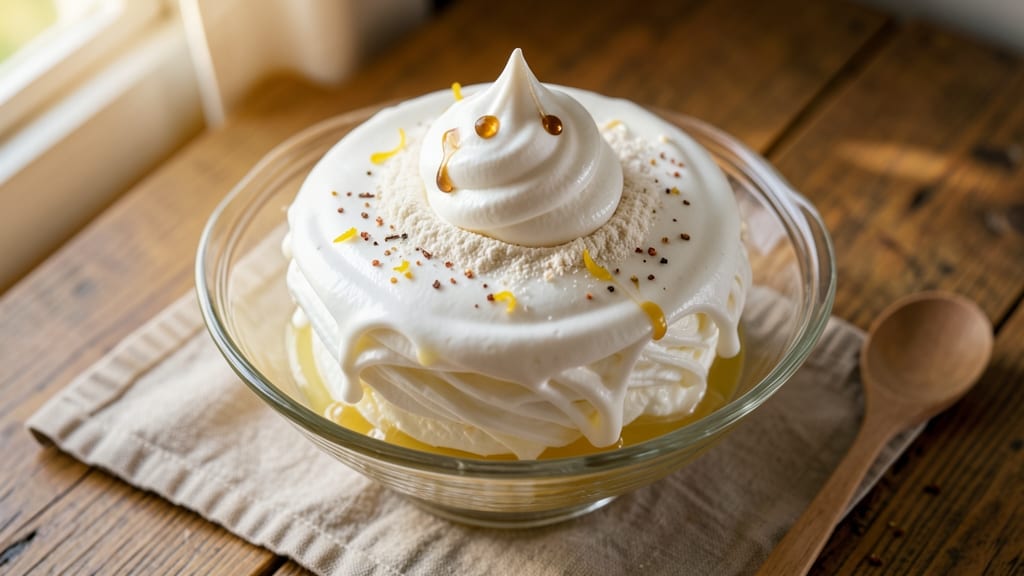
This whipped egg white cake recipe delivers light-as-air layers with a crisp exterior and tender crumb—all without a single drop of butter or oil. The secret lies in properly whipped egg whites that create a stable structure while keeping the texture impossibly delicate.
After years of testing, I’ve perfected a method that eliminates common pitfalls like collapsing or dense layers, making it ideal for both beginners and experienced bakers.
The process begins with room-temperature egg whites whipped to stiff peaks, then gently folded into a simple batter of flour, sugar, and a touch of cream of tartar for stability. Baking at 350°F for 25-30 minutes yields golden, crackly layers with a melt-in-your-mouth interior.
Unlike traditional cakes, this version relies entirely on the protein in egg whites for structure, resulting in a fat-free, high-protein dessert that’s surprisingly rich.
What sets this recipe apart is its foolproof stability—no greasy residue, no heavy aftertaste, just pure, airy perfection. The layers hold their shape when sliced, making it ideal for layering with fruit compotes or light whipped cream.
Whether you’re baking for a special occasion or simply craving a lighter treat, this cake delivers restaurant-quality results with minimal effort.
Perfect for vegetarian diets (thanks to its egg-based structure) or anyone watching fat intake, this recipe also scales beautifully for parties. The key to success? Precision timing when folding the whites and avoiding overmixing the batter. Let’s get baking—your taste buds will thank you.
Ingredients for whipped egg white cake
Nine ingredients transform into restaurant-quality layers without butter or oil.
| Ingredient | Amount | Notes |
|---|---|---|
| Large Egg Whites 🥚 | 12 whole | Room temperature, no yolks |
| Granulated Sugar 🍚 | 2 cups | Superfine preferred for dissolving |
| Cream of Tartar 🧂 | ½ tsp | Essential for stability |
| All-Purpose Flour 🌾 | 2 cups | Sifted, light variety |
| Vanilla Extract 🌿 | 1 tsp | Pure, high-quality preferred |
| Salt 🧂 | ¼ tsp | Fine sea salt preferred |
| Cornstarch 🌾 | ½ tsp | For tender crumb |
| Unsweetened Almond Milk 🥛 | ¼ cup | For delicate moisture |
| Lemon Juice 🍋 | 1 tbsp | Freshly squeezed |
The egg whites are the foundation—room temperature is critical for proper volume. Store-bought pasteurized whites work in a pinch, but fresh whites from large eggs yield superior stability. For optimal quality, purchase eggs from local farms or specialty grocers like Whole Foods or Wegmans, where you can verify freshness by the vibrant, clear whites. The cream of tartar acts as a stabilizer, but if unavailable, substitute with white vinegar at half the amount. Measure your sugar precisely—under-whipping leads to dense layers, while over-whipping causes collapse. A kitchen scale ensures accuracy, but if using volume, spoon and level for consistency.
Substitutions must preserve the delicate balance of this recipe. Coconut sugar or brown sugar can replace granulated sugar, though the cake may darken slightly. For a dairy-free alternative, oat milk or soy milk works instead of almond milk, though texture may vary. The vanilla extract is non-negotiable—imitation extracts contain additives that can destabilize the egg whites. If you lack lemon juice, white vinegar at equal volume provides the necessary acidity. For a nut-free option, omit the almond milk entirely and increase the water content in the flour mixture by 2 tablespoons. Sift your flour thoroughly to eliminate lumps, which can disrupt the even distribution of the batter.
Store the cake in an airtight container at room temperature for up to 3 days, or freeze for up to 2 months wrapped tightly in plastic. Reheat slices at 300°F for 5 minutes to restore crispness. The layers hold their shape remarkably well, making this ideal for layering with fruit compotes or coconut whipped cream. For a foolproof presentation, dust with powdered sugar or drizzle with a simple glaze of powdered sugar and almond milk. The cake's stability means it can be sliced and served immediately after baking, though it's best enjoyed within 2 hours for optimal texture.
Why You'll Love This Recipe
- No Mixer Needed: I’ll admit, I was skeptical at first—just egg whites and sugar? But the secret’s in the whipping: a hand mixer (or even a whisk if you’re patient) turns them into clouds, and that’s all the magic you need. No sifting, no folding, no stress.
- Vanilla-Kissed Lightness: That vanilla extract isn’t just for flavor—it’s the soul of this cake. The cream of tartar keeps the whites stable, but the vanilla? It makes every bite taste like a bakery’s secret. (Yes, even my picky teen asks for seconds.)
- Prep-Ahead Perfection: Bake it, slice it, and store it for days—this cake stays moist without turning gummy. I make a batch on Sunday, wrap it in parchment, and it’s ready for school lunches or last-minute guests. No one suspects it’s just eggs and flour.
- Budget Baking Wins: Three dollars’ worth of ingredients, and you’ll get two cakes out of one batch. Honestly, I’ve used this to impress people who think I’m a “real” baker—no one guesses it’s this simple. (My wallet thanks me every time.)
Step-by-step instructions for whipped egg white cake
Precision is everything in this recipe—follow these steps exactly for flawless, stable layers.
Prepare the Egg Whites for Whipping
Separate the 12 whole large egg whites into a completely clean, grease-free mixing bowl. Room temperature eggs whip more easily, so if they're chilled, let them sit at room temperature for 30 minutes before starting. Any trace of fat—even a tiny bit of yolk—will prevent the egg whites from reaching stiff peaks. Use a fine-mesh strainer to remove any accidental yolk fragments if needed.
Add the 0.5 teaspoon cream of tartar and 0.25 teaspoon salt to the egg whites. The cream of tartar is non-negotiable—it stabilizes the meringue by lowering the pH, allowing the proteins to unfold properly. Whisk these dry ingredients into the egg whites until fully dissolved. This step ensures your meringue will hold its shape and volume during baking.
Gradually Incorporate the Sugar
With an electric mixer fitted with the whisk attachment, begin beating the egg whites on low speed until soft peaks form. This usually takes about 1-2 minutes. Gradually add the 2 cups granulated sugar, 1 tablespoon at a time, increasing the speed to medium-high after each addition. This slow incorporation prevents the sugar from weighing down the meringue and ensures a smooth, glossy texture.
Continue beating until the meringue is stiff and glossy, with peaks that stand straight up when the whisk is lifted. You should be able to draw a figure-eight in the meringue that holds its shape—this is your signal that the sugar is fully incorporated and the meringue is ready for folding. If the mixture looks grainy, keep whipping for another 30-60 seconds to dissolve any remaining sugar crystals.
Fold in Dry Ingredients and Liquids
In a separate bowl, sift together the 2 cups all-purpose flour and 0.5 teaspoon cornstarch. This sifting step prevents lumps and ensures an even distribution of the dry ingredients. Gently fold one-third of the sifted flour mixture into the meringue using a spatula, being careful not to deflate the air incorporated during whipping. Repeat with another third, then the final third, folding just until combined.
In a small bowl, whisk together the 0.25 cup unsweetened almond milk, 1 teaspoon vanilla extract, and 1 tablespoon lemon juice. The lemon juice adds a subtle tang that balances the sweetness and enhances the cake's stability. Gently fold this liquid mixture into the meringue-flour combination, again using a spatula to preserve the airiness. Fold just until no dry streaks remain—overmixing at this stage will deflate the batter and compromise the cake's structure.
Divide, Bake, and Assemble the Cake
Preheat your oven to 350°F and grease three 8-inch round cake pans with nonstick spray or line them with parchment paper. Divide the batter evenly among the pans, smoothing the tops with a spatula. Tap each pan firmly on the counter 3-4 times to eliminate any air bubbles and ensure even layers. Bake for 20-25 minutes, or until the tops spring back when lightly touched and a toothpick inserted into the center comes out clean.
Remove the cakes from the oven and let them cool in the pans for 5 minutes. Then invert them onto a wire rack to cool completely. Once cooled, level the tops if necessary using a serrated knife. For assembly, place one layer on a cake stand or plate, spread a thin layer of whipped cream or the remaining almond milk mixture (if desired), and repeat with the remaining layers. This cake holds its shape beautifully, so you can assemble it up to 24 hours in advance for a stress-free serving.
Pro Tips For Making Whipped Egg White Cake
- USE COLD BOWLS FOR MERINGUE: Egg whites warm up fast—even room temp can ruin your peaks. Pop your mixing bowl and beaters in the freezer for 10 minutes first. I learned this the hard way after deflating three batches on a summer afternoon. Cold surfaces stabilize proteins, so your whites hold shape longer when you fold in sugar.
- WHISK BEFORE YOU WHIP: Don’t just dump those egg whites in. Give them a quick whisk in the bowl first to break up any stubborn clumps. Cream of tartar needs room to work, and hidden lumps can create weak spots in your cake. This takes 10 seconds but makes a real difference in texture.
- SIFT FLOUR LAST MINUTE: Fold in the flour after your meringue is stiff but not dry—like when you can draw peaks that wobble slightly. Sifting it too early collapses the air you just whipped in. Keep a fine-mesh sieve ready and work fast once you open it.
- BAKE UNTIL SPRINGY: That cake’s done when it bounces back fast when you press the center—not when it’s golden. Overbaking turns it gummy. My grandmother swore by the "finger test": tap the top lightly; if it springs up immediately, pull it. (Yes, even if it looks underdone.)
Wine and beer pairings for this whipped egg white cake
Light White Wine
This cake’s delicate, airy texture pairs beautifully with crisp white wines that complement its subtle sweetness and citrus notes. A Sauvignon Blanc from New Zealand or Loire Valley is my go-to—its bright acidity and hints of gooseberry and lime cut through the cake’s richness while enhancing the lemon juice’s tang.
Look for bottles with 12-13% ABV to balance the dessert’s lightness without overpowering it. 🍷
Dry Sparkling Wine
For a celebratory touch, serve this cake with dry Prosecco or Champagne—the effervescence cleanses your palate between bites, making each slice feel fresh. Opt for Italian Prosecco (like La Giustina) for a budget-friendly option or French Brut (such as Veuve Clicquot) for a more luxurious experience.
The bubbles also highlight the cake’s crisp exterior and tender crumb.
Fruity Red Wine
If you prefer red wine, a light Pinot Noir from Oregon or Burgundy works surprisingly well. Its red fruit and earthy undertones harmonize with the cake’s vanilla and almond milk, while its low tannins prevent bitterness.
Chill the wine slightly (about 55°F) to soften its structure and enhance its aromatic pairing with the dessert.
Non-Alcoholic Pairings
For a refreshing non-alcoholic option, try sparkling apple cider (like Martinelli’s) or ginger beer (such as Feather Ginger Beer). The carbonation mirrors the cake’s airy texture, while the ginger’s spice adds a playful contrast.
For a more traditional pairing, chilled hibiscus tea (with a splash of lemon) complements the cake’s citrus notes without competing flavors. ✨
Beer Pairings
A Belgian witbier (like Hoegaarden) is my favorite beer pairing—its corianander and citrus notes echo the lemon juice in the cake, while the light body won’t overwhelm the delicate dessert.
For a darker option, a wheat beer (such as Blue Moon) adds a touch of sweetness that balances the cake’s subtle flavors. Serve both chilled to preserve their crispness.
Nutrition facts
Frequently asked questions
Why do I need room-temperature egg whites for this recipe?
Room-temperature egg whites whip up to 30-50% more volume than cold ones because the proteins unfold more easily. Cold whites trap air poorly, leading to weak, unstable peaks that collapse during baking. Let them sit for 30 minutes at room temperature before whipping for perfect structure.
Can I substitute cream of tartar if I don't have any?
Yes! Use ½ teaspoon white vinegar or lemon juice instead—both provide the same acidity to stabilize the egg whites. The acid helps the proteins bond properly, preventing grainy texture or collapse. Just measure carefully to avoid over-acidifying the batter.
What's the best way to tell when the egg whites are fully whipped?
Look for stiff, glossy peaks that hold their shape when the whisk is lifted. You should also be able to draw a figure-eight in the meringue that stands upright. If the mixture looks grainy, whip for another 30-60 seconds—undissolved sugar crystals can weigh down your cake.
Why did my cake collapse after baking?
Collapse usually happens from over-whipping (beyond stiff peaks) or opening the oven door too soon. The extreme heat causes trapped air to escape. Always bake at 350°F until the top springs back when touched, then let cakes cool in pans for 5 minutes before removing.
How do I prevent dry layers in this cake?
The almond milk and lemon juice keep the cake tender, but don't overbake—pull it when a toothpick comes out clean (20-25 minutes). For extra moisture, brush warm layers with simple syrup (equal parts sugar and water) before assembling. The cake's fat-free nature makes it slightly drier than traditional cakes.