
Desserts
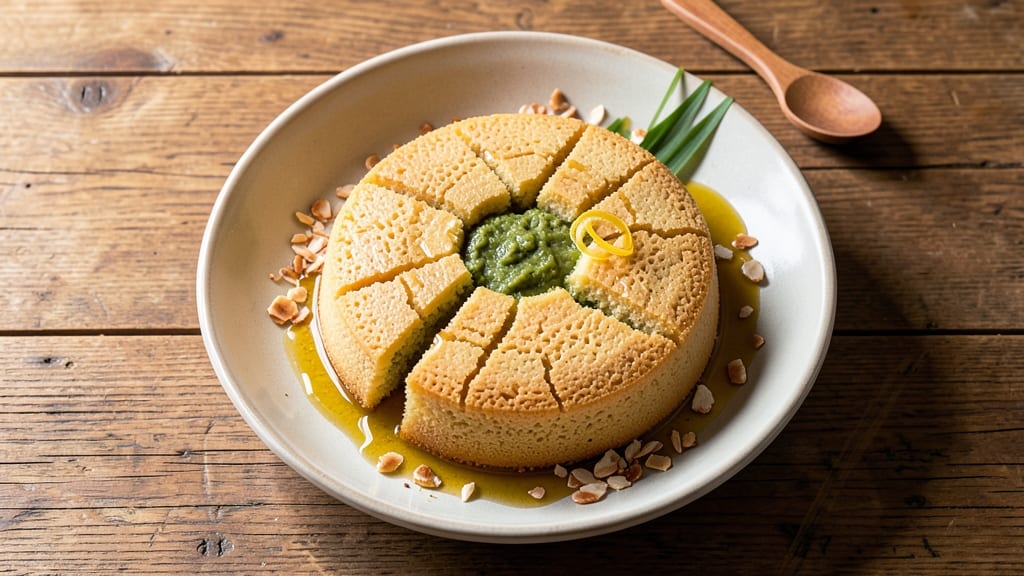
This Vietnamese egg cake recipe delivers the delicate balance of silky custard and fragrant pandan that makes it a beloved dessert across Southeast Asia.
The secret lies in the slow steaming process that transforms a simple batter into layers of tender, slightly chewy texture with those signature swirls of aromatic pandan. I've perfected this version after years of testing—no special equipment needed, just patience and precise technique.
What sets this recipe apart is the harmony of ingredients: sweetened coconut milk provides richness, egg yolks create that signature custard texture, and pandan extract infuses every bite with its distinct floral aroma.
The cake's unique structure comes from alternating layers of batter and coconut milk during steaming, creating those beautiful marbled patterns. Unlike many desserts, this one improves as it sits, developing deeper flavors and a firmer yet still tender bite.
The result is a dessert that's both elegant and comforting—a perfect balance of textures and flavors that makes it ideal for celebrations or quiet afternoons. Each slice reveals the contrast between the smooth custard and the delicate pandan swirls, creating a sensory experience that's uniquely Vietnamese.
Whether you're making it for a special occasion or simply craving something special, this recipe delivers restaurant-quality results at home.
For those interested in variations, you can easily adapt this recipe by adding mung bean powder for a traditional green bean flavor or substituting coconut milk with almond milk for a lighter version.
The key to success remains the same: precise layering and careful steaming. Let's get started on creating this beautiful dessert that's sure to impress.
Ingredients for vietnamese egg cake
Sixteen essential ingredients transform into a restaurant-worthy Vietnamese egg cake.
| Ingredient | Amount | Notes |
|---|---|---|
| Large Egg Yolks 🥚 | 12 whole | Fresh, room temperature |
| Sweetened Coconut Milk 🥥 | 2 cups | Full-fat, canned preferred |
| Granulated Sugar 🍚 | 1 ½ cups | White or light brown |
| All-Purpose Flour 🌾 | 1 cup | Sifted, light texture |
| Pandan Extract 🌿 | 1 tbsp | Pure, not imitation |
| Vanilla Extract 🌸 | 1 tsp | Pure vanilla preferred |
| Salt 🧂 | ½ tsp | Fine sea salt |
| Unsalted Butter 🧈 | ½ cup | Cold, cubed for texture |
| Tapioca Starch 🍚 | 2 tbsp | For binding texture |
| Vegetable Oil 🫒 | ¼ cup | For greasing mold |
| Water 💧 | ½ cup | Room temperature |
The coconut milk is non-negotiable here—opt for full-fat canned brands like Thai Kitchen for authentic richness. Pandan extract makes all the difference; Thai Pantry or Asian markets carry the best quality. Egg yolks should be fresh and room temperature—cold yolks won't emulsify properly. For the butter, Land O'Lakes unsalted works perfectly, but any cold, cubed butter will do. Sift your flour to avoid lumps in the delicate batter.
No pandan extract? Fresh pandan leaves steeped in water (1/2 cup leaves to 1 cup water, simmered 10 minutes) works as a substitute. Out of coconut milk? Almond milk or cashew cream lightens the texture but loses some richness. For a lighter cake, replace half the sugar with powdered erythritol—just reduce the water slightly to maintain moisture. The tapioca starch is crucial; Bob's Red Mill is my go-to brand for consistent results. If you can't find it, arrowroot powder works in a pinch.
This batter must rest at least 2 hours before steaming—patience prevents cracking. Store leftovers in an airtight container for up to 3 days in the fridge, or freeze for 2 months. To reheat, steam for 10 minutes—no microwave! The cake improves as it sits, developing deeper pandan flavor with each hour. For gifting, wrap tightly in plastic wrap and secure with a ribbon.
Why You'll Love This Recipe
- No Fuss, One Bowl: I swear, this recipe lives in my "no excuses" folder—just yolks, coconut milk, and a handful of flour. No whisking to oblivion, no measuring cups cluttering my counter, and honestly? The batter comes together faster than I can put on a pot of tea.
- Pandan Perfection: That faint floral note from pandan extract? It’s the secret weapon—lightly sweet, subtly aromatic, and somehow makes every bite taste like a little vacation. The coconut milk keeps it rich without being heavy, and the sugar caramelizes just enough to give it that golden, crispy edge.
- Breakfast or Dessert?: Between us, this cake is my go-to for lazy mornings and impromptu dessert nights. Serve it warm with condensed milk for a nostalgic treat, or slice it cold for a quick protein boost. My kids ask for it more than cake—yes, even on a Tuesday night.
- Leftovers That Won’t Let You Down: I make a double batch every time because it reheats like a dream—just a quick zap in the microwave or a few minutes in the oven. Plus, the ingredients are cheap enough that I’m not stressing over wasted food, and the texture stays tender for days. Budget-friendly? Absolutely. Reliable? Even more so.
Step-by-step instructions for Vietnamese egg cake
Here's how to create a perfectly steamed custard with those signature pandan swirls.
Prepare the Dry Ingredients
In a medium bowl, whisk together the 1 cup all-purpose flour and 2 tablespoons tapioca starch until completely combined. This creates a fine, airy base that will give your cake its signature light texture. Sift the mixture through a fine-mesh sieve to eliminate any lumps—this ensures a smooth batter without graininess.
Set aside the flour mixture while you prepare the wet ingredients. The sifting step is crucial for preventing dense spots in your cake, so don't skip it. Keep the bowl nearby as you'll be adding to it in the next step.
Whisk Wet Ingredients to Smooth Perfection
In a separate large bowl, combine the 12 whole egg yolks, 1.5 cups granulated sugar, 2 cups sweetened coconut milk, 1 tablespoon pandan extract, 1 teaspoon vanilla extract, and 0.5 teaspoon salt. Using a hand mixer or stand mixer, beat the mixture on medium speed for 3-4 minutes until it becomes pale yellow and thickens noticeably.
This step is where the magic happens—the yolks should triple in volume and develop a ribbon-like consistency when the whisk is lifted. If you're using fresh pandan extract, you'll notice its distinctive floral aroma developing in the mixture. The sugar should fully dissolve, leaving no gritty texture.
Combine Wet and Dry Ingredients
Gradually add the sifted flour mixture to the wet ingredients while mixing on low speed. Be patient—this should take about 1-2 minutes to fully incorporate. Once combined, the batter should be smooth and slightly thicker than heavy cream, with no visible flour streaks.
Real talk: Don't overmix here. You want just enough to combine the ingredients without developing gluten, which would make your cake tough. The batter should coat the back of a spoon but still flow freely when tilted. If it's too thick, add 1-2 tablespoons of water to reach the perfect consistency.
Incorporate Butter and Final Adjustments
Cut the 0.5 cup cold unsalted butter into small cubes and gently fold them into the batter using a rubber spatula. Work quickly but thoroughly to distribute the butter evenly—this creates those signature pockets of flavor and texture in the final cake. The batter should remain smooth but slightly marbled with butter flecks.
Let the batter rest for 15-20 minutes at room temperature. This brief resting period allows the flour to fully hydrate and the butter to soften slightly, resulting in a more uniform texture when steamed. Cover the bowl loosely with plastic wrap to prevent a skin from forming.
Steam to Golden Perfection
Preheat your steamer by bringing 0.5 cup water to a gentle simmer. Grease a 6-inch round cake pan generously with 0.25 cup vegetable oil, then pour the batter into the pan and spread it evenly. Place the pan in the steamer and cover tightly.
Steam over medium heat for 45-50 minutes until the top is golden brown and a toothpick inserted in the center comes out clean. The cake should spring back gently when pressed in the center—this indicates it's fully set. If the top browns too quickly, tent it loosely with aluminum foil to prevent over-browning while maintaining moisture.
Cool and Serve
Remove the cake from the steamer and let it cool in the pan for 10 minutes. Then transfer it to a wire rack to cool completely. The cake will continue to set as it cools, developing its characteristic firm yet tender texture. For the best results, serve at room temperature.
This Vietnamese egg cake should have a delicate, custard-like interior with a slightly crisp exterior. The pandan swirls should be visible throughout, adding their signature floral aroma to each bite. Store leftovers covered in the refrigerator for up to 3 days or freeze for up to 1 month for freshness.
Pro Tips For Making Vietnamese Egg Cake
- STEAM IT RIGHT: The cake’s texture hinges on the steam—don’t skimp. Line your pan with parchment, fill it halfway with boiling water, then place the cake on top. After 30 minutes, top with a damp towel for another 10. I learned this the hard way when mine came out dry and dense.
- WHISK THE YOLKS: Beat those yolks until they’re pale, thick, and ribbon-like—about 3-5 minutes. Cold yolks resist emulsification, so let them sit at room temp for 10 minutes first. Skimping here means a cake that’s more custard than fluffy.
- MEASURE FLOUR BY WEIGH: Spoon flour into the bowl, don’t scoop—packing it changes the ratio. For a 20cm pan, aim for 150g flour max. I used to eyeball it, and the cake always turned out gummy. A kitchen scale solves this instantly.
- SWAP PANDA FOR VANILLA: No pandan? A teaspoon of vanilla extract works in a pinch—just halve the sugar to balance the sweetness. Or skip both and add a pinch of salt to highlight the coconut’s natural flavor. Sounds weird, but it works when you’re short on time.
Storing and reheating your leftovers
Room-Temp Storage
After cooling completely, store your Vietnamese egg cake in an airtight container at room temperature for up to 2 days. The cake actually develops deeper pandan flavor as it sits, so I recommend making it a day ahead for optimal taste.
Place a slice of bread or a damp paper towel in the container to prevent drying. 💫
Fridge Preservation
For longer storage, refrigerate the cake in an airtight container for up to 3 days. The cold temperature helps maintain moisture, but the texture becomes slightly firmer.
Let it sit at room temperature for 15-20 minutes before serving to restore its tender quality. I always wrap individual slices in parchment paper for easy grab-and-go portions.
Freezing for Later
Freeze the cake in slices wrapped tightly in plastic wrap and aluminum foil for up to 2 months. Thaw overnight in the refrigerator before reheating. For best results, steam the thawed slices for 5-7 minutes to restore moisture and texture—microwaving can make them rubbery.
Label your freezer bags with the date to track freshness.
Reheating Methods
Steaming is the gold standard for reheating. Place the cake on a heatproof plate in your steamer for 8-10 minutes over simmering water. The steam gently revives the custard texture without drying it out.
For quick options, microwave individual slices on low power (50%) for 20-30 seconds, then cover with a damp paper towel for 1 minute to redistribute moisture.
Texture Recovery Tips
If your cake loses moisture during storage, brush the top with 1 tablespoon warm coconut milk before reheating. This adds back richness and helps restore that signature custard mouthfeel. For extra decadence, serve reheated slices with a drizzle of warmed coconut cream and a sprinkle of toasted sesame seeds.
The contrast of warm cake with cool topping is pure comfort. 🥥
Nutrition facts
Frequently asked questions
Why does my Vietnamese egg cake have cracks on top?
The most common cause is overmixing the batter or not letting it rest properly. For perfect texture, mix just until combined and let the batter rest for at least 2 hours before steaming. Also ensure your steamer has enough water—too much heat too quickly causes cracking.
Can I make this cake without pandan extract?
Yes! You can substitute with 1/2 cup fresh pandan leaves steeped in 1 cup hot water (simmered 10 minutes) or 1 teaspoon vanilla extract plus 1/2 teaspoon almond extract. The flavor will be different but still delicious. For a nutty twist, add 1/4 cup crushed peanuts to the batter.
What's the secret to getting those beautiful swirls?
Those signature swirls come from the coconut milk's natural separation during steaming. For more pronounced patterns, pour half the batter into the pan, steam for 20 minutes, then add another layer of coconut milk before completing the steaming. The heat causes the coconut cream to rise and create marbling.
Is this recipe gluten-free?
Not traditionally, but you can adapt it! Replace the 1 cup all-purpose flour with 1 cup gluten-free 1:1 baking flour and add 1/2 teaspoon xanthan gum to maintain structure. The texture will be slightly denser, but still delicious. For best results, use a gluten-free blend designed for baking.
How do I know when the cake is fully cooked?
Your cake is done when it springs back gently when pressed in the center and a toothpick comes out clean. The top should be golden brown, not pale. If unsure, steam 5 more minutes—undercooked cake will be jelly-like and overcooked cake will be dry.