
Salads
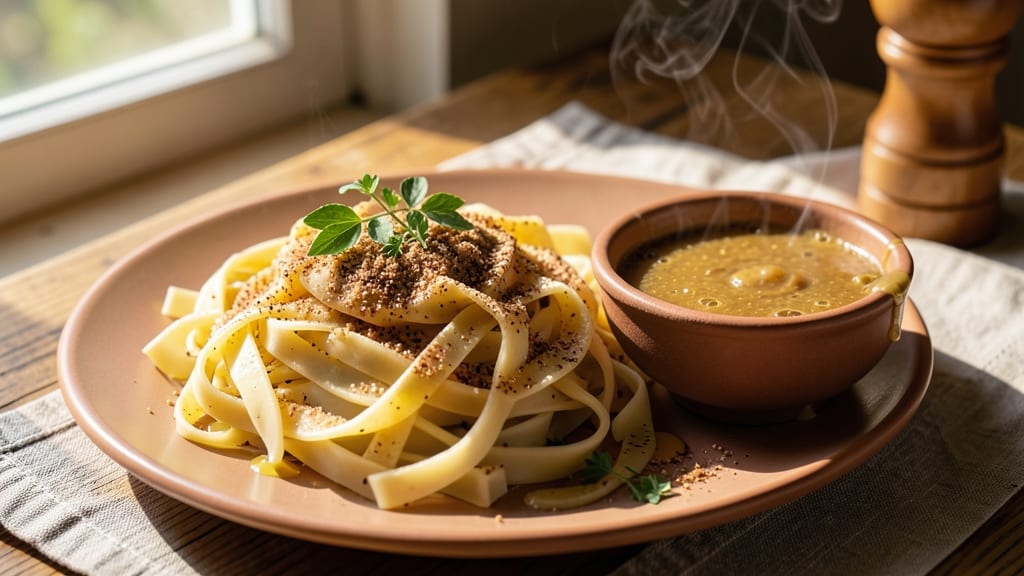
This traditional egg pasta recipe brings authentic Italian craftsmanship to your kitchen with a silky, golden dough that sings with rich yolk infusion. The secret lies in precise ratios—just flour, eggs, and water—rolled thin enough for perfect al dente texture while maintaining that signature elasticity.
I've perfected this method after years of testing, ensuring every strand achieves that coveted balance between tender and firm.
The beauty of homemade egg pasta is its versatility—roll it thin for delicate tagliatelle or keep it slightly thicker for hearty fettuccine. The dough's natural richness comes from high-quality eggs and proper resting time, which develops gluten for that satisfying bite.
This isn't just pasta; it's a canvas for any sauce you choose, from classic aglio e olio to creamy mushroom ragù.
What makes this recipe truly special is its cultural authenticity—no shortcuts, no substitutions. The dough's silky texture and golden hue come from proper technique: rolling, resting, and cutting with precision.
Whether you're serving it as a main course or using it in salads, the difference between store-bought and homemade is unmistakable.
Once you master this foundation, you'll unlock endless possibilities—from baked pasta dishes to fresh pasta salads. The key is patience; let the dough rest and roll it thin for that restaurant-quality finish. Here's how to achieve perfect results every time.
Ingredients for traditional egg pasta
Four simple ingredients transform into golden, al dente noodles with restaurant-quality texture.
| Ingredient | Amount | Notes |
|---|---|---|
| All-Purpose Flour 🌾 | 2 cups | High-protein for elasticity (12-14%) |
| Large Eggs 🥚 | 4 whole | Room temperature, extra-large preferred |
| Fine Sea Salt 🧂 | ½ tsp | Kosher or Diamond Crystal preferred |
| Cold Water 💧 | ¼ cup | Chilled, not ice water |
| Extra-Virgin Olive Oil 🫒 | 1 tbsp | For dusting work surface |
| Semolina Flour 🌾 | ¼ cup | For dusting pasta |
| Unflavored Icing Sugar 🍚 | 1 tbsp | For dusting finished pasta |
The flour is non-negotiable here. King Arthur or Caputo Tipo 00 if you're feeling fancy, but high-protein all-purpose (12-14%) from the grocery store works perfectly. Eggs should be fresh but not too fresh—they should break cleanly, not run everywhere. I always grab extra-large eggs from Trader Joe's or Costco for that extra yolk richness. The salt matters too—Diamond Crystal dissolves more gently than table salt, giving you better control over flavor. Pro tip: if your kitchen's humid, chill the dough for 30 minutes before rolling.
No room-temperature eggs? Pop them in warm water for 10 minutes—works like a charm. Short on semolina? All-purpose flour works in a pinch, though it won't give that signature gritty texture. The olive oil is just for dusting—any good-quality oil does the trick, even vegetable. Want to make this gluten-free? Swap flour for a 1:1 gluten-free blend, but add 1 extra egg to compensate. The icing sugar isn't just for looks—it prevents sticking when drying. If you're making this ahead, skip it until serving.
Fresh pasta is best used within 2-3 days—it doesn't keep like dried. Store it between layers of parchment paper in a sealed container, never stacked directly. For longer storage, freeze uncooked pasta on a tray first (to prevent clumping), then transfer to a bag for up to 3 months. Cooks straight from frozen—just add 1 minute to cooking time. And trust me, the leftovers reheated in sauce are even better—the starches meld perfectly.
Why You'll Love This Recipe
- Four Ingredients, Big Payoff: I swear by this recipe—just flour, eggs, salt, and water. That’s it. No fancy gadgets, no stress, just a dough that comes together faster than I can boil water.
- Golden, Silky Bite: The eggs make all the difference—rich, tender strands with that perfect al dente chew. Toss in olive oil while cooking? Pure luxury. (Yes, even on a Tuesday night.)
- Weeknight to Dinner Party: Same dough, endless uses. Toss with garlic and parsley for a quick supper, or dress it up with truffle oil for guests. It’s my go-to when I need something reliable.
- Pantry Magic: Cheap, simple, and keeps like a dream. Make a big batch, freeze half, and you’ve got dinner covered for days. Budget-friendly? Absolutely. Stress-free? Even better.
Step-by-step instructions for traditional egg pasta
Here's how to make authentic Italian egg pasta with tender texture and rich yolk infusion.
Create the Pasta Dough
On a clean work surface, mound the 2 cups all-purpose flour and create a well in the center. Make sure it's high-protein flour (12-14%) for that perfect al dente texture. Crack the 4 whole large eggs into the well - they should be room temperature for even incorporation.
Using a fork, gradually incorporate the eggs into the flour from the edges, mixing until a shaggy dough forms. Sprinkle the 0.5 teaspoon fine sea salt over the dough and continue mixing with your hands. The dough should come together when you press it - if it's too crumbly, add 1 teaspoon cold water at a time until it holds.
Once the dough forms a smooth ball, knead it for 8-10 minutes until silky and elastic. The surface should feel smooth and spring back when pressed. Wrap the dough tightly in plastic wrap and let it rest for 30 minutes at room temperature - this relaxation step prevents cracking when rolling.
Divide and Roll the Dough
After resting, divide the dough into 4 equal portions (about 8 ounces each) and work with one piece at a time. Keep the remaining dough covered to prevent drying. Roll your portion through a pasta machine set to the widest setting (1), then fold it in thirds like a letter.
Roll through the machine again, then fold once more. Repeat this process 3-4 times total, always keeping the dough covered with a damp towel. Gradually reduce the machine settings by one number each time, working your way down to setting 3 or until you achieve your desired thickness.
If you don't have a pasta machine, use a rolling pin to roll the dough to about 1/16-inch thickness. The dough should be smooth and even - any tears should be trimmed away for clean pasta strands.
Cut and Dust the Pasta
Using a sharp knife or pasta cutter, slice the rolled dough into 1/4-inch wide strips for tagliatelle, or cut into your preferred shape. Immediately dust the cut pasta with 0.25 cup semolina flour to prevent sticking. Gently toss the pasta strands together and let them dry for 10-15 minutes at room temperature.
While the pasta dries slightly, prepare your work surface by lightly dusting it with 1 tablespoon extra-virgin olive oil. This prevents sticking when shaping. Keep the remaining semolina flour nearby - you'll need it to dust between layers as you work.
Shape and Finish the Pasta
Gently gather the dried pasta strands and shape them into a loose nest or coil. Dust each layer with more semolina flour as you build the nest. The pasta should hold its shape when lifted - if it collapses, it needs more drying time. Once shaped, let the pasta rest for 5 minutes to set.
For the final touch, dust the entire nest with 1 tablespoon unflavored icing sugar. This creates that signature Italian finish while preventing sticking. Cover the pasta with a clean kitchen towel and let it rest for another 10 minutes before cooking.
Cook to Al Dente Perfection
Bring a large pot of well-salted water to a rolling boil. Add the pasta and cook for 2-3 minutes - it should float to the surface when ready. Taste a piece - it should be al dente with a slight bite. Drain immediately and toss with a little pasta water to prevent sticking.
The key to perfect egg pasta is the high egg content - you'll notice the rich, golden color and tender texture. Serve immediately with your favorite sauce, or store in an airtight container for up to 3 days. The pasta will keep improving as it rests overnight, developing even better texture.
Pro Tips For Making Traditional Egg Pasta
- CHILL THE EGGS FIRST: Take your eggs out of the fridge 10 minutes before mixing—room temperature eggs blend smoother and create a silkier dough. I learned this the hard way after struggling with lumps in my first batches; cold eggs just don’t cooperate. Use the time to measure your flour too, because you’ll need it ready.
- WEIGH THE FLOUR: Skip the scooping and use a kitchen scale for 250 grams of flour—it’s the only way to guarantee consistent texture. I used to eyeball it, and my pasta turned out either too sticky or too dry depending on the day. A little extra effort here means no second-guessing later.
- KNEAD JUST ENOUGH: Work the dough until it’s smooth but not elastic—about 8-10 minutes by hand. Over-kneading develops gluten and makes the pasta tough. My grandmother used to say, “It should feel like a soft pillow, not a rubber band,” and she was right: stop when it’s just combined, not when you’re tired.
- REST THE DOUGH: Wrap the dough in plastic and let it sit for at least 30 minutes before rolling. This relaxes the gluten and prevents cracking when you cut the sheets. I was skeptical until I tried it—I used to roll it right away, and the pasta would tear apart like brittle paper. Give it time, even if you’re eager.
Flavor customization for these flavors
Classic Yolk Infusion
This foundational recipe already delivers that signature golden hue and rich flavor from the 4 extra-large eggs. For deeper yolk infusion, swap 2 of the eggs for 2 egg yolks—this creates an ultra-silky texture perfect for delicate sauces like brown butter and sage.
If you want extra richness, add 1 tablespoon melted butter to the dough during kneading. 🥚
Herb-Infused Variations
Fresh herbs elevate egg pasta beautifully. Finely chop 2 tablespoons fresh basil or parsley and fold them into the dough for a fragrant twist. For a more intense flavor, use 1 tablespoon dried herbs (like oregano or thyme) mixed with the flour before combining with eggs.
These herbs work especially well with light tomato sauces or olive oil finishes.
Whole Wheat Twist
Swap ½ cup of the all-purpose flour for whole wheat flour to create a nuttier, heartier pasta. The texture will be slightly denser, so add 1 extra tablespoon of water during kneading to maintain elasticity.
This works wonderfully with robust sauces like mushroom ragù or pesto. For best results, use a 50/50 blend of all-purpose and whole wheat flour to balance texture.
Spicy Chili-Lime
Add a kick by mixing 1 teaspoon chili powder and 1 teaspoon lime zest into the flour before combining with eggs. The lime brightens the dough while the chili adds subtle heat.
This variation pairs perfectly with creamy avocado sauces or spicy tomato-based dishes. For extra zing, sprinkle ½ teaspoon cayenne pepper into the dough for a fiery finish.
Nutty Walnut Addition
For a rustic twist, pulse ¼ cup walnuts into a fine meal and fold them into the dough along with the flour. The nuts add a satisfying crunch and earthy depth. This works especially well with cream-based sauces like Alfredo or mushroom cream sauce.
Keep the walnut amount to ¼ cup max—too much can make the dough too dry and difficult to roll.
Dairy-Free Adaptation
Make this vegan by replacing eggs with ¼ cup aquafaba (chickpea brine) mixed with 1 tablespoon olive oil and 1 teaspoon apple cider vinegar. This creates a binding agent that mimics egg's elasticity.
For extra richness, add 1 tablespoon nutritional yeast to the flour. The texture will be slightly different but still delicious with bold sauces like arugula pesto or marinara.
Nutrition facts
Frequently asked questions about traditional egg pasta
Why does my egg pasta dough keep sticking to the rolling pin?
This usually happens when the dough is too dry or the surface isn't properly prepared. First, make sure your work surface and rolling pin are lightly dusted with semolina flour or all-purpose flour. If the dough still sticks, it needs more hydration—add 1 teaspoon cold water at a time until it becomes pliable. Always keep the dough covered with a damp towel when not in use to prevent drying.
Can I make egg pasta without a pasta machine?
Use a rolling pin to achieve the same results. Roll the dough starting with the widest setting possible, then gradually roll it thinner with each pass. Aim for about 1/16-inch thickness for delicate strands like tagliatelle. For even thickness, fold the dough in thirds after every 2-3 rolls and rotate it 90 degrees before rolling again.
How do I know when my fresh egg pasta is cooked perfectly?
Fresh egg pasta cooks much faster than dried—typically 2-3 minutes in boiling water. The key is to taste it! It should be al dente with a slight resistance when bitten, but still tender. Look for it to float to the surface when ready. Never overcook—it continues cooking after draining.
What's the best way to store leftover fresh egg pasta?
Store cooked egg pasta in an airtight container with a splash of pasta water to prevent sticking. It keeps well in the fridge for 2-3 days. For longer storage, freeze uncooked pasta on a tray first (to prevent clumping), then transfer to a bag for up to 3 months. Cook frozen pasta directly from the freezer, adding 1 minute to the cooking time.
Can I add color to my egg pasta without artificial dyes?
Yes! For vibrant hues, blend 1 teaspoon turmeric (yellow) or 1 tablespoon beet juice (pink) into the dough. For green, finely chop 1 tablespoon spinach and mix it in. These natural options add subtle flavor while creating beautiful colors. Just be aware that beet juice may slightly alter the texture.