
Main Courses
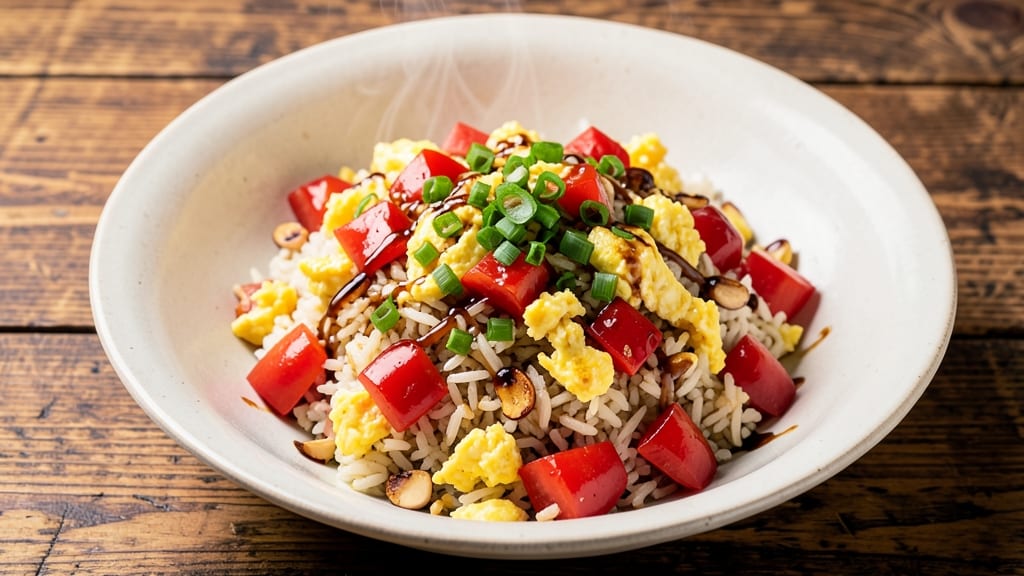
This tomato egg fried rice recipe delivers restaurant-quality results with a perfect balance of savory, umami, and slightly sweet flavors—every bite is packed with texture and depth. The secret lies in using day-old rice (never fresh!) that absorbs the egg and tomato mixture beautifully while maintaining that ideal chewy bite. I've perfected this technique over countless home-cooked meals, and it never fails to impress.
The magic happens in the stir-frying process, where high heat creates a crispy texture on the eggs while keeping the rice tender. Fresh tomatoes add natural sweetness that contrasts beautifully with the salty soy sauce and aromatic garlic.
This dish is incredibly versatile—you can customize it with proteins like chicken, shrimp, or tofu, or keep it vegetarian for a satisfying plant-based meal.
What you'll end up with is a vibrant, flavorful dish that's ready in just 20 minutes. The eggs are perfectly cooked—soft yet slightly set—while the tomatoes break down into a slightly caramelized sauce that coats every grain of rice.
The aroma alone will have everyone at the table asking for seconds, and the balance of flavors makes it a crowd-pleaser for any occasion.
Whether you're feeding a family or meal prepping for the week, this recipe scales effortlessly. The technique is simple but yields restaurant-quality results, proving that homemade fried rice can be just as impressive as takeout. Let's get cooking!
Ingredients for tomato egg fried rice
Restaurant-quality fried rice starts with these carefully selected ingredients—each playing a crucial role in texture and flavor harmony.
| Ingredient | Amount | Notes |
|---|---|---|
| Day-Old Cooked White Rice 🍚 | 4 cups | Cold, preferably jasmine or basmati |
| Large Eggs 🥚 | 4 whole | Room temperature for even cooking |
| Fresh Tomatoes 🍅 | 1 ½ cups | Diced, vine-ripened preferred |
| Garlic Cloves 🧄 | 4 cloves | Minced, fresh for aromatic depth |
| Green Onions 🧅 | ½ cup | Sliced, white and green parts |
| Light Soy Sauce 🥢 | 3 tbsp | Kikkoman preferred for balance |
| Dark Soy Sauce 🥢 | 1 tbsp | For color and umami depth |
| Sesame Oil 🫒 | 1 tbsp | Toasted, for aromatic finish |
| Vegetable Oil 🫒 | 2 tbsp | High smoke point for stir-frying |
| Salt 🧂 | ½ tsp | Diamond Crystal preferred |
| Black Pepper 🌶️ | ¼ tsp | Freshly ground for brightness |
| White Pepper 🌶️ | ¼ tsp | Traditional for classic texture |
| Sesame Seeds 🌾 | 1 tbsp | Toasted for garnish |
The rice is non-negotiable—day-old, cold grains absorb flavors better than fresh. Jasmine or basmati varieties work best due to their distinct aroma and texture. For the tomatoes, vine-ripened delivers the perfect balance of sweetness and acidity; grocery store tomatoes work but lack depth. Eggs should be room temperature for even cooking, and Kikkoman soy sauce provides that authentic umami punch without overpowering. Garlic and green onions add aromatic layers that elevate the dish—never skip the white parts of green onions for maximum flavor.
No fresh tomatoes? Canned San Marzano tomatoes work in a pinch, but drain them well to avoid excess moisture. Short on sesame oil? Toasted peanut oil offers a similar nutty depth. For a vegetarian twist, add firm tofu or mushrooms to replace the eggs entirely. The soy sauce ratio is critical—too much dark soy sauce makes it bitter, while too little light soy sauce flattens the flavor. If you're using pre-minced garlic, toast it first in the oil to deepen its flavor. The sesame seeds should be toasted in a dry pan until fragrant—this enhances their nutty aroma significantly.
Store day-old rice in an airtight container in the fridge for up to 3 days before using. The eggs should be at room temperature when cooking—20 minutes out of the fridge is ideal. This dish reheats beautifully—just add a splash of water and stir-fry again. For meal prep, portion into containers with a layer of sesame oil on top to prevent drying. The flavors actually improve after the first day as the ingredients meld together—perfect for leftovers.
Why You'll Love This Recipe
- Here’s what sold me: the way the fresh tomatoes soften just enough to caramelize, while the eggs stay silky and the garlic? Oh, it browns in that pan, layering in depth. It’s bright, savory, and somehow more satisfying than takeout.
- No Chopping Nightmare: I swear by this one—just dice the tomatoes and mince the garlic, then toss everything in. That’s it. No finicky prep, no stressing over perfect slices. Even if your knife skills are questionable, the flavor still wins.
- Garlic-Tomato Magic: Here’s what sold me: the way the fresh tomatoes soften just enough to caramelize, while the eggs stay silky and the garlic? Oh, it browns in that pan, layering in depth. It’s bright, savory, and somehow more satisfying than takeout.
- Lunchbox Hero: Between us, this is my go-to for packed lunches. The day-old rice stays firm, the eggs hold up, and the tomatoes add freshness that keeps it from getting soggy. Toss in a sprinkle of green onions, and suddenly you’ve got a meal that’s actually exciting to unpack.
Step-by-step instructions for tomato egg fried rice
This method delivers restaurant-quality texture and flavor every time—crispy edges, tender eggs, and vibrant tomato pieces.
Prepare the Egg Mixture for Silky Custard
Crack the 4 whole large eggs into a bowl and whisk vigorously for 30 seconds until the yolks and whites are fully combined. Add 0.5 teaspoon salt and 0.25 teaspoon black pepper, then whisk another 10 seconds. The mixture should be homogeneous with no visible streaks—this ensures even cooking and a smooth, silky texture when scrambled.
I like to use room-temperature eggs for this dish because they cook more evenly and develop a better custard-like consistency. If your eggs are straight from the fridge, let them sit at room temperature for 10 minutes before whisking. The slight warmth helps prevent rubbery eggs—this is particularly important for fried rice where texture matters most.
Stir-Fry the Aromatics and Tomatoes
Heat 2 tablespoons vegetable oil in a 14-inch wok or large skillet over medium-high heat until shimmering. Add the 4 cloves minced garlic and stir for 20 seconds until fragrant but not browned—this prevents bitterness. Immediately add the 1.5 cups diced fresh tomatoes and stir-fry for 3-4 minutes until they soften slightly but maintain their shape.
The key here is to develop the tomato flavor without cooking it into oblivion. You want them to contribute their natural sweetness while still holding their structure. If you notice the tomatoes releasing too much liquid, increase the heat briefly to evaporate the excess moisture—this keeps your fried rice from becoming soggy later.
Cook the Eggs to Perfect Custard Texture
Pour the egg mixture into the wok in a thin, even layer. Let it sit undisturbed for 10 seconds until the edges begin to set, then gently push the eggs toward the center of the pan with a spatula, allowing the uncooked egg to flow to the edges. Continue this motion for 45-60 seconds until the eggs are just set—still slightly moist in the center but no longer runny.
This technique creates the signature silky egg texture found in professional fried rice. If you scramble too aggressively, you'll end up with dry, curdled eggs. Remove the eggs from the wok and set aside on a plate, keeping them warm while you prepare the rice base.
Combine All Ingredients for Umami Perfection
Add the 4 cups day-old cooked white rice to the wok and break up any clumps with your spatula. Stir-fry for 1 minute to heat through and reactivate the starches. Pour in 3 tablespoons light soy sauce, 1 tablespoon dark soy sauce, and 0.25 teaspoon white pepper, then toss everything together for 2 minutes until the rice is evenly coated and fragrant.
The dark soy sauce is crucial here—it adds that signature deep brown color while contributing a rich umami flavor. If you're using cold rice straight from the fridge, it will take slightly longer to heat through, but the texture will be even better as the starches reactivate properly during cooking.
Finish with Sesame Oil and Garnish
Return the eggs to the wok and toss everything together for 1 minute to combine. Drizzle in 1 tablespoon sesame oil and 0.5 cup sliced green onions, then stir-fry for an additional 30 seconds until the green onions are wilted but still vibrant. Remove from heat and sprinkle with 1 tablespoon toasted sesame seeds just before serving.
The sesame oil should infuse the dish with its nutty aroma in the final moments of cooking. Serve immediately while the rice is hot and the eggs maintain their perfect custard texture. Each bite should deliver a balance of umami from the soy sauces, sweetness from the tomatoes, and richness from the eggs—this is what makes this fried rice truly exceptional.
Pro Tips For Making Tomato Egg Fried Rice
- STIR-FRY RICE DRY: Your rice should sound like dry sand when you press it—no clumping, no moisture. Spread freshly cooked rice on a tray and let it cool uncovered for 30 minutes (or use leftover rice straight from the fridge). Cold, dry rice fries better and won’t turn mushy when you add the eggs later.
- CHOP TOMATO SMALL: Cut your tomatoes into ½-inch cubes, not slices—small pieces cook faster and blend into the rice without turning to mush. My grandmother used to say, "Big chunks hide; small pieces sing." (And she wasn’t wrong.)
- EGGS FIRST, LOW HEAT: Scramble the eggs in a separate pan first on low heat until just set—soft, creamy curds, not rubbery. Dump them into the wok after the garlic and tomatoes start sizzling, so they absorb the flavors instead of overcooking. I learned this the hard way—fried eggs in fried rice taste like sad, dry hockey pucks.
- SAVE TIME WITH FROZEN GARLIC: Skip mincing fresh garlic if you’re in a rush—frozen garlic chunks (thawed) work just as well and save 5 minutes of prep. Just pat them dry first so they brown instead of steam. (Yes, even if you’re impatient like me.)
Regional styles of tomato egg fried rice
Chinese Home-Style
This is the classic version you'd find in Chinese households across America, where the focus is on simplicity and balance. The eggs are scrambled to a soft custard texture, and the tomatoes are cooked just until they soften slightly, preserving their natural sweetness.
I like to add a pinch of white pepper instead of black for that authentic Chinese restaurant aroma. For extra umami, many home cooks stir in a splash of Shaoxing wine (about 1 teaspoon) when cooking the tomatoes—it adds depth without overpowering the dish. 🍚
Japanese Tomato Rice
In Japan, this dish often appears as "tomato rice" (トマトライス) and sometimes includes a touch of dashi broth for extra umami. The eggs are often cooked separately and served on top rather than mixed in, and the tomatoes are diced smaller for a more uniform texture.
I've seen versions where mirin (about 1 teaspoon) replaces some of the soy sauce for a sweeter, brighter flavor profile. The dish is frequently served as a side with grilled fish or miso soup. 🍶
Thai-Inspired Tom Yum Twist
For a Thai-inspired variation, I like to add 1 tablespoon fish sauce and 1 teaspoon palm sugar to the soy sauce mixture, along with a few slices of Thai bird's eye chili for heat.
The tomatoes are often replaced with green mango salsa (about ½ cup) for a tangy, slightly sweet contrast. Fresh Thai basil leaves are sprinkled on top at the end for an aromatic finish. This version is perfect for those who love bold, complex flavors. 🌶️
Korean Kimchi Fried Rice Fusion
In Korea, this dish often gets a spicy kick with ½ cup chopped kimchi added during the stir-fry stage. The tomatoes are sometimes replaced with gochujang (Korean chili paste) (about 1 tablespoon) for a deeper, smokier flavor.
I like to finish with a drizzle of sesame oil and a sprinkle of toasted sesame seeds, plus a few fried shallots for crunch. This version is heartier and more flavorful, perfect for a cold day. 🔥
Vietnamese Caramelized Tomato
For a Vietnamese-inspired take, I caramelize the tomatoes longer (about 5-6 minutes) until they're slightly jammy, then add 1 teaspoon fish sauce and ½ teaspoon sugar to balance the flavors.
The eggs are often cooked with a bit of black pepper and a pinch of sugar for a slightly sweet-savory taste. Fresh cilantro and green onions are used as garnishes, and a squeeze of lime juice is added at the end for brightness.
This version is lighter but packed with depth. 💫
Nutrition facts
Frequently asked questions
Why does the recipe call for day-old rice instead of fresh?
Day-old rice has dried out slightly, which prevents it from turning mushy when stir-fried. Fresh rice contains too much moisture and releases starches that make fried rice gummy. The cold rice also absorbs flavors better, giving each grain perfect texture. Always refrigerate cooked rice uncovered for 30 minutes before storing to speed up drying.
Can I make this with frozen vegetables instead of fresh tomatoes?
Use 1 cup frozen peas and carrots instead of tomatoes for a sweeter, more traditional fried rice. Thaw them first and drain well to prevent excess moisture. For tomato flavor, add 1 teaspoon tomato paste when cooking the aromatics. The texture will be slightly different but still delicious.
How do I fix rubbery eggs in my fried rice?
Rubbery eggs happen when they're overcooked or stirred too aggressively. For perfect texture, cook eggs on medium-low heat until just set (about 45-60 seconds), then remove them from the pan. Add them back only at the very end to warm through. Room-temperature eggs also help prevent this issue.
What's the best way to reheat leftovers?
Add 1 tablespoon water or oil to each portion and stir-fry for 2-3 minutes over medium heat. The moisture reactivates the starches, restoring that fresh-from-the-wok texture. Never microwave—it makes the rice gummy. For extra flavor, add a splash of soy sauce when reheating.
Can I make this gluten-free?
Yes! Replace the soy sauces with 3 tablespoons gluten-free tamari and 1 tablespoon coconut aminos. For umami depth, add ½ teaspoon fish sauce or 1 teaspoon mushroom powder. The flavor will be slightly different but still delicious. Always check labels on sesame oil and other ingredients for hidden gluten.