
Main Courses
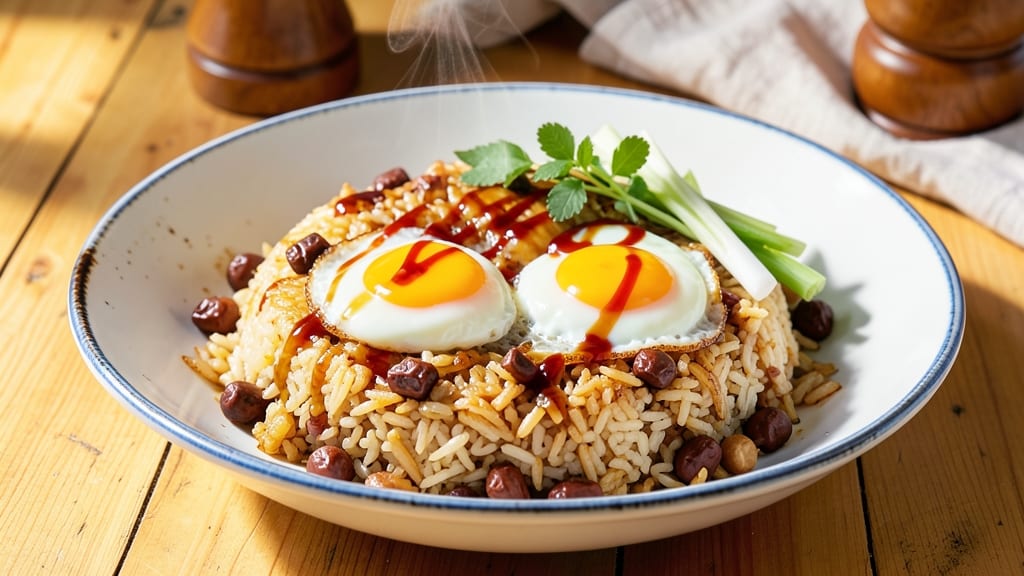
This Shan Chinese egg fried rice delivers the perfect balance of smoky, savory, and slightly spicy flavors that define Yunnan cuisine. The secret lies in using day-old rice—its slightly dried texture absorbs flavors better while maintaining that signature chewy bite.
Shan-style cooking emphasizes bold seasonings like fermented soybeans, chili oil, and aromatic scallions, creating a dish that's both comforting and complex.
The technique is all in the wok-tossing: high heat, quick movements, and proper seasoning timing transform simple ingredients into a restaurant-quality meal. We'll start with scrambled eggs that stay tender, then incorporate rice, proteins (if using), and vegetables in layers to ensure even distribution of flavor.
The key is balancing saltiness from soy sauce with the heat of chili oil and the freshness of green onions.
What you'll end up with is a fragrant, umami-rich dish where every bite offers perfect texture contrast—chewy rice, silky eggs, and crisp vegetables all coated in a savory-sweet sauce.
The aroma alone will have everyone gathering around the table, and the flavors only deepen as it sits, making it ideal for meal prep or feeding a crowd.
While traditional versions use simple proteins like pork or shrimp, modern adaptations welcome chicken, tofu, or even leftover vegetables.
The beauty of this recipe is its flexibility—it's equally at home as a quick weeknight dinner or a special weekend meal when you want to showcase authentic Shan Chinese flavors without the complexity of a full multi-course feast.
Ingredients for shan chinese egg fried rice
Day-old rice, bold seasonings, and wok-tossed eggs create this Shan-style umami masterpiece.
| Ingredient | Amount | Notes |
|---|---|---|
| Day-Old Cooked Jasmine Rice 🍚 | 4 cups | Cold, broken into clusters |
| Large Eggs 🥚 | 6 whole | Fresh, room temperature |
| Scallions 🧅 | ½ cup | White and green parts, chopped |
| Shan Fermented Soybeans (Douchi) 🌱 | ¼ cup | Crumbled, salty and savory |
| Chili Oil 🌶️ | 2 tbsp | Homemade or store-bought |
| Light Soy Sauce 🥫 | 3 tbsp | Kikkoman preferred |
| Dark Soy Sauce 🥫 | 1 tbsp | For color depth |
| Sesame Oil 🫒 | 1 tbsp | Toasted, for aroma |
| Garlic Cloves 🧄 | 4 cloves | Minced, aromatic |
| Vegetable Oil 🫒 | ½ cup | High smoke point |
| Salt 🧂 | 1 tsp | Adjust to taste |
| White Pepper 🌶️ | ½ tsp | Freshly ground |
| Optional Protein 🍗 | 1 cup | Diced chicken, shrimp, or tofu |
The day-old jasmine rice is non-negotiable—freshly cooked rice releases too much starch and turns mushy. Look for long-grain jasmine with a slightly chewy texture when cold. Douchi (fermented soybeans) is the secret weapon here—find it in Asian markets or well-stocked grocery stores like H Mart or 99 Ranch. If unavailable, miso paste adds depth, though it won’t replicate the funky umami perfectly. The chili oil should be homemade or from a trusted brand—avoid the watery supermarket versions. For the eggs, room temperature ensures even cooking without breaking.
No douchi? Double the soy sauce and add 1 tsp fish sauce for umami, though it won’t match the complexity. Scallions can be swapped for green onions, but the white parts add crucial texture. Chicken or shrimp work best as protein—tofu absorbs flavors well but needs a quick sear first. Sesame oil is for aroma only; add it at the very end. The soy sauces should be light and dark varieties—Kikkoman for light, any Asian market brand for dark. Vegetable oil with a high smoke point (like avocado or peanut oil) prevents burning during the wok toss.
Rice keeps 3 days in the fridge, but day-old is ideal—reheat gently to revive texture. Douchi lasts 6 months in the fridge once opened; chili oil keeps 3 months in a sealed jar. Prep proteins and veggies ahead—chop scallions, dice chicken, and crumble douchi to save time during cooking. Leftovers reheat beautifully—add a splash of water to prevent drying. Double the batch for meal prep; flavors deepen as it sits, making it perfect for lunches.
Why You'll Love This Recipe
- One-Pan Magic: I swear by this—no chopping boards, no extra pots. Just toss in the cold rice, scramble those eggs right into the wok, and let the douchi work its savory magic while you stir. That chili oil? Drizzle it last for instant heat without extra cleanup.
- Umami Bomb: Between us, douchi is the secret weapon here. It’s funky, salty, and chewy—like a tiny fermented treasure in every bite. The eggs add richness, scallions bring freshness, and suddenly, your rice isn’t just rice; it’s a flavor explosion. (Yes, even on a Tuesday night.)
- Lunchbox Hero: This dish is my go-to for meal prep because it travels like a dream. Pack it in containers, and the rice stays separate until you mix it—no soggy bits. My kids grab it for school lunches, and honestly? They fight over who gets the extra douchi pieces.
- Budget Crunch: I make this when I’m broke or lazy—or both. Day-old rice? Free. Eggs? Cheap. Douchi lasts forever in the pantry. A single batch feeds four for under $5, and the leftovers? Just as good reheated the next day. (Between us, I’ve eaten it cold straight from the fridge. No judgment.)
Step-by-step instructions for Shan Chinese egg fried rice
Master this wok technique for restaurant-quality fried rice with deep umami layers and perfect texture.
Prepare the Day-Old Rice and Protein
Break the 4 cups day-old cooked jasmine rice into rough clusters using your fingers—this prevents mushiness. Spread it on a baking sheet and let it dry slightly at room temperature for 10 minutes. The starchy surface needs to be slightly dry to achieve that signature wok-hei texture.
If using the 1 cup optional protein, dice it into ½-inch pieces and set aside. For chicken or shrimp, pat dry thoroughly with paper towels—excess moisture will steam the protein instead of searing it. Tofu should be pressed to remove all surface water before cooking.
Create the Umami Base
Heat ½ cup vegetable oil in a 14-inch wok or large skillet over high heat until shimmering. Add the 4 cloves minced garlic and ½ cup chopped scallions, stirring constantly for 20-30 seconds until fragrant but not browned. Immediately add the ½ cup crumbled Shan fermented soybeans (Douchi) and toast for 1 minute—this releases their nutty, fermented depth.
Push the aromatics to one side of the wok and add the prepared protein. Sear for 2-3 minutes until fully cooked through, then remove and set aside. The residual heat will finish cooking the protein later in the process.
Scramble the Eggs Perfectly
In a separate bowl, beat the 6 whole large eggs with 1 tsp salt and ½ tsp white pepper until frothy. Return the wok to medium-high heat and add 1 tbsp sesame oil, swirling to coat. Pour in the egg mixture and let it sit undisturbed for 5-7 seconds before gently pushing it from one side to the other with a spatula, creating soft, silky curds.
Remove the eggs from the wok and set aside. The eggs should be just set—still slightly runny in the center. This ensures they'll melt beautifully when combined with the rice later, creating that signature "wet" fried rice texture.
Wok-Toss the Rice with Sauce Layers
Return the wok to high heat and add ½ cup vegetable oil. Toss in the prepared rice, breaking up any large clumps as it sizzles. After 1 minute, add 3 tbsp light soy sauce, 1 tbsp dark soy sauce, and 2 tbsp chili oil, stirring vigorously to coat every grain. The dark soy sauce will give the rice its signature mahogany color.
Cook for 2-3 minutes until the rice is heated through and the edges begin to crisp slightly. The rice should be hot but not dry—if it sticks, add 1-2 tbsp hot water to steam and loosen. This is where the magic happens: the combination of high heat and proper sauce ratio creates that perfect balance of crispy edges and tender centers.
Combine and Finish
Return the protein and eggs to the wok, tossing everything together for 1-2 minutes until fully heated through. The residual heat from the wok will gently cook the eggs into the rice, creating that signature "egg fried rice" texture. Taste and adjust seasoning with additional soy sauce or salt if needed.
Serve immediately while the rice is still sizzling hot. The dish should have deep umami layers from the Douchi, sweet-savory balance from the soy sauces, and textural contrast between crispy rice edges, silky eggs, and tender protein. Each bite should deliver wok-hei—that smoky, charred aroma that defines Shan Chinese fried rice.
Pro Tips For Making Shan Chinese Egg Fried Rice
- CRACK THE EGGS FIRST: I used to scramble eggs in the pan and then mix them with cold rice—big mistake. Beat eggs in a bowl, then pour them directly into the dry, hot wok with a splash of oil. The eggs will sizzle and set instantly, so they stay soft and creamy instead of rubbery. (Yes, even if you're impatient like me.)
- SOAK DOUCHI 10 MINUTES: Shan fermented soybeans need a quick rinse before chopping, but don’t skip the soak. Toss them in warm water for 10 minutes—this cuts the bitterness and makes them easier to chop. Pro move: Use a mortar and pestle for the last few seconds to release their funky aroma. (Your future self will notice the difference.)
- STIR-FRY RICE IN BATCHES: I learned this the hard way—dumping all the rice in at once steams it instead of frying. Work in 1-cup portions, spreading them evenly in the wok. Let the first batch turn golden and slightly crispy before adding the next. (This isn’t the prettiest method, but it’s the tastiest.)
- DRIZZLE CHILI OIL LAST: Add chili oil at the very end, right after turning off the heat. It’s not just for heat—it coats every grain and egg, tying the dish together. If you add it too early, the oil will burn and turn bitter. (Sounds weird, but it works: trust the process.)
Wine and beer pairings for these flavors
Light Beer Pairings
For this umami-rich dish, a crisp Chinese lager like Snow Beer or Tsingtao is ideal—their clean, slightly malty profiles complement the fermented soybeans without overpowering the delicate flavors. The subtle bitterness helps cut through the richness of the chili oil and eggs, creating a refreshing contrast.
I always grab a cold Tsingtao when making this recipe, especially during hot summer months. 🍺
Dry Riesling Harmony
A dry Riesling from Germany or Australia brings bright acidity that mirrors the dish's balance of spicy and savory notes. Look for a Mosel Riesling with its zesty citrus and mineral undertones—these flavors echo the chili oil's heat while the wine's acidity cleanses your palate between bites.
I love pairing it with the shan fermented soybeans (Douchi) because the wine's crispness highlights their funky depth. 🍷
Sake for Tradition
For an authentic Shan Chinese dining experience, serve dry sake at room temperature. A junmai daiginjo with its clean, slightly floral notes enhances the dish's umami without competing. The subtle sweetness in premium sake also complements the soy sauces beautifully.
I keep a bottle of Dassai on hand specifically for this recipe—it's become my go-to for any Chinese fried rice dish. 🍶
Spiced Wine Option
Infuse white wine with star anise and cinnamon for a warming pairing that enhances the dish's aromatic profile. Simmer 1 cup dry white wine with 1 star anise pod and ½ cinnamon stick for 5 minutes, then strain.
This spiced wine adds a subtle complexity that mirrors the Shan spices while keeping the palate refreshed. It's perfect for those who want a more adventurous pairing. 🌶️
Non-Alcoholic Match
For a refreshing non-alcoholic option, try yuzu soda—its citrusy brightness cuts through the richness while complementing the chili oil's heat. I make my own by mixing sparkling water with 1 tbsp yuzu juice and a pinch of salt.
Alternatively, jasmine tea served warm provides a soothing contrast to the dish's bold flavors. Both options keep the meal light and refreshing. 🍵
Beer Brewing Tip
If you're feeling adventurous, try brewing a Chinese-style wheat beer at home using 50% wheat malt and 30% rice malt. Add 1 oz Chinese five-spice powder** during fermentation for a subtle aromatic complexity.
This homemade beer pairs perfectly with the dish's spicy-savory profile and adds a personal touch to your meal. 🍺✨
Nutrition facts
Frequently asked questions
Why does the recipe specify day-old rice?
Day-old rice has less moisture and more chewy texture, which absorbs flavors better during stir-frying. Freshly cooked rice releases too much starch and turns mushy when tossed in the wok. The slight dryness creates those signature crispy edges while keeping the center tender. For best results, refrigerate cooked rice uncovered for 30 minutes first to dry the surface.
Can I substitute Shan fermented soybeans (Douchi) if I can't find them?
Yes! For umami depth, double the soy sauce and add 1 tsp fish sauce or 1 tbsp miso paste. For texture, try ½ cup crumbled tempeh or ¼ cup finely chopped mushrooms. While not identical, these alternatives prevent flavor gaps. The key is balancing saltiness—taste as you go and adjust with extra soy sauce or a pinch of MSG.
How do I prevent my fried rice from turning out dry?
Use high heat and just enough oil to coat the wok. If the rice sticks, add 1-2 tbsp hot water to steam and loosen. The secret is timing—cook the rice for only 2-3 minutes after adding sauce. Overcooking dries it out. For extra moisture, add 1 tbsp chicken broth or ½ cup finely chopped veggies like peas or carrots.
What's the best way to reheat leftover Shan egg fried rice?
Reheat in a wok or skillet over medium-high heat with 1 tbsp oil and 1 tbsp water. Toss for 2-3 minutes until hot through. For microwave reheating, cover with a damp paper towel and heat in 30-second intervals, stirring between each. The steam revives texture. Add a splash of soy sauce or chili oil to refresh flavors.
Can I make this recipe vegetarian?
Skip the protein or use ½ cup firm tofu (pressed and cubed) or ½ cup mushrooms. Boost umami with 1 tbsp vegetarian oyster sauce or 1 tsp dried shiitake powder. For extra texture, add ¼ cup roasted peanuts or ½ cup corn. The dish remains rich and satisfying without meat. Just ensure your soy sauce is vegetarian-friendly.