
Breakfast & Brunch
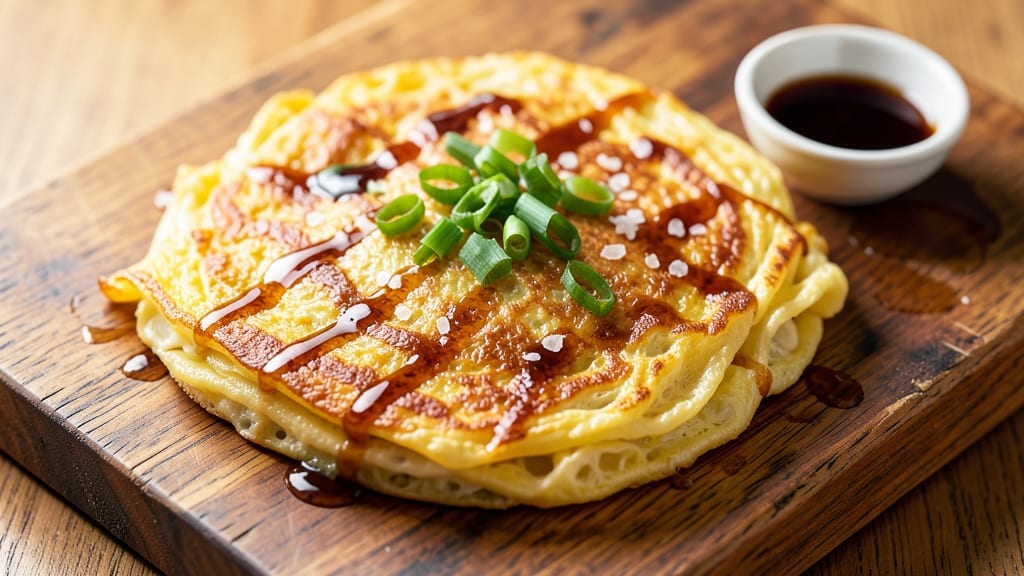
Taiwanese egg pancakes deliver the perfect balance of crispy edges and silky yolk centers, creating fluffy layers that make every bite irresistible. 💛 This recipe captures the essence of street food stalls in Taipei, where golden, slightly puffed pancakes are a breakfast staple.
The secret lies in the right batter consistency and gentle heat control—no flipping or fluffing required. What sets these apart is the technique: pouring thin layers of egg batter into a hot pan, letting them set just enough before adding another.
This creates those signature fluffy layers while keeping the edges beautifully crisp. Scallions and a touch of salt are traditional, but modern variations include cheese or ham for extra flavor. By the time you finish, you'll have a stack of golden pancakes with crispy edges and tender, custardy centers.
The aroma alone will have everyone gathering around the table. Serve warm with a sprinkle of flaky salt or a drizzle of soy sauce for the full experience. This method is foolproof for beginners but impressive enough for seasoned cooks. Here's how to make them perfectly every time.
Ingredients for taiwanese egg pancake
Nine simple ingredients transform into golden, fluffy Taiwanese egg pancakes with crispy edges and silky centers.
| Ingredient | Amount | Notes |
|---|---|---|
| Large Eggs 🥚 | 6 whole | Room temperature preferred |
| All-Purpose Flour 🌾 | ½ cup | Lightly sifted for smooth batter |
| Scallions 🧅 | 3 whole | Thinly sliced, green parts only |
| Flaky Sea Salt 🧂 | ½ tsp | For finishing, like Maldon |
| Vegetable Oil 🫒 | ½ cup | High smoke point, like canola |
| Soy Sauce 🥢 | 1 tbsp | Light or dark variety |
| Sesame Oil 🫒 | ½ tsp | Toasted, for aroma |
| White Pepper 🌶️ | ¼ tsp | Freshly ground preferred |
| Butter 🧈 | 2 tbsp | Unsalted, for finishing |
The eggs are the heart of this recipe—use large, room-temperature eggs for the best texture. Kirkland Signature or Organic Valley are reliable brands, but any fresh eggs will work. The flour should be all-purpose, lightly sifted—this prevents lumps in the delicate batter. Scallions add freshness, so grab the green parts only (the white bulbs are too tough). For the oil, canola or vegetable oil works best due to its high smoke point—avoid olive oil, which burns easily at these temperatures. The soy sauce should be light or dark, but not the reduced kind—you want that fresh umami punch.
No scallions? Green onions or chives work in a pinch, but they have a milder flavor. Running short on sesame oil? Toasted sesame seeds sprinkled on top give a similar aroma. The butter is optional but adds richness—use unsalted so you control the saltiness. For a vegetarian twist, skip the butter entirely and add an extra drizzle of soy sauce. The pancakes rely on gentle layering, so don’t substitute thick batters or fluffy pancake mixes—they won’t achieve that signature texture. If you’re feeling adventurous, add a pinch of white miso paste to the batter for depth.
These pancakes shine when made fresh, but they reheat beautifully—just warm in a dry skillet over medium-low heat for 2-3 minutes. Store leftovers in an airtight container for up to 3 days in the fridge, or freeze for 1 month. To reheat from frozen, thaw overnight in the fridge before warming. The secret to serving them right? A light sprinkle of flaky salt and a drizzle of soy sauce right before eating—this enhances the crispy edges and balances the richness of the yolks.
Why You'll Love This Recipe
- No-Fuss Ingredients: I swear by this recipe because it’s the kind of meal that doesn’t judge you for having exactly five ingredients. Eggs, flour, scallions, salt, and oil—that’s it. No fancy pantry raids, no last-minute grocery runs. Honestly, if you can scramble an egg, you can make these.
- Crispy-Creamy Magic: That first golden-brown bite? It’s the star. The outside gets gloriously crispy in the pan while the inside stays pillowy—like a hug from your favorite Taiwanese street vendor. The scallions add a bright, fresh kick that cuts through the richness, and a sprinkle of flaky sea salt? Instant flavor upgrade.
- Breakfast or Snack: I make these for lazy mornings, but they’re also my go-to for after-school snacks when the kids come home hungry. Serve them warm with a side of chili oil or soy sauce for dipping, and suddenly you’ve got a meal that works at any hour—no rules, no stress.
- Leftovers That Don’t Suck: Unlike so many pancakes, these actually reheat like a dream. Toss them in a toaster or warm them in a dry pan for 30 seconds, and they’re just as good as fresh. Between us, I’ve eaten cold ones straight from the fridge—no shame. They’re cheap to make, too, so you can feed a crowd without breaking the bank.
Step-by-step instructions for Taiwanese egg pancakes
Master the technique for golden-brown edges and a tender, custardy center.
🍳 Step 1: Whisk Eggs and Scallions for Smooth Batter
In a large bowl, combine the 6 whole Large Eggs and the 1 tablespoon Soy Sauce. Whisk vigorously for 30 seconds until the yolks and whites blend completely. Add the 0.5 cup All-Purpose Flour, 0.5 teaspoon Sesame Oil, and 0.25 teaspoon White Pepper, whisking until just combined—no lumps should remain. This ensures a light, airy texture.
Fold in the 3 whole Scallions, sliced thinly, using a spatula. The batter should be smooth and slightly translucent, like a thin pancake mixture. Let it rest for 5 minutes at room temperature—this allows the flour to fully hydrate and prevents dense pancakes.
🔥 Step 2: Heat Oil and Test for Perfect Temperature
Pour the 0.5 cup Vegetable Oil into a 10-inch nonstick skillet and heat over medium-low heat until a wooden chopstick inserted into the oil bubbles gently around the edges (15-20 seconds). This is your signal—oil that’s too hot burns the pancakes; too cool makes them greasy. The oil should shimmer but not smoke.
Here’s the thing—Taiwanese egg pancakes rely on gentle heat to create those signature layers. If the oil smokes, reduce the heat immediately. You’ll know it’s ready when a single drop of batter sizzles and spreads evenly across the pan.
👨🍳 Step 3: Cook the First Layer Low and Slow
Pour about ⅓ of the batter into the skillet, tilting to spread it into a ¼-inch thick circle. Cook for 2-3 minutes without stirring—this first layer must set completely before adding more. You’ll see the edges curl slightly at the bottom; this is normal and creates the signature crispy texture.
When the edges lift easily from the pan and the bottom is light golden brown, it’s time for the second layer. Pour another ⅓ of the batter over the first layer, letting it spread naturally. The pancake should look like a thin, even disk with no gaps. Cook for another 2 minutes before adding the final layer.
🥘 Step 4: Build Layers and Flip for Even Cooking
Add the final ⅓ of batter, spreading it evenly. Cook for 1-2 minutes until the top layer is set but still slightly translucent in the center. Press down gently on the pancake with a spatula—if it springs back, it’s not ready. When it holds its shape, it’s time to flip.
Slide a spatula under the pancake and flip it onto a plate. Return it to the skillet, crispy-side down, and cook for another 30 seconds to crisp the other side. The pancake should be golden brown on both sides with a slightly puffed center—this is your target texture.
🔪 Step 5: Finish with Butter and Flaky Salt
Transfer the pancake to a plate and immediately melt the 2 tablespoons Butter in the skillet over low heat. Tilt the skillet to coat the butter evenly, then pour it over the pancake, letting it seep into the layers. Sprinkle with 0.5 teaspoon Flaky Sea Salt while the butter is still warm—this enhances the crispy edges and balances the richness.
Cut into 4 equal wedges and serve immediately. The pancake should have crispy, golden edges, a tender, custardy center, and a savory-salty finish from the soy sauce and sesame oil. Each bite should deliver a contrast of textures—crunchy, chewy, and silky all at once.
Pro Tips For Making Taiwanese Egg Pancake
- Preheat the Pan Longer: Give that nonstick skillet a solid 3-4 minutes on medium-high before adding oil—this ensures the pancake releases cleanly and gets that signature crispy bottom. I used to rush this, and the pancakes would stick no matter how much oil I added.
- Chop Scallions Fine: Dice those green onions into tiny, almost confetti-sized pieces—they’ll cook fast and distribute evenly, giving every bite that bright, fresh kick. My first batch had thick slices that turned mushy in the center.
- Let the Batter Rest: Mix the eggs and flour, then wait 10 minutes before cooking. This lets the gluten relax slightly, making the pancake tender instead of tough. I skipped this once and ended up with a chewy, dense mess.
- Use Cold Eggs: Pull the eggs straight from the fridge—cold eggs whip up fluffier and cook more evenly, preventing a gummy center. Warm eggs? They’ll spread too fast and turn rubbery. Trust me, this matters more than you’d think.
Pro cooking tips for this dish
Oil Temperature Secrets
The key to perfect Taiwanese egg pancakes lies in medium-low heat and oil temperature control. Heat your 10-inch nonstick skillet until a wooden chopstick sizzles gently when dropped in—this should take about 15-20 seconds.
Too hot? The pancakes burn before setting properly. Too cool? They turn greasy instead of crispy. I use canola oil because its high smoke point prevents burning while creating that signature golden crust. 🌡️
Layering Like a Pro
Pour ⅓ of the batter at a time, letting each layer cook 2-3 minutes before adding the next. The first layer must set completely—edges should curl slightly at the bottom, creating the crispy texture. I find using a thin silicone spatula helps spread the batter evenly without tearing.
Press down gently on the pancake before flipping—if it springs back, it’s not ready. The goal is three distinct layers, not one thick pancake.
Flipping Without Fail
Flip only when the pancake holds its shape and the edges lift easily. I use a spatula with a thin, flexible edge to slide under the pancake—this prevents tearing. After the first flip, cook for 30 seconds on the second side to crisp evenly.
The secret? Patience—rushing causes uneven cooking and broken layers. A well-made pancake should have golden-brown edges with a slightly puffed center that’s still tender. 💡
Butter and Salt Finish
Melt 2 tablespoons unsalted butter in the skillet after removing the pancake, then pour it over the hot pancake. This adds richness and helps distribute heat evenly.
Finish with ½ teaspoon flaky sea salt (like Maldon) while the butter is still warm—this enhances the crispy edges and balances the savory flavors. The salt should melt slightly into the layers, not just sit on top.
Heat Control Adjustments
If your kitchen runs hot, reduce heat to low—Taiwanese egg pancakes cook best with gentle, even heat. I often test the oil by flicking a drop of batter into the pan: if it sizzles and spreads evenly, it’s ready.
Too much heat? The pancakes brown too quickly on the outside while staying raw inside. Too little? They turn out greasy and dense. Adjust your stove to medium-low and monitor closely. ⚡
Equipment Upgrades
A 10-inch nonstick skillet is ideal, but any skillet with a flat bottom works. For better heat distribution, I recommend All-Clad stainless steel or Lodge cast iron—both retain heat well. Avoid nonstick pans with damaged coatings, as they can release harmful fumes at high heat.
If your pan lacks nonstick properties, lightly grease it with vegetable oil before cooking. The right pan makes all the difference in achieving those crispy edges. 🔥
Nutrition facts
Frequently asked questions
Why do Taiwanese egg pancakes have layers?
The layering technique creates the signature texture—each thin layer cooks just enough to set before adding the next, resulting in crispy edges with a tender, custardy center. This method mimics traditional street food stalls where heat control is key for that perfect balance between fluffy and crispy.
Can I make these pancakes without scallions?
While scallions add freshness, you can substitute with green onions, chives, or even finely chopped cilantro for a different flavor profile. Just adjust the amount to taste—about 1 tablespoon of chopped substitute should work. The pancakes will still be delicious without them!
What if my pancakes turn out greasy instead of crispy? Greasy pancakes usually mean the oil wasn't hot enough or the heat was too low. Next time, increase heat to medium-low and test the oil by flicking a drop of batter—it should sizzle and spread evenly. Also,
How do I store leftovers?
Store pancakes in an airtight container in the fridge for up to 3 days or freeze for 1 month. To reheat, warm in a dry skillet over medium-low heat for 2-3 minutes per side. For frozen pancakes, thaw overnight in the fridge before reheating to preserve texture.
Can I add cheese or ham to these pancakes?
Yes! For a modern twist, fold ¼ cup shredded mozzarella or cheddar into the batter before cooking, or add thinly sliced ham between layers. Just be careful not to overfill—too much filling can prevent proper layering. The cheese will melt beautifully into the warm pancakes for extra richness.