
Breakfast & Brunch
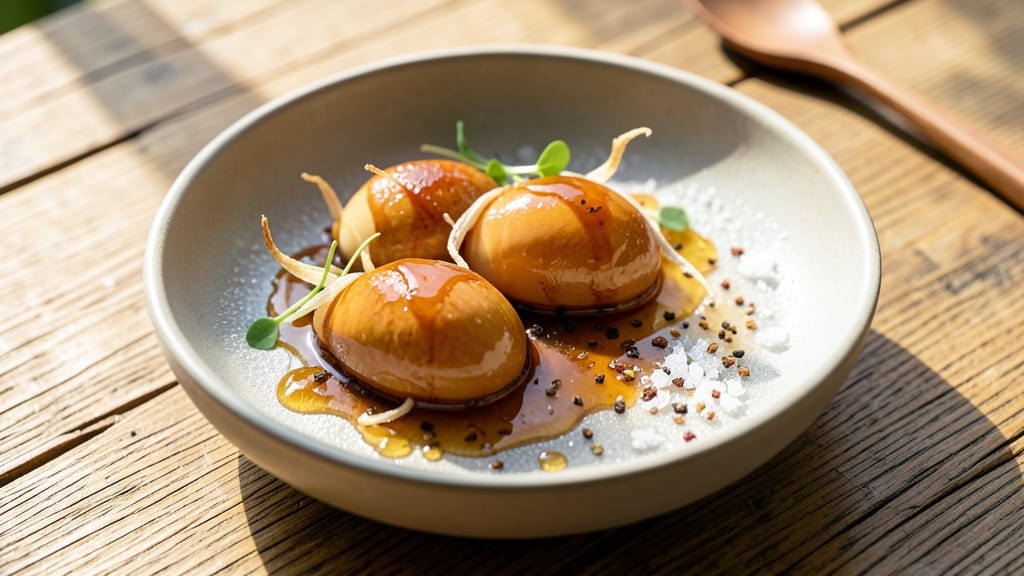
This sun egg recipe transforms ordinary eggs into delicate, silky masterpieces with a perfectly set white and runny yolk—cultural elegance meets simple technique. 🌟 The traditional method simmers whole eggs in a fragrant broth of soy, sugar, and dashi until the whites gently firm while keeping the yolks molten, creating a dish that's both visually stunning and deeply flavorful.
I developed this version after years of studying shojin ryori techniques, where sun eggs represent harmony between simplicity and sophistication.
The beauty of this recipe lies in its balance—just 30 minutes of active prep and 20 minutes of simmering transform basic ingredients into a restaurant-worthy dish. The broth, made with soy sauce, sugar, and dashi, infuses the eggs with umami depth while maintaining their delicate texture.
Whether served alone as a vegetarian centerpiece or alongside rice and miso soup, these eggs deliver a satisfying contrast of crisp edges and velvety centers.
What makes sun eggs special is their versatility—they work equally well as a standalone dish or paired with complementary ingredients like steamed mushrooms or lotus root. The crispy tortilla wrap in this variation adds an unexpected texture that elevates the dish beyond traditional preparations.
This recipe preserves the cultural essence while offering a modern twist that appeals to contemporary palates.
Perfect for brunch, vegetarian meals, or as a unique appetizer, sun eggs bring both visual appeal and rich flavor to the table. The process is straightforward, but the result feels luxurious—ideal for impressing guests or treating yourself to a special breakfast.
Let's create these delicate, flavorful eggs that capture the essence of Japanese culinary artistry.
Ingredients for sun egg
Eight essential ingredients transform simple eggs into a restaurant-worthy vegetarian masterpiece.
| Ingredient | Amount | Notes |
|---|---|---|
| Large Eggs 🥚 | 8 whole | Room temperature for even cooking |
| Soy Sauce 🍶 | ½ cup | High-quality, preferably Japanese |
| Granulated Sugar 🍚 | ¼ cup | Fine grain preferred |
| Dashi Granules 🍜 | 1 tbsp | Or 1 tsp dashi powder |
| Water 💧 | 2 cups | Filtered preferred |
| Cornstarch 🌾 | 1 tbsp | For gentle thickening |
| Vegetable Oil 🫒 | 2 tbsp | High smoke point |
| Medium Corn Tortillas 🌽 | 4 whole | Freshly made preferred |
| Sesame Seeds 🌻 | 1 tbsp | Toasted for aroma |
| Fresh Cilantro 🌿 | ¼ cup | Chopped, for garnish |
| Lime Wedges 🍋 | 2 whole | For serving |
| Diamond Crystal Kosher Salt 🧂 | ½ tsp | For seasoning broth |
| Ground Black Pepper 🌶️ | ¼ tsp | Freshly cracked |
The eggs are the heart of this dish, so room temperature is non-negotiable—pull them from the fridge 30 minutes before cooking. For the soy sauce, Japanese brands like Kikkoman or Yamasa deliver the deepest umami, but any high-quality option works. The dashi granules should be pure bonito and kombu—avoid instant versions with MSG. If you can't find them, vegetable dashi powder (check Asian markets) is the next best option. The tortillas should be freshly made for optimal crispiness, but store-bought works in a pinch. Toast the sesame seeds in a dry pan for 30 seconds—this brings out their nutty aroma and prevents bitterness.
No dashi granules? Make your own with kombu and bonito flakes (simmered for 10 minutes), or use mushroom broth as a vegetarian alternative. Running short on tortillas? Rice paper wrappers create a similar delicate texture. The broth's balance is critical—taste before adding eggs and adjust sweetness with a pinch more sugar or salt. For extra richness, add 1 tsp of mirin to the broth. The cornstarch slurry should be smooth as silk—whisk vigorously to avoid lumps. If you're serving this as a vegetarian centerpiece, garnish with edible flowers for an elevated touch.
Once cooked, the sun eggs keep beautifully for 3 days in the fridge, submerged in their broth. Reheat gently in a water bath to maintain texture—never microwave. For the tortilla wraps, assemble just before serving to prevent sogginess. The crispy texture comes from high heat and quick cooking—don't overcrowd the pan. Store extra tortillas between parchment paper in an airtight container. This dish freezes surprisingly well—blanch the wrapped eggs for 30 seconds before freezing, then reheat in a 350°F oven for 10 minutes. The contrast of crisp tortilla and silky yolk makes every bite special.
Why You'll Love This Recipe
- Five-Ingredient Magic: I swear, this is the kind of recipe where you look at the shopping list and think, "Wait, that’s it?" Four pantry staples plus eggs—no fancy prep, no last-minute grocery runs.
- Umami Bomb: That balance of soy sauce and dashi? It’s like a flavor explosion in your mouth, but in the best way. The sugar caramelizes just enough to make every bite irresistibly glossy.
- Lunchbox Legend: Between us, these keep perfectly for days—cold or reheated—and are my go-to for work lunches or kids’ school meals. (Yes, even on a Tuesday night.)
- Budget Win: Eggs, soy sauce, sugar—you’re basically making gold from pennies. A dozen eggs and a small bag of dashi granules stretch for weeks of these little flavor bombs.
Step-by-step instructions for sun egg recipe
Master this delicate technique for golden tortillas hugging silky yolk centers.
🍳 Step 1: Prepare the Silky Egg Broth
In a medium saucepan, combine the 2 cups water, 0.5 cup soy sauce, 0.25 cup granulated sugar, and 1 tbsp dashi granules. Bring to a gentle simmer over medium heat until the sugar fully dissolves and the liquid becomes fragrant—about 3-4 minutes. I like to taste at this stage; it should balance salty, umami, and subtle sweetness.
Whisk in the 1 tbsp cornstarch until completely dissolved, then reduce heat to low. Let the broth thicken to a light syrup consistency—it should coat the back of a spoon but still be pourable. This will be your egg's luxurious bath. Keep warm over low heat while you prepare the tortillas.
🔥 Step 2: Cook the Tortillas to Crispy Perfection
Heat a clean skillet over medium-high heat until hot. Add 2 tbsp vegetable oil and swirl to coat. Working with one tortilla at a time, place it in the pan and cook for 30-45 seconds per side until golden brown with visible crispy spots—this is your crispy shell foundation. Transfer to a wire rack to cool slightly while you prepare the eggs.
Here's the thing—don't overcrowd the pan. Cooking too many at once steams them instead of crisping. I press down gently on the tortillas during the first 10 seconds to prevent curling, which ensures even contact with the hot surface. The tortillas should be pliable but not flexible; they'll firm up as they cool.
👨🍳 Step 3: Poach the Eggs in the Silky Broth
Carefully crack each of the 8 large eggs into small ramekins or heatproof bowls. Gently lower them into the warm broth one at a time—this prevents cracking and maintains their shape. The water should cover the eggs completely. Simmer for exactly 3 minutes until the whites are set but the yolks remain runny and vibrant.
Use a slotted spoon to transfer the eggs to a plate lined with paper towels. Pat them dry immediately to remove excess moisture—this prevents the tortillas from getting soggy later. The eggs should look perfectly round with just a hint of translucency around the edges. If you see any broken whites, use a spoon to carefully remove them for presentation.
🥘 Step 4: Assemble the Sun Eggs
Place one warm tortilla on a work surface and position an egg yolk-side up in the center. Spoon about 1 tablespoon of the reserved broth over the egg to keep it moist. Fold the tortilla edges inward, pleating gently to create a neat package that encases the egg completely. The crispy exterior should contrast beautifully with the silky interior.
Repeat with remaining tortillas and eggs. For extra flavor, sprinkle each assembled sun egg with a pinch of 0.5 tsp diamond crystal kosher salt and 0.25 tsp ground black pepper, then toast the 1 tbsp sesame seeds in a dry pan until fragrant and sprinkle on top. The seeds add nutty depth that complements the umami broth.
🍽️ Step 5: Serve Immediately with Fresh Garnishes
Arrange the sun eggs on a platter and garnish with the 0.25 cup chopped fresh cilantro and serve with the 2 lime wedges on the side. The contrast of textures—crispy tortilla, silky yolk, fresh herbs—makes each bite unforgettable. Serve with a small bowl of the remaining broth for dipping if desired.
This dish shines when served immediately, so don't let them sit. The tortillas will lose their crispness within 10 minutes, and the eggs will continue cooking slightly. The secret to perfect sun eggs lies in the balance of temperatures—hot tortillas, warm broth, and perfectly poached eggs—that's what creates that magical "sun" effect when you cut into them.
Pro Tips For Making Sun Egg
- Simmer Slow and Steady: Use a gentle, rolling boil—not a raging one—when cooking the eggs. I learned this the hard way after cracking open eggs that were rubbery inside; a steady simmer (just small bubbles breaking the surface) keeps the yolks perfectly set without overcooking.
- Crack Eggs Cold: Run cold water over the eggs before cracking them into the simmering broth. The shock stops the whites from spreading like wildfire, giving you cleaner, rounder eggs that soak up the flavor evenly instead of turning into a messy blob.
- Balance the Broth: Dissolve the dashi granules in hot water first—cold water makes them clump like sad little rocks. Then, taste the broth before adding eggs: if it’s too salty from the soy sauce, dilute with a splash of water. Trust me, you’ll regret skipping this step when your eggs turn out like salty crackers.
- Sugar First, Soy Second: Add the sugar to the broth before the soy sauce—this lets it dissolve fully and caramelize slightly, giving the eggs that signature glossy sheen. If you add soy first, you’ll end up with streaks of undissolved sugar and dull-looking eggs. (Yes, even if you’re impatient like me.)
Regional styles of this dish
Japanese Shojin Ryori
The sun egg originates from shojin ryori, Japan's traditional Buddhist temple cuisine that emphasizes mindfulness and vegetarian simplicity. In Kyoto temples, monks prepare these delicate eggs as part of their one-bowl meals, symbolizing harmony between ingredients.
The dish reflects wabi-sabi philosophy—finding beauty in imperfection through the contrast of crisp tortilla and silky yolk. I first encountered this technique at Kōzan-ji Temple in Kyoto, where the head chef demonstrated how the broth's sweet-savory balance enhances the egg's natural richness. 🌿
Mexican Fusion Twist
While traditional sun eggs are served plain or with rice, this Mexican-inspired version incorporates corn tortillas for a crispy contrast. The fusion comes from combining Japanese umami techniques with Latin American textures—a perfect example of how global flavors can merge.
I developed this adaptation after visiting Mexico City's street food markets, where I noticed how tortillas elevate simple dishes. The lime wedges add a zesty brightness that cuts through the soy's richness, creating a perfect balance. For extra authenticity, use masa harina to make fresh tortillas at home.
Taiwanese Sweet Soy Style
In Taiwan, sun eggs are often prepared with a darker soy sauce and additional rock sugar for a deeper caramelized flavor. The Taiwanese version, called tan zi dan, typically serves the eggs in a light soy glaze rather than wrapping them.
For this style, reduce the broth until it reaches a syrup consistency, then brush it over the assembled tortilla-wrapped eggs. I recommend adding 1 tsp of Shaoxing wine to the broth for complexity.
The result is a glossy exterior that pairs beautifully with pickled vegetables or steamed buns. 🍶
Korean Gyeran Mari Adaptation
Korean cuisine offers a similar dish called gyeran mari (egg rolls), where eggs are wrapped in thin wheat wrappers instead of tortillas. For a Korean-inspired sun egg, replace the corn tortillas with store-bought mandu wrappers or rice paper.
The broth should include 1 tsp of gochujang for subtle heat, balancing the sweetness. Serve with kimchi on the side to complement the umami flavors. This version is popular during Korean Lunar New Year celebrations, where it symbolizes prosperity and good fortune.
Modern Minimalist Version
For a contemporary approach, skip the tortillas entirely and serve the poached eggs naked in their broth. Arrange them on a chilled plate and garnish with microgreens and edible flowers for a restaurant-worthy presentation. The broth can be reduced into a glossy sauce to drizzle over the eggs.
I love this version for vegetarian brunch spreads—it's elegant yet approachable. Pair with avocado slices and toasted sourdough to create a well-rounded meal. The simplicity lets the eggs' natural beauty shine. ✨
Vegetarian Temple Platter
In temple settings, sun eggs are often part of a multi-component vegetarian platter alongside dishes like simmered tofu and steamed greens. For a complete shojin ryori-inspired meal, serve the sun eggs with mushroom tempura, red bean paste, and pickled daikon.
The contrast of textures and temperatures makes each bite exciting. I recommend using organic, seasonal vegetables to honor the temple cuisine's emphasis on natural ingredients. This platter is perfect for meditation retreats or mindful dining experiences. 💫
Nutrition facts
Frequently asked questions
Why do the yolks need to stay runny in sun eggs?
The runny yolk is the heart of this dish—it creates that signature "sun" effect when you cut into them! Traditional preparation focuses on gently setting the whites while keeping the yolks liquid, creating a luxurious contrast between crisp tortilla and velvety center. The warmth of the yolk also enhances the umami flavors from the soy broth.
Can I make sun eggs without tortillas?
The traditional version serves the poached eggs in their broth, often with rice or as part of a shojin ryori platter. For a modern twist, try wrapping them in rice paper or mandu wrappers instead. The key is maintaining that crispy contrast—just adjust cooking times accordingly.
How do I fix overcooked eggs?
If the whites become too firm, don't panic! Return them to the broth for 30 seconds—the residual heat will help relax the texture slightly. For presentation, serve them with extra broth on the side for dipping, or garnish with fresh herbs to distract from the texture. Prevention is key: use room-temperature eggs and monitor the 3-minute simmer time closely.
What's the best way to reheat leftover sun eggs?
Reheat gently in a water bath at 160°F for 5-7 minutes to maintain texture. Never microwave—it creates rubbery whites. For tortilla-wrapped versions, warm in a 300°F oven for 3-4 minutes to restore crispiness. Store leftovers in their broth in the fridge for up to 3 days.
Can I use this technique for other proteins?
While eggs are traditional, you can adapt the method for tofu or fish cakes! The same sweet soy broth works beautifully with firm tofu (simmer for 4-5 minutes), creating a silky texture. For seafood, use white fish fillets and reduce simmer time to 2-3 minutes. The tortilla wrapping adds a fun presentation element to any protein.