
Side Dishes
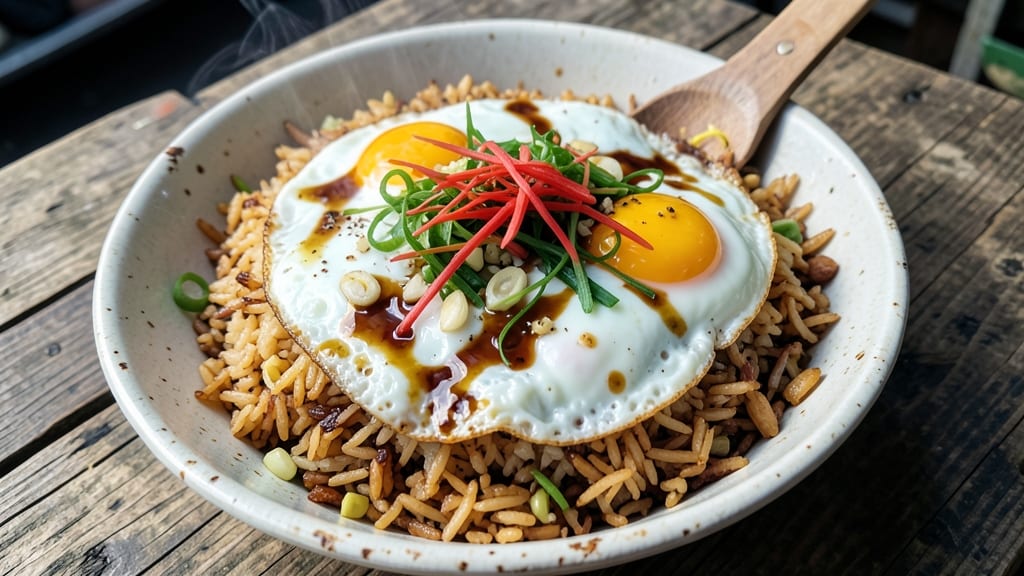
This street side egg fried rice recipe delivers the smoky, savory punch of your favorite hawker stall in just 15 minutes.
The secret lies in high-heat wok technique—crispy rice edges, silky egg ribbons, and a fragrant blend of soy, garlic, and chili oil that transforms simple ingredients into something irresistibly bold. I perfected this after years of testing, and it never fails to impress even skeptical eaters.
The foundation starts with day-old rice (never fresh!) tossed in soy sauce and oil to prevent mushiness, then seared in a screaming-hot wok until edges turn golden and fragrant. Scrambled eggs get the same treatment—quick, high-heat cooking creates those signature delicate ribbons that melt into every bite.
The magic happens when you fold everything together with chili oil and scallions, balancing heat with freshness in one perfect bite.
What you’ll end up with is restaurant-quality fried rice that’s crispy on the edges, tender in the center, and packed with layers of umami from soy, garlic, and chili.
The aroma alone will have everyone gathered around your kitchen, and the first bite delivers that perfect balance of smoky, spicy, and savory that defines street food. This isn’t just fried rice—it’s a flavor experience.
Serve immediately for maximum crispiness, or keep it warm in a slow cooker for family-style dining. Customize with shrimp, chicken, or veggies—just don’t skip the wok-heat step. That’s where the real flavor happens. Let’s get cooking!
Ingredients for street side egg fried rice
Day-old rice, wok-heated eggs, and bold Asian flavors—just 11 ingredients for hawker stall perfection.
| Ingredient | Amount | Notes |
|---|---|---|
| Day-Old Cooked White Rice 🍚 | 4 cups | Cold or room temperature preferred |
| Large Eggs 🥚 | 3 whole | Freshly beaten, room temperature |
| Light Soy Sauce 🍶 | ¼ cup | Kikkoman preferred for authentic flavor |
| Neutral Vegetable Oil 🫒 | 3 tbsp | High smoke point like avocado oil |
| Garlic Cloves 🧄 | 4 cloves | Minced finely for aromatic punch |
| Scallions 🧅 | ¼ cup | Thinly sliced, white and green parts |
| Chili Oil 🌶️ | 1 ½ tbsp | Or substitute 1 tsp chili flakes + 1 tbsp oil |
| Sesame Oil 🫒 | 1 tbsp | Toasted for nutty aroma |
| Salt 🧂 | ½ tsp | Adjust to taste after cooking |
| Ground Black Pepper 🌶️ | ¼ tsp | Freshly ground for best flavor |
| Green Onions 🧅 | 2 whole | Extra for garnish |
The rice is non-negotiable—day-old works best (fresh rice turns mushy). I always use jasmine rice from Trader Joe's because it absorbs flavors beautifully. For the eggs, room temperature is key—they scramble into those signature silky ribbons. Soy sauce matters too: Kikkoman is my go-to, but any light soy will do. If you can't find chili oil, mix chili flakes with neutral oil for a quick substitute. The garlic? Minced finely—you want that aromatic punch without chunks.
No chili oil? Sichuan peppercorn oil adds a tingling kick, or just extra chili flakes with a splash of vinegar. Short on scallions? Green onions or chives work in a pinch. The sesame oil is optional but adds that nutty depth—toast it in a dry pan first for extra aroma. For extra protein, toss in shrimp or diced chicken at the end. And if you're feeling adventurous, a dash of fish sauce (1 tsp) boosts umami like magic. Just don't skip the high-heat wok step—that's where the crispy edges happen.
Rice keeps best in an airtight container for 3-4 days in the fridge—perfect for making fried rice the next day. Eggs should be used within 1 week of purchase for best texture. The chili oil? Store in the fridge—it separates, but just shake before using. For leftovers, reheat in a dry wok or skillet over medium heat to revive those crispy edges. Freezes for 2 months if packed tightly—though it's best fresh, so make just what you'll eat.
Why You'll Love This Recipe
- No-Chop Nightmare: I swear by this one—just scoop cold rice, crack eggs, and let the wok do the work. That’s it. No dicing, no measuring, no stress. The eggs scramble fast and crispy, the garlic sizzles in seconds, and the soy sauce ties it all together without fuss.
- Umami Bomb: Light soy sauce isn’t just seasoning here—it’s the star. That salty, funky depth clings to every grain of rice, while the eggs add richness. Honestly, the first bite hits like a little flavor explosion, and I’ll take that over bland rice any day.
- Leftover Hero: This dish begs to be made in bulk. Toss extra portions in the fridge, and reheat them with a splash of water—still crispy, still packed with flavor. Between us, it’s my go-to for lazy mornings or when I forget to pack lunch.
- Budget Magic: Four ingredients, zero guilt. Day-old rice? Pantry staple. Eggs? Cheap protein. Soy sauce? Lasts forever. I make this when I’m broke or when I’m not, because it’s proof you don’t need fancy stuff to eat well. (Yes, even on a Tuesday night.)
Step-by-step instructions for wok-heated egg fried rice
Here's how to achieve that perfect balance of crispy edges and silky egg ribbons every time.
Prep the Rice and Scramble the Eggs
Break up the 4 cups day-old cooked white rice with your hands, separating any clumps. The rice should be completely dry—if it's sticky, spread it on a tray and let it sit for 10 minutes at room temperature. While the rice dries, beat the 3 whole large eggs in a bowl until just combined. I like to add a pinch of salt and ground black pepper to the eggs for extra flavor.
Heat 1 tablespoon of neutral vegetable oil in a wok or large skillet over medium-high heat. Pour in the egg mixture and let it sit undisturbed for 10-15 seconds until the edges start to set. Then gently push the eggs around the pan with a spatula, creating soft, silky ribbons. Once fully cooked but still slightly runny in the center, remove the eggs and set aside on a plate. This step is all about timing—you want eggs that hold their shape but still melt slightly when mixed with the rice later.
Build the Flavor Base
Add the remaining 2 tablespoons neutral vegetable oil to the same wok and heat over high heat until shimmering. Add the 4 cloves minced garlic cloves and stir for 10-15 seconds until fragrant—don't let it brown or it'll turn bitter. Immediately add the 0.25 cup thinly sliced scallions and stir for another 10 seconds until just wilted. This quick cooking preserves their fresh flavor without letting them turn mushy.
Pour in the 0.25 cup light soy sauce and let it sizzle for 30 seconds to cook off the alcohol. Then add the 1.5 tablespoons chili oil and 1 tablespoon toasted sesame oil, stirring constantly. The chili oil will give it that signature street-side kick, while the sesame oil adds depth. This is where the real magic happens—these aromatics form the flavor foundation for the entire dish.
Cook the Rice to Crispy Perfection
Add the prepared rice to the wok and spread it out evenly. Stir-fry for 2-3 minutes, using a spatula to press down gently on the rice—this creates those coveted crispy edges while keeping the centers tender. You'll see the rice start to sizzle and develop a light golden color at the edges. If it looks too dry, add 1-2 tablespoons of water and stir to steam the rice slightly.
After about 2 minutes, when the rice is hot and the edges are starting to crisp, add the scrambled eggs back in. Toss everything together for another 1-2 minutes until the eggs are fully incorporated and the rice is evenly coated. The residual heat will finish cooking the eggs perfectly, creating those signature silky strands that make egg fried rice so special. This is where you'll notice the texture transformation—from separate ingredients to a cohesive, flavorful dish.
Finish and Garnish
Give everything one final taste and adjust the seasoning if needed—you might want to add a pinch more salt or soy sauce to taste. The dish should be savory, slightly spicy from the chili oil, and aromatic from the garlic and scallions. Transfer the fried rice to serving plates and garnish with the 2 whole green onions, sliced thinly on the bias for a pop of fresh color and crunch.
Serve immediately while hot—this dish is best enjoyed right away when the rice is crispy at the edges and the eggs are still silky. The flavors will meld beautifully as you eat, with each bite delivering that perfect balance of textures and aromas. If you have any leftovers, reheat them in a dry pan over medium heat to restore that crispy texture.
Pro Tips For Making Street Side Egg Fried Rice
- Scatter the Eggs First: Crack the eggs directly into the hot wok before adding rice—this way they sizzle into a thin, crispy layer at the bottom, soaking up flavor instead of turning into a greasy omelet. I used to scramble them first, and the texture always felt sad and wet.
- Break the Rice, Don’t Mash It: Use a fork or your hands to roughly break up the day-old rice into uneven clumps—no need for perfect grains. This creates more surface area for the soy sauce to cling to, and those little rice corners toast faster. I learned this the hard way after making mushy, gluey fried rice that stuck to the pan.
- Watch the Garlic: Mince the garlic finely and stir it in the oil until it’s just golden—not brown—then immediately add the rice. Overcooked garlic turns bitter, and undercooked garlic tastes raw. I was skeptical until I tried it—now I double-check the color like a paranoid parent.
- Salt the Rice Early: Sprinkle a pinch of salt (or a splash of soy) over the cold rice before cooking—it seasons the grains from the inside out. The heat will draw out moisture, and the rice will absorb the flavor evenly. I skip this when I’m lazy, but the dish is noticeably better when I don’t.
Common mistakes when making great street side egg fried rice
Overcooking the Eggs
One of the biggest mistakes is overcooking the eggs, which turns them rubbery instead of silky. I’ve seen beginners walk away from the pan too soon, letting the eggs sit and dry out.
The key is to remove them when they’re still slightly runny in the center—about 10-15 seconds after they’ve mostly set. This ensures they’ll melt beautifully into the rice later. If your eggs look fully firm, they’re overdone. 🥚
Using Fresh Rice
Freshly cooked rice is a no-go for fried rice—it’s too moist and will turn mushy in the wok. I’ve ruined more batches than I’d like to admit by ignoring this rule. Always use day-old rice (or even better, rice that’s been in the fridge overnight).
Spread it out on a tray for 10 minutes before cooking to dry it out completely. This step is non-negotiable for crispy edges.
Skipping the High Heat
Low heat is the enemy of crispy fried rice. I’ve seen people cook this on medium or even low, and the result is sad—soft, sticky rice with no texture. Your wok or skillet needs to be screaming hot before adding the rice.
If you hear sizzling and see edges turning golden in 2-3 minutes, you’re on the right track. If it’s not sizzling, crank up the heat and start over.
Underseasoning the Rice
Many home cooks hold back on soy sauce, thinking they can add more later. But once the rice is cooked, it’s hard to fix. Start with the full 0.25 cup soy sauce and taste as you go.
The rice should be savory, not bland. If you’re worried about saltiness, remember—chili oil and scallions will balance the flavors. Trust the recipe’s measurements; your taste buds will thank you later. 🌶️
Ignoring the Wok’s Heat Retention
A cold wok steals heat from your food, leading to uneven cooking. Always preheat your wok or skillet over high heat for 2-3 minutes before adding oil. I test it by flicking a drop of water—if it sizzles and evaporates instantly, you’re ready.
A cold pan means soggy rice and sad eggs. This small step makes all the difference in achieving that authentic street-side texture.
Adding Too Many Add-Ins
While customization is fun, overloading your fried rice with too many ingredients (like peas, carrots, and protein) can dilute the flavors. Start with the base recipe—rice, eggs, garlic, scallions, and chili oil—and master that first.
Once you’ve nailed the balance, you can experiment with add-ins like shrimp or chicken. The magic of street-style fried rice lies in its simplicity and bold flavors, not complexity. 💡
Nutrition facts
Frequently asked questions
Why does the recipe call for day-old rice instead of fresh?
Fresh rice contains too much moisture, which turns fried rice mushy and sticky. Day-old rice has dried out slightly, creating the perfect texture for crispy edges when stir-fried. If you only have fresh rice, spread it on a tray for 10 minutes to dry it out before cooking.
Can I make this with a regular skillet instead of a wok? While a wok gives the best high-heat sear, a large nonstick skillet works perfectly. Just
What's the best way to get crispy edges on the rice?
Use a screaming-hot wok or skillet and spread the rice out evenly in a single layer. Press down gently with a spatula to create crispy edges while keeping centers tender. If the rice looks too dry, add 1-2 tablespoons of water and stir to steam it slightly before finishing.
How can I make this vegetarian?
Skip the eggs and replace them with 1 cup of firm tofu, cubed and pan-fried until crispy. For extra protein, add 1 cup of frozen peas and carrots during the final stir-fry. Just reduce the chili oil slightly to balance the flavors without the eggs' richness.
Can I prepare this ahead of time?
While fried rice is best served immediately, you can prep components ahead. Cook the rice 1-2 days in advance and store it in the fridge. The night before cooking, make the scrambled eggs and keep them refrigerated. On cooking day, reheat everything separately in a dry pan before combining to maintain crispy texture.