
Main Courses
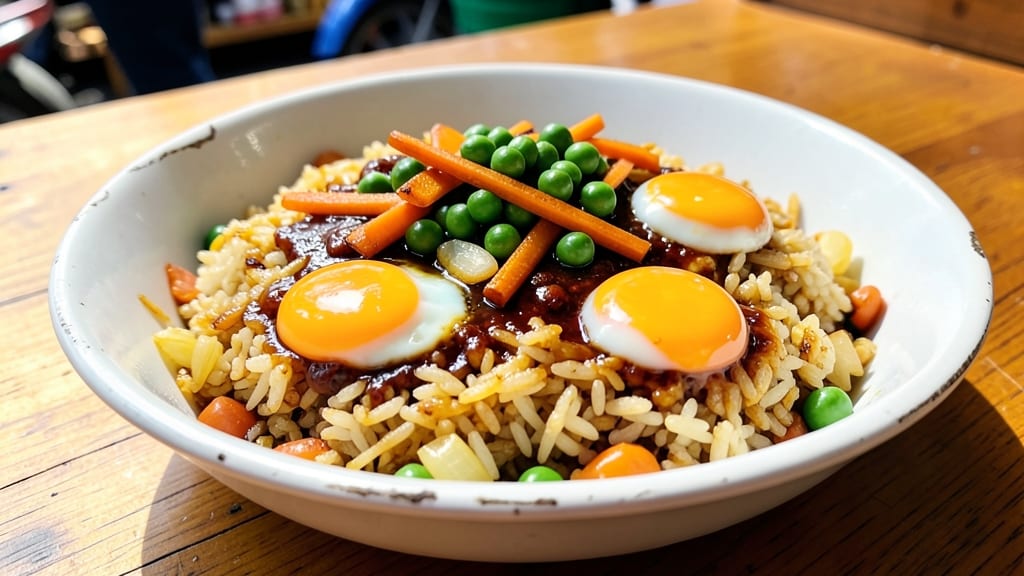
This street egg fried rice recipe delivers the wok-house magic you crave—crispy rice edges, silky egg ribbons, and a savory-sweet balance that disappears faster than takeout. The secret lies in high heat, quick cooking, and a technique that transforms day-old rice into something restaurant-worthy.
I’ve perfected this over years of testing, ensuring every bite has that authentic street-food crunch and tender texture.
What sets this apart is the two-stage egg cooking method: first poaching eggs in hot oil for creamy yolks, then slicing them into delicate ribbons that melt into the rice. The stir-fry happens in minutes—no soggy ingredients here—thanks to proper prep and a well-heated wok.
We’ll use simple ingredients like day-old rice, eggs, peas, carrots, and soy sauce, but the technique elevates them to something special.
By the end, you’ll have a dish with crispy golden edges on the rice, perfectly cooked eggs that ribbon through each bite, and a flavor profile that’s tangy, umami-rich, and just slightly sweet.
The aroma alone will have everyone gathering around your table. Serve it with a drizzle of chili oil or extra soy sauce for that true street-food experience.
This recipe works as a quick weeknight dinner or a crowd-pleaser for lunch. Add diced ham, shrimp, or extra veggies for variations, but the core technique stays the same: high heat, fast cooking, and that irresistible wok-hei flavor. Let’s get cooking!
Ingredients for street egg fried rice
High-heat magic starts with these simple, quality ingredients—day-old rice, eggs, and aromatics that transform into restaurant-style fried rice.
| Ingredient | Amount | Notes |
|---|---|---|
| Day-Old Cooked White Rice 🍚 | 4 cups | Cold, dry, broken into pieces |
| Large Eggs 🥚 | 4 whole | Room temperature for even cooking |
| Peas 🌱 | ½ cup | Frozen or fresh, thawed if frozen |
| Carrots 🥕 | ½ cup | Finely diced, small uniform pieces |
| Yellow Onion 🧅 | 1 whole | Thinly sliced, about 1 cup |
| Garlic Cloves 🧄 | 4 cloves | Minced, about 1 tbsp total |
| Ginger Root 🌿 | 1 tbsp | Fresh, finely grated |
| Light Soy Sauce 🥄 | 3 tbsp | High-quality, low-sodium preferred |
| Dark Soy Sauce 🥄 | 1 tbsp | For color and depth |
| Sesame Oil 🫒 | 1 tbsp | Toasted, for aroma |
| Vegetable Oil 🫒 | 4 tbsp | High smoke point, neutral flavor |
| White Sugar 🍚 | 1 tbsp | Balances flavors |
| Salt 🧂 | ½ tsp | Adjust to taste |
| Black Pepper 🌶️ | ¼ tsp | Freshly ground |
| Green Onions 🧅 | 3 whole | Thinly sliced, for garnish |
The rice is non-negotiable—day-old, cold, and broken into pieces for that signature crispy edge. Day-Rice brand or any leftover rice works perfectly. Fresh rice steams instead of frying. For the eggs, room temperature is key—they cook more evenly in the hot oil. The peas and carrots should be prepped uniformly: frozen peas thawed and carrots finely diced so they cook in the same timeframe. Trader Joe's has pre-diced veggies that save time, but fresh is fresher. The ginger and garlic need to be minced finely—a microplane works wonders for ginger to avoid stringy bits.
No light soy sauce? Substitute with regular soy sauce at half the amount—just add a pinch of sugar to balance. Dark soy sauce can be skipped if unavailable, but the color and depth it adds is worth hunting down at an Asian market. Sesame oil is purely for aroma—use the toasted variety for authentic flavor. For the two-stage egg method, poach in hot oil first to create silky ribbons, then slice into the rice. The sugar balances the salty soy sauce, so don't skip it—coconut sugar works too. If you're short on time, pre-chop all veggies and store in the fridge for up to 3 days.
This dish reheats beautifully—30 seconds in the microwave with a splash of water revives crispiness. Store leftovers in an airtight container for 3-4 days, though it's best fresh. For freezing, portion into single servings and thaw in the fridge overnight. The eggs lose some texture when reheated, so make fresh whenever possible. Garnish with green onions and a drizzle of chili oil for that true street-food touch.
Why You'll Love This Recipe
- Here’s what sold me: that first bite where the egg’s edges are crispy but the middle stays gloriously soft. The onions caramelize fast, and the peas add a tiny pop—like a street vendor’s secret. Honestly, it’s the kind of dish that makes you want to eat it straight from the pan.
- I’ll be real: this recipe costs me next to nothing. Day-old rice? Already in my fridge. Eggs, onions, carrots—all cheap and lasting. And leftovers? They taste even better the next day, especially if you add a fried egg on top. It’s the kind of meal that doesn’t break the bank but feels like a treat.
Step-by-step instructions for wok-hot egg fried rice
Master the wok hei technique to achieve crispy edges and silky egg ribbons every time.
Prepare the Wok and Break Down the Rice
Heat a wok or large skillet over high heat until it's smoking hot. Add the 4 tablespoons vegetable oil and swirl to coat the entire surface. The oil should shimmer but not burn—this is your signal the wok is ready. While the wok heats, spread the 4 cups day-old cooked white rice on a baking sheet and break it into ½-inch pieces with your hands or a fork.
Breaking the rice ensures even cooking and prevents large clumps that stay undercooked. Day-old rice is crucial—it's drier and absorbs flavors better than fresh rice. Keep the broken rice nearby as you'll add it to the wok immediately after the egg step.
Scramble the Eggs to Ribbon Perfection
Push the oil to one side of the wok, leaving space for the eggs. Crack the 4 whole large eggs into a bowl, then pour them into the wok. Let them sit undisturbed for 5-10 seconds until the edges begin to set. Using a spatula, gently push the eggs from one side to the other in quick, continuous motions—this creates those signature silky ribbons.
Remove the eggs from the wok and set aside. The residual heat should cook them to soft curds with just a hint of runny yolk in the center. If the eggs stick, your wok isn't hot enough—start over with a fresh batch of eggs and a properly heated wok. This is the foundation of your dish's texture.
Stir-Fry the Aromatics and Vegetables
Return the wok to high heat and add 1 tablespoon vegetable oil. Toss in the thinly sliced yellow onion and cook for 1 minute until translucent. Add the finely diced carrots and peas, stirring constantly for 2 minutes until the carrots soften slightly but remain crisp.
Push the vegetables to one side, then add the minced garlic cloves and finely grated ginger root to the empty space. Stir-fry for 20-30 seconds until fragrant—you should smell the garlic's sharpness and ginger's warmth. This quick cooking preserves their fresh flavors without letting them burn.
Combine All Ingredients for the Final Stir-Fry
Return the scrambled eggs to the wok and mix with the vegetables. Add the broken rice and stir-fry for 2 minutes to heat through. In a small bowl, whisk together the 3 tablespoons light soy sauce, 1 tablespoon dark soy sauce, 1 tablespoon white sugar, 0.5 teaspoon salt, and 0.25 teaspoon black pepper. Pour this mixture over the rice and stir vigorously for 1 minute.
The dark soy sauce will give your fried rice that classic mahogany color while balancing the saltiness. The sugar enhances the umami flavors, and the pepper adds a subtle heat. Keep stirring constantly—this prevents the rice from sticking and ensures even distribution of the sauce.
Finish with Sesame Oil and Garnish
Drizzle the 1 tablespoon sesame oil over the fried rice and toss one final time. The sesame oil should perfume the air with its nutty aroma. Taste and adjust seasoning if needed—you might need a touch more soy sauce or sugar depending on your rice's age and your taste preferences.
Transfer the fried rice to serving plates and garnish with the thinly sliced green onions. Serve immediately while the edges are still crispy and the aromas are at their peak. The contrast between the crispy rice edges and silky egg ribbons is what makes this dish truly authentic street-style fried rice.
Pro Tips For Making Street Egg Fried Rice
- Scramble Eggs First: Crack the eggs into a separate bowl, scramble them almost fully on medium-low heat, then set aside—this keeps them tender when you toss them into the rice later. I learned this the hard way by dumping raw eggs straight into the wok and ending up with rubbery curds.
- Use Cold, Dry Rice: Spread your day-old rice on a tray and let it sit uncovered for 10 minutes before cooking—this evens out moisture so it doesn’t turn mushy. I was skeptical until I tried it; the texture is noticeably better when the grains are firm and separate.
- Don’t Overcrowd the Wok: Add ingredients in batches—start with onions and carrots, then peas—so they sizzle instead of steam. After burning three batches, I finally figured out that cramming everything in at once kills the flavor and makes the rice soggy.
- Salt the Eggs: Whisk a pinch of salt into the eggs before scrambling—it seasons them evenly and cuts through the richness of the rice. Sounds weird, but it works: the eggs stay juicier and the final dish tastes more balanced. (Yes, even if you’re impatient like me.)
Wine and beer pairings for street egg fried rice
Light Beer Pairings
A crisp, light lager like Peroni or Sapporo complements this dish beautifully. The clean, refreshing profile cuts through the richness of the fried rice and eggs without overpowering the delicate soy and sesame flavors.
I always keep a cold bottle of Peroni in my fridge for this recipe—its subtle malt sweetness enhances the dish's umami notes. 🍺
Sake for Authentic Flavor
For an authentic touch, serve with a chilled dry sake like Dassai or Kubota Junmai. The light acidity and subtle earthiness mirror the ginger and garlic in the fried rice while cleansing your palate between bites.
I like to serve it slightly chilled (45-50°F) to highlight its crispness. 🍶
Rice Wine Enhancement
If you prefer wine, a dry Riesling or Pinot Grigio works wonderfully. The acidity in these wines balances the fried rice's richness, while their citrus notes complement the soy sauce's umami depth. I recommend a German Riesling for its minerality—it pairs especially well with the sesame oil's nutty aroma. 🍷
Spicy Beer Option
For those who love heat, try a wheat beer with chili notes, like Blue Moon Chili Lime or Allagash White with Chili Pepper. The citrusy hop profile and subtle spice echo the chili oil garnish while adding a refreshing contrast.
This pairing works especially well if you serve the fried rice with a side of sriracha mayo. 🌶️
Non-Alcoholic Match
For a non-alcoholic option, serve with jasmine iced tea or yuzu soda. The floral notes of jasmine tea enhance the dish's aromatic qualities, while the citrusy tang of yuzu soda brightens each bite.
I often make my own jasmine tea by steeping 2 tea bags in hot water for 5 minutes, then chilling it with ice. 🍃
Nutrition facts
Frequently asked questions
Why does the recipe call for day-old rice?
Day-old rice is essential because it's drier and breaks apart more easily, creating those signature crispy edges. Fresh rice contains too much moisture and will steam instead of fry, resulting in a soggy dish. The broken pieces also ensure even cooking throughout. Pro tip: Spread your leftover rice on a tray after cooking to speed up the drying process.
Can I make this with fresh rice?
Technically yes, but it won't have the same texture. If you must use fresh rice, spread it on a baking sheet and microwave it uncovered for 1-2 minutes to dry it out first. Then break it into pieces and proceed with the recipe. The result will be less crispy but still flavorful. For best results, always use day-old rice when possible.
What's the secret to getting crispy edges on the rice?
The crispy edges come from three key factors: using day-old rice, breaking it into small pieces, and cooking it over high heat with enough oil. Start with a smoking-hot wok and work quickly—don't overcrowd the pan. Stir constantly during the final 2 minutes of cooking to expose all surfaces to the heat. The broken pieces also help create more surface area for crisping.
How do I prevent the eggs from sticking to the wok?
First, ensure your wok is properly heated until it's smoking hot before adding oil. Use a high smoke-point oil like vegetable or peanut oil, and make sure the eggs are at room temperature. Let them sit undisturbed for 5-10 seconds before stirring, and use a well-seasoned wok or non-stick skillet if needed. A lightly oiled spatula also helps prevent sticking.
Can I add meat to this recipe?
For extra protein, add ½ cup diced ham or ½ pound shrimp when stir-frying the aromatics. Cook the meat separately first to avoid overcooking it in the final stir-fry. For chicken, marinate it in soy sauce and cornstarch before adding. Just