
Breakfast & Brunch
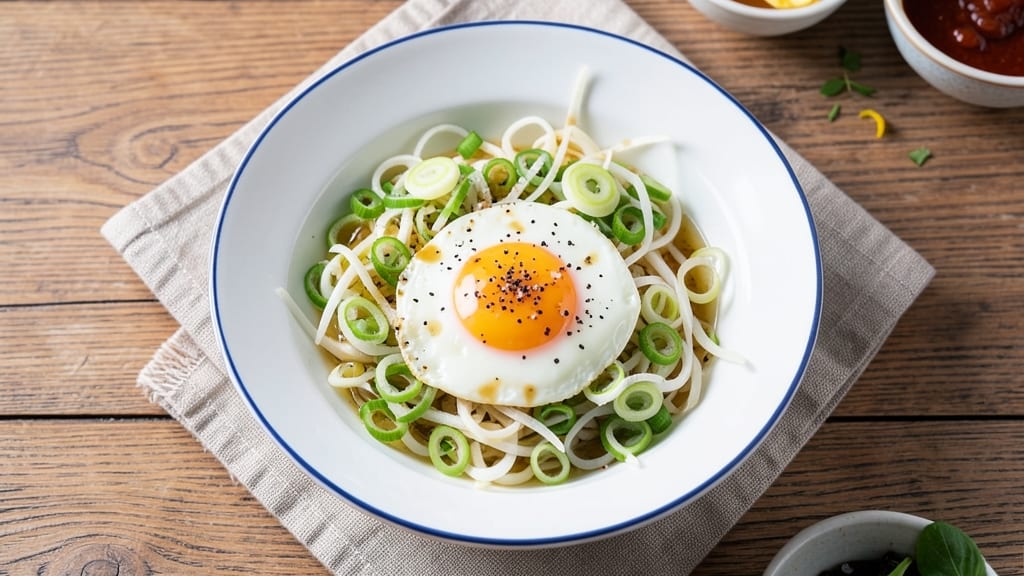
The spring onion egg Chinese recipe delivers wok-fired perfection with its signature silky yolk ribbons and crisp, aromatic green onions. This dish balances rich, savory flavors with a delicate sweetness that makes every bite irresistible.
The secret lies in high-heat stir-frying—just seconds transform runny eggs into golden, velvety strands that cling to the onions. What sets this recipe apart is the texture contrast: tender, custardy eggs paired with crisp, slightly charred green onions.
The dish comes together in under 10 minutes, making it ideal for a quick breakfast or light lunch. Traditional versions use minimal ingredients—just eggs, spring onions, and a touch of oil—but the technique elevates them to restaurant-quality.
The result is a dish that’s both comforting and elegant, with the eggs absorbing the onion’s natural sweetness while maintaining their creamy texture. Serve it with steamed rice or crusty bread to soak up every last bit of that savory, umami-packed sauce. Here’s how to master it.
This recipe stays true to its roots while being accessible for home cooks. The key is patience—letting the eggs cook low and slow at first, then finishing with a quick sear to create those signature ribbons.
The high heat also caramelizes the onions slightly, adding depth without overpowering the dish’s natural flavors. For an extra layer of richness, some regional versions include a splash of soy sauce or a pinch of sugar, but the classic method relies on the onions’ natural sweetness.
The dish is versatile enough for breakfast, brunch, or even a light dinner, especially when paired with steamed greens or a simple salad.
What makes this recipe truly special is how it transforms simple ingredients into something extraordinary. The eggs remain silky and intact, while the onions add a satisfying crunch.
It’s a dish that feels both nostalgic and refined—perfect for those who appreciate the balance of textures and flavors in Chinese home cooking.
Ingredients for spring onion egg chinese
Four eggs, one bunch of spring onions, and a wok—this trio creates restaurant-quality Chinese breakfast in minutes.
| Ingredient | Amount | Notes |
|---|---|---|
| Large Eggs 🥚 | 4 whole | Room temperature for even cooking |
| Spring Onions 🧅 | 1 bunch | Green and white parts separated |
| Vegetable Oil 🫒 | ¼ cup | High smoke point preferred |
| Salt 🧂 | ½ tsp | Fine sea salt preferred |
| White Pepper 🌶️ | ¼ tsp | Freshly ground for subtle heat |
| Soy Sauce 🥢 | 1 tsp | Light soy preferred, optional |
| Sesame Oil 🫒 | ½ tsp | For finishing aroma |
| Steamed White Rice 🍚 | 1 cup | For serving, cooked |
Spring onions are the star here. Look for vibrant green tops and crisp white bulbs at Asian markets—they pack the most flavor. The white parts caramelize beautifully, while the greens stay crisp for that signature crunch. Trader Joe's or H Mart carry fresh bunches year-round, but any grocery store's produce section will have them. If only green onions are available, use twice the amount—white parts are sweeter and more flavorful. For the eggs, room temperature is key; they'll cook more evenly and create those signature ribbons. Crack them gently into a bowl first to avoid splattering in the hot wok.
No spring onions? Substitute regular green onions at double the quantity, but you'll miss that delicate sweetness. The soy sauce is optional but recommended for an extra umami layer—light soy is traditional, but any soy sauce works. White pepper adds subtle heat without overpowering the dish; if you prefer black pepper, use half the amount for a milder touch. Sesame oil is non-negotiable for that authentic aroma, but if you're avoiding it, a pinch of toasted sesame seeds works too. The vegetable oil should have a high smoke point—avocado or peanut oil are excellent choices if you want to splurge. For a vegetarian twist, skip the soy sauce entirely and rely on the onions' natural sweetness.
Prep the onions first—they need time to soften slightly before cooking. Store any unused spring onions wrapped in damp paper towels in the fridge for 5-7 days. Eggs keep best in their shells at room temperature for up to 3 days once cracked, but for maximum freshness, use them within 24 hours. The cooked dish reheats beautifully—just 30 seconds in a dry skillet over medium heat. For meal prep, store components separately: eggs cooked separately, onions prepped, and oil measured. Assemble fresh to maintain that signature crisp texture.
Why You'll Love This Recipe
- Five-Ingredient Magic: I swear by this recipe—just eggs, green onions, oil, salt, and pepper. That’s it. No fancy prep, no hidden pantry raids, and zero stress. Honestly, I’ve made it after a 12-hour shift with takeout boxes still in my bag, and it still came out golden and perfect.
- Crispy-Creamy Balance: The secret’s in the high heat and quick cook—you get that crispy egg edge with a runny, silky center. Between us, that first bite is dangerously satisfying, especially when the onions caramelize just enough to add a sweet, sharp punch. (Yes, even on a Tuesday night.)
- Breakfast or Snack: This isn’t just for morning—it’s my go-to for late-night cravings, lazy brunch, or even a quick lunch. Add it to rice for a full meal, or serve it cold in wraps for a picnic. My daughter picks out the onions first, but still asks for seconds. (Kids are brutal critics.)
- Leftovers? More Like Forever: Make a big batch and keep it in the fridge for days—it reheats in seconds. Budget-friendly? Absolutely. A single egg and a handful of onions stretch into multiple servings. I’ll be real: I’ve eaten this cold from the fridge at 2 AM, and it’s still spot-on. No waste, no fuss.
Step-by-step instructions for spring onion egg Chinese recipe
Master this wok technique for eggs with perfect set whites and silky yolk ribbons.
Prepare the Spring Onions and Seasoning
Separate the green and white parts of the 1 bunch spring onions. Finely slice the white portions into ¼-inch rings—these will form the flavor base. Cut the green parts into ½-inch pieces for garnish. In a small bowl, mix the 0.5 teaspoon salt, 0.25 teaspoon white pepper, and 1 teaspoon soy sauce until fully combined. This seasoning blend ensures balanced flavor in every bite.
Let the 4 whole large eggs sit at room temperature for 10 minutes before cooking. Room temperature eggs cook more evenly, preventing uneven doneness. While waiting, heat a wok or large skillet over medium-high heat until it's properly preheated—you should see a slight shimmer when you hold your hand about 6 inches above it.
Cook the Spring Onion Base
Add the 0.25 cup vegetable oil to the hot wok and swirl to coat the bottom evenly. Toss in the white spring onion slices and stir-fry for 1-2 minutes until they become translucent and just begin to soften. This quick cooking preserves their crisp texture while building flavor. Avoid overcrowding the pan—work in batches if needed to maintain proper heat.
Pour the seasoning mixture over the onions and stir for 30 seconds until the liquid evaporates and the onions absorb the flavors. The wok should be sizzling but not smoking—adjust the heat if needed. This step creates the aromatic foundation for your dish. The onions should now be fragrant with a slight sheen from the oil.
Scramble the Eggs to Perfection
Push the spring onion mixture to one side of the wok, creating a small well in the center. Crack the 4 whole large eggs directly into this well. Let them sit undisturbed for 5-8 seconds until the edges begin to set but the centers remain runny. This brief pause prevents the eggs from immediately breaking apart and allows for those signature silky yolk ribbons.
Using a spatula, gently fold the eggs over the spring onions, stirring continuously in one direction for 10-15 seconds until the eggs are 70% set but still slightly moist in the center. The key is to work quickly but carefully—you want to create soft, creamy curds rather than dry scrambled eggs. Remove the wok from heat just as the eggs reach this stage to prevent overcooking.
Finish and Serve
Return the wok to low heat and drizzle in the 0.5 teaspoon sesame oil. Stir gently for 10 seconds to infuse the aroma throughout the dish. The sesame oil should perfume the air with its nutty scent—this is your signal that the dish is ready. Toss in the reserved green spring onion pieces and stir just until wilted.
Serve immediately over the 1 cup steamed white rice, spooning the spring onion eggs generously on top. Each bite should deliver tender rice, crisp spring onions, and creamy egg with delicate yolk ribbons. The dish should be hot from the wok, with the aromas of sesame and soy sauce complementing the eggs' richness. For best results, serve while the eggs are still warm and the yolk maintains its silky texture.
Pro Tips For Making Spring Onion Egg Chinese
- CRACK THE EGGS FAST: Use room-temperature eggs straight from the fridge—no need to pre-crack them. Drop them directly into the hot oil (after the onions sizzle) so they slide in whole and cook evenly. I learned this the hard way when my eggs kept sticking to the spoon mid-crack.
- SLICE ONIONS THICK: Cut the spring onions into 3-inch batons—not those tiny 1-inch pieces. Thicker slices hold their shape better and crisp up faster in the oil, giving you that satisfying crunch without turning to mush. Trust me, your dish will look and taste more impressive.
- LOWER THE HEAT BEFORE FLIPPING: The moment the egg whites set but yolks are still runny, turn the heat to medium-low. High heat makes the eggs flip unevenly or even break apart—especially when you’re juggling a crowded pan. A gentle hand and lower heat keep those eggs intact.
- STIR THE OIL CONSTANTLY: Don’t just dump the onions in and walk away. Keep the oil moving with a wooden spoon—especially after adding the eggs. This prevents sticking and ensures the onions caramelize instead of burning. (Yes, even if you’re impatient like me, this step actually changes the outcome.)
Essential equipment for this dish
Wok Essentials
A carbon steel wok is my go-to for this recipe—it heats up quickly and retains heat perfectly, which is crucial for that high-heat stir-fry. I recommend a 14-inch wok for two servings, like the De Buyer 14-inch wok.
If you don’t have a wok, a heavy-bottomed skillet (like All-Clad Stainless) works too, but it won’t distribute heat as evenly. For beginners, a non-stick wok (like Made In wok) is a great budget-friendly alternative, though it won’t develop the same caramelized flavors over time. 🔥
Heat Control Tools
You’ll need a way to monitor and adjust heat precisely. A wok thermometer (like the ThermoWorks Smoke) helps gauge the perfect medium-high heat (around 350-400°F).
If you don’t have one, use the "hand test"—hold your hand about 6 inches above the wok; it should feel comfortably warm but not scorching. A long-handled spatula (like OXO Good Grips) is essential for stirring and flipping without burning your hands.
Keep a small bowl nearby to crack eggs into before adding them to the wok—this prevents splattering. 🌡️
Cutting and Prep Gear
Sharp tools make all the difference for even cooking. A Japanese santoku knife (like Shun Premier) is ideal for slicing spring onions cleanly into ¼-inch rings. If you don’t have one, a chef’s knife with a honing steel will work.
For prepping, a cutting board (I love Teakha bamboo boards) prevents slipping, and a microplane (like Bamboo Microplane) is perfect for grating fresh white pepper if you prefer a finer texture.
Keep a small mixing bowl handy for combining the seasoning—it should hold just the 0.5 tsp salt, 0.25 tsp pepper, and 1 tsp soy sauce. ✨
Finishing Touches
For the final aroma, sesame oil is non-negotiable, but you’ll only need 0.5 tsp. I keep a small squeeze bottle (like Glasslock) in my pantry for easy drizzling—it’s less messy than a spoon.
A fine-mesh strainer (like OXO Good Grips) helps drain any excess oil from the onions if you prefer a lighter texture. For serving, a wooden spoon (traditional in Chinese cuisine) adds authenticity, though any spoon works.
Don’t forget a small plate for tasting as you cook—this helps you adjust seasoning before plating. 💫
Nutrition facts
Frequently asked questions
Can I make this recipe without a wok?
While a wok is ideal for even heat distribution, a heavy-bottomed non-stick skillet (like a 10-inch cast iron) works perfectly. The key is maintaining medium-high heat and stirring constantly. If your pan isn't non-stick, use slightly less oil (0.2 cup) to prevent sticking. The texture will be slightly different but still delicious.
Why do my eggs turn out rubbery instead of silky?
Overcooking is the most common culprit. Remove the pan from heat as soon as the eggs reach 70% set—they'll continue cooking from residual heat. Also, ensure your eggs are at room temperature and don't stir too vigorously. The secret is gentle folding motions to create those signature ribbons. If they're still rubbery, try cooking at slightly lower heat (medium instead of high).
Can I use regular green onions instead of spring onions?
Yes, but you'll need double the amount (about ½ cup total) since green onions are milder. The white parts are sweeter and more flavorful, which is why spring onions are traditional. For best results, use both green and white parts of green onions separately—treat the white portions like the spring onion whites and reserve the greens for garnish. The dish will still taste great, just slightly less aromatic.
How do I store leftovers?
Store in an airtight container in the fridge for up to 3 days. Reheat gently in a dry skillet over low heat for 1-2 minutes, stirring constantly, until warmed through. For best texture, reheat only what you plan to eat immediately—the eggs can become slightly drier upon reheating. The onions will stay crisp longer if stored separately from the eggs.
What's the best way to adjust this for spicier flavors?
Add ½ teaspoon chili flakes or 1 teaspoon chili crisp when cooking the onions, or stir in 1 teaspoon sriracha with the sesame oil at the end. For heat without spice, replace white pepper with ½ teaspoon black pepper. Remember, the onions already provide a subtle sweetness that balances heat—don't overdo it or the dish may become overwhelming. Start with small amounts and adjust to taste.