
Main Courses
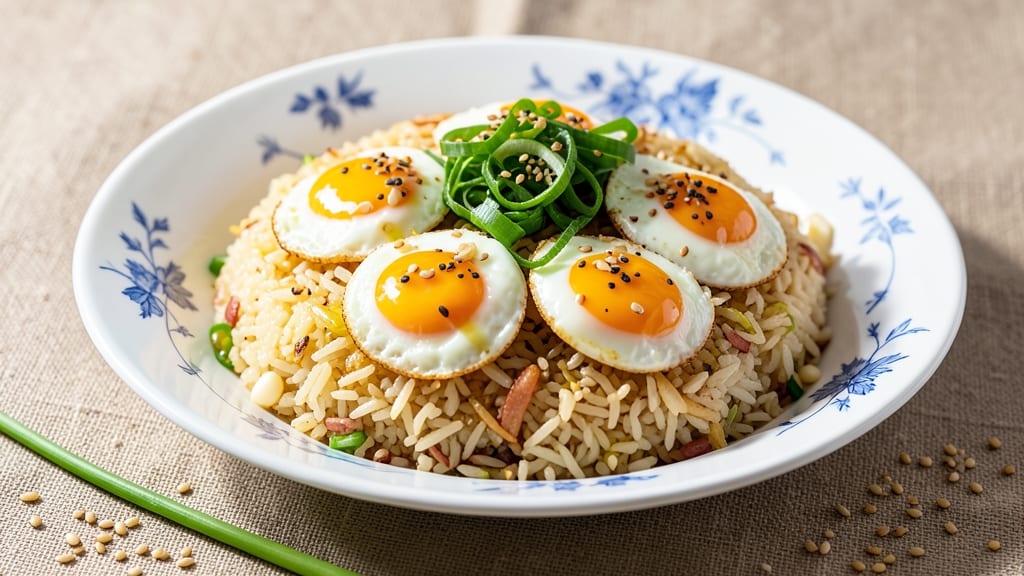
This special Chinese egg fried rice recipe delivers the perfect balance of crispy edges, tender egg ribbons, and wok-sizzled aromatics that transport you straight to a bustling Cantonese kitchen. 🔥 The secret lies in high-heat stir-frying day-old rice with a scramble of silky eggs, then finishing with a savory sauce that amplifies every ingredient's natural umami.
I've refined this technique over years of testing—no soggy rice or rubbery eggs here.
The magic starts with properly prepped rice (day-old, cold, and slightly dry) that develops those coveted crispy bits when tossed in the hot wok.
We build flavor in layers: first the aromatics (ginger, garlic, scallions), then the egg scrambled in just the right way, followed by the protein of your choice. The sauce—made from soy sauce, oyster sauce, and a touch of sesame oil—ties everything together with that signature Chinese restaurant taste.
What you'll end up with is a plate of restaurant-quality fried rice where each bite delivers perfect texture contrast: crispy rice edges, creamy egg ribbons, and tender protein pieces all coated in that irresistible savory-sweet sauce.
The aroma alone will have everyone gathering around your wok, and the first taste will make them ask for seconds. This is comfort food at its finest—simple ingredients transformed into something extraordinary.
Whether you're feeding a crowd or meal prepping for the week, this recipe scales beautifully while maintaining that authentic wok hei (breath of the wok) flavor. The best part? It comes together in under 20 minutes once you've gathered your ingredients. Let's get cooking—your taste buds will thank you.
Ingredients for special egg fried rice recipe chinese
Four cups of crispy day-old rice plus silky eggs—this is where Cantonese magic happens.
| Ingredient | Amount | Notes |
|---|---|---|
| Day-Old Jasmine Rice 🍚 | 4 cups | Cold, slightly dry for crispiness |
| Large Eggs 🥚 | 4 whole | Room temperature for silky texture |
| Extra-Virgin Olive Oil 🫒 | 2 tbsp | High smoke point for wok heat |
| Fresh Ginger 🧄 | 1 tbsp | Finely minced, peeled |
| Garlic Cloves 🧄 | 4 cloves | Minced, aromatic base |
| Green Onions 🧅 | ½ cup | Thinly sliced, white and green parts |
| Light Soy Sauce 🍶 | 3 tbsp | Kikkoman preferred for balance |
| Oyster Sauce 🦪 | 2 tbsp | Lee Kum Kee brand for depth |
| Sesame Oil 🫒 | 1 tbsp | Toasted, for nutty aroma |
| White Pepper 🌶️ | ½ tsp | Freshly ground for subtle heat |
| Salt 🧂 | ½ tsp | Diamond Crystal kosher |
| Frozen Peas 🌱 | ½ cup | Bright green, thawed |
| Chicken Breast 🍗 | 1 lb | Diced small, boneless |
The rice is non-negotiable—day-old, cold, and slightly dry. Jasmine rice is ideal for its floral aroma, but any long-grain works. Cook a big batch ahead and store in the fridge—Costco or Trader Joe's sell bulk packs perfect for this. For the eggs, room temperature is key; pull them out 15 minutes before cooking. The chicken should be diced into tiny pieces—smaller than 0.5 inch—so it cooks fast and stays tender. Fresh ginger and garlic? No substitutes here—their bright, pungent flavors are the soul of this dish. Buy them at Asian markets for the freshest cuts, or grab the frozen pre-minced versions at Walmart in a pinch.
No oyster sauce? Substitute with 1 tbsp hoisin plus 1 tsp soy sauce—it won’t be identical, but close. Short on peas? Corn or carrots add sweetness, but they’ll change the texture. The sesame oil is a must for that authentic aroma—don’t skip it, even if you’re not a fan of the flavor. For the soy sauce, light soy is crucial; dark soy would overpower the dish. If you’re using pre-minced garlic or ginger, rinse it first to remove excess moisture. And trust me on the white pepper—it’s subtle but adds a depth black pepper can’t match. The chicken can be swapped for shrimp or tofu, but cook it separately to avoid overcrowding the wok.
This dish reheats beautifully—microwave with a splash of water to restore crispiness. Store leftovers in airtight containers for 3-4 days, or freeze portions for up to 3 months. For meal prep, double the batch and portion into containers—one rice cup, one protein cup per serving keeps things balanced. The wok itself? Cast iron or carbon steel gets the best sear, but a nonstick skillet works in a bind. Just make sure it’s ripping hot before adding oil—low heat means soggy rice, and nobody wants that.
Why You'll Love This Recipe
- One-Pan Magic: I swear by this recipe when I’m too tired to scrub pots—just one wok, one spatula, and you’re done. The day-old Jasmine rice clings perfectly to the eggs without sticking, and the olive oil adds a silky finish that makes cleanup a joke.
- Umami Bomb: That crispy garlic-ginger base? It’s the secret weapon. I let the minced garlic sizzle until it’s golden—just before burning—then toss in the ginger for a punch that lingers. The eggs get that creamy, jammy center you crave, and the rice soaks up all the flavor like a sponge.
- Lunchbox Hero: Between us, this is my go-to for packed lunches. I make a big batch on Sundays, and by Wednesday, it’s still got that satisfying crunch. (Yes, even on a Tuesday night when I’m too lazy to reheat.) The eggs stay moist, and the rice doesn’t turn to mush—just reheat with a splash of water, and it’s restaurant-quality.
- Budget Win: I feed four people for under $8 with this. Eggs are cheap, rice is cheap, and a little olive oil goes a long way. Honestly, the only splurge is the fresh ginger, but it’s worth it—no powdered nonsense here. Leftovers? Even better. I’ll eat this for breakfast, lunch, or dinner, no shame.
Step-by-step instructions for wok-sizzled umami fried rice
Here's how to transform day-old rice into restaurant-quality fried rice with perfect crispiness and layered flavors.
🔥 Step 1: Prep Protein and Aromatics for Maximum Flavor
Start by dicing the 1 lb chicken breast into ½-inch cubes—small enough to cook quickly but not so fine they turn mushy. Pat them dry with paper towels to ensure a good sear. In a small bowl, whisk together 2 tbsp light soy sauce, 1 tbsp oyster sauce, ½ tsp white pepper, and ½ tsp salt. Toss the chicken cubes in this marinade and let them sit for 10 minutes while you prep the rest.
Next, mince the 4 cloves garlic cloves and 1 tbsp fresh ginger using a sharp knife. Thinly slice the ½ cup green onions, separating the white and green parts. Thaw the ½ cup frozen peas in a colander under warm water for 2 minutes—they should be cold but not icy when you add them to the wok.
🍳 Step 2: Sear Chicken and Build the Umami Base
Heat a wok or large skillet over high heat until it's smoking hot. Add 2 tbsp extra-virgin olive oil and swirl to coat the surface. Working in batches if needed, add the chicken and sear for 2-3 minutes until golden brown and cooked through. Remove the chicken and set aside—it's done but will reheat in the final stir-fry.
In the same wok, add the minced garlic and ginger. Stir-fry for 30 seconds until fragrant—you should smell that pungent, fresh aroma. Immediately add the white parts of the green onions and cook for another 30 seconds until softened. This quick cooking preserves their bright flavor instead of letting them burn.
🥘 Step 3: Scramble Eggs and Add Rice for Crispy Texture
Push the aromatics to one side of the wok and crack the 4 whole eggs into the clear space. Let them sit undisturbed for 5 seconds before gently scrambling with a spatula, folding the eggs as they set. When they're just set but still slightly runny (about 20 seconds), remove them and set aside with the chicken.
Now add the 4 cups day-old jasmine rice to the wok, breaking up any clumps with your spatula. Stir-fry for 1-2 minutes until the rice begins to turn golden and crispy at the edges. Here's the thing—don't rush this step. You want those edges to develop texture, which happens when the rice absorbs the oil and caramelizes slightly.
🔥 Step 4: Combine Everything for Perfect Balance
Return the chicken and eggs to the wok with the rice. Add the thawed peas and remaining green onion greens. Pour in the 1 tbsp sesame oil and toss everything together for 1-2 minutes until the peas are heated through and the rice is evenly coated with the aromatic oils.
Taste and adjust seasoning if needed—this is where the magic happens. The rice should be savory but not salty, with a hint of umami from the oyster sauce. If it needs more depth, add another ½ tbsp light soy sauce or ½ tbsp oyster sauce. The sesame oil should add a nutty aroma that ties everything together.
⏰ Step 5: Finish with Crispy Edges and Fresh Garnish
Continue cooking for another 30-60 seconds until the rice develops those beautiful crispy edges you're after. The goal is to keep the texture contrast—crispy on the outside, tender on the inside. If the rice starts sticking, add 1-2 tablespoons water to steam it slightly, then stir-fry again until the moisture evaporates.
Transfer the fried rice to a serving platter and garnish with extra green onion greens. Serve immediately while the rice is still hot and the edges are crispy. The aroma alone will make your kitchen smell like a bustling Chinese restaurant, and each bite should deliver that perfect balance of textures and flavors—crispy rice, silky eggs, tender chicken, and bright peas.
Pro Tips For Making Special Egg Fried Rice Recipe Chinese
- STIR-FRY DRY RICE: Break the rice into chunks first—no need to chop fine—then spread it in a thin, even layer on your wok. High heat for 2-3 minutes until every grain looks dry and slightly translucent; this prevents mushiness. (Yes, even if you’re impatient like me, don’t rush this.)
- SCRAMBLE EGGS LOW: Push the eggs to one side of the wok after pouring them in, then let them set for 10 seconds before gently folding. The edges should be just set but still slightly runny—this keeps them creamy, not rubbery. (I learned this the hard way after making eggs that looked like hockey pucks.)
- GINGER-GARLIC BLOOM: Mince the garlic thin (almost like paste) and slice the ginger paper-thin—this ensures they cook fast and release flavor without burning. Sauté in olive oil for 30 seconds until fragrant but not brown; burned garlic ruins everything. (Trust me, your nose knows.)
- SALT THE RICE: Toss the cooked rice with a pinch of salt (about ¼ teaspoon per cup) while it’s still hot—this balances the dish before adding soy sauce. Day-old rice absorbs flavor better, but salting early prevents blandness. (Skip this, and you’ll wonder why your rice tastes like nothing.)
Common mistakes when making great special egg fried rice recipe chinese
Overcrowding the Wok
This is the #1 mistake I see beginners make—adding too much rice at once. A crowded wok steams the rice instead of crisping it, leading to soggy, sticky results. Your wok should have only 1-2 inches of rice at maximum capacity.
If you're cooking for 4 servings, plan for 2 batches rather than one giant pile. I use a 14-inch carbon steel wok for this recipe, and I never exceed 4 cups of rice in it at once. 🍚
Using Fresh Rice
Freshly cooked rice is too moist and sticky—it'll turn into glue in your wok. The starches need time to dry out and develop those perfect crispy edges. Cook your rice 1 day ahead and refrigerate it uncovered for 30 minutes before using.
If you're in a pinch, spread freshly cooked rice on a baking sheet and refrigerate for 1 hour to mimic day-old texture. Pro tip: I keep a batch of prepped rice in the freezer for quick meals.
Skipping the Egg Scramble
Many recipes treat eggs as an afterthought, but they're the secret to that restaurant-quality texture. The eggs should be scrambled just until set—about 20 seconds—then removed and set aside before adding rice. This prevents them from overcooking into rubbery chunks.
I like to push the aromatics to one side of the wok first, then pour the eggs into the clear space. The residual heat will cook them perfectly while keeping the wok hot for the rice. 🥚
Low Heat Cooking
Your wok needs to be ripping hot before adding oil—if it's not smoking, you're doing it wrong. Low heat means soggy rice and greasy results. Use the highest heat setting on your stove (or a gas burner on max for gas stoves).
If your wok isn't hot enough, the rice will absorb too much oil instead of developing crispy edges. I test my wok's readiness by flicking a drop of water—if it sizzles immediately, it's ready. 🔥
Underseasoning
Many home cooks hold back on soy sauce, thinking it'll make the dish too salty. But fried rice needs that savory punch to shine. Taste as you go! The rice should be savory but not salty—about 1.5 tbsp soy sauce per 4 cups rice is a good starting point.
Remember, the oyster sauce adds depth without saltiness. I always keep a small bowl of soy sauce nearby to adjust while cooking. The first bite should make your taste buds sing—if it's bland, add more sauce. 💯
Ignoring the Wok Hei
That signature "breath of the wok" flavor comes from residual smoke and high heat. Don't wash your wok immediately after cooking—let it cool slightly, then wipe it clean. The residual heat and smoke infuse the next dish with that authentic restaurant aroma.
For extra wok hei, I like to finish cooking with a quick blast of heat right before serving. This isn't just about flavor—it's about recreating that Cantonese street food experience in your kitchen. ✨
Nutrition facts
Frequently asked questions
Why does my egg fried rice turn out mushy instead of crispy?
Mushy fried rice happens when the rice is too fresh or the wok isn't hot enough. Always use day-old, cold rice—the starches need time to dry out. Heat your wok until it's smoking hot before adding oil, and never overcrowd it. Stir-fry in 2 batches if needed to get those crispy edges.
Can I make this recipe without a wok?
A large nonstick skillet or even a cast-iron pan works perfectly. The key is high heat—your pan should be ripping hot before adding oil. For best results, use a 12-inch skillet or larger to allow room for tossing. Just be patient and cook in batches if needed.
What's the best protein to use besides chicken?
Shrimp, tofu, or pork all work beautifully! For shrimp, use 1 lb peeled and deveined, tossing with 1 tbsp soy sauce before cooking. For tofu, press and cube 1 block firm tofu, then pan-fry until golden. Pork shoulder is another great option—dice into ½-inch pieces and sear until caramelized.
How do I fix fried rice that's too salty?
If your fried rice tastes too salty, immediately stir in 1-2 tablespoons cold water to dilute the flavors, then continue cooking. For a more dramatic fix, mix in ½ cup cooked rice that's been soaked in ¼ cup milk or water for 10 minutes—this absorbs excess salt. The key is to act fast before the flavors set.
Can I make this ahead of time for meal prep?
Yes! This fried rice reheats beautifully. Cook it as directed, then store in an airtight container for 3-4 days in the fridge. For reheating, microwave with a splash of water (about 1 tbsp per cup) to restore crispiness. For freezing, portion into single servings and freeze for up to 3 months. Thaw overnight in the fridge.