
Desserts
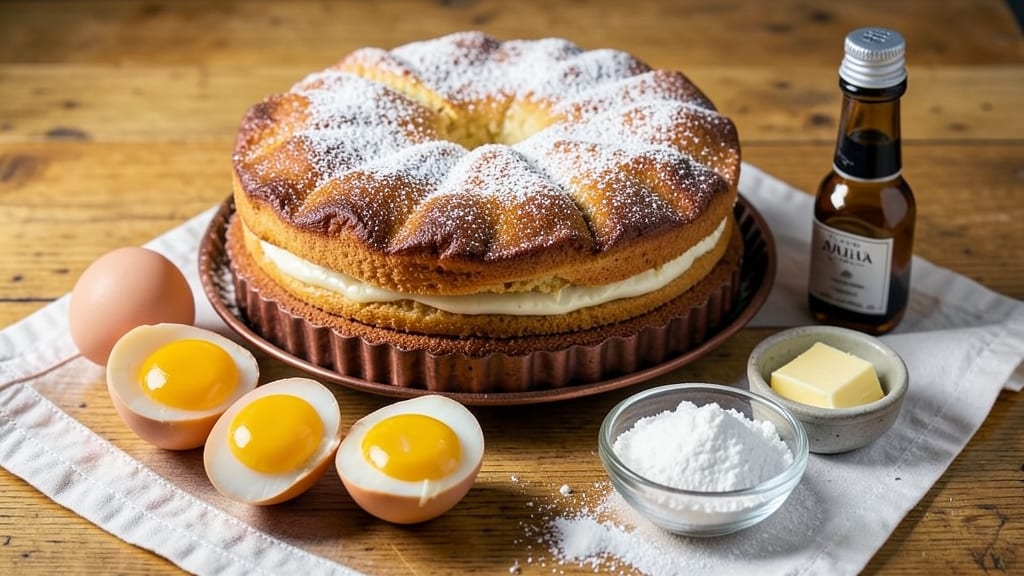
A six-egg cake delivers the richest, most velvety vanilla layers you've ever tasted—thanks to the science of eggs doing double duty as both binder and leavening agent. 💛 Unlike traditional cakes, this recipe relies on the power of six whole eggs (yes, all yolks included) to create a custard-like texture that's impossibly tender yet sturdy enough to hold its shape.
The secret? Foil-sealing the yolks during baking preserves their natural richness while preventing over-browning, resulting in layers that practically melt in your mouth.
What sets this cake apart is its foolproof technique: no complicated folding or whisking required. The eggs are gently combined with sugar and vanilla, then folded into a light batter that rises into fluffy, golden layers with just the right amount of structure.
The result is a dessert that's equal parts elegant and comforting—perfect for special occasions or when you want to impress without fuss.
Once baked, the cake develops a subtle caramelized edge while maintaining a soft, custardy center that's almost too good to slice. The vanilla flavor shines through without being overpowering, making it a blank canvas for optional additions like chocolate swirls, citrus zest, or a dusting of powdered sugar.
Serve warm with a scoop of vanilla ice cream or whipped cream for the ultimate indulgence.
This recipe works beautifully for celebrations, but don't wait for a special occasion—it's the kind of dessert that deserves a spot on your regular rotation. The richness of six eggs ensures every slice is decadent, while the simple technique makes it achievable for home bakers of any skill level.
Let's get baking!
Ingredients for six egg cake
Six whole eggs transform into velvety vanilla layers—no folding required, just science.
| Ingredient | Amount | Notes |
|---|---|---|
| Large Eggs 🥚 | 6 whole | Room temperature for even mixing |
| Granulated White Sugar 🍚 | 1 ½ cups | Superfine preferred for smooth texture |
| Pure Vanilla Extract 🌿 | 2 tsp | Bottled vanilla preferred over imitation |
| All-Purpose Flour 🌾 | 1 ½ cups | Sifted for lightness, 4% protein |
| Unsalted Butter 🧈 | ¾ cup | Cold, cubed for proper creaming |
| Baking Powder 🧂 | 1 ½ tsp | Aluminum-free for tender crumb |
| Salt 🧂 | ½ tsp | Fine sea salt for balance |
| Heavy Cream 🥛 | ½ cup | Whole milk fat for richness |
| Aluminum Foil 📄 | 1 sheet | Heavy-duty, cut to 6-inch squares |
| Powdered Sugar 🍚 | ½ cup | For dusting finished cake |
| Vanilla Ice Cream 🍦 | 2 cups | Optional serving suggestion |
The eggs are the star, so prioritize large, fresh eggs with vibrant yolks—Peters Eggs or local farm varieties excel. Room temperature is critical: cold eggs create dense layers. For the sugar, superfine (like Domino) dissolves faster, but regular granulated works if pulsed in a food processor. The butter should be cold and cubed—this ensures proper creaming without melting. Land O'Lakes unsalted is reliable, but European-style butter adds extra richness. Measure flour precisely using the spoon-and-level method to avoid dense cake. Baking powder matters: Clabber Girl aluminum-free is ideal for tender crumb.
No superfine sugar? Pulse granulated sugar in a food processor for 30 seconds—it'll work in a pinch. Short on heavy cream? Substitute whole milk (reduce by 1 tbsp) or Greek yogurt for moisture. The vanilla extract is non-negotiable—imitation lacks depth. For a citrus twist, add 1 tsp lemon zest to the batter. Need gluten-free? Swap flour for 1:1 gluten-free blend (like King Arthur) and add 0.5 tsp xanthan gum. The foil sealing is key: use heavy-duty foil to prevent tearing during baking. Preheat your oven to 350°F—this ensures even rise without over-browning.
Store baked cake in an airtight container at room temperature for 2 days or refrigerate for 5 days. For longer storage, freeze layers wrapped in plastic for 3 months. Reheat slices at 300°F for 10 minutes to restore moisture. The powdered sugar dusting should be done just before serving—it melts slightly when warm. Leftovers make excellent French toast or trifle layers. Portion into single servings before freezing for easy thawing.
Why You'll Love This Recipe
- Foolproof Mix-In: I swear by this recipe—just crack, whisk, fold. No sifting, no measuring cups with questionable lines. Six eggs and a bowl of flour? That’s it. Even my husband (who burns toast) can handle it.
- Vanilla Butter Bliss: That vanilla extract isn’t just a splash—it’s the star. The butter gets creamed until it’s light and fluffy, and when it bakes, it’s got this buttery richness that tastes like a bakery’s secret. Honestly, I’d eat it plain.
- Crowd-Pleaser Any Day: Birthday? Brunch? A last-minute dessert? This cake cuts into perfect squares and disappears fast. I’ve served it at potlucks, school events, and even as a "quick dessert" when company drops by. No one ever asks what’s in it.
- Budget Baking Win: Six eggs mean less waste than a dozen, and the rest of the ingredients? Pantry staples. A single batch feeds six, and leftovers? They’re even better the next day—if they last that long. My wallet and my taste buds thank me.
Step-by-step instructions for fluffy vanilla layers with foil-sealed yolk magic
Master this six-egg technique for a cake so light it practically floats—no dense crumb in sight.
👨🍳 Step 1: Separate Eggs and Cream Butter-Sugar
Crack the 6 whole Large Eggs into two separate bowls, carefully separating yolks from whites. I use a wire whisk to gently separate them—no need for fancy gadgets. In a stand mixer with the paddle attachment, beat the 0.75 cup Unsalted Butter and 1.5 cups Granulated White Sugar on medium speed for 3-4 minutes until the mixture is pale, fluffy, and nearly tripled in volume.
This creaming process incorporates air, which is critical for that signature lightness. You'll know it's ready when the butter-sugar mixture leaves faint ribbons when the paddle is lifted. Meanwhile, whisk the egg whites in a separate bowl until soft peaks form—this pre-whipping ensures maximum volume later.
🍳 Step 2: Combine Dry Ingredients and Add Yolks
In a medium bowl, sift together the 1.5 cups All-Purpose Flour, 1.5 tsp Baking Powder, and 0.5 tsp Salt. Gradually add this dry mixture to the butter-sugar blend in three additions, mixing on low speed just until combined after each addition. This prevents overmixing which leads to tough cake.
In a separate bowl, whisk the 6 egg yolks with the 2 tsp Pure Vanilla Extract until smooth. With the mixer on low speed, slowly pour the yolk mixture into the butter-sugar-flour blend. Scrape down the sides of the bowl to ensure even distribution. Here's the thing—this is where the magic starts. The yolks add moisture and richness that keeps the cake tender.
🥘 Step 3: Fold in Whipped Egg Whites and Heavy Cream
Using a rubber spatula, gently fold the whipped egg whites into the batter in three parts, being careful not to deflate them. The batter will look slightly curdled at first, but don't worry—this is normal. After incorporating the whites, fold in the 0.5 cup Heavy Cream until just combined. The batter should be thick but pourable.
This is the moment that matters: the egg whites provide structure while the cream adds moisture. The goal is to maintain as much air as possible for that signature fluffiness. If you see any unincorporated flour, gently fold it in with a spatula to ensure a consistent texture throughout.
🔥 Step 4: Bake with Foil-Sealed Yolk Magic
Preheat your oven to 350°F. Pour the batter evenly into two 6-inch round cake pans lined with parchment paper. Cut the 1 sheet Aluminum Foil into two 6-inch squares and place one over each cake pan. This foil seal creates steam during baking, which is key to that ultra-moist texture.
Bake for 25-30 minutes or until a toothpick inserted into the center comes out clean. The cake should spring back when gently pressed. Here's where precision pays off—overbaking leads to dryness, while underbaking leaves it gummy. Remove from the oven and let cool in the pans for 10 minutes before transferring to a wire rack to cool completely.
🍽️ Step 5: Dust and Serve with Ice Cream
Once completely cooled, dust the top of each cake layer with 0.5 cup Powdered Sugar using a fine-mesh sieve. This adds a delicate sweetness and visual appeal. For serving, slice each layer horizontally and stack with a generous scoop of 2 cups Vanilla Ice Cream between layers. The contrast of warm cake with cold ice cream is pure indulgence.
The result should be layers so light they're almost airy, with a tender crumb that melts in your mouth. Each bite delivers that perfect balance of sweetness and richness, thanks to the careful technique of separating eggs, proper creaming, and the foil-sealed baking method that keeps them moist.
Pro Tips For Making Six Egg Cake
- Whisk Eggs Until Ribbon Stage: Stop when the egg mixture holds a slow ribbon—about 30 seconds after it starts to thicken. Over-whisking adds air but can also make the cake dense; this recipe thrives on gentle structure, not fluff.
- Melt Butter Slowly: Warm the butter in the microwave for 20 seconds, then stir—don’t melt it fully. Cold butter creates pockets of moisture that keep the cake tender, and you’ll still get that buttery richness without greasiness.
- Sift Flour Twice: First sift the flour to remove lumps, then sift it again after mixing with sugar. This recipe’s lightness depends on it; clumps turn into dry spots that ruin the crumb.
- Bake at 325°F, Not Hotter: Skip the urge to crank the heat—325°F is non-negotiable. Higher temps brown the outside too fast before the center sets, leaving you with a cake that’s cakey on the outside and raw in the middle.
Serving suggestions for this recipe
Warm Ice Cream Sandwich
Serve this cake warm for the ultimate indulgence—slice a thick piece, place it on a plate, and top with a scoop of vanilla ice cream that's been softened slightly at room temperature.
Microwave the ice cream for 10-15 seconds to make it easier to scoop, then place it on top of the cake. The contrast of warm cake and cold ice cream creates a magical sensory experience that's hard to resist. 🍦
Layered Trifle Presentation
For an impressive dessert spread, create a layered trifle using the cake as your base. Cut the cake into 1-inch cubes and arrange them in a trifle dish.
Add a layer of vanilla pudding (about 1 cup) mixed with 1 tsp vanilla extract, then repeat with cake cubes and a final layer of whipped cream. Top with fresh berries or chocolate shavings for a pop of color and freshness.
Coffee Pairing Perfection
Pair your six-egg cake with a cup of freshly brewed coffee to balance the richness. A medium-roast Arabica with notes of caramel and nuts complements the vanilla beautifully. For an extra treat, drizzle a little honey or caramel sauce over the cake before serving.
The warmth of the coffee enhances the cake's natural sweetness without overpowering it.
Fruit Topping Variations
Add seasonal fruit toppings to elevate your cake. For summer, try fresh strawberries sliced into thin rounds or a mix of blueberries and raspberries. In fall, warm caramelized apples with a sprinkle of cinnamon add a cozy touch.
The acidity of the fruit cuts through the cake's richness, creating a perfect balance of flavors.
Chocolate Drizzle Finish
For a decadent touch, prepare a simple chocolate drizzle using ½ cup melted dark chocolate and 1 tbsp heavy cream. Stir until smooth, then drizzle over the cake just before serving.
The chocolate adds depth and a touch of bitterness that enhances the vanilla flavor. Use a squeeze bottle for an even, elegant finish.
Make-Ahead Serving Tips
Bake the cake a day ahead and store it in an airtight container at room temperature. Reheat slices at 300°F for 10 minutes before serving to restore moisture. This works especially well for parties—assemble the trifle or ice cream sandwiches just before guests arrive so everything stays fresh and delicious.
The flavors actually improve overnight as the cake absorbs the aromas of the toppings. 💫
Nutrition facts
Frequently asked questions
Why does this recipe use six whole eggs instead of fewer?
The six eggs create a custard-like texture that's impossibly tender yet sturdy. The yolks add moisture and richness while the whites provide structure—together they create that signature fluffy, melt-in-your-mouth crumb. Fewer eggs would result in a denser, less velvety cake.
Can I substitute butter with another fat?
For best results, stick with unsalted butter—it's essential for that rich flavor and proper creaming. However, you can substitute with ½ cup vegetable oil or ½ cup coconut oil (melted) if needed. The cake will still be moist but may have slightly different texture. Avoid margarine for the best outcome.
What's the purpose of the foil during baking?
The foil creates steam during baking, which keeps the cake ultra-moist and prevents the top from over-browning. It's especially important for this recipe since the eggs are the primary source of moisture. Remove the foil after 15 minutes to allow the cake to set properly.
How do I fix a sunken center in my cake?
If your cake sinks slightly, it's often due to overmixing or underbaking. Next time, ensure your oven is properly calibrated and bake for the full 25-30 minutes. For immediate fixes, slice off the sunken top, then layer with whipped cream and extra powdered sugar before serving. The flavor will still be delicious!
Can I make this cake gluten-free?
Yes! Replace the all-purpose flour with a 1:1 gluten-free flour blend (like King Arthur) and add ½ tsp xanthan gum to improve texture. Keep all other ingredients and techniques the same. The cake may be slightly denser but will still be delicious.