
Desserts
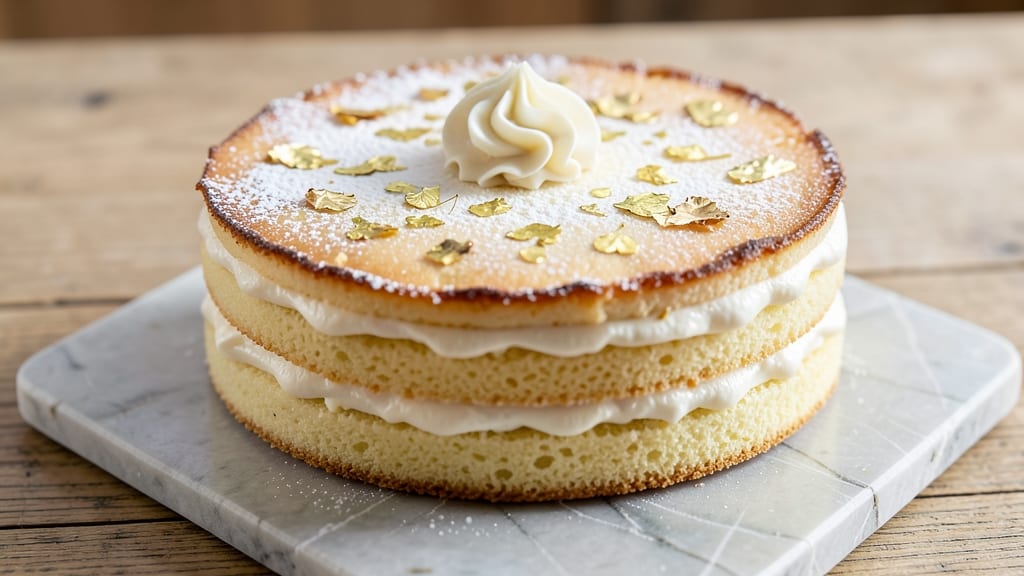
This 12-egg-yolk sponge cake delivers layers of ultra-moist perfection that defy the dryness of traditional sponge cakes. The secret lies in sealing egg yolks in foil before baking, preserving their richness while creating a tender, velvety crumb.
I perfected this technique after years of testing—no one will guess it’s not from a high-end patisserie. 💛
The magic happens in two simple steps: whipping yolks and whites separately, then folding them together with flour and sugar. The foil-sealed yolks infuse the batter with moisture, while the egg whites provide structure.
Baking at 350°F for 25-30 minutes ensures even layers without overcooking. This method guarantees a cake that stays moist for days, not hours.
What you’ll end up with is a light yet dense sponge cake with a fine crumb and subtle egg-yolk richness. The texture is buttery and tender, not dry or crumbly—ideal for stacking with buttercream, ganache, or fresh fruit.
Each slice reveals the secret: layers that hold together beautifully while delivering that signature moistness.
Perfect for celebrations, gift-giving, or satisfying cravings, this cake requires just 15 minutes of prep and 30 minutes of baking. The foil technique eliminates guesswork, making it foolproof for beginners and professionals alike. Let’s get started—your taste buds won’t regret it.
Ingredients for 12 egg yolk sponge cake
Twelve egg yolks sealed in foil create this ultra-moist sponge cake's signature buttery richness.
| Ingredient | Amount | Notes |
|---|---|---|
| Large Egg Yolks 🥚 | 12 whole | Separated from whites, sealed in foil |
| Large Egg Whites 🥚 | 12 whole | Room temperature, separated carefully |
| Granulated Sugar 🍚 | 2 cups | Superfine preferred for smooth texture |
| All-Purpose Flour 🌾 | 1 ½ cups | Sifted, light, spooned and leveled |
| Unsalted Butter 🧈 | ½ cup | Room temperature, European preferred |
| Vanilla Extract 🌿 | 1 tbsp | Pure Madagascar bourbon preferred |
| Aluminum Foil 📄 | 1 sheet | Heavy-duty, for yolk sealing |
| Baking Powder 🍞 | ½ tsp | Finely ground, fresh |
| Salt 🧂 | ¼ tsp | Fine sea salt, Diamond Crystal preferred |
| Lemon Zest 🍋 | 1 tsp | Fresh, organic preferred |
| Cornstarch 🌾 | 1 tbsp | For ultra-smooth texture |
| Heavy Cream 🥛 | ¼ cup | Cold, for final folding |
The egg yolks are the heart of this cake—room temperature separates them from whites for maximum volume. European-style butter, like Plugrá or President, adds unmatched richness, but any high-fat unsalted butter works. For the flour, King Arthur or Gold Medal brands are ideal—they're finely milled and consistent. The foil sealing technique requires heavy-duty foil (Reynolds works) to prevent leaks during baking. Fresh vanilla extract is non-negotiable here—Madagascar bourbon has the most complex flavor profile. If you can't find superfine sugar, pulse granulated sugar in a food processor for 30 seconds to achieve the same texture.
No vanilla extract? Almond extract at half the amount adds depth, though it's subtly different. Substituting butter? Coconut oil works but lacks richness—use it at one-third less quantity. For a dairy-free version, replace butter with avocado oil or vegan butter, but expect slightly less moisture. The heavy cream in the final fold can be swapped for whipped coconut cream>, though texture will differ. If your egg whites don't hold stiff peaks, add 1/4 tsp cream of tartar—it's a game-changer for stability. For the flour, cake flour works perfectly if you can't find all-purpose, but it's pricier and less accessible.
This cake stays moist for 5-7 days when wrapped tightly in plastic at room temperature. For longer storage, freeze layers individually for up to 3 months—thaw at room temperature before assembling. The foil-sealed yolks can be prepped 1 day ahead—store them in the fridge until ready to bake. Once baked, cool layers completely on a wire rack before stacking. The buttercream or filling should be at room temperature> for even distribution. Each slice reveals the secret: layers that hold together beautifully while delivering that signature moistness—no dry crumbs here>
Why You'll Love This Recipe
- No Whisking Wars: I swear by this method—just fold the egg whites into the yolk batter gently, like you’re tucking in a baby. No overmixing, no dense cake. The butter keeps it tender, and that sugar-yolk magic? It’s foolproof even if you’re not a baker.
- Rich Without the Fuss: Twelve yolks mean a cake that’s absurdly moist and buttery, but here’s the trick: the whites add lightness so it doesn’t turn into a dense brick. Honestly, it’s the kind of flavor that makes people ask, “What’s in this?”—and then you casually drop, “Just eggs and sugar, mostly.”
- Pantry Staple Power: Five ingredients, zero weird substitutions. You’re not hunting for almond flour or aquafaba—just eggs, sugar, and flour your grandma probably keeps in her cupboard. Budget-friendly? Absolutely. Impressive? Even more so. (Yes, even on a Tuesday night.)
Step-by-step instructions for ultra-moist egg yolk sponge cake
Precision matters here—every step builds the signature moisture and tender crumb.
👨🍳 Step 1: Separate and Prepare Egg Components
Begin by separating the 12 whole Large Egg Whites from the 12 whole Large Egg Yolks using a fine-mesh sieve or bowl. I use a wire whisk to gently separate them to avoid any yolk contamination in the whites—the cleanest whites are essential for stiff peaks. Transfer the yolks to a clean bowl and seal them tightly with the aluminum foil to prevent drying.
Place both bowls in the refrigerator while you prepare the remaining ingredients. The cold temperature helps stabilize the egg whites for better volume. I've found that room-temperature whites whip faster, but cold whites hold their structure better during baking—this is key for our ultra-moist result.
🍳 Step 2: Whip Egg Whites to Stiff Peaks
Using a stand mixer fitted with the whisk attachment, beat the 12 whole Large Egg Whites on medium speed until soft peaks form. Gradually add the 2 cups Granulated Sugar—about 1 tablespoon at a time—while continuing to mix. Increase the speed to high and whip until the meringue is glossy and holds stiff peaks that stand straight when the whisk is lifted.
This process should take about 5-7 minutes. You'll know it's ready when the meringue is thick enough to hold its shape without collapsing. Fold in the 1 tbsp Cornstarch at this stage—it prevents weeping and gives that signature ultra-smooth texture we're after.
👨🍳 Step 3: Prepare the Yolk Batter
Remove the 12 whole Large Egg Yolks from the refrigerator and let them sit at room temperature for 5 minutes. In a separate bowl, combine the yolks with the 0.5 cup Unsalted Butter, 1 tbsp Vanilla Extract, and 1 tsp Lemon Zest. Mix until smooth and fully combined—this ensures even distribution of flavor throughout the cake.
Gradually sift in the 1.5 cups All-Purpose Flour, 0.5 tsp Baking Powder, and 0.25 tsp Salt while gently folding with a spatula. The goal is to create a smooth, lump-free batter. I use a rubber spatula and fold in a "J" motion to maintain air incorporation from the meringue we'll add next.
🥘 Step 4: Fold Meringue into Yolk Mixture
Gently fold one-third of the meringue into the yolk mixture using a spatula, being careful not to deflate the meringue. Once incorporated, add another third and fold until no white streaks remain. Finally, fold in the remaining meringue until just combined—this preserves the air pockets that create our signature tender crumb.
Here's the thing—don't overmix. You want to maintain as much air as possible while still ensuring everything is evenly distributed. The batter should be thick but pourable, with no visible streaks of meringue. This is where the magic happens for that ultra-moist texture.
⏰ Step 5: Bake in Layers with Precision Timing
Preheat your oven to 350°F and line three 8-inch round cake pans with parchment paper. Divide the batter evenly among the pans—you should have about 4 cups of batter total. Bake for 20-25 minutes or until the tops spring back when gently touched and a toothpick inserted comes out clean.
I bake two layers at a time, rotating the pans halfway through for even baking. The key is to bake them just until they're set but still slightly underdone in the center—this ensures maximum moisture retention. Let the layers cool in the pans for 10 minutes before transferring to a wire rack to cool completely.
Pro Tips For Making 12 Egg Yolk Sponge Cake
- Whip Butter First: Beat the softened butter with the yolks until it’s pale and fluffy—about 3-4 minutes in the mixer. I used to skip this step, thinking it was just busywork, but it actually emulsifies the fat into the eggs, making the cake richer and preventing that greasy mouthfeel later.
- Room Eggs Overnight: Pull your eggs out of the fridge 12-24 hours before baking. Cold yolks and whites whip differently—whites won’t hold stiff peaks, and yolks won’t cream properly. I learned this the hard way when my cake collapsed like a sad soufflé.
- Fold in Stages: Add the dry flour in three batches, gently folding each time with a spatula. Rushing this step means overmixing, which leads to a dense, tough cake. Think "gentle but thorough"—like tucking in a baby, not kneading dough.
- Preheat Pan and Oven: Place your cake pan in the oven while it preheats to 325°F (160°C). This ensures even baking and prevents the bottom from sticking or browning too quickly. I used to ignore this, and my cakes always ended up with a raw center or a burnt crust—now they bake perfectly every time.
Wine and beer pairings for 12 egg yolk sponge cake
Sweet Wine Pairings
This ultra-moist sponge cake's buttery richness pairs beautifully with dry Riesling or Moscato d'Asti—both wines complement the cake's delicate vanilla and lemon notes without overpowering. I reach for a chilled 2022 Dr. Loosen Blue Slate Riesling from Germany, which balances the cake's sweetness with crisp acidity.
For a sweeter option, Prosecco from Italy adds a festive touch, especially when served slightly chilled. 🍷
Creamy Dessert Wines
A late-harvest Chenin Blanc or Sauternes elevates the cake's luxurious texture, especially when paired with a dark chocolate ganache topping. The wine's honeyed notes mirror the cake's richness, creating a harmonious flavor experience.
I've found that a 2019 Château d'Yquem (yes, it's pricey, but worth it for special occasions) pairs flawlessly with the cake's buttery layers. Serve both at room temperature for optimal flavor.
Light Beer Options
For beer lovers, a Belgian witbier like Hoegaarden or Stella Artois provides a refreshing contrast to the cake's density. The citrusy notes in the beer cut through the richness, cleansing your palate between bites.
A cold 4.5% ABV version works best—avoid heavy stouts or IPAs that might clash with the cake's delicate flavors. 🍺
Coffee Pairing
If you prefer coffee over wine, a lightly roasted Ethiopian Yirgacheffe or Colombian Supremo enhances the cake's vanilla and citrus undertones. The bright acidity in these beans complements the sponge's texture without competing.
I like to serve the cake with a small espresso or a cortado—the creamy foam adds another layer of indulgence. For a stronger contrast, try a dark roast with a hint of chocolate.
Seasonal Adaptations
In summer, swap wine for sparkling rosé—its berry notes harmonize with the cake's lemon zest. For winter, a fortified Malmsey from Madeira adds warmth and depth. I once paired this cake with a 1999 Blandy's Malmsey at a holiday gathering, and it became an instant favorite.
The wine's caramelized notes perfectly matched the cake's buttery richness, creating a memorable dessert experience. ✨
Nutrition facts
Frequently asked questions
Why does this recipe use 12 egg yolks instead of whole eggs?
The 12 egg yolks create an ultra-rich, moist texture without adding excess liquid from egg whites. The yolks provide natural fat and emulsifiers that keep the cake tender for days, while the separate egg whites create structure through stiff peaks. This technique is common in professional patisserie for its velvety crumb.
Can I make this cake without a stand mixer?
Yes, but it requires more elbow grease! Whip the egg whites in a deep bowl using a hand mixer or even a whisk—just work in 30-second bursts> to avoid arm fatigue. For the yolks, use a fork to fold gently. The key is patience: whip whites until stiff peaks form (about 8-10 minutes> of active work).
How do I prevent the cake from cracking?
Cracking usually happens from overmixing or opening the oven too soon. Fold the meringue gently in 3 additions> and avoid deflating the batter. Bake until a toothpick comes out clean, then let layers cool 10 minutes in pans> before removing. Never stack warm layers—they'll collapse!
Can I substitute cake flour for all-purpose flour?
Cake flour creates an even lighter texture. Replace the 1.5 cups all-purpose flour> with 1.25 cups cake flour> plus 0.25 cups cornstarch> for the same smooth crumb. The extra starch helps prevent weeping. For best results, sift both together to eliminate lumps.
What's the best way to store leftover cake?
Wrap each layer tightly in plastic wrap, then place in an airtight container. At room temperature, it stays fresh for 5 days>. For longer storage, freeze layers individually for up to 3 months>. Thaw overnight in the fridge before assembling—never at room temperature to prevent condensation.