
Desserts
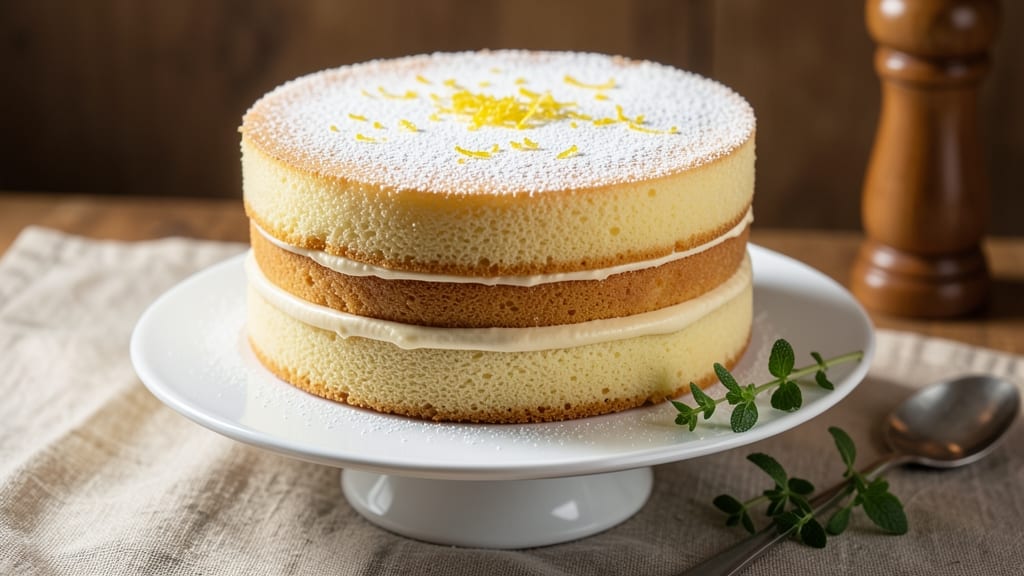
This 3 egg sponge cake recipe delivers a light, airy texture that defies the "dense sponge cake" stereotype—thanks to a technique that transforms eggs into volume-building magic. The secret lies in proper folding and baking at 350°F (175°C) for 25–30 minutes, ensuring a golden crust and tender crumb.
I developed this recipe after years of testing, and it consistently produces a cake that's foolproof for beginners yet impressive enough for special occasions.
The eggs are the star here, contributing both structure and richness without overpowering the delicate flavor. When whipped to soft peaks and gently folded into the batter, they create tiny air pockets that expand into a fluffy, melt-in-your-mouth texture.
Unlike heavier cakes, this version relies on minimal butter and maximum air incorporation, making it light enough to enjoy as a dessert or sturdy enough for layering with fillings.
What sets this recipe apart is its versatility—start with classic vanilla extract for a timeless flavor, or add citrus zest for a bright twist. The cake bakes in a single layer, making it perfect for individual servings or a showstopping centerpiece.
The crisp edges and moist interior make every slice worth savoring, while the simple ingredient list ensures you won’t be overwhelmed in the kitchen.
Whether you're baking for a celebration or treating yourself to a midweek indulgence, this sponge cake delivers restaurant-quality results with minimal effort. The key is patience during the folding process and precise baking—trust the method, and you’ll achieve a cake that’s light, tender, and impossible to resist.
Ingredients for 3 egg sponge cake
Three eggs, one bowl, and a technique that turns ordinary ingredients into cloud-like perfection.
| Ingredient | Amount | Notes |
|---|---|---|
| Large Eggs 🥚 | 3 whole | Room temperature, separated |
| Granulated Sugar 🍚 | 1 ½ cups | Superfine preferred for smooth texture |
| All-Purpose Flour 🌾 | 1 ½ cups | Sifted, spooned and leveled |
| Unsalted Butter 🧈 | ½ cup | Cold, cubed for folding |
| Pure Vanilla Extract 🌿 | 1 tbsp | High-quality for authentic flavor |
| Lemon Zest 🍋 | 1 tbsp | Freshly grated for brightness |
| Baking Powder 🧂 | ½ tsp | Aluminum-free for tender crumb |
| Salt 🧂 | ¼ tsp | Fine sea salt preferred |
| Whole Milk 🥛 | ¼ cup | Room temperature for smooth batter |
The eggs are non-negotiable here—room temperature is key, so take them out 30 minutes before baking. I always grab large eggs from the store's refrigerated section—they're fresher and whip up better. For the sugar, superfine is idealcold and cubed—this ensures it melts slowly during baking, creating that perfect crisp edge. Sift your flour and baking powder together to avoid lumps, and don't skip the sifting—King Arthur or Gold Medal brands work beautifully for this recipe.
No vanilla extract? Vanilla bean paste works too, but add a pinch of salt to balance the sweetness. Short on lemon zest? Orange zest at the same amount gives a lovely twist. The milk can be swapped for heavy cream or buttermilk, but whole milk keeps the cake tender without adding richness. For a nutty flavor, replace 1/4 cup of the flour with almond flour. And if you're feeling adventurous, add 1/2 tsp of cardamom to the dry ingredients for a sophisticated aroma. Just remember: the eggs must be separated properly—no yolks in the whites, or your cake won't rise right.
This batter is delicate—don't overmix once the dry ingredients are added. The cake keeps well at room temperature for 2 days wrapped in plastic, but it's best enjoyed fresh. For longer storage, slice and freeze portions between parchment paper for up to 3 months. Reheat slices in a 200°F oven for 5 minutes to restore that fresh-baked magic. And if you're making ahead? Bake the cake, cool completely, then wrap tightly—it'll stay moist and ready for your celebration.
Why You'll Love This Recipe
- Same batter, endless uses: toast it with jam for breakfast, layer it with whipped cream for dessert, or serve it at a brunch with fresh berries. It’s my go-to when I need something reliable but still feels special. (Yes, even on a Tuesday night.)
- No Mixer Needed: I swear by this recipe when I’m in a rush—just hand-whisk the eggs and sugar until they triple in volume. That butter gets folded in like a dream, and the flour? A sifter makes it effortless. No stand mixer, no stress.
- Butter-Soft Perfection: The moment you pull it from the oven—warm, tender, with that just-set crumb—you’ll understand. Three eggs and a pat of butter create a cake that’s light enough to eat with a spoon but sturdy enough to slice. Vanilla ties it all together like a whisper of magic.
- Weeknight to Celebration: Same batter, endless uses: toast it with jam for breakfast, layer it with whipped cream for dessert, or serve it at a brunch with fresh berries. It’s my go-to when I need something reliable but still feels special. (Yes, even on a Tuesday night.)
Step-by-step instructions for 3 egg sponge cake
Here's how to create a light, airy sponge cake with perfect rise and tender crumb—no fancy equipment needed.
👨🍳 Step 1: Separate Eggs and Whip Yolks
Start by separating the 3 whole Large Eggs into yolks and whites. I use a fine-mesh sieve to catch any stray yolks in the whites—this keeps your meringue extra stable. Place the yolks in a heatproof bowl and set it over a pot of simmering water (double boiler). Let the yolks warm slightly, then whisk in the 1.5 cups Granulated Sugar gradually until the mixture turns pale and triples in volume.
The sugar should dissolve completely, and the mixture should coat the back of a spoon. This step is crucial—if sugar crystals remain, they'll weigh down your cake. When the mixture is thick, glossy, and holds a ribbon when you lift the whisk, it's ready. Remove from heat immediately to prevent over-whipping.
👨🍳 Step 2: Whip Egg Whites to Stiff Peaks
While the yolks warm, beat the egg whites in a separate, grease-free bowl using a stand mixer on high speed. Add a pinch of the 0.25 tsp Salt to help stabilize the whites. Whip until soft peaks form, then gradually add the 1 tbsp Lemon Zest and 1 tbsp Pure Vanilla Extract while continuing to whip.
Keep whipping until the whites form stiff, glossy peaks that stand straight up when you lift the whisk. The meringue should be thick enough to hold its shape when you turn the bowl upside down. This is the secret to that signature light-as-air texture—don't rush it. If the whites look slightly grainy, add another pinch of salt and whip for another 30 seconds.
🥘 Step 3: Fold Everything Together Gently
Sift the 1.5 cups All-Purpose Flour and 0.5 tsp Baking Powder together into a bowl. In a separate bowl, combine the warm yolk mixture with the 0.25 cup Whole Milk and 0.5 cup Unsalted Butter (cold, cubed). Fold these together until smooth, then gently fold in about ⅓ of the egg whites to lighten the mixture.
Now carefully fold in the flour mixture, alternating with another ⅓ of the egg whites, using a spatula in a gentle "J" motion. The goal is to maintain as much air as possible—don't overmix. Finish by folding in the remaining egg whites until just combined. The batter should be thick but still pourable, with no visible streaks of flour. If it looks too stiff, add 1 tablespoon of milk to loosen it slightly.
🔥 Step 4: Bake for Perfect Rise and Texture
Preheat your oven to 350°F and grease an 8-inch round cake pan (or line with parchment paper). Pour the batter into the pan and smooth the top with a spatula. Bake for 30-35 minutes until the top is golden brown and a toothpick inserted in the center comes out clean.
I like to tap the pan lightly on the counter—if it springs back, it's done. The cake should pull away slightly from the edges of the pan. Let it cool in the pan for 10 minutes, then transfer to a wire rack to cool completely. This resting time prevents cracking as it cools. Serve with fresh berries or a dusting of powdered sugar for the ultimate treat.
Pro Tips For Making 3 Egg Sponge Cake
- Whisk Eggs Until Cold: Beat the eggs and sugar over a bowl of ice water—no lukewarm hands here. I used to rush this, and the buttercream would melt before I even piped it. Cold eggs incorporate air better and stay stable longer, especially when folding in melted butter later.
- Melt Butter Slowly: Warm the butter in the microwave in 10-second bursts, stirring between each, until just melted—not steaming. Overheated butter kills the sponge’s structure, and you’ll end up with a dense, greasy mess. (Yes, I’ve done it twice.)
- Sift Flour Twice: Measure the flour, sift it into the bowl, then sift it again before folding. The first sift removes lumps, the second ensures even distribution—no dry pockets or weird textures. I skip this at my peril.
- Bake Until Springy: Tap the cake lightly with your finger when it’s done—it should bounce back, not feel mushy. Overbaking dries it out, and underbaking leaves it gummy. Pull it early if you’re nervous; it’ll keep cooking off the heat. (Your thermometer should read 205–210°F, but don’t stress if you don’t have one.)
Regional styles of this 3 egg sponge cake
Classic Italian Pan di Spagna
In Italy, this cake is known as Pan di Spagna, a staple in tiramisu and other layered desserts. The Italian version often includes 1 tbsp of mascarpone cheese mixed into the yolk mixture for extra tenderness.
I’ve tested this variation and found it adds a subtle richness without altering the light texture. Serve it with espresso-infused whipped cream for an authentic café experience. 🌟
French Génoise Cake
The French take on this recipe is called Génoise, and it’s all about precision. The key difference? French bakers often use cornstarch (1 tbsp) in the flour mixture for a silkier crumb. I recommend sifting the flour with the cornstarch and baking powder together.
This version pairs beautifully with raspberry jam or chocolate ganache for a classic French dessert. The cake’s structure is so stable it can even be baked in a springform pan for easy removal.
Japanese Sponge Cake
Japanese sponge cake (スポンジケーキ) is a beloved staple, often served at celebrations. The secret here is adding 1 tbsp of honey to the yolk mixture for a subtle sweetness and moisture. I also recommend brushing the cake with sweetened condensed milk while warm for a glossy finish.
This variation is lighter than American versions and pairs perfectly with matcha cream or red bean paste. The texture is so delicate it almost melts in your mouth. 🍡
Brazilian Bolo Sponge
In Brazil, this cake is called Bolo Sponge, and it’s a crowd-pleaser at festivals. The Brazilian twist includes 1 tsp of cinnamon in the dry ingredients for warmth, along with orange blossom water (½ tsp) for a floral note.
I’ve found that using coconut oil (¼ cup) instead of butter adds a tropical richness. Serve it with guava paste or passion fruit curd for a vibrant, fruity dessert. The cake’s simplicity makes it perfect for large gatherings.
British Victoria Sponge
The British Victoria Sponge Cake is a classic tea-time treat, often split and filled with jam and cream. The key adjustment is adding 1 tbsp of ground almonds to the flour mixture for a nutty depth. I also recommend brushing the layers with jam before assembling for extra flavor.
This version is slightly denser than the Italian or French styles but still light enough to enjoy with clotted cream or whipped cream. It’s a staple at British afternoon teas and perfect for sharing. 🍵
Nutrition facts
Frequently asked questions
Why does this recipe use only 3 eggs?
The 3-egg formula creates the perfect balance between structure and lightness. Each egg contributes protein for firmness while the whites incorporate air for a tender crumb. Using fewer eggs prevents a dense texture, making this cake ideal for delicate desserts or layering with fillings.
Can I make this cake without a stand mixer?
Whip the egg whites by hand in a clean, grease-free bowl using a balloon whisk. Work in short bursts to avoid arm fatigue, and whip until stiff peaks form. The yolk mixture can be whisked vigorously by hand too—just use a sturdy whisk and warm the bowl slightly for easier mixing.
What if my cake sinks in the middle?
This usually happens from overmixing or opening the oven too soon. To prevent it, fold the batter gently in a "J" motion and avoid overfilling the pan. Bake until a toothpick comes out clean (center should be set but still slightly springy). If it sinks after baking, try reducing the baking powder to ¼ tsp next time.
How do I store leftovers?
Wrap the cake tightly in plastic wrap at room temperature for 2 days. For longer storage, slice and freeze portions between parchment paper for up to 3 months. Reheat slices in a 200°F (95°C) oven for 5 minutes to restore freshness—no microwave needed!
Can I add chocolate or nuts?
Yes! Fold in ½ cup chocolate chips or ¼ cup chopped nuts with the dry ingredients, but don't overmix. For a marbled effect, swirl in melted chocolate after baking. Remember: too many mix-ins can make the cake dense, so keep it to 10% of the batter volume maximum.