
Breakfast & Brunch
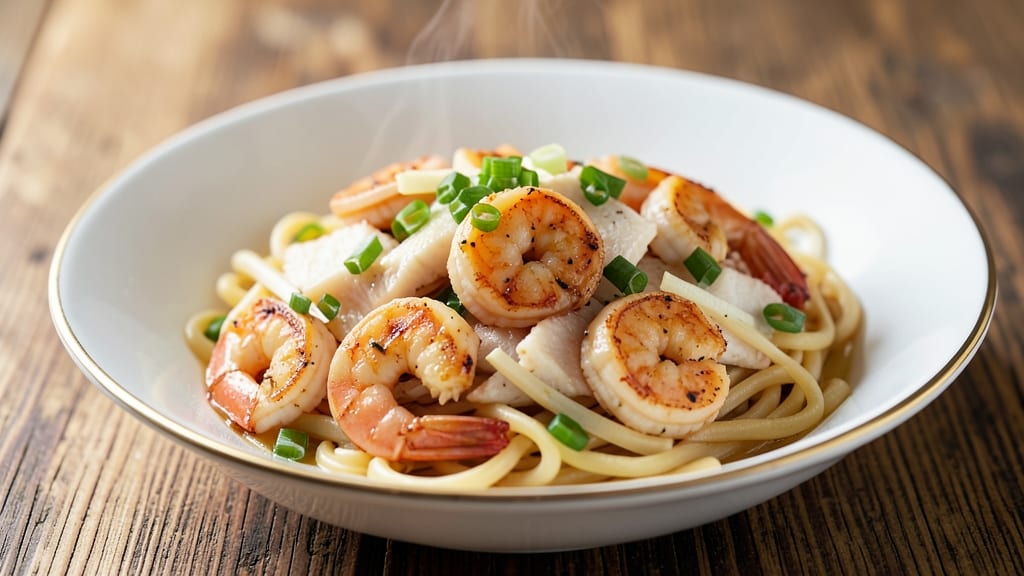
This seafood egg noodles recipe delivers the perfect balance of crispy wok-fried noodles and silky poached eggs, elevated by fresh seafood and aromatic flavors. The technique combines quick stir-frying with gentle poaching to create a dish that's both restaurant-quality and surprisingly simple to make at home.
I've perfected this version after years of testing, ensuring every bite delivers that satisfying contrast of textures and flavors.
The foundation of this dish lies in properly cooking the egg noodles until they're just tender enough to hold their shape while still maintaining that satisfying bite. Meanwhile, the seafood—whether shrimp, scallops, or fish—gets a quick sear in the wok, locking in juices and adding depth of flavor.
The sauce, a delicate balance of soy, sesame, and a touch of sweetness, ties everything together without overpowering the fresh ingredients.
What you'll end up with is a plate of golden, wok-fried noodles with perfectly poached eggs on top, their runny yolks creating a luxurious finish. The seafood adds a delicate sweetness that complements the savory noodles and rich eggs, while fresh herbs and scallions provide a bright, fresh contrast.
This dish is elegant enough for brunch with guests but simple enough for a weeknight dinner.
The beauty of this recipe is its versatility—swap in different seafood based on what's fresh and available, or adjust the sauce to your preference. With just a few key techniques and quality ingredients, you'll create a dish that tastes like it came from your favorite Asian bistro.
Let's get started on making this seafood egg noodles masterpiece.
Ingredients for seafood egg noodles
Fresh seafood, silky eggs, and crispy noodles—these ingredients create a restaurant-quality dish at home.
| Ingredient | Amount | Notes |
|---|---|---|
| Egg Noodles 🍜 | 8 oz | Fresh or dried, egg-based preferred |
| Large Eggs 🥚 | 4 whole | Fresh, room temperature |
| Shrimp 🦐 | 1 lb | Peeled, deveined, tail-on |
| Scallops 🐚 | ½ lb | Fresh, dry-packed |
| White Fish Fillets 🐟 | 6 oz | Cod or halibut, skinless |
| Green Onions 🧅 | ¼ cup | Thinly sliced, white and green parts |
| Fresh Cilantro 🌿 | ¼ cup | Chopped, stems removed |
| Sesame Oil 🫒 | 1 tbsp | Toasted, for aroma |
| Light Soy Sauce 🍶 | 2 tbsp | For balance, not dark |
| Dark Soy Sauce 🍶 | 1 tbsp | For color depth |
| Oyster Sauce 🍶 | 1 tbsp | High-quality, less salt |
| Rice Vinegar 🍶 | 1 tbsp | Seasoned preferred |
| Sesame Seeds 🌾 | 1 tsp | Toasted, for garnish |
| Vegetable Oil 🫒 | ½ cup | High smoke point |
| Salt 🧂 | 1 tsp | Kosher or sea salt |
| White Pepper 🌶️ | ¼ tsp | Freshly ground |
The seafood selection is key. Shrimp and scallops should be fresh—ask your fishmonger for day-of delivery if possible. For the fish, cod or halibut holds up best to quick cooking. If you can't find fresh, frozen shrimp and scallops work too, just thaw them in the fridge overnight. The noodles? Egg noodles are non-negotiable here—they hold their shape better than wheat noodles. I grab mine at Trader Joe's or Whole Foods since they're pre-cooked and ready to fry. For the eggs, room temperature is crucial—they poach more evenly.
No shrimp? Swap in mussels or clams, but reduce cooking time by half. Scallops too pricey? Thinly sliced zucchini or mushrooms mimic the texture. The soy sauces matter—light soy for flavor, dark for color. If you can't find seasoned rice vinegar, regular rice vinegar plus 1/4 tsp sugar works. For the sesame oil, toasted sesame oil (not regular) adds that nutty aroma that's essential. The cilantro is optional but adds brightness—skip it if you're sensitive to its flavor. And the fish fillets? Cut into 1-inch pieces for even cooking.
Prep the seafood last—it cooks in minutes. Store raw seafood in the coldest part of your fridge, use within 1 day of purchase. The eggs? Keep in the fridge until ready to poach. Leftover noodles? Reheat in a dry pan for 2 minutes to restore crispiness. This dish reheats beautifully—2-3 days in the fridge, 1 month frozen. I always make extra sauce to drizzle on top—it keeps for 1 week in the fridge. For presentation, arrange noodles on a plate, poach eggs directly on top, and garnish with sesame seeds and green onions.
Why You'll Love This Recipe
- I’ll be real: seafood can be pricey, but this recipe stretches it. A single fillet and a handful of shrimp go a long way when mixed with eggs and noodles. Leftovers? Even better. They reheat like a dream, so you’re not stuck eating sad takeout the next day.
- One-Pan Magic: I swear by this recipe when I’m too tired to wash dishes. Toss the shrimp, scallops, and fish fillets right into the same pan with the noodles—no extra pots, no stress. The eggs bind everything together while cooking, so you’re left with a single pan that’s easier to clean than a first date’s napkin.
- Umami Bomb: Between us, the secret’s in the eggs. They’re not just for binding—they add this rich, almost buttery depth that makes the dish taste like it simmered for hours. Add a splash of soy sauce or a sprinkle of fish sauce, and suddenly you’ve got restaurant-quality flavor without the fuss.
- Weeknight to Weekend: This recipe works for everything: a rushed Tuesday dinner, a potluck where you want to bring something impressive, or even a lazy Sunday brunch. Swap in whatever seafood’s on sale, and it’s still a winner. My roommates don’t even question it—just grab seconds.
Step-by-step instructions for wok-fried seafood egg noodles
Master this technique for perfectly crispy noodles and silky eggs every time.
Prepare the Seafood and Noodles
Start with the shrimp and scallops - pat them completely dry with paper towels. This is crucial for achieving that signature crispy texture when we wok-fry them later. Season both the shrimp and scallops with ½ teaspoon salt and ⅛ teaspoon white pepper each, tossing gently to coat evenly. Set aside the white fish fillets for now - we'll handle those separately.
Cut the 8 oz egg noodles into 3-inch lengths using kitchen shears or a sharp knife. This size gives you perfect bite-sized pieces that crisp beautifully. Blanch the noodles in boiling water for 1 minute exactly, then immediately drain and rinse under cold water. This stops the cooking process and removes excess starch that would make them gummy. Spread the noodles on a wire rack to dry completely - they should be dry to the touch before frying.
Poach the Eggs to Perfection
Fill a deep skillet with 3 inches of water and bring to a gentle simmer over medium-low heat. Crack each of the 4 whole large eggs into a small bowl, then carefully slide them into the water one at a time. The water should be moving gently but not boiling vigorously - you're looking for small bubbles at the bottom, not a rolling boil.
Poach the eggs for 3 minutes for runny yolks or 3 minutes 30 seconds for slightly firmer yolks. They're done when the whites are set but the yolks remain perfectly silky. Use a slotted spoon to transfer the eggs to paper towels to drain, then cover with a clean towel to keep warm. The eggs should stay warm but not overcook while you finish the rest of the dish.
Wok-Fry the Seafood and Noodles
Heat a wok or large skillet over high heat until it's screaming hot. Add ½ cup vegetable oil and swirl to coat the bottom evenly. Working in batches to avoid crowding, add the shrimp and scallops. Stir-fry for 1-2 minutes until they develop a golden-brown crust on all sides. Remove with a slotted spoon and set aside.
In the same wok, add just enough oil to lightly coat the noodles. Toss the dried noodles vigorously for 1-2 minutes until they're uniformly golden brown and crispy. The high heat is essential here - you're looking for that satisfying crunch that defines this dish. Add the reserved seafood back to the wok and toss everything together for 30 seconds to combine.
Create the Flavorful Sauce
Lower the heat to medium and add 1 tbsp sesame oil, 2 tbsp light soy sauce, 1 tbsp dark soy sauce, 1 tbsp oyster sauce, and 1 tbsp rice vinegar to the wok. Stir constantly for 1 minute until the sauce thickens slightly and coats the noodles evenly. The dark soy sauce will give that beautiful glossy finish while balancing the other flavors.
Return the poached eggs to the wok and gently toss everything together just to warm through. The residual heat will create a delicate sheen on the eggs without overcooking them. Sprinkle with ½ cup chopped green onions and ½ cup chopped fresh cilantro, then finish with 1 tsp toasted sesame seeds. Serve immediately while the noodles are crispy and the eggs are silky.
Pro Tips For Making Seafood Egg Noodles
- Cook Shrimp First: Shrimp cook in 90 seconds flat—if you wait for the fish or scallops, they’ll turn to rubber. Toss them in a separate pan with a splash of water, a pinch of salt, and a glug of oil while you prep everything else. That way, they’re done exactly when the eggs are set and the noodles are al dente.
- Pat Scallops Dry: Wet scallops steam instead of sear, and that’s a fast track to blandness. Grab paper towels and press hard—like you’re mad at them. The extra 30 seconds now means golden crusts instead of sad, gray centers later.
- Resist Overcrowding the Pan: I learned this the hard way—packing too much seafood into the wok or skillet makes the eggs scramble into a gluey mess. Work in batches: cook the fish first, then the scallops, then the shrimp. Your noodles will thank you with a silky, not soggy, finish.
- Use Cold Eggs for Egg Noodles: Straight from the fridge, cold eggs make noodles that hold their shape and don’t turn mushy when tossed. Whisk them in a chilled bowl, then let them sit for 5 minutes before cooking—just enough time to warm slightly, but not enough to get lazy. (Yes, even if you’re impatient like me.)
Make-ahead tips for this recipe
Noodle Prep Ahead
Cook the egg noodles 1 day ahead and store them in an airtight container in the fridge. After blanching, rinse them in cold water, drain thoroughly, and spread on a wire rack to dry completely.
This step is crucial—they'll crisp up beautifully when reheated. I like to portion them into 4 equal servings for easy assembly later. 🍜
Seafood Prep Strategy
Pat and season shrimp and scallops up to 24 hours ahead and store them in a sealed container in the fridge. The key is keeping them bone-dry—this ensures maximum crispiness when you wok-fry them.
For fish fillets, cut them into 1-inch pieces and store separately. I always prep seafood last to maintain freshness and texture. 🦐
Egg Poaching Shortcut
Make a large batch of poached eggs ahead and store them in an ice water bath for up to 2 days. To reheat, place them in a wire basket over simmering water for 30 seconds to restore their silky texture.
This is my favorite time-saver—just reheat the eggs right before serving. For extra insurance, keep them covered with a damp towel to maintain moisture. 🥚
Sauce Prep in Advance
Combine all sauce ingredients—soy sauces, oyster sauce, rice vinegar, and sesame oil—in a small jar and store in the fridge for up to 1 week.
Shake well before using. I often double the batch because it's so versatile—great for drizzling over rice bowls or noodles. The flavors meld beautifully overnight. 🍶
Complete Assembly
When ready to serve, simply reheat the noodles in a dry wok for 1-2 minutes until crispy again. Add the prepped seafood and toss with the sauce.
Place the reheated poached eggs on top and garnish with fresh herbs. This assembly takes just 5 minutes—perfect for busy mornings or last-minute brunch guests. ✨
Freezing Tips
For longer storage, freeze the cooked noodles and seafood mixture (without sauce) in a single layer on a tray for 1 hour, then transfer to a freezer bag for up to 1 month.
Reheat by microwaving for 2 minutes with a splash of water, then crisp in a wok. The eggs don't freeze well, so always poach fresh when serving. 💫
Nutrition facts
Frequently asked questions
Can I use frozen shrimp instead of fresh?
Thaw frozen shrimp overnight in the fridge before using. Pat them completely dry with paper towels to ensure they crisp up perfectly when stir-fried. The key is removing all moisture—this prevents steaming instead of searing. Just don't thaw at room temperature, as that can promote bacterial growth.
How do I prevent the noodles from getting soggy?
After blanching, rinse the noodles in cold water and spread them on a wire rack to dry completely before frying. This removes excess starch that causes sogginess. Also, work in batches if needed—overcrowding the wok will steam the noodles instead of crisping them. The goal is that satisfying crunch that defines this dish!
What if I don't have a wok? No problem! Use a large, heavy-bottomed skillet or even a cast-iron pan. The key is getting it as hot as possible before adding oil. A wok distributes heat perfectly, but any high-heat pan will work. Just
Can I make this dish vegetarian?
Yes, but you'll need to adjust the flavors. Swap the seafood for shiitake mushrooms or tofu (pressed and sliced thin), and add extra umami with 1 tbsp mushroom powder or ½ tsp fish sauce substitute. The sauce ratios will work, but you may want to add a splash of vegetable broth instead of oyster sauce for depth. The crispy noodles and poached eggs will still shine!
How do I make the eggs extra silky?
Use very fresh eggs (preferably from a farm stand) and poach them in water that's just at a gentle simmer—not a rolling boil. Add a splash of white vinegar to the water (1 tbsp per gallon) to help the whites set more quickly while keeping yolks runny. The secret is patience—remove them just when the whites are fully set but yolks remain liquid.