
Desserts
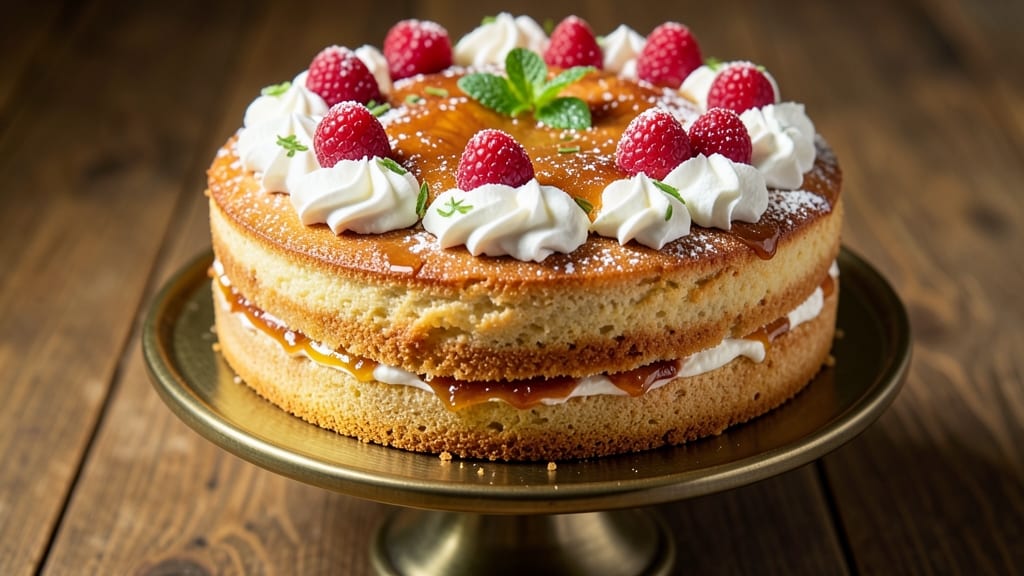
This 6-egg cake recipe delivers restaurant-quality fluffiness without the risk of overmixing—thanks to a precise technique that balances structure and airiness. The secret lies in the eggs, which provide both moisture and stability, creating layers that rise effortlessly.
I’ve baked this cake dozens of times, and it never fails to impress with its tender crumb and golden-brown top.
The recipe relies on a foolproof method where eggs are incorporated gently, just until combined, to maintain maximum air. This approach ensures a light, airy texture without requiring special equipment—just a standard mixing bowl and oven.
The result is a cake that’s moist, voluminous, and perfect for celebrations or everyday treats.
What sets this apart is the versatility—you can customize it with flavors like vanilla, chocolate, or citrus zest, or even adapt it for dietary preferences by substituting eggs with applesauce or flaxseed. The baking time is straightforward, and the frosting options are endless, from buttercream to cream cheese.
Whether you're a beginner or an experienced baker, this recipe delivers consistent, professional results every time. The key is patience and precision, but the payoff—a perfectly fluffy cake—is worth every minute. Let’s get started!
Ingredients for 6 egg cake
Six eggs, precise measurements, and gentle technique create a cake with restaurant-quality fluffiness.
| Ingredient | Amount | Notes |
|---|---|---|
| Large Eggs 🥚 | 6 whole | Room temperature for best volume |
| Granulated Sugar 🍚 | 1 ½ cups | White or light brown preferred |
| All-Purpose Flour 🌾 | 2 cups | Sifted for light texture |
| Unsalted Butter 🧈 | 1 cup | Softened to room temperature |
| Vanilla Extract 🌿 | 1 tbsp | Pure extract, not imitation |
| Baking Powder 🍞 | 2 tsp | Aluminum-free preferred |
| Salt 🧂 | ½ tsp | Fine sea salt preferred |
| Whole Milk 🥛 | ½ cup | Room temperature |
| Lemon Zest 🍋 | 1 tbsp | Freshly grated |
| Vegetable Oil 🫒 | ¼ cup | Light, neutral flavor |
| Cream Cheese 🧀 | 4 oz | Room temperature for frosting |
| Powdered Sugar 🍚 | 1 ½ cups | For buttercream |
| Heavy Whipping Cream 🥛 | ½ cup | Cold for stability |
The eggs are the foundation—room temperature ensures proper emulsification for maximum volume. Kirkland Signature or Perdue large eggs work best for consistent results. Store-bought butter should have a 70% fat content for optimal creaminess, and Land O'Lakes or Plugrá are reliable brands. The flour must be sifted to eliminate lumps, which disrupts the delicate air pockets. For the vanilla, McCormick Pure Vanilla Extract delivers the most authentic flavor without artificial aftertaste. Lemon zest should be freshly grated—organic Meyer lemons from the grocery store produce the brightest flavor.
No vanilla extract? Vanilla bean paste works at half the amount, or vanilla sugar can be substituted by dissolving 1 tbsp in the milk. For a dairy-free option, replace the milk with unsweetened almond milk>, though texture may vary slightly. The cream cheese frosting requires Philadelphia brand for its smooth consistency—Neufchâtel works too but has a slightly different fat ratio. If you prefer a lighter frosting, replace half the butter with light cream cheese. The powdered sugar should be sifted before whipping to avoid graininess, and Domino or C&H brands are widely available.
Store eggs in their original carton in the coldest part of your fridge for up to 3 weeks. Butter and cream cheese should remain sealed in the refrigerator until use. The cake batter can be prepared 24 hours ahead and refrigerated, but bring all ingredients to room temperature before baking. Once baked, the cake keeps at room temperature for 2 days or refrigerated for 5 days. The frosting can be made 1 day ahead and stored in the fridge, rewhipped before use. For long-term storage, freeze the unfrosted cake for up to 3 months
Why You'll Love This Recipe
- Same batter, two vibes: serve it warm with a dusting of powdered sugar for a decadent breakfast, or chill it overnight for a no-fuss vanilla cake. My kids don’t even question why it’s on the table.
- No Mixer Needed: I swear by this recipe on days when I’ve got no energy—just whisk eggs and sugar by hand until light and fluffy. That butter gets folded in like a dream, and honestly? No stand mixer required.
- Vanilla Butter Bliss: The moment that vanilla-infused butter melts into the warm cake? Pure comfort. It’s rich but not heavy, with just enough sweetness to make you reach for seconds.
- Breakfast or Dessert: Same batter, two vibes: serve it warm with a dusting of powdered sugar for a decadent breakfast, or chill it overnight for a no-fuss vanilla cake. My kids don’t even question why it’s on the table.
Step-by-step instructions for fluffy layers without overmixing
Master the art of light, airy cake layers with precise technique and minimal mixing.
Prepare Your Mixing Tools and Ingredients
Begin by ensuring all your ingredients are at the proper temperatures. The 6 whole large eggs and 1 cup unsalted butter should be at room temperature—press your finger gently into the butter; it should leave a slight indentation but hold its shape. Sift the 2 cups all-purpose flour and 2 teaspoons baking powder together into a medium bowl to remove any lumps and aerate the flour. This step is crucial for achieving a light, tender crumb.
In a separate small bowl, whisk together the 1.5 cups granulated sugar, 1 tablespoon vanilla extract, and 1 tablespoon lemon zest. The lemon zest adds a subtle brightness that balances the richness of the butter and eggs, while the vanilla enhances the overall flavor profile. Keep this mixture aside until you're ready to combine it with the eggs and butter.
Cream Butter and Sugar for Maximum Volume
In a stand mixer fitted with the paddle attachment, beat the 1 cup softened unsalted butter and 1.5 cups granulated sugar on medium speed for 3-4 minutes. You're aiming for a light, fluffy texture that nearly doubles in volume and becomes pale in color. This creaming process incorporates air into the mixture, which is essential for achieving those high, fluffy layers. If using a hand mixer, increase the time to 5 minutes to ensure proper aeration.
Scrape down the sides of the bowl with a rubber spatula every 30 seconds to ensure all the butter is fully incorporated. The mixture should be smooth and ribbon-like—when you lift the paddle, the ribbon should hold its shape for a few seconds before dissolving back into the bowl. This is your signal that the butter and sugar are properly emulsified and ready for the next step.
Alternate Adding Dry Ingredients and Milk
With the mixer running on low speed, add one-third of the sifted flour mixture, followed by half of the 0.5 cup whole milk. Mix just until combined, then repeat, ending with the remaining flour mixture. This alternating method ensures even distribution of the dry ingredients and prevents overmixing, which can lead to a dense cake. After adding all the flour and milk, mix for an additional 10-15 seconds until the batter is smooth and no flour streaks remain.
Add the 6 whole large eggs, one at a time, mixing on low speed for 10 seconds after each addition. This gradual incorporation prevents the eggs from scrambling and maintains the airiness of the batter. Once all the eggs are added, mix in the prepared sugar-vanilla-lemon zest mixture until fully combined. The batter should be thick but pourable—if it looks too thin, let it rest for 5 minutes before proceeding.
Incorporate Oil and Bake the Layers
Gently fold in the 0.25 cup vegetable oil using a rubber spatula. The oil adds moisture and tenderness to the cake layers, ensuring they remain soft and fluffy. Divide the batter evenly among three 8-inch round cake pans lined with parchment paper and lightly greased with butter. Tap the pans gently on the counter to remove any air bubbles and ensure the batter settles evenly.
Preheat your oven to 350°F. Bake the cakes for 25-30 minutes, or until a toothpick inserted into the center comes out clean. Rotate the pans halfway through baking for even browning. The cakes should spring back slightly when pressed in the center and have a golden dome. Avoid overbaking, as this can lead to dry layers. Let the cakes cool in the pans for 10 minutes, then transfer to a wire rack to cool completely before frosting.
Prepare the Cream Cheese Frosting
In a large mixing bowl, beat the 4 oz room-temperature cream cheese and 1.5 cups powdered sugar using an electric mixer on medium speed until smooth and creamy. Add the 0.5 cup cold heavy whipping cream and mix on high speed for 2-3 minutes until the frosting is light, fluffy, and holds stiff peaks. The cold cream stabilizes the frosting and ensures it doesn't melt when applied to the cake layers.
Once the cake layers are completely cool, spread a thin layer of frosting between each layer, pressing down gently to remove any air pockets. This step is essential for preventing a soggy cake. Frost the entire cake with the remaining frosting, smoothing the sides with a spatula. Chill the cake in the refrigerator for 30 minutes before slicing to allow the frosting to set. This ensures clean, professional-looking slices every time.
Pro Tips For Making 6 Egg Cake
- Whisk Eggs Until Ribbon Stage: Stop when the mixture holds a slow, thick ribbon between the whisk and bowl—no need to overbeat. I learned this the hard way after making a cake so dense it tasted like a hockey puck.
- Cream Butter and Sugar Low: Mix butter and sugar on medium-low heat for 3-5 minutes until pale and fluffy, not hot. High heat turns the butter greasy, and the cake will taste like a sad, buttery puddle.
- Sift Flour Twice: First sift to remove lumps, then sift again after mixing dry ingredients—this lightens the texture. Skipping this step is how you end up with a cake that looks like it’s been through a blender.
- Bake at 325°F, Not Higher: This recipe needs steady, gentle heat to rise properly—325°F is non-negotiable. I was in a rush once and cranked it to 350°F; the top browned before the center set, and the whole thing collapsed like a deflating balloon.
Make-ahead tips for this recipe
Batter Prep Ahead
Prepare the cake batter up to 24 hours in advance and store it in an airtight container in the refrigerator. I like to cover the bowl with plastic wrap pressed directly onto the surface to prevent a skin from forming.
When ready to bake, let the batter sit at room temperature for 30-60 minutes—this helps restore some of the air that may have settled during storage. Stir gently before dividing into pans to maintain even consistency. 💫
Layered Cake Assembly
Assemble the cake layers 12 hours before serving—this allows the frosting to set properly and flavors to meld. I recommend using a serrated knife to level the tops of each cake layer for even frosting application.
Place parchment paper between layers if stacking ahead of time to prevent sticking. Store the assembled cake in the fridge until ready to serve. 🍰
Frosting Make-Ahead
Make the cream cheese frosting 1 day ahead and store it in an airtight container in the refrigerator. When ready to use, let it sit at room temperature for 10-15 minutes before whipping again to restore fluffiness.
If the frosting appears grainy, strain it through a fine-mesh sieve to remove any lumps. Rewhip until light and airy before applying to the cake layers. ✨
Fully Baked Storage
Bake the cake layers fully and let them cool completely before storing. Wrap each layer individually in plastic wrap and place them in an airtight container. They’ll keep at room temperature for 2 days or refrigerated for 5 days.
For long-term storage, freeze the unfrosted layers for up to 3 months. Thaw overnight in the fridge before frosting and assembling. 💪
Frosted Cake Storage
Once fully frosted, store the cake in the refrigerator for up to 4 days. Bring it to room temperature for 30 minutes before serving to soften the frosting slightly. If storing longer than 2 days, cover the cake with a cake dome or plastic wrap to prevent drying.
For a quick refresh, brush the top with a simple syrup (equal parts sugar and water, heated until dissolved) before serving. 🌟
Freezing Fully Assembled
For a fully assembled and frosted cake, wrap it tightly in plastic wrap followed by aluminum foil to prevent freezer burn. Label with the date and freeze for up to 2 months.
To serve, thaw overnight in the fridge, then let it sit at room temperature for 1 hour before slicing. The frosting may soften slightly but can be refreshed with a quick rewhip if needed. 🍧
Nutrition facts
Frequently asked questions
Why does this recipe use 6 eggs instead of the usual 3?
Six eggs create a richer, more stable structure while keeping the cake incredibly moist and fluffy. The extra eggs add protein for better rise and prevent a dense texture. This ratio works perfectly for 3 standard 8-inch layers, giving you plenty of cake for gatherings without compromising texture.
Can I make this cake without a stand mixer?
Use a hand mixer and increase the creaming time to 5 minutes for butter and sugar. For the eggs, add them one at a time with gentle folding by hand—just mix until each is fully incorporated without overworking the batter. The key is patience with the mixing process.
How do I prevent cracks in the cake layers?
Cracks usually happen from overbaking or opening the oven too soon. Bake until a toothpick comes out clean (about 25-30 minutes at 350°F) and let the cakes cool in pans for 10 minutes before removing. Avoid high humidity in your kitchen, which can also contribute to cracking.
What can I substitute if I don't have cream cheese for the frosting?
For a dairy-free option, use coconut cream whipped with powdered sugar. For a lighter texture, try mascarpone mixed with whipped cream. If you prefer a chocolate frosting, replace the cream cheese with 4 oz melted dark chocolate (cooled) and add 1 tbsp butter to help smooth it.
Can I bake this cake in a different pan size?
Yes, but adjust the baking time. For 9-inch pans, bake 20-25 minutes (they'll be thinner). For 6-inch pans, bake 30-35 minutes. The key is to check for doneness with a toothpick—it should come out clean. Divide the batter proportionally (e.g., 2/3 for 9-inch pans, 1/3 for 6-inch pans).