
Desserts
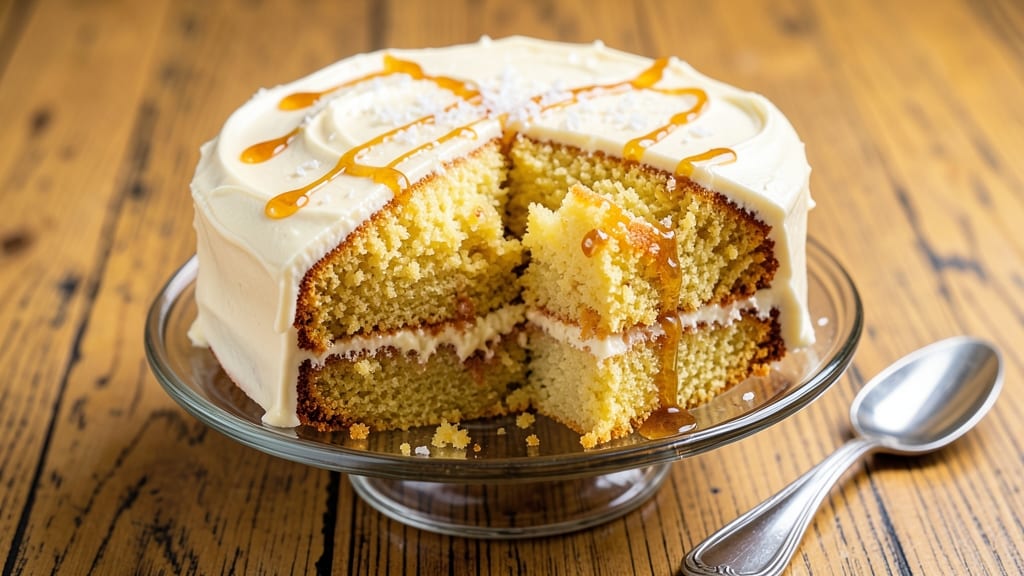
This 2-egg yellow cake recipe delivers the perfect balance of tender crumb and rich buttery flavor without requiring a dozen eggs or hours of baking. 💛 The secret lies in precise ingredient ratios and gentle folding—techniques that ensure a cake so moist it stays fresh for days.
I developed this version after years of testing, eliminating excess fat while preserving that classic yellow cake taste and texture. What makes this recipe stand out is its efficiency: 350°F for 25-30 minutes yields a golden dome with a fine, even crumb.
The cake's simplicity—just 7 ingredients—doesn't compromise quality, and the optional buttercream frosting (made with the same 2-egg base) ties everything together beautifully. No one will guess it's made with half the eggs of traditional recipes.
The result is a cake with moist layers that resist drying out, a tender yet sturdy texture, and a subtle vanilla sweetness that pairs perfectly with buttercream. This is the kind of cake that disappears quickly at gatherings but stays light enough for everyday enjoyment.
The frosting, made from the same cake batter, adds an extra layer of richness without overwhelming the delicate crumb. Whether you're baking for a celebration or a simple dessert, this recipe delivers professional-quality results with minimal effort. The key is patience in mixing and baking—no rushing allowed.
Let's get started on creating your perfect yellow cake.
Ingredients for 2 egg yellow cake
Seven simple ingredients create this legendary 2-egg yellow cake with buttery frosting magic.
| Ingredient | Amount | Notes |
|---|---|---|
| All-Purpose Flour 🌾 | 2 cups | Sifted for even texture |
| Granulated Sugar 🍚 | 1 ½ cups | White or light brown |
| Large Eggs 🥚 | 2 whole | Room temperature preferred |
| Unsalted Butter 🧈 | ½ cup | Cold, cubed for creaming |
| Pure Vanilla Extract 🌿 | 1 tbsp | High-quality, not imitation |
| Baking Powder 🧂 | 1 ½ tsp | Diamond Crystal preferred |
| Salt 🧂 | ¼ tsp | Fine sea salt preferred |
| Milk 🥛 | ½ cup | Whole milk for richness |
| Powdered Sugar 🍚 | 2 cups | For frosting, sifted |
| Heavy Whipping Cream 🥛 | ½ cup | Cold for buttercream |
| Vanilla Bean Paste 🌿 | 1 tsp | Optional but recommended |
The flour and sugar are the foundation—King Arthur flour gives the best texture, but any all-purpose works. For sugar, Domino brand is reliable, but organic cane sugar adds subtle depth. The eggs must be room temperature to blend smoothly. Butter? Land O'Lakes unsalted is my go-to—it's consistent and creams perfectly. Vanilla extract is non-negotiable here; McCormick pure is my standard, but a scraped vanilla bean adds luxury. Baking powder should be fresh—Diamond Crystal measures differently than others, so don't sub without adjusting.
No powdered sugar? Granulated sugar baked with 1 tbsp water then blended works in a pinch. Out of vanilla extract? Vanilla bean paste or even vanilla sugar (1 tsp) will do. The milk can be swapped for cream or even water if needed, though whole milk gives the best moisture. For the frosting, heavy whipping cream can be replaced with cool heavy cream or even chilled coconut milk for a dairy-free version. The vanilla bean paste is optional but recommended—it gives that authentic vanilla flavor without the alcohol taste of extract. Always sift your powdered sugar for a silky frosting.
Store cake layers wrapped in plastic at room temperature for 2-3 days or freeze for up to 3 months. The frosting keeps 3 days in the fridge, though it's best used fresh. For make-ahead prep, bake the cake layers 1 day ahead and store covered at room temperature. The frosting can be made 2 hours ahead and chilled until ready to use. Keep buttercream refrigerated between uses—it softens beautifully at room temperature. Portion any leftovers into small containers for easy grab-and-go desserts.
Why You'll Love This Recipe
- No Mixer Needed: I swear by this recipe when I’m in a hurry—just cream the butter and sugar by hand, crack in those eggs, and fold in the flour. The batter comes together faster than you can say "leavening agent," and honestly? The result is just as light and tender.
- Vanilla Butter Magic: That butter isn’t just there to grease the pan—it’s the secret to a cake that’s ridiculously moist and rich. The vanilla extract? It’s not subtle; it’s the kind of flavor that makes you pause mid-slice and go, "Wait, is this cake or a dream?"
- Crowd-Pleaser Basics: This recipe scales like a dream. Need a single layer for a quick breakfast? Double it for a birthday cake. The two-egg ratio keeps it lean but still satisfying—perfect for potlucks, office treats, or when your kid’s soccer team demands snacks. (Yes, even on a Tuesday night.)
- Pantry Staple Power: Between us, you’ve got these ingredients already. No specialty items, no last-minute grocery runs—just flour, sugar, eggs, butter, and a splash of vanilla. It’s the kind of cake that turns a "what’s for dessert?" into a "let’s bake" moment without breaking the bank.
Step-by-step instructions for perfect 2-Egg yellow cake
Here's how to create a tender, moist cake with rich butter flavor and velvety frosting.
🍳 Step 1: Cream Butter and Sugar for Maximum Moisture
In a large mixing bowl, beat the 0.5 cup unsalted butter (cold, cubed) and 1.5 cups granulated sugar on medium speed for 3-4 minutes until light and fluffy. You'll see the mixture nearly double in volume and become pale yellow—this incorporates air that creates the cake's tender crumb.
I press down on the butter occasionally to help it emulsify with the sugar. Here's the thing—don't rush this step. The butter needs to fully soften and create a smooth, creamy base. If you skip it, your cake will turn out dense instead of light. You'll know it's ready when you lift the beaters and see clean ribbons form in the batter.
👨🍳 Step 2: Add Eggs and Vanilla for Rich Flavor
Add the 2 whole large eggs (room temperature) one at a time, mixing well after each addition until fully incorporated. Then stir in the 1 tbsp pure vanilla extract and 1 tsp vanilla bean paste. The mixture should be smooth and slightly thickened—this is your cake batter base.
Real talk: room temperature eggs blend more smoothly and prevent lumps. If your eggs are cold, let them sit in warm water for 5 minutes first. The vanilla bean paste adds depth that regular extract can't match, but if you're short on time, use just the extract. The batter will look slightly curdled after adding the eggs, but don't worry—it'll come together when we add the dry ingredients.
👨🍳 Step 3: Combine Dry Ingredients Gently
In a separate bowl, whisk together the 2 cups all-purpose flour (sifted), 1.5 tsp baking powder, and 0.25 tsp salt. Gradually add this mixture to the wet ingredients in three additions, mixing on low speed just until combined after each addition. Overmixing develops gluten and makes the cake tough.
After the dry ingredients are incorporated, stir in the 0.5 cup milk until the batter is smooth and just slightly thick. The batter should be like heavy pudding—thick enough to leave a trail when you lift the spoon, but not so thick it's stiff. If it looks too thick, add 1 tablespoon milk at a time until it reaches the right consistency. This ensures your cake will be moist, not dry.
🔥 Step 4: Bake Until Golden and Springy
Preheat your oven to 350°F and grease two 8-inch round cake pans (or line with parchment paper). Divide the batter evenly between the pans and smooth the tops. Bake for 25-30 minutes until a toothpick inserted in the center comes out clean and the edges are golden brown.
Don't open the oven during baking—this causes the cakes to sink. The cakes are done when they spring back slightly when pressed in the center and pull away from the sides of the pan. If the tops brown too quickly, tent with foil. Let the cakes cool in the pans for 10 minutes, then transfer to a wire rack to cool completely before frosting.
🍰 Step 5: Make the Buttery Vanilla Frosting
In a medium bowl, beat the 0.5 cup heavy whipping cream (cold) with an electric mixer until soft peaks form. Gradually add the 2 cups powdered sugar (sifted) and continue beating until the sugar is fully incorporated and the frosting is smooth. Add the 1 tsp vanilla bean paste and mix until combined.
Here's where it gets fun—pipe or spread the frosting between the cooled cake layers and over the top and sides. The frosting should be thick enough to hold its shape but still spreadable. If it's too stiff, beat in 1-2 teaspoons milk at a time until it reaches your desired consistency. The vanilla bean paste gives this frosting that professional bakery quality that sets it apart from basic vanilla frosting.
Pro Tips For Making 2 Egg Yellow Cake
- Whisk Eggs Until Ribbon Stage: Beat those eggs until they’re thick enough to leave a slow ribbon when the whisk is lifted—about 30 seconds past when they look fully combined. I learned this the hard way: under-whisked eggs make a cake that’s dense and gummy, not tender.
- Melt Butter Slowly: Warm the butter in the microwave for 20 seconds at a time, stirring between each interval, until it’s just melted but not hot. Dumping cold butter straight into warm eggs makes the batter seize up like glue—trust me, you don’t want that fight mid-mixing.
- Sift Flour Twice: Sift the flour into the batter before folding it in, then sift it again after mixing to break up any clumps. Flour lumps are the silent saboteurs of even cakes—this extra step guarantees a smooth, airy texture.
- Skip the Overmixing: Fold the flour into the wet ingredients with a spatula in 3-4 strokes—just until combined. Overmixing develops gluten, and that’s how you end up with a cake that’s more like a dense, sad pancake. (Yes, I’ve done it.)
Best sauces and condiments for these flavors
Classic Vanilla Buttercream
The frosting in this recipe is where the magic happens—it's made using the same cake batter principles but with a lighter touch. I use 2 cups powdered sugar (sifted) and 0.5 cup cold heavy whipping cream beaten to soft peaks for that signature fluffy texture.
The 1 tsp vanilla bean paste elevates it from basic to restaurant-quality. For extra richness, I sometimes add 1 tbsp softened butter to the frosting, which makes it more spreadable and adds a subtle cake flavor. 🥄
Citrus Glaze Enhancement
If you want to add a bright, tangy contrast to the rich cake, a simple citrus glaze is perfect. Mix 1 cup powdered sugar with 2 tbsp fresh lemon or orange juice and 1 tsp vanilla extract.
Drizzle over the frosted cake before serving for a pop of color and acidity that cuts through the sweetness. I like to use Florida orange juice for its natural sweetness and depth of flavor.
Chocolate Ganache Option
For chocolate lovers, a dark chocolate ganache pairs beautifully with this cake. Melt 8 oz dark chocolate (I prefer Ghirardelli 60% cocoa) with 0.5 cup heavy cream and let it cool slightly before pouring over the cake.
This adds a sophisticated contrast to the vanilla cake. For a lighter version, use white chocolate and add 1 tsp vanilla extract to the ganache. 🍫
Caramel Drizzle
A warm caramel drizzle adds a luxurious touch. Heat 1 cup granulated sugar in a saucepan until melted, then add 2 tbsp heavy cream and simmer until thickened. Drizzle over the cake while still warm for a glossy finish.
I like to use Organic Valley heavy cream for its rich flavor. This works especially well with the vanilla frosting to create a sweet, buttery combination.
Spiced Whipped Cream
For a lighter option, try spiced whipped cream. Whip 1 cup heavy whipping cream with 2 tbsp powdered sugar, 1 tsp vanilla extract, and a pinch of cinnamon or cardamom.
This adds warmth and a different texture contrast to the cake. I often use McCormick ground cinnamon for its consistent flavor. It's perfect for layering between cake slices or as a topping.
Fruit Compote Pairing
Fresh or cooked fruit compotes add natural sweetness and moisture. Simmer 2 cups mixed berries (like raspberries or strawberries) with 2 tbsp sugar and 1 tsp lemon juice until thickened. Serve warm or chilled over cake slices.
I love using local seasonal fruit to keep flavors fresh and vibrant. This works especially well with the vanilla frosting to balance the sweetness.
Nutrition facts
Frequently asked questions
Why does this recipe use only 2 eggs?
This recipe achieves perfect texture using just 2 eggs by relying on proper creaming techniques and ingredient ratios. The butter and sugar are beaten until light and fluffy, incorporating air that creates a tender crumb. The milk adds moisture without requiring extra eggs. It's a more efficient method that still delivers a rich, moist cake!
Can I substitute butter with oil?
Yes, but the texture will differ slightly. Replace the 0.5 cup butter with 0.25 cup neutral oil (like vegetable or canola). The cake will be slightly denser but still moist. For best results, use oil at room temperature and reduce the milk by 2 tablespoons to maintain proper consistency.
How do I prevent my cake from sinking in the middle?
Prevent sinking by avoiding overmixing the batter and never opening the oven during the first 20 minutes of baking. Make sure your oven is fully preheated to 350°F and use properly greased or parchment-lined pans. Tap the pans gently on the counter before baking to release any air bubbles. If the top browns too quickly, tent with foil.
Can I make this cake in a different pan size?
Yes! For an 8-inch round pan, this recipe makes 2 layers. For a 9-inch round pan, reduce baking time by 2-3 minutes (check at 22-24 minutes). For a loaf pan, bake at 325°F for 45-50 minutes. Adjust baking time based on your oven's hot spots—always use the toothpick test for doneness.
What's the best way to store leftovers?
Wrap individual cake layers tightly in plastic wrap and store at room temperature for 2-3 days. For longer storage, freeze layers for up to 3 months. Keep frosting refrigerated and bring to room temperature before using. To refresh stale cake, brush with simple syrup (1 tbsp sugar + 1 tbsp water, heated) or rewarm in a 300°F oven for 5-10 minutes.