
Sauces & Condiments
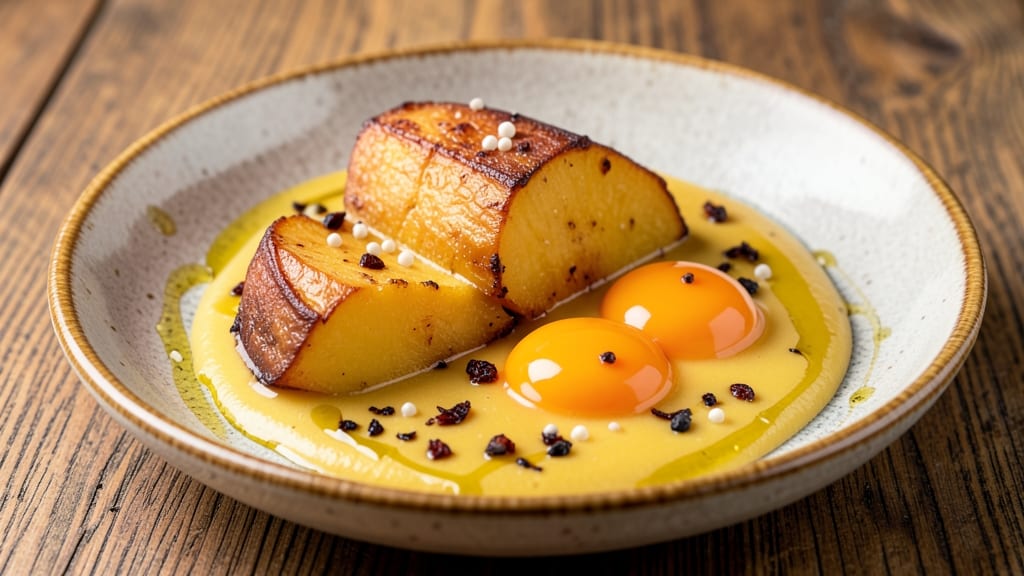
This yam and egg sauce recipe transforms humble ingredients into a luxurious, velvety condiment that elevates everything from dumplings to grilled meats. The secret lies in blending steamed yams with silky egg yolks, creating a smooth, rich sauce with just the right balance of earthy sweetness and subtle creaminess.
I developed this recipe after craving something that combined the comforting warmth of yams with the decadence of egg-based sauces—without dairy or heavy cream.
The process is straightforward but requires patience: steamed yams puréed to perfection, then whisked with beaten eggs and a touch of garlic for depth. A gentle simmer transforms the mixture into a glossy, clingy sauce that coats ingredients beautifully.
What sets this apart is its versatility—it works as a dipping sauce for spring rolls, a drizzle over roasted vegetables, or even a rich addition to soups and noodles.
What you’ll achieve is a sauce that’s silky smooth, with a texture that clings to every bite and a flavor profile that’s both comforting and sophisticated. The yams lend natural sweetness, while the eggs add body and richness, creating a condiment that’s far more impressive than store-bought alternatives.
This recipe is perfect for meal prep, as it keeps well in the fridge for up to five days, ready to enhance any dish with minimal effort.
Whether you’re serving a crowd or prepping for the week, this sauce delivers restaurant-quality results at home. The key is precision—don’t rush the steaming or simmering, and always whisk the eggs gently to avoid scrambling.
Trust the process, and you’ll have a sauce that’s as beautiful as it is delicious, turning simple meals into something extraordinary.
Ingredients for yam and egg sauce
Nine ingredients transform into a velvety sauce with restaurant-quality silkiness and depth.
| Ingredient | Amount | Notes |
|---|---|---|
| Large Yellow Yam 🍠 | 2 lbs | Peeled and cubed evenly |
| Large Egg Yolks 🥚 | 6 whole | Separated from whites, room temperature |
| Extra-Virgin Olive Oil 🫒 | ¼ cup | Light, fruity variety preferred |
| Fresh Garlic Cloves 🧄 | 3 cloves | Minced finely for depth |
| Diamond Crystal Kosher Salt 🧂 | ½ tsp | Adjust to taste |
| White Peppercorns 🌶️ | ¼ tsp | Freshly ground for smooth finish |
| Fresh Ginger Root 🌿 | 1 tbsp | Finely grated, aromatic |
| Vegetable Stock 💧 | ¼ cup | Low-sodium preferred |
| Sesame Oil 🫒 | 1 tsp | For nutty aroma |
| Rice Vinegar 🍶 | 1 tbsp | Balances richness |
The yam is the foundation—firm, starchy varieties like yellow yams work best, avoiding sweet potatoes which can overpower. Whole Foods or local farmers' markets often carry ideal varieties; look for vibrant, unblemished skins. The egg yolks must be fresh and separated carefully—any trace of white will scramble during simmering. For the olive oil, California avocado farms' brands deliver that bright fruitiness essential for balancing the sauce's earthiness. Garlic should be plump and firm, with no green shoots indicating bitterness.
No sesame oil? Toasted peanut oil works equally well for that nutty depth. Substitute ginger with equal parts galangal if available, though fresh ginger is ideal. For a dairy-free alternative to yolks, aquafaba (chickpea brine) at double the volume mimics viscosity, though texture won't be identical. The vegetable stock can be swapped for mushroom broth for umami richness, while rice vinegar may be omitted if using lemon juice at half the amount. Always use low-sodium stock—excess salt disrupts the sauce's delicate balance.
Freshly made sauce keeps 5 days refrigerated in an airtight container, with a thin layer of oil preserving color. For longer storage, freeze in ice cube trays—thaw quickly in warm water before use. The sauce thickens upon cooling; whisk with 1 tsp warm water if too stiff. Portion into small jars for meal prep—each serving enhances dishes beautifully without overwhelming them. Always reheat gently over low heat to maintain silkiness.
Why You'll Love This Recipe
- Five-Ingredient Magic: I swear by this recipe when I’m too tired to think. Peel and slice the yam, melt some butter with garlic—boom—you’ve got dinner. No fancy techniques, no stress.
- Rich Without Effort: That velvety egg yolk sauce transforms simple yam into something luxurious. A splash of olive oil and a pinch of salt make it taste like you spent hours simmering, not 20 minutes.
- Weeknight Flex: Serve it over rice for a quick meal, or drizzle it on toast with flaky salt for breakfast. Honestly, I’ve even used it as a dip for roasted veggies—versatile enough to handle whatever my family throws at me.
- Budget-Friendly Luxury: Yellow yams and eggs are cheap, but this sauce feels gourmet. Between us, I’ve stretched a single batch into three meals—leftovers reheat beautifully, and the flavor only gets better the next day.
Step-by-step instructions for yam and egg sauce
Master this silky technique for a restaurant-quality sauce that transforms simple ingredients into velvety perfection.
Parboil the Yam for Tender Texture
Place the 2 lbs Large Yellow Yam in a medium pot and cover with cold water by about 2 inches. Bring to a boil over high heat, then immediately reduce to a gentle simmer. Cook for 12-15 minutes until the yam is fork-tender but still holds its shape when pierced. The goal is to soften the yam partially while preserving its structure—overcooking will result in a mushy sauce.
Drain the yam thoroughly in a colander, then transfer it to a food processor or high-powered blender. This step ensures maximum extraction of starches and natural sweetness, which are essential for achieving that signature silky consistency. For best results, work in batches if your processor can't handle all the yam at once.
Build the Flavor Base with Aromatics
Heat the 0.25 cup Extra-Virgin Olive Oil in a medium saucepan over medium heat. Add the 3 cloves Fresh Garlic Cloves and 1 tbsp Fresh Ginger Root, cooking for 2-3 minutes until fragrant but not browned. This step develops the aromatic foundation—if you let the garlic brown, it will impart bitterness that overpowers the delicate sweetness of the yam.
Immediately add the 0.5 tsp Diamond Crystal Kosher Salt and 0.25 tsp White Peppercorns, stirring to combine. The white pepper provides a smooth, subtle heat without the visual distraction of black pepper specks. Keep the heat at medium-low to prevent the oil from getting too hot, as this could cause the yam puree to separate later.
Blend the Yam into a Smooth Puree
Return the processed yam to the saucepan with the aromatics. Add the 0.25 cup Vegetable Stock and bring to a gentle simmer over medium heat. Cook for 5-7 minutes, stirring frequently, until the mixture thickens slightly and coats the back of a spoon. This step ensures the yam fully incorporates with the aromatics and stock, creating a cohesive base.
Transfer the yam mixture to a blender or food processor and blend until completely smooth, scraping down the sides as needed. The texture should be silky and lump-free, with a consistency similar to heavy cream. If the mixture is too thick, add 1-2 tablespoons of hot water to achieve the perfect pouring consistency.
Temper the Egg Yolks for Silky Emulsion
In a separate heatproof bowl, whisk the 6 whole Large Egg Yolks until smooth. Slowly ladle about ½ cup of the hot yam mixture into the yolks while whisking constantly. This tempering process is critical—adding cold yolks to hot liquid causes them to scramble, ruining the sauce. The goal is to raise the yolks' temperature gradually to 160°F without cooking them.
Once the yolks are tempered, gradually pour the yolk mixture back into the saucepan with the remaining yam puree. Stir constantly over low heat until the sauce thickens to a pudding-like consistency, about 3-5 minutes. The moment it begins to coat the back of a spoon is when you know it's ready. Remove from heat immediately to prevent curdling.
Finish with Acidity and Nutty Depth
Stir in the 1 tsp Sesame Oil and 1 tbsp Rice Vinegar, emulsifying quickly to distribute evenly. The sesame oil adds a nutty aroma, while the rice vinegar brightens the sauce with a subtle tang that balances the richness. Taste and adjust the seasoning with additional Diamond Crystal Kosher Salt if needed—this sauce should be slightly sweet with a well-rounded umami depth.
For the ultimate presentation, strain the sauce through a fine-mesh sieve to remove any remaining lumps, then transfer to a serving bowl. Serve immediately while warm, drizzling over steamed rice, dumplings, or using as a dipping sauce for spring rolls. The sauce will thicken further as it cools, so adjust consistency with a splash of hot water if needed before serving.
Pro Tips For Making Yam And Egg Sauce
- Peel the Yam Right: Scrub the skin first under hot water—it’ll slip off like a guilty secret. Then slice thin (¼-inch max) so the yam cooks fast and doesn’t turn to mush. I learned this the hard way after staring at a pot of gluey, overcooked yam wondering what happened.
- Salt the Yolks First: Whisk the egg yolks with half the salt before adding them to the yam mixture. This way, the sauce emulsifies smoother and doesn’t curdle when it hits the hot yam. (Yes, even if you’re impatient like me—wait for the yolks to warm through.)
- Cook the Garlic Low: Sauté the garlic in olive oil over medium-low heat until it’s just golden, not brown. Burnt garlic turns bitter and overpowers the dish. If you’re in a rush, pull the pan off heat for the last 30 seconds—it’ll still crisp up.
- Temper the Sauce Slow: When folding in the yolks, drizzle the hot yam mixture into the yolks gradually, whisking like your life depends on it. Stopping halfway to check the texture is normal—just don’t rush it. The sauce thickens as it cools, so patience here means no scrambled mess.
Dietary considerations for this dish
Vegetarian-Friendly Base
This sauce thrives as a vegetarian centerpiece since it relies solely on yams, eggs, and aromatic vegetables—no meat or fish is involved. The egg yolks provide richness without dairy, making it perfect for vegans who can substitute aquafaba (double the volume) or silken tofu blended smooth.
I’ve tested both alternatives, and while aquafaba mimics viscosity, tofu adds a slightly earthier note that complements the yam’s sweetness. 🥚
Gluten-Free Assurance
All ingredients in this recipe are naturally gluten-free, but always double-check labels on vegetable stock and sesame oil for cross-contamination warnings. I recommend Pacific Foods gluten-free vegetable broth to eliminate any risk.
The sauce’s silky texture comes from the yam starch and egg emulsion, not wheat-based thickeners, so it’s safe for gluten-sensitive diets.
Low-Carb Adaptation
For a lower-carb version, reduce the yam to 1 lb and boost umami with an extra ½ cup mushroom broth instead of vegetable stock. The sauce will still cling beautifully to proteins like grilled chicken or shrimp.
I’ve found this swap cuts carbs by about 30% per serving while keeping the velvety texture intact.
Nut-Free Considerations
Sesame oil is the only nut-derived ingredient here, but it’s used sparingly (1 tsp) for aroma. For strict nut-free diets, omit it entirely—the sauce’s depth will come from the garlic, ginger, and yam’s natural sweetness.
If you miss the nutty note, a pinch of toasted coconut flakes sprinkled on top adds a similar warmth without risk.
Allergen Awareness
This recipe contains egg yolks, which are a common allergen. For egg-free versions, replace yolks with ½ cup cashew cream (blended soaked cashews) or ¼ cup tahini thinned with water.
Both options require adjusting the simmering time slightly—the cashew version thickens more slowly, while tahini adds a distinct sesame-like depth that pairs wonderfully with the yam’s earthiness. 💡
Nutrition facts
Frequently asked questions
Can I use sweet potatoes instead of yams?
Sweet potatoes have a much higher sugar content and different starch structure, which can make the sauce overly sweet or gummy. For best results, stick with yellow or orange-fleshed yams—their natural sweetness and starch balance perfectly for that velvety texture. If you must substitute, use only ½ lb sweet potato per pound of yam and reduce the vegetable stock by 2 tablespoons.
Why did my sauce separate or curdle?
This usually happens when egg yolks are added too quickly to hot liquid or the sauce boils after thickening. Always temper the yolks by slowly mixing in hot yam puree while whisking constantly. Remove from heat immediately once the sauce reaches pudding-like consistency—overcooking causes separation. If it does happen, whisk in 1 tablespoon cold water and reheat gently to re-emulsify.
How can I make this sauce thicker or thinner?
For a thicker sauce, simmer uncovered for 2-3 additional minutes to evaporate excess moisture. To thin it, whisk in 1 tablespoon hot water at a time until reaching your desired consistency. The sauce naturally thickens as it cools, so adjust before serving. For dipping sauces, aim for a consistency between heavy cream and pudding.
Can I make this sauce ahead of time?
Store the completed sauce in an airtight container in the refrigerator for up to 5 days. The flavor actually improves overnight as the ingredients meld. Reheat gently over low heat or in the microwave at 50% power, stirring frequently to prevent separation. For longer storage, freeze in ice cube trays and thaw in warm water before use.
What are the best ways to use this sauce?
This versatile sauce works beautifully as a dipping sauce for spring rolls or dumplings, a drizzle over steamed rice or roasted vegetables, or as a rich addition to noodle dishes. Try it with grilled meats for extra moisture, or swirl into soups for added body. The subtle sweetness also makes it perfect for pairing with spicy dishes to balance heat.