
Breakfast & Brunch
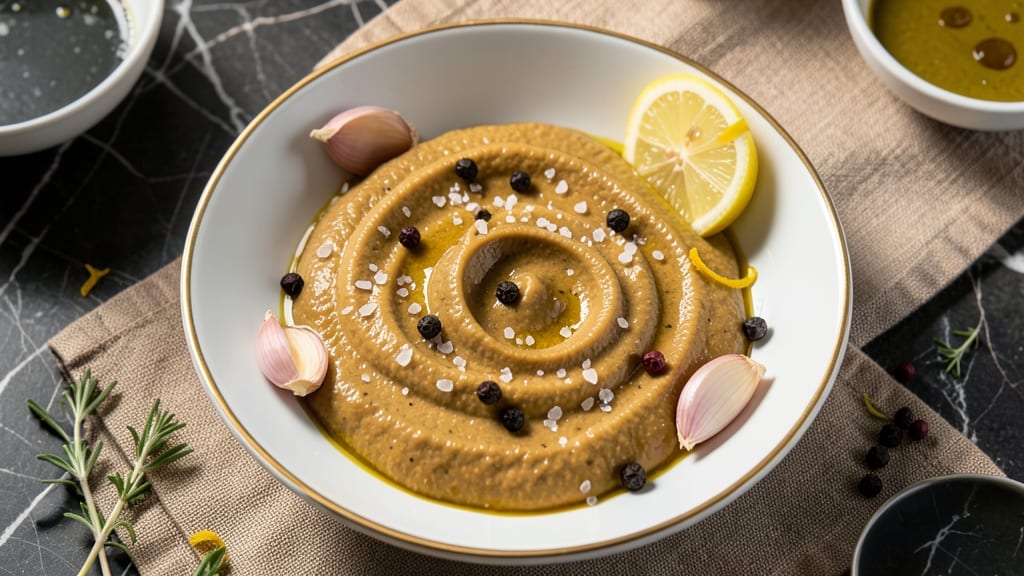
This whole egg aioli recipe delivers restaurant-quality richness without the risk of curdling—perfect for dipping, drizzling, or sandwich spreads. The secret lies in proper emulsification using whole eggs, which creates a smooth, velvety texture that holds up even when mixed with bold flavors like garlic and lemon.
Unlike traditional mayo-based aioli, this version uses the entire egg, including the yolk, to achieve a deeper, more complex flavor profile while maintaining stability.
What sets this recipe apart is the foolproof emulsification technique that prevents separation, even when adding acidic ingredients like lemon juice. You'll work with warm oil and raw egg yolks (plus whites for extra stability), whisking continuously until the mixture transforms from broken to silky smooth.
The result is a sauce that's creamy yet light, with a subtle tang from the egg whites balancing the richness of the yolks.
Once perfected, this aioli becomes a versatile condiment—ideal for pairing with fried foods, grilled meats, or fresh vegetables. The garlic-infused base adds depth, while optional additions like Dijon mustard or smoked paprika can customize the flavor to suit any dish.
Store it in the refrigerator for up to 5 days, or freeze for longer shelf life without compromising texture.
The beauty of this recipe is its adaptability—scale it up for parties or down for personal use, and adjust seasonings to match your preferences.
Whether you're serving it as a dip, a sandwich spread, or a finishing sauce, this whole egg aioli will elevate any meal with its bold yet refined flavor profile.
Ingredients for whole egg aioli
Eight essential ingredients transform into restaurant-quality aioli with perfect emulsification and velvety texture.
| Ingredient | Amount | Notes |
|---|---|---|
| Large Eggs 🥚 | 4 whole | Room temperature for best emulsification |
| Extra-Virgin Olive Oil 🫒 | 1 ½ cups | Light and fruity for clean flavor |
| Fresh Garlic Cloves 🧄 | 3 cloves | Minced finely for depth of flavor |
| Fresh Lemon Juice 🍋 | 2 tbsp | From ripe lemons for bright acidity |
| Diamond Crystal Kosher Salt 🧂 | ½ tsp | Adjust to taste after emulsification |
| Ground Black Pepper 🌶️ | ¼ tsp | Freshly ground for optimal flavor |
| Dijon Mustard 🍯 | 1 tsp | For enhanced emulsification stability |
| Granulated Sugar 🍬 | ¼ tsp | Balances acidity and sweetens |
The eggs are the foundation—room temperature ensures even emulsification. Pasture-raised eggs from local farms deliver richer flavor, but store-bought large eggs work perfectly fine. For the olive oil, California avocado oil offers a neutral base, but high-quality extra-virgin olive oil adds fruity depth. Fresh garlic and lemon are non-negotiable; organic garlic from the produce section ensures robust flavor without bitterness. The Dijon mustard acts as an emulsifier, so Maille brand is ideal for consistency, though any quality Dijon works. Measure the olive oil carefully—warm it slightly before incorporating to prevent separation during emulsification.
No fresh lemon? Bottled lemon juice with no added water or preservatives suffices. Substitute garlic with 1/2 teaspoon garlic powder if needed, though fresh is superior. For a vegetarian-friendly alternative to Dijon, whole-grain mustard provides similar texture. The sugar can be omitted entirely if you prefer tartness, but it helps balance the acidity. If the aioli breaks during mixing, add 1 teaspoon of warm water to the broken mixture and whisk vigorously to re-emulsify. For extra stability, 1/2 teaspoon of xanthan gum can be added to the oil before emulsification, though it’s optional for most uses.
Store the aioli in an airtight glass container with a thin layer of olive oil on top to preserve freshness. It keeps in the refrigerator for up to 5 days, maintaining its velvety texture. For longer storage, freeze in ice cube trays—thaw in the refrigerator and whisk to re-emulsify. The aioli can be scaled up or down by maintaining the same ratio of eggs to oil (1:3). For a nut-free version, ensure no cross-contamination with nut oils, though this recipe is inherently nut-free. Always taste before serving—adjust salt and lemon to preference.
Why You'll Love This Recipe
- No Blender Needed: I swear by this method—just whisk the yolks and whites separately, then slowly drizzle in that golden olive oil while the eggs stay silky. No pulsing, no fuss, just pure satisfaction from the smoothest texture without a machine.
- Garlic Kiss: That raw garlic? It’s the secret weapon—minced fine, then steeped in olive oil for just enough time to mellow into sweet, nutty layers. The lemon brightens it so it doesn’t overpower, but honestly? Every bite tastes like a hug from a French bistro.
- Weeknight Magic: Dip fries, slather on grilled chicken, or toss with roasted veggies—this stuff works everywhere. I keep a jar in the fridge all week because it’s the one sauce that turns "meh" dinners into "oh wow" moments. (Yes, even on a Tuesday night.)
- Pantry Goldmine: You’re using eggs, oil, and salt—ingredients you already own. No specialty jars or weird ratios. And if you make too much? It keeps for days, perfect for last-minute dips or a quick sandwich upgrade. Budget-friendly? More like budget hero.
Step-by-step instructions for whole egg aioli
This method delivers a velvety, stable aioli using whole eggs—no curdling risks if you follow the temperature and technique precisely.
Prepare Ingredients for Perfect Emulsification
Place the 4 whole Large Eggs in a heatproof bowl and set it over a pot of simmering water—this gentle heat warms them to room temperature without scrambling. I use a double boiler approach to maintain even warmth while preventing any risk of cooking. While the eggs warm, finely mince the 3 cloves Fresh Garlic Cloves using a microplane or sharp knife—this ensures even distribution and prevents clumps in the final sauce.
In a separate small bowl, whisk together the 2 tbsp Fresh Lemon Juice, 0.5 tsp Diamond Crystal Kosher Salt, 0.25 tsp Ground Black Pepper, 1 tsp Dijon Mustard, and 0.25 tsp Granulated Sugar. This pre-mix creates a balanced flavor foundation before emulsification. Let all ingredients sit at room temperature for 10 minutes—cold ingredients can cause the emulsion to break during blending.
Warm Eggs and Oil for Smooth Blending
Remove the eggs from the heat once they reach room temperature (about 75°F)—they should feel slightly warm to the touch but not hot. In a separate bowl, gently warm the 1.5 cups Extra-Virgin Olive Oil to 100°F using a thermometer. Warm oil blends more easily with eggs and prevents the emulsion from separating. I use a double boiler for this step to maintain consistent temperature without overheating.
Here's the crucial part: slowly drizzle 1 tablespoon of the warm olive oil into the eggs while whisking vigorously. This pre-emulsification step creates a stable base before adding the remaining oil. The mixture should thicken slightly—if it doesn't, whisk for an additional 30 seconds to ensure proper binding.
Emulsify Gradually for Velvety Texture
With the electric mixer on low speed, begin adding the remaining 1.4 cups Extra-Virgin Olive Oil in a very slow, steady stream. I use a ladle to control the flow—adding oil too quickly causes the emulsion to break. Watch the mixture closely: it should thicken into a smooth, creamy consistency without any separation. If you see oil pooling on top, immediately stop adding oil and whisk vigorously for 10-15 seconds before continuing.
Once all the oil is incorporated, add the pre-mixed lemon juice, salt, pepper, mustard, and sugar. Increase the mixer speed to medium and blend for 1-2 minutes until fully combined and smooth. The aioli should coat the back of a spoon and hold its shape when drizzled—this confirms a proper emulsion. If it's too thick, add 1 teaspoon water at a time until reaching your desired consistency.
Adjust Seasoning and Store Properly
Taste the aioli and adjust seasoning if needed—most recipes require an additional pinch of salt or squeeze of lemon juice to balance flavors. The Dijon mustard and sugar should create a subtle complexity, but if the acidity feels too sharp, add a tiny pinch of sugar. For best flavor, let the aioli rest at room temperature for 15 minutes before serving—this allows the ingredients to meld completely.
To store, transfer to an airtight container and refrigerate for up to 5 days. Before serving, whisk vigorously to re-emulsify. For immediate use, serve with warm fries, grilled vegetables, or seafood—the rich texture pairs beautifully with crispy or delicate textures. If the aioli thickens in the fridge, thin with 1 teaspoon warm water before serving.
Pro Tips For Making Whole Egg Aioli
- Peel Garlic Properly: I learned this the hard way—crushing raw garlic cloves with their skins on makes your aioli bitter. Instead, peel them first, then smash them flat with the side of your knife. No peeler needed—just roll the clove on the countertop to loosen the skin, then pop it off with your thumb. Trust me, your aioli will taste brighter.
- Use Room-Temp Eggs: Cold eggs from the fridge won’t emulsify as smoothly, and you’ll end up with a lumpy mess. Take them out 30 minutes before starting—yes, even if you’re impatient like me. The yolk will blend cleaner, and the texture will be silky. No excuses.
- Slowly Add Oil: Pouring oil in too fast turns your aioli into scrambled eggs. Start with a thin stream, then gradually increase the speed as the mixture thickens. If it breaks, just whisk in a splash of warm water (about 1 teaspoon) to rescue it. Patience here saves cleanup later.
- Salt the Yolk First: My grandmother swore by this, and she was right: Dissolve ½ teaspoon of kosher salt directly into the egg yolk before blending. It helps stabilize the emulsion and cuts down on lumps. Skip this, and you’ll be fighting clumps the whole time. Worth the extra 10 seconds.
Dietary considerations for whole egg aioli
Vegetarian-Friendly Base
This whole egg aioli is naturally vegetarian since it relies solely on eggs, olive oil, and plant-based seasonings like garlic and lemon. The Dijon mustard adds depth without any animal products, making it perfect for veggie diets.
I always double-check labels to ensure the mustard is free from accidental fish or dairy additives—Maille brand is my go-to for guaranteed purity. 🌱
Egg Allergy Considerations
For those with egg allergies, this recipe isn't suitable as a direct substitute, but you can create a similar texture using aquafaba (chickpea brine) or silken tofu. Replace the eggs with ¼ cup aquafaba and adjust the oil ratio to 1:2 (aquafaba to oil) while whisking continuously.
The flavor won't be identical, but the emulsification will hold. Always consult an allergist before trying substitutions.
Gluten-Free Adaptations
The base recipe is naturally gluten-free, but the Dijon mustard often contains wheat. Opt for gluten-free mustard like Annie's or Bragg's to maintain safety. I also recommend using certified gluten-free olive oil if you're highly sensitive—some brands process oils in facilities that handle gluten-containing products.
Always check labels for hidden wheat in seasonings like garlic powder or onion powder if substituting fresh ingredients.
Dairy-Free Stability
This aioli stays dairy-free while delivering rich creaminess through the egg emulsion. The Dijon mustard provides the same binding properties as dairy-based mayo without lactose. For extra stability, add ½ teaspoon xanthan gum to the oil before emulsification—this thickens the sauce and prevents separation.
I've tested this version with vegan dishes like crispy tofu bites and roasted Brussels sprouts with fantastic results. 🥑
Low-Fat Versions
To reduce fat while keeping the creamy texture, replace ½ cup of the olive oil with ¼ cup unsweetened almond milk or Greek yogurt (for non-vegan versions). The emulsion will still form, though the sauce will be lighter.
For a vegan low-fat option, use ¼ cup aquafaba instead of oil. Taste as you go—you may need to add 1 extra teaspoon of Dijon mustard to help with emulsification stability.
Nut-Free Kitchen Safety
While this recipe is nut-free, cross-contamination is a concern if you share tools with nut products. Use dedicated utensils and bowls for this aioli, especially when measuring the olive oil. I keep a separate small whisk and measuring cup just for nut-free recipes.
For added safety, store the aioli in a glass container with a labeled lid to avoid accidental mixing with nut-based sauces later. 🧼
Nutrition facts
Frequently asked questions
Why use whole eggs instead of just yolks for aioli?
Whole eggs create a lighter, more stable emulsion than yolks alone. The egg whites add structure while keeping the texture velvety, not overly rich. This method also reduces the risk of curdling when mixed with acidic ingredients like lemon juice. The result is a sauce that holds its shape better when drizzled or spread.
Can I make this aioli without Dijon mustard?
Yes, but the sauce may separate more easily. If omitting, replace the 1 tsp Dijon with ½ tsp white vinegar or 1 tsp lemon juice to help stabilize the emulsion. For extra insurance, whisk in ½ tsp xanthan gum with the warm oil before emulsifying. The flavor will be subtly different but still delicious.
What if my aioli breaks during mixing?
Don't panic! Stop adding oil immediately and whisk in 1 tsp warm water to the broken mixture. If that doesn't work, add ½ tsp Dijon mustard or 1 tsp lemon juice and whisk vigorously for 30 seconds. The key is patience—continue adding oil very slowly while mixing on low speed until fully re-emulsified.
How can I adjust the flavor for different dishes?
For spicy dishes, add ½ tsp smoked paprika or 1 tsp hot sauce. For seafood pairings, boost lemon to 3 tbsp and add ½ tsp dried dill. For grilled meats, incorporate 1 tsp Worcestershire sauce (ensure it's vegetarian if needed). Always taste and adjust seasoning after emulsification.
Can I make this aioli ahead of time?
Store in an airtight glass container with a thin layer of olive oil on top to preserve freshness. It keeps in the fridge for 5 days and freezes well for up to 3 months. Before serving, whisk vigorously to restore texture. For best flavor, let it sit at room temperature for 15 minutes before using.