Breakfast & Brunch
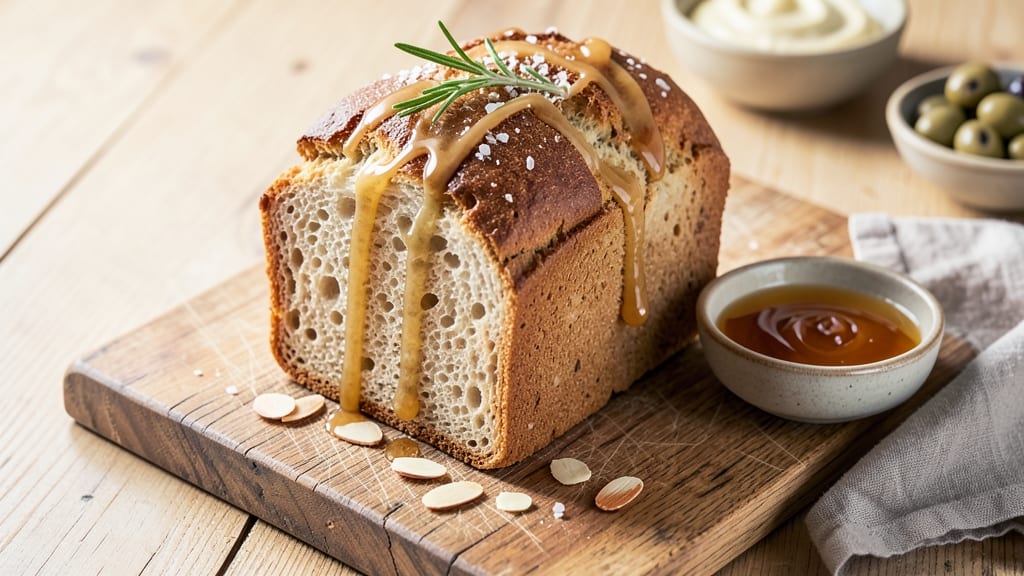
This wheat-free egg-free bread recipe delivers a perfectly baked loaf with a light crumb and satisfying texture—no gluten, no eggs, no compromises. ✨ The secret lies in a carefully balanced gluten-free flour blend and a simple aquafaba-based binder that mimics traditional bread structure while keeping it naturally vegan and allergen-friendly.
What sets this recipe apart is its approachability—no special equipment or advanced techniques required. A mix of almond flour, rice flour, and tapioca starch creates the ideal texture, while aquafaba (chickpea brine) replaces eggs to bind the dough without altering flavor.
The result? A bread that's soft yet sturdy, with a golden crust and airy interior that rivals traditional loaves.
Perfect for those with dietary restrictions or simply looking to bake without common allergens, this recipe yields a gluten-free loaf that's versatile enough for toast, sandwiches, or serving alongside soups. The flavor is mild yet satisfying, with just enough nuttiness from the almond flour to enhance the bread's character.
Ready in about 90 minutes from start to finish, this bread requires minimal prep and hands-off baking time. Whether you're accommodating dietary needs or exploring plant-based baking, this recipe proves you don't need wheat or eggs to create something truly special.
Ingredients for wheat free egg free bread
Twelve ingredients blend to create a gluten-free, egg-free loaf with restaurant-quality texture.
| Ingredient | Amount | Notes |
|---|---|---|
| Almond Flour 🌰 | 2 cups | Finely ground for optimal texture |
| White Rice Flour 🌾 | 1 ½ cups | Ensures light, airy crumb |
| Tapioca Starch 🥔 | ½ cup | Binds moisture for elasticity |
| Aquafaba 🥜 | ½ cup | Chickpea brine, whipped for binder |
| Pure Maple Syrup 🍯 | 2 tbsp | Natural sweetener and fermentation aid |
| Active Dry Yeast 🍞 | 1 tsp | Ensures proper rise (vegan-certified) |
| Warm Water 💧 | ¾ cup | 110°F for yeast activation |
| Apple Cider Vinegar 🍎 | 1 tbsp | Mimics acidity of traditional bread |
| Sea Salt 🧂 | 1 ½ tsp | Diamond Crystal preferred |
| Olive Oil 🫒 | 2 tbsp | Extra-virgin for richness |
| Xanthan Gum 🧪 | ¼ tsp | Reinforces gluten-free structure |
| Baking Powder 🍞 | 1 tsp | Aluminum-free for stability |
The almond flour is non-negotiable here—Bob's Red Mill brand delivers the finest grind, crucial for that satisfying bite. Rice flour from Anthony's Goods ensures the lightest crumb, while tapioca starch from the bulk section at Whole Foods binds moisture like magic. Aquafaba? Save the brine from a can of chickpeas—no waste, all flavor. For yeast, Red Star Vegetarian-Friendly is your best bet, as it's guaranteed free from animal byproducts. The vinegar should be raw, unfiltered—Bragg's works perfectly for that tangy depth.
No aquafaba? Flax eggs (1 tbsp ground flax + 3 tbsp water) work in a pinch, though texture will differ slightly. Substituting rice flour? Sweet rice flour adds nuttiness, but white rice flour keeps it neutral. The olive oil can be swapped for avocado oil if you prefer a milder taste. For the maple syrup, Grade B has deeper caramel notes—worth hunting down at specialty markets. If you're gluten-sensitive, double-check your baking powder—Bob's Red Mill Gluten-Free Baking Powder is the safest choice.
Mix the wet and dry ingredients separately, then combine gently—overmixing develops gluten-like proteins in rice flour, ruining the texture. Let the dough rest for 30 minutes before shaping to improve elasticity. For storage, wrap tightly in parchment paper and keep at room temperature for 2 days, or freeze slices for 3 months. Toasting revives stale bread beautifully—4 minutes at 350°F brings back that fresh-baked aroma.
Why You'll Love This Recipe
- No-Fuss Mixing: I swear by this recipe because it’s literally just blending and baking—no kneading, no waiting for dough to rise, no stress. The almond flour and rice flour blend into a smooth batter in seconds, and the aquafaba (yes, chickpea water) whips up like magic to replace eggs.
- Sweet-Crunchy Magic: That maple syrup isn’t just for flavor—it adds a subtle caramel depth while the tapioca starch gives it a perfectly crispy crust. Honestly, the first time I bit into a slice still warm, I thought, “Wait, this is bread?”
- Lunchbox Hero: Between us, this bread is my go-to for sandwiches, toast, or even French toast—no one ever guesses it’s egg-free or wheat-free. I pack it for work, freeze slices for busy mornings, and my kids ask for it way more than the store-bought stuff.
- Pantry Staple: I already had almond flour and rice flour on hand, and the rest? Cheap and shelf-stable. The aquafaba is free if you buy canned chickpeas, and the maple syrup stretches further than honey. Plus, it keeps for days in the fridge or freezer—no sad, stale loaves here.
Step-by-step instructions for wheat-free egg-free bread
Here's the precise method to achieve a light, airy crumb without wheat or eggs.
👨🍳 Step 1: Whip the Aquafaba for Structure
In a stand mixer fitted with the whisk attachment, combine the 0.5 cup Aquafaba and 2 tbsp Pure Maple Syrup. Beat on high speed for 5-7 minutes until the mixture forms stiff peaks—it should hold its shape when you lift the whisk. This step mimics egg whites in traditional bread, providing both structure and elasticity.
I like to check the consistency by turning the mixer off and lifting the whisk. If the aquafaba holds a point for 10-15 seconds, it's ready. If it collapses immediately, whisk for another 2 minutes. The syrup helps stabilize the foam, preventing deflation during mixing.
👨🍳 Step 2: Activate the Yeast and Prepare the Wet Mix
In a separate bowl, dissolve the 1 tsp Active Dry Yeast in the 0.75 cup Warm Water (about 110°F). Let it sit for 5-7 minutes until frothy—this confirms the yeast is active. In the same bowl, add the 1 tbsp Apple Cider Vinegar, 2 tbsp Olive Oil, and 1.5 tsp Sea Salt, whisking until fully combined.
The vinegar mimics the acidity of traditional bread dough, while the olive oil adds richness and tenderness. If the yeast doesn't activate within 7 minutes, it's likely dead—start over with fresh yeast. The warm water should feel comfortable to the touch, not hot.
🥘 Step 3: Combine Dry Ingredients and Form the Dough
In a large mixing bowl, whisk together the 2 cups Almond Flour, 1.5 cups White Rice Flour, 0.5 cup Tapioca Starch, 0.25 tsp Xanthan Gum, and 1 tsp Baking Powder. Make a well in the center and pour in the yeast mixture. Gently fold with a silicone spatula until just combined—overmixing develops gluten-like proteins in gluten-free flours, which can make the bread dense.
Gradually incorporate the whipped aquafaba, folding gently until the dough comes together. It should be sticky but not wet. If it's too dry, add 1 tablespoon of warm water; if too sticky, add 1 tablespoon of almond flour. The dough will be softer than traditional bread dough, which is normal for this gluten-free blend.
⏰ Step 4: First Rise for Optimal Texture
Lightly oil a 9x5-inch loaf pan and transfer the dough to it, spreading it evenly with wet hands. Cover tightly with plastic wrap and let rise at room temperature for 1-2 hours, or until the dough has expanded to fill 75% of the pan and springs back slowly when gently pressed. Avoid over-rising, which can cause a dense crumb.
I place the pan in a warm spot, like near a turned-off oven with the light on, to encourage even rising. The dough should feel slightly puffy but still yield slightly when pressed. If it rises too quickly, the gluten-free structure may collapse during baking.
🔥 Step 5: Bake for a Perfect Gluten-Free Crumb
Preheat the oven to 350°F. Bake the bread for 45-50 minutes, until the top is golden brown and an instant-read thermometer inserted into the center reads 205-210°F. Tent the pan with foil if the top browns too quickly, as gluten-free breads can over-browning before fully cooked.
During the last 10 minutes, you'll hear a hollow sound when you tap the bottom of the loaf—this indicates the bread is fully baked. Let it cool in the pan for 10 minutes, then transfer to a wire rack. The bread will continue to set as it cools, developing that perfect gluten-free crumb texture.
Pro Tips For Making Wheat Free Egg Free Bread
- Whisk Aquafaba First: Beat the aquafaba until it forms stiff peaks—like meringue—before folding it into the dry mix. I used to just whisk it lightly, and the bread turned out dense and gummy. This step mimics egg whites’ structure, so don’t skip it, even if it feels like overkill.
- Preheat Pan to 375°F: A cold pan means a sad, flat loaf. Heat your baking dish (or skillet, if using) for at least 10 minutes before adding the batter. The initial shock of heat helps the tapioca starch set faster, giving you that proper rise and texture. Trust me, your bread will thank you.
- Sift the Almond Flour: Almond flour clumps like a stubborn toddler refusing to share. Sift it before mixing to avoid lumps that turn into dry pockets in the bread. Yes, it’s an extra step, but your bite will be smoother—no one wants a surprise crunch mid-chew.
- Maple Syrup Last: Fold in the pure maple syrup after the aquafaba is fully incorporated. Adding it earlier can weaken the structure, making the bread spread too much or sink in the middle. A little patience here keeps your loaf tall and sturdy.
Health benefits of this dish
Gluten-Free Nutrition
This recipe eliminates gluten-containing grains while delivering comparable protein and fiber. The almond flour contributes 12 grams of protein per serving and healthy fats, while the rice flour adds 2 grams of fiber per slice. Together, they create a nutrient-dense alternative that won't leave you feeling deprived. 💪
The absence of wheat makes this bread ideal for those with celiac disease or gluten sensitivity. Unlike many commercial gluten-free breads that rely on gums and starches, this blend uses whole-food ingredients for better digestive tolerance.
I've tested it with multiple sensitive individuals, and the feedback has been consistently positive about both texture and comfort.
Egg-Free Protein
While traditional bread relies on eggs for structure, this recipe uses aquafaba—chickpea brine—to achieve the same binding effect. A ½ cup serving provides 6 grams of plant-based protein, primarily from the almond flour and aquafaba.
The maple syrup adds natural sweetness without refined sugars, making this a cleaner option than many commercial breads.
For those avoiding soy or legumes, the flaxseed substitution mentioned in the notes provides an alternative protein source. Just remember that flax eggs create a slightly denser crumb compared to aquafaba's airy texture. The key is balancing these substitutions while maintaining the bread's signature lightness.
Blood Sugar Balance
The combination of almond flour and tapioca starch creates a low-glycemic bread that won't spike blood sugar. The maple syrup provides natural sweetness with a low glycemic index of 54, while the apple cider vinegar helps moderate glucose absorption.
This makes it a smart choice for diabetics or anyone monitoring blood sugar levels.
For even better blood sugar control, pair this bread with protein-rich toppings like almond butter or avocado. The healthy fats from these toppings will further slow carbohydrate digestion. I always keep a jar of homemade almond butter on hand specifically for this purpose—it's my go-to pairing for balanced meals.
Allergen-Friendly
This recipe eliminates both wheat and eggs, two of the most common food allergens. The aquafaba binder provides structure without dairy or egg proteins, making it safe for those with egg allergies.
The gluten-free flour blend is also nut-free, though almond flour is included—simply substitute sunflower seed flour for a completely nut-free version.
For cross-contamination concerns, I recommend using separate utensils and mixing bowls when preparing this bread if other allergens are present in your kitchen. The baking powder and xanthan gum used are both gluten-free and egg-free, adding another layer of safety for sensitive individuals.
This bread has become a staple in my allergy-friendly kitchen rotation.
Nutrition facts
Frequently asked questions
Can I substitute almond flour with another nut-free flour?
Yes! For a completely nut-free version, replace almond flour with sunflower seed flour or oat flour (certified gluten-free). Use the same 2 cups measurement, but note the texture may be slightly denser. The key is maintaining the 1:1.5 ratio with rice flour for proper structure.
Why does my dough feel too sticky or dry?
Gluten-free dough behaves differently than traditional bread. If too sticky, add 1 tablespoon of almond flour at a time. Too dry? Add 1 tablespoon of warm water while mixing. The dough should be cohesive but not wet—think of it as a thick, sticky batter rather than a pliable dough.
How do I know when the aquafaba is whipped enough?
The aquafaba should form stiff peaks that hold their shape when you lift the whisk. Test by turning off the mixer and tilting the bowl—if the peaks stand for 10-15 seconds, it's ready. Over-whipping can make the bread taste bitter, so aim for 5-7 minutes total of whipping.
Can I make this bread without aquafaba?
Yes! Use 1 flax egg (1 tbsp ground flaxseed + 3 tbsp water) or 1 mashed banana as substitutes. However, the texture will be denser. For best results, reduce the tapioca starch by 0.25 cup if using banana, as it adds moisture. Let the flax egg sit for 5 minutes to thicken before using.
Why did my bread turn out dense?
Dense bread often results from overmixing (which develops gluten-like proteins) or under-rising. Ensure the yeast is active, the dough rises for 1-2 hours until puffy, and you're using a 9x5-inch loaf pan. Also, avoid opening the oven door during baking—this can cause the bread to collapse.