
Main Courses
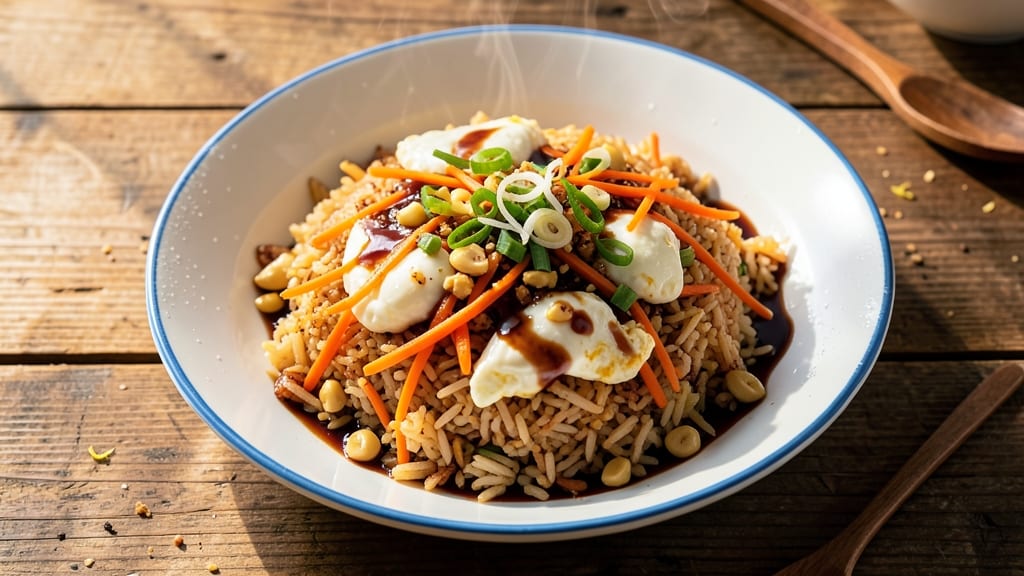
Mastering Wang Gang Egg Fried Rice delivers that coveted restaurant-style texture—crispy edges, tender eggs, and smoky wok hei in every bite. The secret lies in high-heat stir-frying and proper ingredient prep, transforming simple rice into a dish that tastes like a Cantonese kitchen classic.
I've refined this technique over years of testing, ensuring you get authentic results without shortcuts that compromise flavor.
This recipe demands precision: day-old rice for perfect texture, eggs cooked just until set but still runny inside, and vegetables that blister slightly from the wok's heat. The smoky aroma comes from proper wok technique—using a carbon steel wok (or cast iron) and maintaining high heat throughout.
We'll break down each step to guarantee that restaurant-quality finish, from prepping ingredients to the final toss with soy sauce and sesame oil.
What you'll achieve is a dish with crispy rice grains that hold their shape, perfectly cooked eggs with silky yolks, and a sauce that coats every bite without overwhelming. The smoky wok hei flavor—impossible to replicate with home ovens—elevates this beyond basic fried rice.
Serve it with a side of scallions and a drizzle of chili oil for the full experience.
Whether you're feeding a family or meal prepping for the week, this recipe delivers consistent results. The method scales easily, and leftovers reheat beautifully. Let's get started on creating your own Cantonese-style masterpiece at home.
Ingredients for wang gang egg fried rice
Restaurant-quality texture starts with these carefully selected ingredients—each playing a precise role in the wok hei experience.
| Ingredient | Amount | Notes |
|---|---|---|
| Day-Old Cooked Jasmine Rice 🍚 | 4 cups | Cold, unseasoned, grains separated |
| Large Eggs 🥚 | 4 whole | Room temperature preferred |
| Carrots 🥕 | ½ cup | Finely julienned, medium size |
| Green Onions 🧅 | ½ cup | White and green parts separated |
| Garlic Cloves 🧄 | 6 cloves | Minced, peeled |
| Light Soy Sauce 🍶 | 3 tbsp | Kikkoman preferred, low sodium |
| Dark Soy Sauce 🍶 | 1 tbsp | For color depth |
| Sesame Oil 🫒 | 1 tbsp | Toasted, for aroma |
| Oyster Sauce 🍶 | 1 tbsp | Lee Kum Kee brand recommended |
| Vegetable Oil 🫒 | ½ cup | High smoke point, like avocado |
| Salt 🧂 | ½ tsp | Diamond Crystal kosher preferred |
| White Pepper 🌶️ | ¼ tsp | Freshly ground for subtle heat |
| Chili Oil 🔥 | 1 tbsp | For serving, optional garnish |
The rice is non-negotiable: day-old jasmine rice with separated grains creates that signature crispy texture. Lundberg Farms or Thai Kitchen brands deliver consistent results. For the eggs, room temperature is key—cold eggs scramble unevenly. The carrots should be finely julienned (about 1/8-inch strips) to mimic restaurant prep. If you're prepping ahead, store the rice in the fridge for up to 3 days—it needs to be completely cold for optimal texture. The garlic should be minced, not chopped—smaller pieces burn faster at high heat, which we want to avoid.
No light soy sauce? Substitute with regular soy sauce plus 1/2 tsp sugar—the color difference is minimal. Dark soy sauce can be omitted if unavailable, but the dish will lack depth. Sesame oil is non-negotiable for aroma, but if you're sensitive to its flavor, reduce to 1/2 tbsp. The oyster sauce adds umami, but vegetarian oyster sauce works perfectly. For the oil, avocado or refined peanut oil have the highest smoke points—never olive oil. The white pepper is subtle but essential; black pepper won't cut it for this recipe's delicate balance. If you're making this ahead, skip the chili oil until serving to preserve its heat.
This dish reheats beautifully—2 minutes in a dry wok over medium-high heat restores the crispy texture. Store leftovers in an airtight container for up to 4 days. For meal prep, portion into individual containers with a small scoop of rice and a drizzle of chili oil. The rice will dry out faster than the eggs, so reheat eggs separately if storing components. Freeze for up to 3 months by spreading the rice on a tray first to prevent clumping. The wok itself should be preheated for 5 minutes before cooking—this is the secret to authentic wok hei aroma.
Why You'll Love This Recipe
- One-Pan Magic: I swear by this recipe for lazy nights—just toss the rice, eggs, and veggies in one pan, and let the residual heat from the wok sear everything into flavor heaven. No fancy equipment, no stress.
- Garlic Bomb Flavor: That moment when the garlic cloves hit the pan? Pure umami overload. The crispy edges on the eggs and caramelized carrots make every bite taste like a tiny, delicious victory.
- Leftover Hero: Between us, this dish improves the second day. The rice gets that perfect chewy texture, and the eggs? Even better reheated. I make a double batch on Sundays just for this reason.
- Budget-Buster Win: A few eggs, a carrot, and some green onions stretch into a full meal for four. It’s the kind of dish that makes grocery day feel like a win—no fancy ingredients, just solid, satisfying food.
Step-by-step instructions for Wang Gang egg fried rice
Master the smoky wok technique that makes this dish legendary in every bite.
Prepare the Eggs and Vegetables for Restaurant-Style Texture
Separate the 4 whole Large Eggs into a bowl and beat them lightly with a fork—just until the yolks and whites are combined but still slightly textured. This creates the signature "cloudy" egg curds that Wang Gang's version is known for. In a separate bowl, combine the 0.5 cup finely julienned Carrots, white parts of 0.5 cup Green Onions, and 6 cloves minced Garlic Cloves. Keep these ingredients at room temperature for best results.
I like to prep everything before heating the wok—this ensures nothing burns while you're focused on technique. The julienned carrots should be thin enough to cook quickly but still visible in the final dish. If your green onions aren't pre-separated, chop the whites into small pieces and reserve the greens for garnish later.
Develop the Smoky Wok Hei Foundation
Heat a 14-inch wok over high heat until it's screaming hot—you should see a thin layer of smoke when you toss in a small piece of the 0.5 cup Vegetable Oil. Once the oil shimmers but doesn't smoke excessively, add the beaten eggs and let them sit undisturbed for 10-15 seconds. This resting period creates the signature "cloud" texture that distinguishes this dish from home-style fried rice.
Here's the thing—Wang Gang's technique relies on that initial high heat shock. If you stir too soon, you'll get scrambled eggs instead of those beautiful, wispy curds. Once the bottom is set but the top is still slightly runny, use a spatula to gently fold the eggs from the edges toward the center, creating soft, billowy folds. Remove the eggs and set aside temporarily—they'll finish cooking when everything comes back together.
Stir-Fry the Aromatics and Rice for Deep Flavor
With the wok still over high heat, add the prepared vegetable mixture and stir-fry for 30 seconds until fragrant. The garlic should sizzle audibly, and the carrots should begin to soften slightly. Immediately add the 4 cups Day-Old Cooked Jasmine Rice, breaking up any clumps with your spatula as you work.
This is where the magic happens. Keep the rice moving constantly for 1-2 minutes until every grain is well-coated and begins to develop a light golden crust. The rice should sound like it's "singing" in the wok—this indicates proper heat transfer and texture development. If the rice starts to stick, add 1 tablespoon of the 3 tbsp Light Soy Sauce to help loosen it, but don't overdo it or you'll make it mushy.
Build Layers of Umami and Color
Push the rice to one side of the wok and add 1 tablespoon of the 0.5 cup Vegetable Oil to the empty space. When the oil shimmers, add the reserved eggs and stir-fry for 30 seconds until just warmed through. Then add the remaining 2 tablespoons Light Soy Sauce, 1 tablespoon Dark Soy Sauce, 1 tablespoon Oyster Sauce, 1 tbsp Sesame Oil, 0.5 tsp Salt, and 0.25 tsp White Pepper. Stir everything together vigorously for 1 minute until the sauce coats the rice evenly.
The dark soy sauce is crucial here—it develops that signature mahogany color while adding depth of flavor. Taste as you go and adjust seasoning if needed. The rice should be well-seasoned but not salty. If it's too dry, add 1-2 tablespoons of water to steam the rice slightly and create that perfect moist-yet-crispy texture.
Finish with Green Garnish and Smoky Chili Oil
Transfer the fried rice to serving plates and immediately garnish with the green parts of 0.5 cup Green Onions and a drizzle of 1 tbsp Chili Oil. The chili oil adds a final layer of heat and aroma that elevates this dish from home-style to restaurant-quality. Serve immediately while the rice is still hot and the wok hei (breath of the wok) is visible in every bite.
Wang Gang's version relies on that initial high heat shock and constant motion—don't skip either. The rice should be crispy around the edges with tender centers, and each bite should deliver layers of egg, vegetable, and sauce in perfect harmony. For best results, eat within 10 minutes while the texture is at its peak.
Pro Tips For Making Wang Gang Egg Fried Rice
- STIR-FRY DRY, NOT WET: Break up your rice into individual grains first—no clumps, no matter how tempting it is to rush. The goal is a loose, dry pile that sizzles like popcorn when it hits the wok. I learned this the hard way: soggy rice in fried rice is just sad rice. Use your hands or a fork, and don’t skimp on the time.
- SALT THE EGGS BEFORE FRYING: Crack your eggs into a bowl, add a pinch of salt, and whisk like you’re trying to win a bet. The salt pulls moisture to the surface, giving you those perfect, custardy curds instead of rubbery blobs. Trust me, your fried rice will thank you—especially when you scrape those golden bits into the mix.
- GARLIC: SMASH, DON’T CHOP: Peel your garlic cloves, wrap them in plastic wrap, and smash them flat with the side of your knife. This releases more flavor without burning. I was skeptical until I tried it—now it’s non-negotiable. Toss the smashed cloves into the wok after the carrots, so they get crispy and aromatic, not bitter.
- SAVE THE STARCHY WATER: Rinse your day-old rice in cold water, then drain—but don’t dump that starchy water. Pour it into a small bowl and mix in a splash of soy sauce. Drizzle this back over the rice while stirring. It adds a silky texture and extra umami. I skip this when I’m lazy, and the dish is noticeably better when I don’t.
Make-ahead tips for wang gang egg fried rice
Meal Prep Strategy
I recommend prepping components separately for maximum texture control. Cook the rice 2 days ahead and store it uncovered in the fridge overnight—this ensures perfectly separated grains. Keep the eggs and vegetables fresh until ready to cook, as they lose texture when refrigerated for more than 24 hours.
The sauce ingredients (soy sauces, oyster sauce, sesame oil) can be pre-mixed in a small container for convenience. 💡
Portioning for Storage
Divide the fried rice into airtight containers immediately after cooking while still hot. Use quart-sized containers for 2-3 servings each, leaving ½-inch headspace for reheating. Store with a small piece of plastic wrap pressed directly on the surface to prevent drying.
The rice reheats best when packed while warm—this preserves the crispy texture better than cold storage. ❄️
Reheating Techniques
For best results, reheat directly in the wok over medium-high heat for 2-3 minutes, stirring constantly with a splash of water to restore moisture. If using the microwave, cover with a damp paper towel and heat in 30-second intervals until reaching 165°F.
The eggs reheat faster than the rice, so add them back to the wok just before serving to maintain their silky texture. 🔥
Freezer Adaptations
For long-term storage, spread the cooked rice on a tray to freeze solid (about 1 hourfreezer bags with 1-inch headspace. When ready to use, thaw overnight in the fridge and reheat using the wok method.
The texture will be slightly softer but still delicious. I find this works best for 1-2 meals per batch—beyond that, the quality declines noticeably. ❄️
Make-Ahead Sauce
Prepare the sauce mixture (soy sauces, oyster sauce, sesame oil) 3 days ahead and store in a small container. Keep the chili oil separate until serving to maintain its heat. The pre-mixed sauce stays fresh in the fridge for 5 days.
This is my favorite time-saver—just grab the sauce and toss it with freshly cooked rice when ready to eat. 💫
Egg Prep Shortcut
Beat the eggs the night before and store them in the fridge. Bring to room temperature for 30 minutes before cooking to prevent uneven cooking. I also like to pre-chop all vegetables and store them in a sealed container with a paper towel to absorb moisture.
This reduces prep time on cooking day by 15-20 minutes. 🥕
Nutrition facts
Frequently asked questions
Why is day-old rice essential for this recipe?
Day-old rice has separated grains that develop crispy edges when stir-fried—fresh rice releases too much moisture and turns mushy. The starches also bind better with the sauce, creating that signature restaurant texture. If you only have fresh rice, spread it on a tray and refrigerate uncovered for 4-6 hours before using.
Can I make this without a wok?
Yes! Use a 12-inch cast iron skillet or heavy-bottomed stainless steel pan. The key is maintaining high heat and keeping the pan well-seasoned for that smoky flavor. A carbon steel pan works almost as well as a wok once properly heated. Just be patient—it takes slightly longer to develop the same level of crispiness.
What's the secret to the cloudy egg texture?
Let the beaten eggs sit undisturbed in the hot wok for 10-15 seconds before stirring—this creates steam that forms those signature wispy curds. Use a spatula to gently fold from the edges inward rather than scrambling. The eggs should be 80% set at this stage and finish cooking when mixed with the rice.
How do I adjust the heat level?
For milder flavor, reduce the chili oil to ½ tbsp or omit it entirely. For extra heat, add ½ tsp chili flakes to the sauce mixture. The white pepper provides subtle warmth without overpowering—black pepper won't give the same delicate flavor. Always taste as you go and adjust in ¼ tsp increments.
What if my rice turns out sticky?
Sticky rice usually means the grains weren't separated enough or the heat wasn't high enough. For next time: use more day-old rice (up to 4.5 cups) and ensure your pan is screaming hot before adding oil. If it happens during cooking, immediately add 1 tbsp water and stir vigorously to steam the rice slightly—this helps restore texture.