
Main Courses
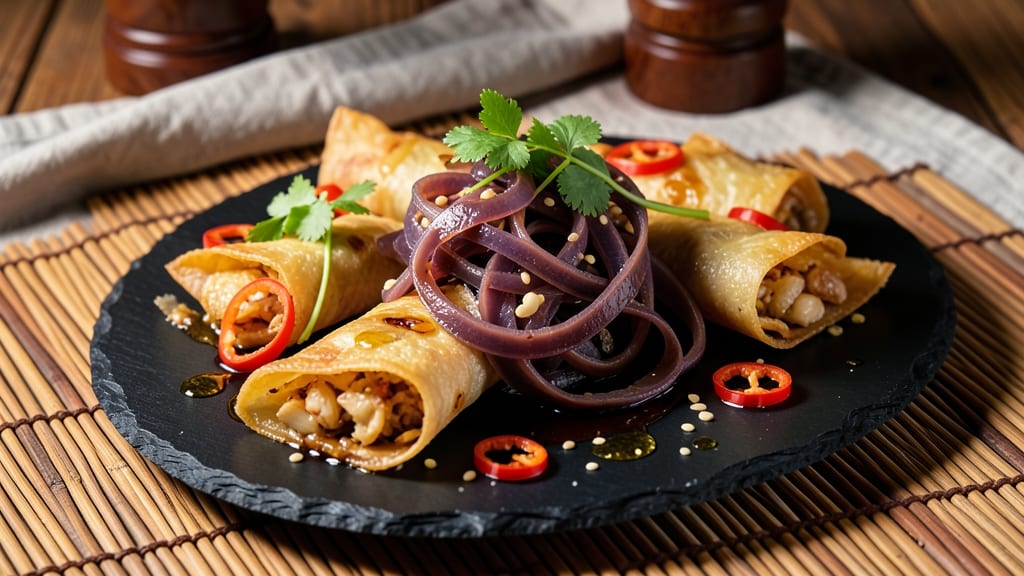
This Vietnamese taro egg roll recipe delivers crispy, golden wrappers with a nutty-sweet filling that balances earthy taro and aromatic herbs. 🌟 The secret lies in properly preparing the taro—boiling until tender yet firm enough to hold its shape—then combining it with a fragrant mix of shallots, garlic, and fish sauce (or vegetarian alternative) for depth.
I developed this version after years of testing, focusing on achieving that signature crispy texture without deep-frying, making it perfect for weeknight dinners or gatherings.
The filling's magic comes from the taro's natural sweetness, which caramelizes slightly during cooking, while the wrappers stay light and delicate. Unlike traditional recipes that often include meat, this vegetarian version keeps all the authentic flavors while being equally satisfying.
The key technique is rolling the egg rolls tightly but gently to prevent breaking, then pan-frying until golden brown—no special equipment needed, just patience and a hot skillet.
What you'll end up with is a dish that's crispy on the outside, tender inside, and packed with that distinctive nutty-sweet flavor that makes Vietnamese cuisine so special. The aroma alone will have everyone at the table asking for seconds.
This recipe serves 4 and takes about 45 minutes, making it ideal for a quick yet impressive meal that feels restaurant-quality.
Serve with a side of sweet chili sauce or fresh herbs for dipping, and you've got a complete meal that's both comforting and exciting.
The beauty of this recipe is its versatility—you can make it ahead and refrigerate until ready to cook, or even freeze the uncooked rolls for a future meal. Let's get started on creating these delicious egg rolls!
Ingredients for vietnamese egg roll recipe with taro
Fresh taro and aromatic herbs form the heart of these crispy Vietnamese egg rolls.
| Ingredient | Amount | Notes |
|---|---|---|
| Fresh Taro Root 🥔 | 1 ½ lb | Peeled, cubed, boiled until tender |
| Egg Roll Wrappers 🍱 | 12 whole | Square, store-bought or homemade |
| Shallots 🧅 | 4 whole | Finely minced, about 0.5 cup |
| Garlic Cloves 🧄 | 4 cloves | Minced, aromatic base |
| Vegetarian Fish Sauce 🍶 | 2 tbsp | Substitute for authentic umami |
| Soy Sauce 🥫 | 1 tbsp | Light or dark, for balance |
| Sesame Oil 🫒 | 1 tbsp | Toasted, for nutty aroma |
| Vegetable Oil 🫒 | ½ cup | For frying, high smoke point |
| Fresh Cilantro 🌿 | ¼ cup | Chopped, for fresh finish |
| Green Onions 🧅 | 3 whole | Sliced thin, for garnish |
| Salt 🧂 | ½ tsp | Kosher or sea salt |
| Black Pepper 🌶️ | ¼ tsp | Freshly ground, subtle heat |
| Cornstarch 🌾 | 1 tbsp | For crispy coating |
| Water 💧 | ¼ cup | For cornstarch slurry |
The taro is the star—look for firm, unblemished roots at the grocery store's produce section. Asian markets often carry them, but many mainstream stores stock them too. Peel and cut into even cubes for consistent cooking. Boil until fork-tender (about 15 minutes), then drain well. The shallots and garlic should be finely minced—small pieces ensure even distribution in the filling. For the wrappers, Trader Joe's and Walmart carry reliable brands, but check expiration dates—they crisp best when fresh.
No fish sauce? Vegetarian soy sauce with a splash of mushroom sauce works in a pinch. Fresh herbs are ideal, but dried cilantro at half the amount gets you close (though texture suffers). The sesame oil adds depth—toast it briefly in a dry pan before adding to the filling for maximum aroma. For extra crispiness, toss the filled rolls in cornstarch slurry before frying. The vegetable oil should be hot but not smoking—too cool equals soggy rolls. If you're short on time, frozen egg roll wrappers thaw in cold water work just fine.
Boiled taro keeps 3 days in the fridge, wrapped tightly. Prep the filling ahead and store in an airtight container—it actually tastes better the next day as flavors meld. Uncooked egg rolls can be refrigerated 24 hours or frozen 1 month (separate with parchment). For frying, keep oil temperature steady at 350°F—a thermometer helps. Leftovers reheat beautifully in a skillet for 2-3 minutes per side until crispy again.
Why You'll Love This Recipe
- No Peel Required: I swear by this trick—just slice the taro root thinly (no peeling!) and soak it in water for 10 minutes. The starch softens right in the pan, so you’re not stuck scrubbing purple goop off your cutting board. Honestly, that’s the moment I fell in love.
- Umami Bomb: That vegetarian fish sauce? Oh, it’s the MVP here. A splash in the pan with minced shallots and garlic transforms the taro into something ridiculously savory—like a cross between a spring roll and a late-night craving. The crispy wrapper seals it all in, and suddenly, you’ve got restaurant-level depth without the fuss.
- Lunchbox Hero: Between us, these are my go-to for packed lunches or potlucks. The taro holds up perfectly when reheated (microwave or pan-fry), and the wrappers stay tender if you wrap them in a damp towel. My kid brings them to school and begs for seconds—proof they’re not just a snack, they’re a meal.
- Budget Crunch-Saver: Taro’s cheap, wrappers are a bulk buy, and you’re using basic pantry staples. I’ve made a full batch for under $10 that feeds four—plus, the leftovers freeze like a dream. No sad, soggy takeout here; just crispy, flavor-packed bites ready to go. (Yes, even on a Tuesday night.)
Step-by-step instructions for Vietnamese taro egg rolls
Here's how to achieve that perfect balance of crispy wrappers and nutty-sweet taro filling.
🍳 Step 1: Cook the Taro Root Until Tender
Peel and cube the 1.5 lb fresh taro root into ½-inch pieces. Place them in a pot of cold water and bring to a boil over medium-high heat. Once boiling, reduce to medium heat and simmer for 15-20 minutes until a knife slides in easily. The cubes should be fork-tender but not falling apart.
Drain the taro immediately and spread it on a baking sheet to cool slightly. This prevents the filling from becoming watery when we mix it later. While it cools, I like to give it a quick press with a potato masher to break up any large chunks—this creates a more uniform texture in the filling.
👨🍳 Step 2: Prepare the Aromatic Filling Base
In a small bowl, combine the 1 tbsp cornstarch with the 0.25 cup water to make a smooth slurry. Set aside. In a large skillet, heat 0.25 cup vegetable oil over medium heat until shimmering. Add the 4 whole shallots and 4 cloves garlic cloves and sauté for 2-3 minutes until fragrant and just beginning to color.
Add the cooled taro cubes to the skillet and stir to coat in the oil. Pour in the cornstarch slurry and cook for 3-4 minutes, stirring constantly, until the mixture thickens and the taro absorbs all the liquid. Remove from heat and let cool completely before assembling the rolls.
🍳 Step 3: Season the Filling Perfectly
In a separate bowl, combine the 2 tbsp vegetarian fish sauce, 1 tbsp soy sauce, 1 tbsp sesame oil, 0.5 tsp salt, and 0.25 tsp black pepper. Pour this mixture over the cooled taro filling and gently fold everything together until evenly distributed. The filling should be sticky enough to hold its shape when rolled but not so wet that it leaks through the wrappers.
Taste the filling at this stage—it should be seasoned with a balance of umami from the fish sauce, saltiness from the soy, and a nutty depth from the sesame oil. If needed, adjust with a pinch more salt or a splash of water to achieve the right consistency.
🥘 Step 4: Assemble and Fry the Egg Rolls
Heat 0.25 cup vegetable oil in a deep skillet or wok to 350°F. While the oil heats, lay out the 12 egg roll wrappers on a clean surface. Place 2 tablespoons of the taro filling near one corner of each wrapper. Fold the corner over the filling, then fold in the sides and roll tightly away from you to form a neat cylinder.
Carefully place the assembled egg rolls seam-side down into the hot oil. Fry for 3-4 minutes until golden brown and crispy on all sides. Don't overcrowd the pan—work in batches if needed to maintain the oil temperature. Drain on a wire rack or paper towels to remove excess oil.
🍽️ Step 5: Garnish and Serve Immediately
While the egg rolls are still hot, transfer them to a serving platter. Sprinkle with the 0.25 cup chopped fresh cilantro and 3 sliced green onions for a fresh, vibrant finish. Serve immediately with a side of sweet chili sauce or peanut dipping sauce for the ultimate Vietnamese street food experience.
The key to success here is timing—these egg rolls are best enjoyed fresh out of the fryer while the wrappers are still crispy. If you need to hold them for a few minutes, tent loosely with foil to keep them warm without steaming.
Pro Tips For Making Vietnamese Egg Roll Recipe With Taro
- PEEL TARO WEARING GLOVES: That purple sap will stain your hands like a crime scene—trust me, I’ve tried scrubbing it off later. Wear disposable gloves or rub your hands with oil first; it makes peeling easier and keeps your fingers from looking like you’ve been dyeing them for a Halloween party.
- COOK TARO UNTIL FALL-APART TENDER: I used to stop when it was "soft," but that’s how you end up with a chewy center. Boil or steam the taro until a fork glides through it like butter—about 20-25 minutes for 2-inch chunks. Overcooked? No problem; mash it into the filling, and no one will notice.
- SAUTÉ SHALLOTS LOW AND SLOW: High heat turns shallots bitter faster than you can say "vegetarian fish sauce." Keep the pan on medium-low, stir every 30 seconds, and add a splash of water if they start sticking. They’re done when they’re golden but still smell sweet—like a promise, not a warning.
- SALVAGE WRAPPERS WITH WATER, NOT OIL: Drizzling oil on egg roll wrappers makes them soggy faster than a bad umbrella in a monsoon. Instead, lightly mist them with water and steam for 10 seconds in a microwave—just enough to soften without turning them into a science experiment. They’ll stay crispy, I swear.
Creative variations of vietnamese egg roll recipe with taro
Sweet Potato Swap
If you can't find fresh taro, swap it for 1.5 lb sweet potatoes—they caramelize beautifully and add a similar earthy sweetness. Peel and cube them just like taro, then boil for 12-15 minutes until tender.
The key difference? Sweet potatoes are slightly softer, so handle them gently when mashing. I’ve tested this swap with orange-fleshed varieties (like Jewel or Beauregard) for the best color and texture match. 🥔
Mushroom Umami Boost
For an extra layer of depth, stir in ½ cup finely chopped shiitake mushrooms (or cremini) into the filling. Sauté them with the shallots and garlic until golden, then mix with the taro. The mushrooms add a meaty texture and amplify the savory notes.
I like to use dried shiitakes rehydrated in warm water for an even deeper umami punch—just squeeze out excess liquid before adding. 🍄
Spicy Kick Option
Add heat by mixing in 1 tsp sambal oelek or ½ tsp red pepper flakes with the seasoning sauce. For a smoky twist, swap ½ tsp smoked paprika> for the black pepper. These adjustments work especially well if you’re serving with a cooling dipping sauce like peanut or cucumber.
Pro tip: Toast the spices in the oil with the shallots and garlic to bloom their flavors. 🌶️
Baked Alternative
Skip the frying entirely by brushing the assembled egg rolls with 1 tbsp oil> and baking at 400°F> for 12-15 minutes> until golden. For extra crispiness, spray with cooking spray halfway through.
While not as crispy as fried, these baked rolls are a lighter option—perfect for weeknight meals. I like to serve them with a side of quick-pickled vegetables> to balance the richness. 🔥
Herb Variations
Swap cilantro for Thai basil> or mint> for a brighter, fresher finish. For a more traditional Vietnamese flavor, add ½ tsp ground coriander> to the seasoning sauce. Fresh herbs like mint or Vietnamese coriander (rau răm)> also pair beautifully with the taro’s earthiness.
If using dried herbs, reduce to ¼ tsp> and toast them lightly in the oil first. 🌿
Make-Ahead Freezer Hack
Assemble the egg rolls, wrap individually in plastic wrap, and freeze for up to 1 month>. When ready to cook, fry from frozen—just add 1-2 extra minutes> to ensure they’re crispy through. For baking, thaw first and brush with oil before baking.
This is my go-to method for busy nights—I prep a batch on Sundays and fry as needed. The filling keeps well in the freezer too, so you can assemble fresh whenever. ❄️
Nutrition facts
Frequently asked questions
Can I use frozen taro instead of fresh?
Fresh taro works best for this recipe because it holds its shape better when cooked. However, if you must use frozen taro, thaw it completely first and pat it very dry to remove excess moisture. The texture will be slightly softer, so handle it gently when mashing and avoid overcooking. For best results, add 1 extra minute to the boiling time to ensure full tenderness.
How do I prevent the egg roll wrappers from breaking?
Keep your filling cool and handle wrappers gently. Work quickly when assembling—don't overfill (use 1.5 tbsp max per roll). Moisten the edges with water before sealing, and roll tightly but evenly. If wrappers tear, patch with small pieces of extra wrapper or use them as-is—they'll still crisp beautifully!
What's the best way to reheat leftover egg rolls?
For crispy results, reheat in a skillet over medium heat for 2-3 minutes per side until golden. Avoid microwaving—they'll get soggy. For extra crunch, brush with a little oil before reheating. If baking, place on a rack over a baking sheet at 375°F for 5-7 minutes to prevent steam buildup.
Can I make these egg rolls without frying?
Brush assembled rolls with 1 tbsp oil and bake at 400°F for 12-15 minutes until golden. For extra crispiness, spray with oil halfway through. While not as crispy as fried, they're still delicious and perfect for meal prep. Pair with pickled veggies to balance the richness.
Why does my filling taste bland?
Check your seasoning balance—the taro's natural sweetness needs acidity and umami. Add ½ tsp more fish sauce or a splash of rice vinegar (1 tsp) to brighten flavors. Also ensure your shallots and garlic are fully cooked—they should be fragrant and slightly golden. For extra depth, toast the sesame oil in the pan before adding to the filling.