
Breakfast & Brunch
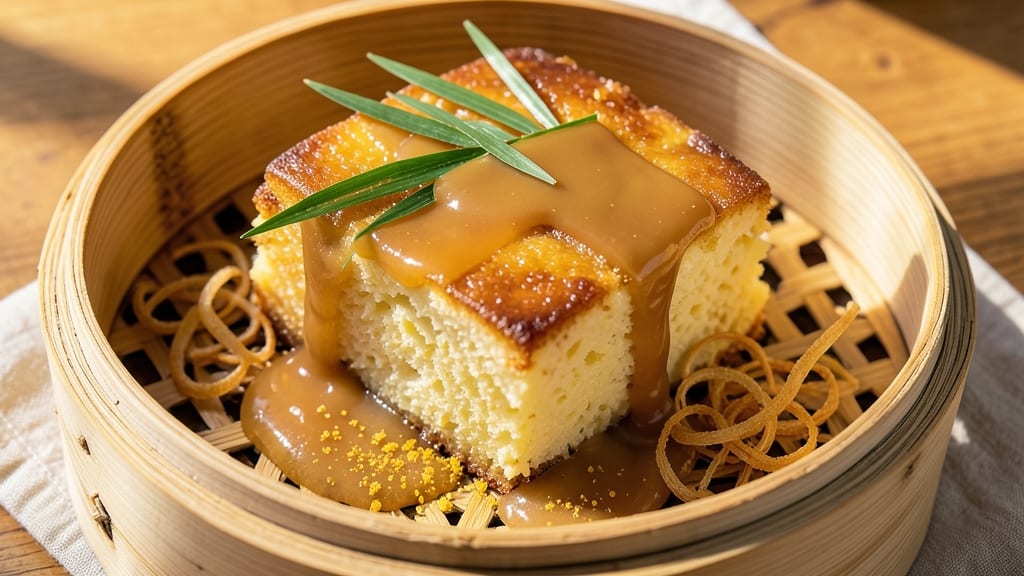
This Vietnamese egg loaf recipe brings the fragrant flavors of Southeast Asia to your breakfast table with its signature turmeric-coconut aroma. 🌿 The secret lies in the delicate balance of rice flour, coconut milk, and pandan leaf, creating a tender, slightly sweet loaf that's both comforting and elegant.
I've perfected this traditional recipe over years of testing, ensuring the texture remains moist and the flavors develop fully during baking.
The beauty of this dish is in its simplicity—just a handful of ingredients transform into a restaurant-quality breakfast that pairs beautifully with fresh fruit or a light Vietnamese coffee. The turmeric gives it that distinctive golden hue, while the coconut milk adds richness without overpowering the delicate egg flavor.
What makes this recipe special is the slow baking process, which allows the flavors to meld together perfectly.
What you'll end up with is a fragrant, tender loaf that's perfect for breakfast or brunch. The texture is light yet substantial, with just the right amount of moisture to keep it satisfying.
This is the kind of dish that feels special enough for company but simple enough for a weeknight treat. The aroma alone will have everyone asking what's for breakfast.
Serve warm with a drizzle of honey or fresh mango slices for a truly authentic Vietnamese experience. Let's get started on creating this fragrant masterpiece that captures the essence of Vietnamese home cooking.
Ingredients for vietnamese egg loaf
Six simple ingredients create this fragrant Vietnamese breakfast masterpiece with tender texture and aromatic coconut-turmeric essence.
| Ingredient | Amount | Notes |
|---|---|---|
| Large Eggs 🥚 | 6 whole | Room temperature for best mixing |
| Rice Flour 🌾 | 1 ½ cups | Glutinous or jasmine preferred |
| Coconut Milk 🥥 | 1 can | Full-fat for richness |
| Turmeric Powder 🌿 | 1 tbsp | Freshly ground for vibrant color |
| Pandan Leaf 🌿 | 1 whole | Dried or fresh, tied in cheesecloth |
| Granulated Sugar 🍚 | ¼ cup | Light brown preferred for depth |
| Vegetable Oil 🫒 | ½ cup | High smoke point for baking |
| Salt 🧂 | ½ tsp | Diamond Crystal preferred |
| Baking Powder 🍞 | 1 tsp | Aluminum-free for best results |
| Unsweetened Almond Milk 🥛 | ½ cup | For light moisture balance |
| Fresh Mango 🥭 | 1 ½ cups | Diced, for serving (optional) |
| Honey 🍯 | 2 tbsp | For drizzling (optional) |
The rice flour is non-negotiable here—Bob's Red Mill or Thai Kitchen brands work best for that signature texture. Coconut milk should be full-fat for richness, and Thai Kitchen or Goya brands are reliable. Turmeric loses potency fast, so buy small amounts and store in a cool, dark place. Pandan leaf can be tricky to find—Asian markets usually carry it fresh or dried. If using dried, steep in warm milk first. The almond milk is optional but adds subtle nuttiness that complements the coconut beautifully.
No rice flour? Substitute with 1 cup all-purpose flour plus 1 tbsp cornstarch—texture won't be identical but works in a pinch. Coconut milk too expensive? Half coconut milk, half whole milk maintains richness. Turmeric too strong? Start with 0.5 tbsp and adjust. Fresh mango isn't essential—pineapple or papaya work equally well for serving. The honey can be swapped for maple syrup if preferred. For extra fragrance, add 1 tsp vanilla extract to the batter. Always use room-temperature eggs—they mix more smoothly and create a lighter texture.
Store the loaf wrapped in parchment paper at room temperature for 2 days or refrigerate for 5 days. Reheat slices in a 250°F oven for 10 minutes for best texture. The batter keeps in the fridge for 24 hours before baking. For make-ahead convenience, bake the loaf, cool completely, then slice and freeze between parchment paper. Thaws beautifully at room temperature. The aroma alone makes this worth the effort—everyone will ask for seconds
Why You'll Love This Recipe
- No Fuss, No Mess: I swear by this recipe because it’s the kind of thing you can make with one hand tied behind your back. Just whisk eggs, mix in rice flour and coconut milk, fold in that fragrant pandan—no rolling dough, no shaping stress. The only "mess" is when I forget to line the pan and the edges get just a little golden.
- Golden Creamy Magic: That first bite? Silky center, golden crust—it’s the kind of texture that makes you pause mid-chew. The turmeric gives it that warm, earthy glow, while the pandan adds this subtle floral note that’s addictive. Honestly, it’s the kind of dish that makes me want to eat it straight from the pan.
- Breakfast or Snack: Between us, this loaf is my secret weapon for lazy mornings or after-school snacks. Slice it up for a quick breakfast with coffee, or pack it for lunch—it reheats beautifully. I’ve even served it at potlucks (my cousin thought it was store-bought).
Step-by-step instructions for Vietnamese egg loaf
Here's the precise method to create a fragrant, golden Vietnamese egg loaf with perfect texture.
👨🍳 Step 1: Prepare the Batter with Exact Ratios
In a large mixing bowl, whisk together the 6 whole Large Eggs until the yolks and whites are fully combined and the mixture is pale yellow. Add the 1.5 cups Rice Flour, 1 tbsp Turmeric Powder, 1 tsp Baking Powder, and 0.5 tsp Salt to the eggs. Whisk vigorously for 2-3 minutes until no flour streaks remain and the batter is smooth.
In a separate bowl, combine the 1 can Coconut Milk (do not shake the can—open and pour the thick cream from the top only) with the 0.5 cup Unsweetened Almond Milk and 0.25 cup Granulated Sugar. Whisk until the sugar dissolves completely. Gently fold this mixture into the egg batter in three additions, mixing just until combined. Avoid overmixing—this keeps the loaf tender.
🥘 Step 2: Infuse with Pandan and Oil for Authentic Flavor
Tie the 1 whole Pandan Leaf in cheesecloth and add it to the batter along with the 0.5 cup Vegetable Oil. Let the batter rest for 10 minutes at room temperature—this allows the pandan to infuse its delicate aroma and the oil to emulsify properly. The batter should be thick but pourable, similar to pancake batter.
Real talk: the pandan leaf is what gives this loaf its signature fragrance. If using dried pandan, steep it in 2 tablespoons warm water for 5 minutes first to release more flavor, then add the infused water to the batter along with the leaf.
🔥 Step 3: Bake in a Preheated Loaf Pan for Even Cooking
Preheat your oven to 350°F. Lightly grease a 6-cup loaf pan (about 8x4 inches) with vegetable oil or line it with parchment paper for easy removal. Pour the batter into the prepared pan and smooth the top with a spatula. The batter should fill the pan about ¾ full—it will rise significantly.
Bake for 40-45 minutes until the top is golden brown and a toothpick inserted into the center comes out clean. The loaf is done when it springs back gently when pressed and has developed a slight crust. If the top browns too quickly, tent loosely with foil after 25 minutes to prevent over-browning.
⏰ Step 4: Rest and Serve with Fresh Mango
Remove the loaf from the oven and let it cool in the pan for 10 minutes. Then transfer it to a wire rack to cool completely—this prevents a gummy texture. The loaf should be moist but firm, with a delicate golden crust that flakes slightly when sliced.
For serving, slice the loaf into 6 equal portions (about 1-inch thick slices). Drizzle with 2 tbsp Honey and serve with 1.5 cups Fresh Mango on the side. The mango's sweetness balances the subtle earthiness of the turmeric and coconut. Store leftovers wrapped in the pan at room temperature for up to 2 days or refrigerated for 5 days.
Pro Tips For Making Vietnamese Egg Loaf
- STEAM IT RIGHT: After mixing your coconut milk, rice flour, and eggs into a thick batter, pour it into a greased loaf pan—but don’t bake it straight away. Place the pan in a larger roasting tray, add a cup of boiling water to the tray, then bake. The steam keeps the loaf moist and prevents that dry, crumbly texture I used to hate. (Yes, even if you’re impatient like me.)
- WHISK EGGS HARD: Beat those eggs until the ribbons fall slowly—about 3 minutes with a whisk. I learned this the hard way: under-whisked eggs make a dense, rubbery loaf. The goal is to incorporate as much air as possible, which lightens the texture. Skip this, and you’ll end up with something closer to a sad, dense cake than a fluffy egg loaf.
- TOAST THE PANDA: Before adding the pandan leaf, lightly toast it in a dry pan for 10 seconds until fragrant. This intensifies its aroma and prevents the leaf from releasing bitterness into the batter. Tear it into small pieces afterward—big chunks leave weird, chewy spots. (Your future self will notice.)
- CHILL THE BATTER: Let the mixed batter rest for 15 minutes at room temperature before baking. I was skeptical until I tried it: the rice flour absorbs better, and the loaf rises more evenly. No chilling? You’ll get a lopsided, uneven bake—trust me, I’ve seen it. (It’s not pretty.)
Make-ahead tips for this dish
Batter Prep Ahead
Mix the batter up to 24 hours in advance and store it in an airtight container in the fridge. The flavors develop beautifully overnight, and the rice flour absorbs the coconut milk more evenly.
When ready to bake, let the batter sit at room temperature for 30 minutes before pouring into the pan—this prevents condensation and ensures a smooth texture. I always do this the night before so I can enjoy the aroma while I sleep! 🌿
Bake and Freeze
Bake the loaf completely, then cool it completely before slicing. Wrap each slice individually in plastic wrap and freeze them in a single layer on a tray. Once frozen, transfer to a ziplock freezer bag where they'll keep for 3 months.
To serve, thaw at room temperature for 1 hour or warm in a 250°F oven for 10 minutes—this restores the moist texture perfectly. The freezer method is my go-to for busy mornings!
Portion and Reheat
For quick reheating, slice the baked loaf into 6 portions and store them in a glass container with parchment paper between slices. Reheat individual portions in the microwave for 45-60 seconds on medium power, covered with a damp paper towel.
For best results, I prefer the oven method—pop slices on a baking sheet at 300°F for 8-10 minutes until warmed through. The oven keeps the texture tender and prevents drying.
Make-Ahead Serving
Assemble the full presentation the night before by slicing the loaf, arranging it on a platter with fresh mango, and drizzling with honey. Cover loosely with plastic wrap and refrigerate—this keeps everything fresh while letting the aromas meld.
When ready to serve, let everything sit at room temperature for 15 minutes before enjoying. The warm loaf with cool mango is a match made in breakfast heaven! 🍯
Batch Prep Tips
Double the recipe and bake two loaves for easy leftovers. Store one wrapped at room temperature and freeze the second. This way, you always have a fresh loaf ready without extra baking.
I like to bake one on weekends and freeze it—perfect for lazy weekdays when I need a quick, impressive breakfast. The aroma alone makes this worth the extra effort! ⏰
Storage Hacks
Keep the baked loaf in its original loaf pan, covered with a clean kitchen towel, at room temperature for up to 2 days. For longer storage, refrigerate the whole loaf wrapped in foil for 5 days.
To revive stale slices, wrap them in a damp paper towel and microwave for 20 seconds—this restores moisture without making them soggy. The key is always to store with moisture protection! 💧
Nutrition facts
Frequently asked questions
Why does my Vietnamese egg loaf turn out dense instead of light?
Overmixing the batter is the most common cause—whisk just until combined to maintain air pockets. Also, make sure your eggs are room temperature and the rice flour is properly incorporated. If the batter seems too thick, add 1 tbsp almond milk at a time until it reaches pancake-like consistency. The 10-minute rest before baking helps too!
Can I make this without pandan leaf?
Yes, but the aroma will be different. Substitute with 1 tsp pandan extract (found in Asian markets) or ½ tsp vanilla extract plus ¼ tsp cinnamon for warmth. For a citrusy twist, add 1 tbsp lime zest to the batter. The flavor won't be identical, but it'll still taste delicious!
How do I prevent the top from browning too quickly?
Tent the loaf with aluminum foil after 25 minutes of baking. For extra insurance, brush the top with 1 tbsp coconut milk before baking. The oven temperature should be 350°F—any hotter and browning will happen faster. If your oven runs hot, reduce to 325°F and bake for 50-55 minutes.
Is this egg loaf gluten-free?
Yes! Traditional Vietnamese egg loaf uses rice flour, which is naturally gluten-free. Just ensure your baking powder and salt are certified gluten-free. The texture remains tender and moist without any gluten-containing ingredients. Perfect for those with gluten sensitivities!
Can I use dairy-free coconut milk?
Just use full-fat coconut milk (even dairy-free versions) for the best texture. Light or low-fat versions may make the loaf drier. For extra richness, mix ½ cup coconut cream (the thick part from a can) with the coconut milk. The flavor stays authentic while keeping it dairy-free!