
Breakfast & Brunch
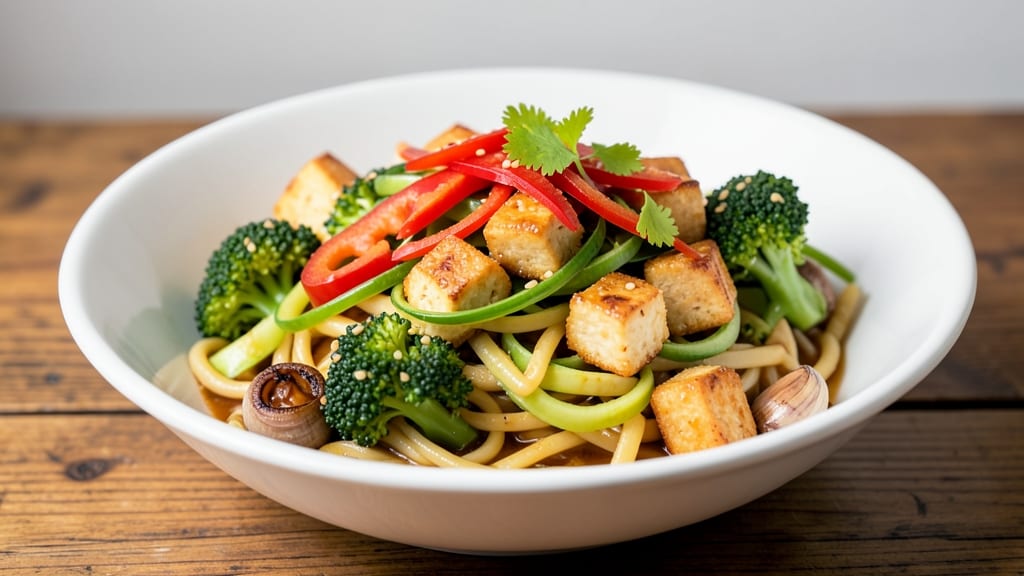
This veggie egg noodles recipe transforms simple ingredients into a protein-packed breakfast bowl that’s ready in under 30 minutes. The secret lies in balancing crispy egg noodles with tender vegetables and a savory sauce that ties everything together—no fancy techniques required.
I developed this dish after realizing how often breakfast could be both nutritious and satisfying without relying on meat or processed ingredients.
The beauty of this recipe is its flexibility—swap in any seasonal vegetables, add tofu or mushrooms for extra protein, or keep it vegetarian with chickpeas. The egg noodles absorb the flavorful sauce while maintaining a satisfying bite, and the vegetables stay crisp-tender thanks to a quick stir-fry method.
It’s the kind of dish that feels indulgent but is actually packed with nutrients, making it perfect for busy mornings or meal prep.
What you’ll end up with is a visually appealing bowl layered with golden egg noodles, vibrant vegetables, and a rich, savory sauce that coats every bite. The texture contrast—crispy noodles, tender vegetables, and creamy optional additions like avocado—makes each spoonful exciting.
This is comfort food at its best: hearty, flavorful, and completely customizable.
Serve it as a standalone breakfast or pair it with a side salad for a complete meal. The recipe scales easily, so whether you’re cooking for one or feeding a crowd, this veggie egg noodles dish delivers every time. Let’s get started!
Ingredients for veggie egg noodles
Simple ingredients that transform into a protein-rich breakfast bowl with satisfying texture and vibrant colors.
| Ingredient | Amount | Notes |
|---|---|---|
| Egg Noodles 🍜 | 8 oz | Dried, egg-based, uncooked |
| Extra-Firm Tofu 🥬 | 1 lb | Pressed, cubed, protein base |
| Bell Peppers 🌶️ | 2 whole | Mixed colors, sliced into strips |
| Zucchini 🥒 | 1 lb | Medium size, sliced into half-moons |
| Broccoli Florets 🥦 | 2 cups | Fresh, cut into bite-sized pieces |
| Garlic Cloves 🧄 | 4 cloves | Fresh, minced for aromatic base |
| Vegetable Broth 💧 | 1 ½ cups | Low-sodium for balanced flavor |
| Soy Sauce 🍶 | 2 tbsp | Low-sodium for health-conscious option |
| Sesame Oil 🫒 | 1 tbsp | Toasted for nutty aroma |
| Olive Oil 🫒 | 2 tbsp | Extra-virgin for high heat cooking |
| Ginger Root 🌿 | 1 tbsp | Freshly grated for zesty kick |
| Green Onions 🧅 | 3 whole | Sliced, for fresh garnish |
| Sesame Seeds 🌾 | 1 tbsp | Toasted for crunchy texture |
| Salt 🧂 | 1 tsp | Diamond Crystal preferred |
| Black Pepper 🌶️ | ½ tsp | Freshly cracked for robust flavor |
The tofu is the protein backbone here—extra-firm holds shape best during cooking. Press it for 15 minutes before cubing to remove excess moisture, which ensures better browning. Trader Joe's and Whole Foods carry excellent organic options, but any store-brand works. For the bell peppers, mixed colors add visual appeal, but stick to one color if you prefer uniformity. The zucchini should be firm and heavy for its size—avoid wrinkled skins. Broccoli florets should be bright green, not yellowing, for optimal flavor and texture.
No tofu? Chickpeas or edamame work as protein substitutes—chickpeas add heartiness, while edamame brings a delicate sweetness. Short on bell peppers? Mushrooms or snap peas add different textures without compromising flavor. The vegetable broth can be swapped for coconut aminos if you're avoiding soy. For extra richness, stir in 1 tbsp nutritional yeast after cooking—it adds a cheesy depth without dairy. The sesame oil should be lightly toasted, not the flavored kind, for authentic flavor.
This dish reheats beautifully—simply microwave with a splash of water for 30 seconds to revive crispiness. Store in airtight containers for 4-5 days in the fridge, or freeze portions for up to 3 months. For meal prep, assemble components separately—cooked noodles, proteins, and veggies—then combine when ready to eat. The sauce thickens as it cools, so add a splash of water if it seems too thick when reheating. Garnish with fresh green onions and sesame seeds just before serving for maximum freshness.
Why You'll Love This Recipe
- One-Pan Magic: I swear by this—just toss everything on a sheet pan, roast until golden, and boom. The tofu gets that crispy edge while the veggies soften just enough, all without a single pot to wash.
- Craving-Worthy Crunch: That first bite? The egg noodles hold their chew while the pan-fried tofu delivers a satisfying crunch—honestly, it’s the kind of texture combo that makes me reach for seconds without thinking.
- Meal Prep MVP: Between us, this is my go-to for lunches all week. The noodles reheat perfectly, and the veggies stay vibrant if you store them separately—no sad, mushy leftovers here.
- Budget-Friendly Flex: Extra-firm tofu keeps costs low, and bell peppers or zucchini stretch further than you’d think. I’ll be real: it’s the kind of dish that lets me feed my family well without breaking the bank.
Step-by-step instructions for one-pan veggie egg noodles
This method delivers a protein-packed, flavorful dish with minimal cleanup and maximum nutrition.
Press and Cube the Extra-Firm Tofu
Begin by pressing the 1 lb extra-firm tofu to remove excess moisture. Wrap it tightly in a clean kitchen towel or paper towels, then place a heavy object like a cast-iron skillet on top for 15 minutes. This step ensures crispy tofu instead of soggy cubes. After pressing, unwrap and gently pat dry with additional paper towels.
Using a sharp knife, carefully cube the tofu into ½-inch pieces. I like to use a mandoline for even cubes, but a chef's knife works perfectly. Season immediately with ½ tsp black pepper and set aside. The longer you let it sit seasoned, the more flavor it absorbs before cooking.
Sauté Aromatics and Prepare the Veggies
Heat 2 tbsp olive oil in a large, deep skillet over medium-high heat. Add the 4 cloves minced garlic and 1 tbsp grated ginger root, cooking for 30 seconds until fragrant—this prevents raw garlic flavor in the final dish. Add the cubed tofu and cook for 5-6 minutes, stirring occasionally, until golden brown on all sides.
While the tofu cooks, prepare the vegetables. Slice the 2 whole bell peppers into ¼-inch strips, the 1 lb zucchini into ½-inch half-moons, and keep the 2 cups broccoli florets whole. Toss them in a large bowl with 1 tsp salt and ½ tsp black pepper, ensuring even seasoning. This prep ensures everything cooks uniformly in the same pan.
Cook the Vegetables and Build the Sauce
Push the tofu to one side of the skillet and add 2 tbsp olive oil if needed. Add the prepared vegetables in batches, starting with the harder vegetables—bell peppers and broccoli florets—and cook for 4-5 minutes until slightly softened. Add the zucchini and cook for another 3 minutes until all vegetables are tender-crisp but still vibrant.
Pour in the 1.5 cups vegetable broth and 2 tbsp soy sauce, scraping up any browned bits from the bottom of the pan. This deglazing step captures all the flavor. Bring to a gentle simmer and let it reduce by half—about 3-4 minutes. The sauce should coat the back of a spoon but remain light enough to coat the noodles.
Cook the Egg Noodles and Combine
Add the 8 oz egg noodles to the skillet, stirring to coat them in the vegetable mixture. Pour in ½ cup water to help the noodles cook evenly. Cover the skillet and cook over medium heat for 8-10 minutes, stirring occasionally, until the noodles are al dente and the liquid has mostly evaporated.
Remove the skillet from heat and stir in the 1 tbsp sesame oil. The sesame oil adds a nutty aroma and balances the savory flavors. Taste and adjust seasoning with additional soy sauce or salt if needed. The dish should be well-seasoned but not overly salty.
Garnish and Serve
Transfer the noodles to serving bowls. Garnish each serving with 1 tbsp toasted sesame seeds and 1 whole sliced green onion. The sesame seeds add texture, while the green onions provide a fresh contrast. Serve immediately while the vegetables are still crisp-tender and the noodles are hot.
This one-pan method ensures every bite is packed with protein, fiber, and vibrant flavors. The tofu stays crispy, the vegetables retain their texture, and the egg noodles absorb all the savory goodness. Enjoy your protein-packed power bowl!
Pro Tips For Making Veggie Egg Noodles
- CRISP THE TOFU FIRST: Toss cubed tofu in 1 tablespoon cornstarch before pan-frying—it browns faster and holds up better than pressing alone. I used to skip this and end up with soggy tofu that turned to mush when the veggies steamed.
- CUT BELL PEPPERS THIN: Slice them into ¼-inch strips instead of chunks—they cook in half the time and stay bright, not mushy. Thicker slices hide in the dish while thin ones caramelize and add crunch.
- DON’T OVERCROWDLE THE PAN: Cook tofu and veggies in two batches if needed—packing the pan steams instead of sears, leaving you with limp broccoli and dull flavors. A hot, slightly crowded pan is fine, but don’t let it get congested.
- SALT THE NOODLES WELL: Toss freshly cooked egg noodles with a pinch of salt while they’re still hot—they absorb it better than waiting until the plate. Unsalted noodles taste bland no matter how much sauce you add.
Dietary considerations for this dish
Vegetarian Protein Power
This recipe delivers 15-20 grams of plant-based protein per serving thanks to the extra-firm tofu and egg noodles. The tofu provides all nine essential amino acids, while the egg noodles add a satisfying chew.
For even more protein, swap in chickpeas (1 cup = 15g protein) or edamame (1 cup = 17g protein). I love adding ½ cup cooked lentils for an extra 9 grams of protein and hearty texture. 💪
Gluten-Free Adaptation
For a gluten-free version, replace the egg noodles with 8 oz gluten-free egg noodles (like Barilla or Jovial) or rice noodles. Both options work beautifully while maintaining the dish's texture.
If you're avoiding eggs entirely, use chickpea or brown rice pasta instead. Always check labels for cross-contamination warnings if gluten sensitivity is a concern.
Low-Carb Options
Cut carbs by swapping egg noodles for zucchini noodles (spiralized) or shirataki noodles (konjac-based). The zucchini noodles add freshness while keeping the dish light, while shirataki noodles mimic the texture of traditional noodles with just 3 grams of carbs per serving.
Reduce the vegetable broth to 1 cup when using these alternatives to prevent excess moisture.
Allergen-Friendly Swaps
For soy-free cooking, replace the soy sauce with tamari or coconut aminos, and use extra-firm tofu from a soy-free brand like House Foods. If sesame allergies are a concern, omit the sesame oil and seeds, or use toasted pumpkin seeds for crunch instead.
Always double-check labels on vegetable broth for hidden soy or gluten additives.
Nutrient Boosts
Enhance the dish's nutritional profile by stirring in 1 tbsp nutritional yeast (adds 2g protein and vitamin B12) or 1 tsp turmeric (anti-inflammatory benefits). For extra fiber, toss in ½ cup chopped spinach or kale—they wilt quickly without overcooking.
I also add ½ avocado per serving for healthy fats and creaminess, especially when serving as a brunch dish. ✨
Meal Prep Tips
Store components separately for up to 5 days: cooked noodles, tofu, vegetables, and sauce. When reheating, combine everything in a skillet with 2 tbsp water over medium heat for 5-7 minutes to restore crisp-tenderness.
For freezing, portion the sauce separately and freeze it with the noodles to prevent mushiness. The tofu stays crispy when reheated this way, and the vegetables retain their vibrant color. 📅
Nutrition facts
Frequently asked questions
Can I make this recipe without tofu?
Swap the tofu for 1 cup cooked chickpeas (for heartiness) or ½ cup edamame (for a lighter option). Both add protein and texture—chickpeas give a nutty flavor while edamame stays delicate. For a meaty texture, try mushroom slices like shiitake or portobello.
How do I prevent the egg noodles from getting mushy?
Cook the noodles with the lid slightly ajar during the final 8-10 minutes to allow steam to escape. This prevents excess moisture buildup. Also, stir occasionally to ensure even cooking. For extra insurance, rinse the cooked noodles briefly under cold water before adding them to the skillet.
What's the best way to reheat leftovers?
Reheat in a skillet over medium heat with 2 tbsp water or broth for 5-7 minutes, stirring occasionally. This restores crisp-tenderness. Microwaving works too—cover with a damp paper towel for 1 minute, then stir and add more liquid if needed. The sauce may thicken when cooled, so thin it with a splash of water if needed.
Can I use fresh herbs instead of sesame seeds?
Yes! Fresh herbs like cilantro, basil, or mint add bright flavors. Use 1 tbsp chopped herbs instead of sesame seeds. For a different texture, try toasted pumpkin seeds or crushed peanuts. Just add them fresh at the end—herbs lose flavor when cooked.
Is this dish kid-friendly?
With some adjustments, yes! Skip the sesame oil and seeds, and use mild soy sauce or coconut aminos. Cut veggies into smaller pieces and add ½ cup shredded carrots or corn for sweetness. Serve with a side of butter or yogurt sauce for dipping. The tofu can be omitted entirely for picky eaters.