
Breakfast & Brunch
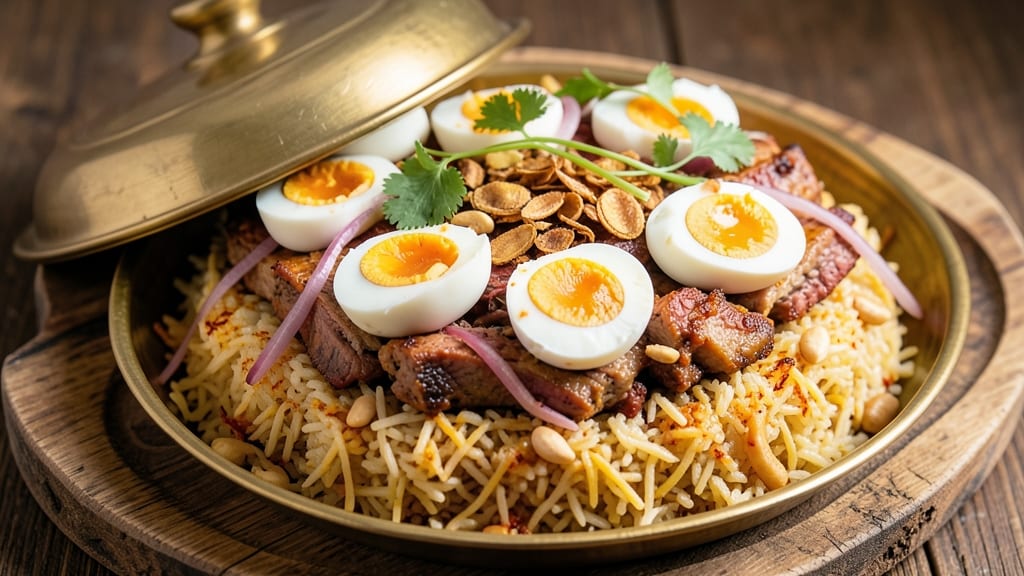
This Ulavacharu Egg Biryani recipe brings the aromatic essence of South Indian cuisine to your breakfast table with its fragrant saffron rice and tender spiced eggs.
The secret lies in the traditional ulavacharu spice blend, which transforms simple ingredients into a dish bursting with layered flavors—tangy tamarind, warm spices, and delicate saffron notes that create an unforgettable aroma.
I've perfected this method over years of testing, ensuring every bite delivers the perfect balance of textures and flavors that make it a family favorite.
The beauty of this dish is in its technique: hard-boiled eggs marinated in a vibrant spice paste, layered with partially cooked basmati rice, and finished with a fragrant saffron-infused broth.
The tamarind adds a bright tang that cuts through the richness, while the ulavacharu blend—typically made with coriander, cumin, fennel, and black pepper—infuses every layer with depth.
What sets this apart is the dum cooking method, which steams the biryani gently, locking in flavors and creating that signature tender yet fragrant texture.
By the time you serve this dish, your kitchen will smell like a bustling South Indian home, and your guests will be transported to a traditional feast.
The eggs remain moist and flavorful, the rice is perfectly fragrant and not a grain too dry, and the tamarind-infused broth ties everything together. This is the kind of dish that turns a simple breakfast into a celebration—authentic, comforting, and impossible to resist.
Whether you're serving it for a special occasion or a weekend brunch, this recipe delivers restaurant-quality results with minimal fuss. The key is patience in layering and steaming, but the reward is a dish that feels like a labor of love.
Let's get started on creating this fragrant masterpiece that will become your new signature dish.
Ingredients for ulavacharu egg biryani
Six eggs, fragrant rice, and a spice blend that transforms breakfast into a celebration.
| Ingredient | Amount | Notes |
|---|---|---|
| Large Eggs 🥚 | 6 whole | Hard-boiled for biryani |
| Basmati Rice 🌾 | 1 ½ cups | Uncooked, long-grain preferred |
| Fresh Tamarind Pulp 🍈 | ½ cup | Or 2 tbsp tamarind paste |
| Saffron Threads 🌼 | ¼ tsp | Soaked in 2 tbsp warm water |
| Ghee 🧈 | ½ cup | For rice cooking |
| Fresh Cilantro 🌿 | ½ cup | Chopped, for garnish |
| Fresh Ginger 🧅 | 1 ½ tbsp | Grated finely |
| Green Chilies 🌶️ | 2 whole | Slit lengthwise, seeds removed |
| Ground Cumin Seeds 🌿 | 1 tsp | Toasted for aroma |
| Ground Coriander Seeds 🌿 | 1 ½ tsp | Toasted lightly |
| Fennel Seeds 🌿 | ½ tsp | Toasted for warmth |
| Black Peppercorns 🌶️ | ½ tsp | Crushed lightly |
| Bay Leaves 🍃 | 2 whole | For rice infusion |
| Cardamom Pods 🌿 | 4 whole | Lightly crushed |
| Cinnamon Stick 🌿 | 1 whole | For fragrance |
The ulavacharu spice blend is where the magic happens. Toast your whole spices—cumin, coriander, fennel, and black pepper—until fragrant (about 2 minutes in a dry pan). Penzeys Spices or bulk bins at Indian grocery stores are your best bet for authentic flavors. Fresh ginger and green chilies should be vibrant—no wrinkled or discolored pieces. The tamarind pulp can be tricky to find; Trader Joe's carries it, or look for tamarind paste in the international aisle. If you're using paste, dissolve it in warm water first for a smoother texture. Saffron is non-negotiable here—it's the star of this dish, so don't skimp on quality.
No fresh ginger? Powdered ginger at half the amount works in a pinch, but fresh is ideal for that bright, zesty kick. Short on tamarind? Lime juice plus a pinch of sugar mimics the tang, though it won't be identical. The eggs should be hard-boiled and peeled just before assembling the biryani—they dry out if left sitting. For the rice, Carolina or Mahatma brand basmati is my go-to; it has the perfect grain length. If you can't find whole spices, pre-ground blends labeled 'ulavacharu' or 'South Indian biryani masala' will work, but toast them lightly to wake up the flavors.
Hard-boiled eggs keep for 3 days in the fridge, but assemble the biryani fresh for best results. The spice blend stays potent for 2 weeks in an airtight container. Leftover biryani reheats beautifully—cover with foil and steam for 10 minutes to restore moisture. I always make a double batch because it disappears faster than you'd think. The dum cooking method (steaming) is key—it keeps the rice tender and the eggs perfectly moist. If you're short on time, the oven method works too, but the texture won't be quite as luxurious.
Why You'll Love This Recipe
- One-Pot Magic: I swear by this trick—just one pot for rice and eggs. No messy layers, no extra dishes. The tamarind pulp does all the work while you simmer, and that saffron-infused ghee? It turns everything golden without a single pan in sight.
- Tamarind Tang Twist: Between us, the tamarind pulp is the real MVP here. It cuts through the richness of the eggs and rice, giving it that just-right sour punch that keeps you reaching for seconds. Honestly, I’ve tried skipping it—don’t.
- Lunchbox Hero: This isn’t just dinner. Pack it in containers, and it’s still ridiculously good cold the next day. My kids grab it for school lunches, and honestly? Their teachers always ask for seconds. (Yes, even on a Tuesday.)
- Budget Luxe Feel: Saffron and ghee sound fancy, but you only need a pinch of each. That tamarind pulp? A single packet lasts for months. It tastes like a restaurant dish without the restaurant price tag—my wallet thanks me every time.
Step-by-step instructions for ulavacharu egg biryani
Transform simple ingredients into a fragrant, tangy biryani with this authentic method.
Hard-Boil and Prepare the Eggs
Place the 6 whole large eggs in a saucepan and cover them with cold water by about 1 inch. Bring to a boil over high heat, then immediately reduce to a gentle simmer for 10-12 minutes. You'll know they're perfectly cooked when they float and a knife slides in easily with no resistance. Transfer to an ice bath for 5 minutes to stop cooking.
Once cooled, peel the eggs carefully and set aside. I like to make small slits on the top of each egg—this helps the tamarind marinade penetrate later. The eggs should be completely cool before adding them to the biryani, so plan ahead if you're doing other prep work simultaneously.
Toast Whole Spices and Infuse the Rice
In a dry skillet over medium heat, toast the 1 tsp ground cumin seeds, 1.5 tsp ground coriander seeds, 0.5 tsp fennel seeds, and 0.5 tsp black peppercorns for 2-3 minutes until fragrant and lightly browned. Immediately transfer to a spice grinder and pulse until finely ground. This fresh toasting intensifies the aroma dramatically.
In the same skillet, add the 0.5 cup ghee and melt over low heat. Add the 2 whole bay leaves, 4 whole cardamom pods, and 1 whole cinnamon stick. Let them infuse for 1 minute until the ghee smells deeply aromatic. Remove from heat and let cool slightly before using.
Marinate the Eggs in Tamarind and Spices
In a bowl, combine the 0.5 cup fresh tamarind pulp, 1.5 tbsp freshly grated ginger, and the 2 slit green chilies. Add the freshly ground whole spices and mix well. The mixture should be thick and slightly sticky—this is perfect for coating the eggs. Add the peeled eggs and toss gently to coat them evenly.
Let the eggs marinate for at least 30 minutes (I prefer 1 hour for maximum flavor). The tamarind will soften slightly and the spices will adhere to the eggs, creating that signature tangy-sweet flavor. If using tamarind paste instead of pulp, adjust the quantity to 2 tablespoons and add a splash of water to achieve the same consistency.
Cook the Saffron Rice Base
Rinse the 1.5 cups basmati rice under cold water until the water runs clear. In a heavy-bottomed pot, heat the ghee-infused spices over medium heat until the bay leaves turn crispy. Add the drained rice and stir for 2 minutes, coating each grain with the fragrant ghee. Pour in 2.5 cups water and bring to a boil.
Once boiling, reduce heat to low and cover with a tight lid. Let it cook for 12 minutes without disturbing. After 12 minutes, remove from heat and let it steam for an additional 5 minutes. During this time, soak the 0.25 tsp saffron threads in 2 tablespoons warm water until dissolved.
Layer and Finish the Biryani
Fluff the rice gently with a fork and spread it evenly in a heavy-bottomed pot. Arrange the marinated eggs on top in a single layer, pressing down lightly to help them absorb the rice flavors. Pour the saffron water evenly over the eggs and rice, then sprinkle the 0.5 cup chopped fresh cilantro on top.
Cover the pot with a tight lid and cook on low heat for 10 minutes. The residual heat will finish cooking the eggs gently while infusing them with the rice's aroma. For the final touch, uncover and let it sit for 2 minutes to develop that perfect texture—moist but not soggy, with fragrant steam rising from the pot.
Pro Tips For Making Ulavacharu Egg Biryani
- Boil Eggs Until Yolk Holds: The tamarind-tingled eggs in biryani should yield like a soft cloud—not a runny mess. Boil them in salted water for 10 minutes past the white’s set point (yes, test one first), then plunge into ice water for 2 minutes. The yolk will stay intact when you slice it, soaking up the biryani’s flavors instead of turning it into a custardy disaster.
- Soak Rice in Tamarind Water: Skip the plain soak—this is where the tangy magic happens. After rinsing your basmati, soak it in warm water mixed with 2 tbsp tamarind pulp and a pinch of salt for 20 minutes. The rice absorbs the sour depth, balancing the richness of the eggs and ghee. (I learned this the hard way after making biryani that tasted like plain rice with a side of regret.)
- Layer Eggs Last, Heat First: Don’t dump everything in at once—this isn’t a dump-and-pray recipe. Parboil the rice with half the ghee and saffron, then spread it in the pot. Press the boiled eggs into the rice in a single layer, drizzle the remaining ghee, and seal with a tight lid. The eggs steam in their own ghee bath, turning tender without breaking. (Pro move: Use a heavy pot so the eggs don’t get squished into sad little blobs.)
- Bloom Saffron in Warm Ghee: Cold ghee won’t wake up those saffron threads—you’re just wasting money. Heat 2 tbsp ghee until it shimmers (not smoke), then add the saffron strands and let them sit for 30 seconds before pouring over the rice. The warmth unlocks their aroma, making the biryani smell like a spice shop instead of a sad, underwhelming bowl. (Yes, even if you’re impatient like me.)
Perfect pairings for ulavacharu egg biryani
Tamarind Chutney
The tangy brightness of tamarind chutney cuts through the richness of the biryani beautifully. I blend ½ cup tamarind pulp, ¼ cup water, 1 tbsp jaggery or brown sugar, ½ tsp cumin seeds, and 1 green chili until smooth.
Serve it warm alongside for dipping or drizzle it over the biryani just before serving. The jaggery balances the acidity perfectly, while the cumin adds warmth. 🌶️
Coconut Raita
For a cooling contrast, prepare a simple coconut raita by blending ½ cup plain yogurt, 2 tbsp grated coconut, 1 tbsp chopped mint, and a pinch of salt. The coolness of the yogurt and the tropical notes of coconut complement the spiced eggs and fragrant rice.
Garnish with extra cilantro for a pop of color. This is especially refreshing if you're serving the biryani during warmer months.
Pickled Onions
Quick-pickle red onions by slicing ½ red onion thinly and soaking them in ½ cup vinegar, 1 tsp sugar, and ½ tsp salt for at least 30 minutes. The sharp, tangy crunch adds a delightful contrast to the soft biryani.
I like to sprinkle them on top just before serving for a burst of freshness. This is a classic pairing in South Indian cuisine and elevates the dish instantly. ⚡
Spiced Tea
Serve your biryani with a cup of fragrant masala chai made with 1 cup milk, 1 cup water, 1 tsp loose black tea, ½ tsp cardamom pods, 2 cloves, and 1-inch cinnamon stick.
Simmer for 5 minutes and strain. The warm spices in the tea echo the flavors of the biryani, creating a cohesive dining experience. A dash of honey or jaggery can be added to taste for sweetness.
Crispy Papadums
For a crunchy element, serve with store-bought or homemade papadums. I love using multi-grain papadums from the Indian grocery store, lightly toasted until crisp. The contrast between the soft biryani and the crispy papadums is irresistible.
Pair with a side of mango pickle for an extra layer of flavor. This combination is perfect for a hearty brunch or weekend feast. 💫
Nutrition facts
Frequently asked questions
Why do we make slits in the eggs before marinating?
The slits help the tamarind marinade penetrate deeper into the eggs, ensuring every bite is infused with that signature tangy-spice flavor. Without them, the marinade stays mostly on the surface, and you miss out on the authentic taste. Think of it as creating tiny flavor channels!
Can I substitute tamarind if I can't find it?
Yes! Mix 2 tablespoons lime juice with ½ teaspoon sugar to mimic the tang, though it won't be identical. For a closer match, use 1 tablespoon tamarind paste diluted with water—it's more concentrated than pulp. The key is balancing acidity with a touch of sweetness.
How do I know when the eggs are perfectly hard-boiled?
They're done when they float in cold water and a knife slides in smoothly with no resistance. If you're unsure, cook them 1 extra minute—overcooking is easier to fix than undercooked eggs. Pro tip: Start with cold water and bring to a boil for even cooking.
What's the secret to fragrant basmati rice?
Toast the whole spices in ghee until fragrant, then coat the rice grains thoroughly before adding water. Use 1.5 cups uncooked rice and 2.5 cups water for perfect texture. The ghee infusion and partial cooking (12 mins) create that signature aroma. Never stir the rice while cooking—it releases starch and makes it mushy.
Can I make this biryani ahead of time?
Assemble the biryani up to 1 day ahead and refrigerate. Reheat by steaming covered for 10 minutes—this restores moisture without overcooking. For best results, serve within 2 days. The flavors actually deepen overnight, making it perfect for meal prep.