
Salads
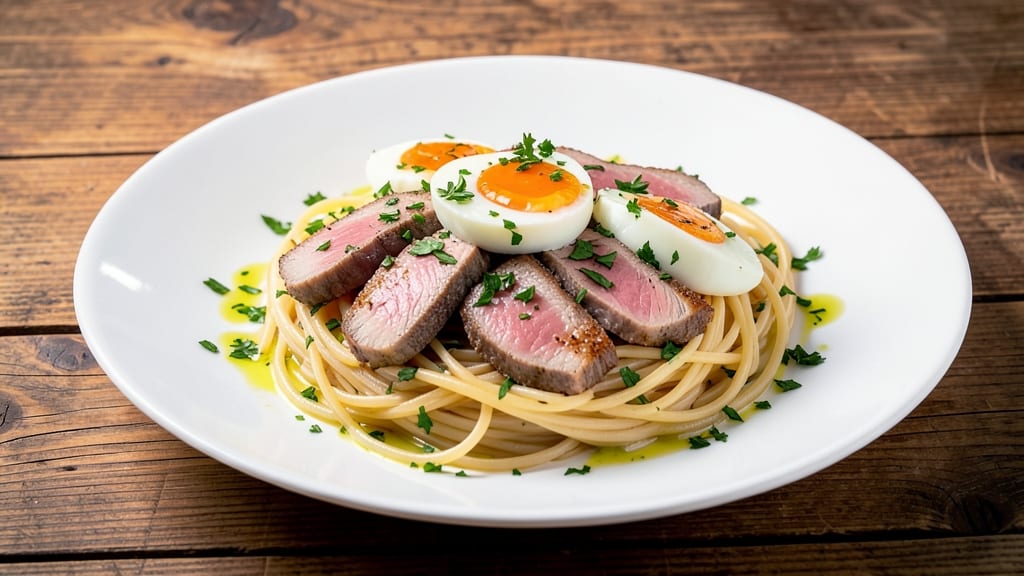
This tuna egg pasta recipe transforms simple ingredients into a luxurious meal where tender noodles cradle flaky tuna and ribbons of silky egg. The secret lies in perfectly cooked pasta paired with a delicate poached egg that ties everything together—creamy, rich, and impossibly satisfying.
It’s the kind of dish that feels special without requiring hours in the kitchen.
What makes this recipe work is the balance: al dente pasta absorbs just enough sauce to coat each strand, while the poached egg adds a velvety contrast to the flaky tuna.
No heavy cream or complicated techniques—just fresh ingredients and a method that ensures every bite delivers that perfect harmony of textures. The result? A dish that’s elegant enough for a dinner party but simple enough for a weeknight.
By the time you twirl that first forkful, you’ll taste the bright acidity of the lemon, the richness of the egg yolk, and the subtle saltiness of the tuna—all wrapped in perfectly cooked noodles.
The dish is light yet substantial, making it ideal for those who love seafood but want something more than just a simple salad. It’s the kind of meal that feels like a celebration, even when it’s just you and a plate.
Serve it immediately for the best experience, with a sprinkle of fresh parsley and a squeeze of lemon to brighten the flavors. This recipe proves that a few well-chosen ingredients and a little attention to technique can create something truly memorable. Let’s get cooking!
Ingredients for tuna egg pasta
Fresh tuna, silky eggs, and al dente pasta—simple ingredients that create a restaurant-worthy dish.
| Ingredient | Amount | Notes |
|---|---|---|
| Spaghetti 🍝 | 8 oz | Dry, al dente preferred |
| Fresh Tuna Steak 🐟 | 1 lb | Sushi-grade, sliced thin |
| Large Eggs 🥚 | 4 whole | Fresh, room temperature |
| Extra-Virgin Olive Oil 🫒 | ¼ cup | High quality, fruity |
| Lemon Juice 🍋 | 2 tbsp | Freshly squeezed |
| Fresh Parsley 🌿 | ¼ cup | Chopped, for garnish |
| White Wine Vinegar 🍷 | 1 tbsp | For poaching liquid |
| Kosher Salt 🧂 | 1 ½ tsp | For pasta water |
| Black Pepper 🌶️ | ½ tsp | Freshly ground |
| Garlic Cloves 🧄 | 2 cloves | Minced, for garnish |
| Vegetable Oil 🫒 | ½ tbsp | For searing tuna |
| White Wine 🍷 | ¼ cup | Dry, optional for sauce |
| Heavy Cream 🥛 | ¼ cup | Optional for richness |
| Dried Oregano 🍃 | ¼ tsp | For subtle seasoning |
The tuna is the star—sushi-grade quality makes all the difference. Grab it from the seafood counter, not the canned aisle. Whole Foods or local fishmongers have the freshest cuts, but even your grocery store’s frozen section works if you thaw it overnight. Look for vibrant color and firm texture. For the eggs, farm-fresh from the grocery store gives the richest yolks. The pasta? De Cecco or Barilla are my go-tos—they hold up to the egg sauce without turning mushy. If you can’t find spaghetti, linguine or fettuccine work just as well.
No fresh tuna? High-quality canned albacore in water or oil can substitute—just drain and flake it. Running out of white wine? Chicken or vegetable broth works in a pinch for the poaching liquid. Heavy cream optional but worth it if you love richness—half-and-half cuts the calories. Fresh herbs wilt fast, so store them in a damp paper towel in the fridge. The garlic and parsley can be prepped ahead and kept in the freezer for up to 3 months if you’re planning multiple meals. For extra flavor, toast the oregano in a dry pan for 30 seconds before adding it to the sauce.
Pasta water is liquid gold—save at least 1 cup before draining. The eggs should be poached in simmering water with vinegar for 3 minutes, then rested in an ice bath. Store any leftover tuna in an airtight container with a squeeze of lemon for 1 day. The cooked pasta keeps for 2 days in the fridge, but it’s best served fresh. For a quick meal, pre-cook the pasta and store it in the fridge—just reheat with a splash of water and toss with fresh sauce. The dish reheats beautifully, though the egg texture will change slightly.
Why You'll Love This Recipe
- Five-Ingredient Magic: I swear, this is the kind of dish where you look at your pantry and think, "I’ve got this." Fresh tuna steak, eggs, and spaghetti—no fancy prep, no chopping mountains of veggies. Just boil, sear, and toss. That’s it.
- Bright & Briny Bite: The moment the lemon juice hits the warm olive oil and fresh tuna, your taste buds wake up. It’s like summer in a bowl—bright, salty, and just enough richness from the eggs to keep it satisfying. Honestly, the first bite makes me close my eyes.
- Lunch or Dinner Flex: Make it for a quick weekday lunch or a light but impressive dinner. Between us, it’s also the only pasta I’ll eat when I’m craving something fresh but not heavy. (Yes, even on a Tuesday night.)
- Leftovers That Don’t Suck: Unlike most pasta, this actually tastes better the next day. The tuna holds up, the eggs get even creamier, and it’s still a meal, not sad desk lunch leftovers. I’ve reheated mine three times—no joke.
Step-by-step instructions for tuna egg pasta
This method delivers perfectly seared tuna, silky egg ribbons, and al dente pasta—every element balanced for maximum flavor.
Prepare the Poaching Liquid and Cook the Pasta
Bring a large pot of water to a rolling boil and add the 1.5 teaspoons kosher salt and 0.25 teaspoon dried oregano. Add the 8 ounces spaghetti and cook until 1 minute before al dente (about 8-10 minutes). Reserve 1 cup pasta water before draining.
While the pasta cooks, prepare the poaching liquid in a separate pot by combining 1 tablespoon white wine vinegar and 2 tablespoons lemon juice with 2 cups cold water. Keep this mixture at a gentle simmer—it should be just warm enough to poach the eggs without curdling them.
Sear the Tuna and Prepare the Garnish
Heat 0.5 tablespoons vegetable oil in a nonstick skillet over medium-high heat. Add the 1 pound fresh tuna steak and sear for 1 minute per side until the exterior is deep golden brown and just opaque in the center. Remove from heat and let rest for 2 minutes before slicing into ¼-inch thick strips. The tuna should be firm but still tender—overcooking will make it dry.
In a small bowl, combine the 0.25 cup chopped fresh parsley and 2 minced garlic cloves. Set aside for garnishing. This bright, herby mix will cut through the richness of the eggs and tuna, balancing the dish perfectly.
Poach the Eggs to Silky Perfection
Lower the heat on the poaching liquid to 160°F (just below a simmer). Crack each of the 4 whole large eggs into a small ramekin or shallow bowl. Gently slide each egg into the poaching liquid—this prevents the whites from breaking apart. Poach for 3-4 minutes until the whites are set but the yolks remain completely liquid. Use a slotted spoon to transfer the eggs to a paper towel-lined plate to drain briefly.
Here's the thing—don't overcook the yolks. They should still feel warm and runny when you cut into them. If they start to set too quickly, reduce the heat further or remove the pot from the burner entirely.
Assemble the Pasta with Tuna and Egg Ribbons
Return the drained spaghetti to the pot and toss with 0.25 cup extra-virgin olive oil to prevent sticking. Divide the pasta among 4 plates, then arrange the tuna strips evenly over each portion. The oil will help the tuna stay warm while you finish the dish.
Slice each poached egg in half lengthwise and place them on top of the tuna. Use a fork to gently break the yolks into silky ribbons over the pasta. The contrast between the creamy yolks, firm tuna, and al dente noodles is what makes this dish extraordinary.
Finish with Optional Sauce and Garnish
In a small saucepan, combine 0.25 cup white wine and 0.25 cup heavy cream. Simmer over medium-low heat for 3-4 minutes until slightly reduced and thickened. Season with a pinch of black pepper and salt if needed. Drizzle this sauce lightly over each serving if using.
Finish by sprinkling the reserved parsley-garlic mixture evenly over each plate. The acidity of the lemon and vinegar in the poaching liquid, combined with the bright herbs, keeps the dish from feeling too heavy. Serve immediately while the eggs are still warm and the pasta maintains its al dente bite.
Pro Tips For Making Tuna Egg Pasta
- Cook Eggs in Cold Water: Fresh tuna steak is delicate—don’t shock it with boiling water. Poach the eggs in cold water that’s barely simmering (tiny bubbles, not rolling), then lower the heat to a whisper. I used to rush this and end up with rubbery yolks or eggs that broke apart when tossed with the pasta. Keep the water at the gentlest simmer possible, and cook the eggs just until the whites set but yolks stay runny.
- Slice Tuna Thin, Against the Grain: Fresh tuna steak should be sliced paper-thin, no thicker than 1/8-inch, and always against the grain. A sharp knife and steady hand make this easier—don’t saw at it. Thick slices turn chewy, and if you cut with the grain, the texture becomes tough. My first attempt looked like sushi-grade perfection but tasted like shoe leather. (Yes, I ate it to test.)
- Toss Pasta While Still Al Dente: Reserve 1/2 cup pasta water, drain the spaghetti just before it’s fully tender, then toss immediately with olive oil and lemon juice. The residual starch clings to the strands, making the sauce stick without needing extra effort. I learned this after slurping a bowl of mushy, gloppy pasta that needed another 3 minutes to cook—wasteful and disappointing.
- Finish with Lemon Zest, Not Just Juice: Fresh tuna and eggs need bright acidity, but skip the dry, bitter hit of plain juice. Zest the lemon first (about 1 teaspoon), then add the juice. The zest adds aroma and a subtle complexity that makes the dish feel more elevated. I was skeptical until I tried it—I now keep a microplane on my counter just for this.
Best sauces and condiments for this dish
Classic Lemon-Olive Oil Sauce
Start with the simplest yet most effective sauce: a bright lemon-olive oil emulsion. After draining your pasta, toss it with 2 tablespoons fresh lemon juice, ¼ cup extra-virgin olive oil, and a pinch of black pepper.
The acidity of the lemon brightens the tuna and eggs, while the olive oil adds richness without overpowering. For extra depth, add 1 teaspoon minced garlic and let it infuse for 1 minute before combining with the pasta. 🍋
Creamy White Wine Reduction
For a more decadent touch, reduce ¼ cup dry white wine with ¼ cup heavy cream until slightly thickened. This sauce adds a velvety contrast to the flaky tuna and silky egg yolks. Season with ½ teaspoon kosher salt and a crack of black pepper.
Drizzle lightly over the assembled pasta—just enough to coat without drowning the components. This sauce pairs beautifully with the optional oregano from the pasta water for a subtle herbal note.
Spicy Chili-Lime Dressing
If you crave heat, blend 2 tablespoons sour cream, 1 tablespoon lime juice, ½ teaspoon chili flakes, and 1 teaspoon chopped cilantro. This tangy, spicy dressing cuts through the richness of the tuna and eggs, adding a vibrant kick.
Drizzle over the pasta just before serving to keep the heat fresh. For a milder version, reduce the chili flakes to ¼ teaspoon and add a pinch of smoked paprika for depth.
Garlic-Herb Butter Sauce
Melt 2 tablespoons unsalted butter with 1 minced garlic clove and 1 tablespoon chopped parsley until fragrant. Toss this into the pasta after draining, letting the butter cling to each strand. The garlic and herbs complement the tuna’s natural sweetness, while the butter adds a luxurious finish.
For extra richness, stir in 1 teaspoon grated Parmesan at the end. This sauce works especially well if you’re skipping the optional cream-based sauce.
Tahini-Yogurt Drizzle
For a lighter, plant-based option, mix 1 tablespoon tahini, 2 tablespoons Greek yogurt, 1 teaspoon lemon juice, and a splash of water to thin. This nutty, creamy drizzle adds texture and a subtle earthiness that balances the seafood flavors.
Drizzle over the pasta just before serving to prevent the tahini from separating. It’s a fantastic choice if you’re watching fat content but still want depth of flavor. 💫
Nutrition facts
Frequently asked questions
Can I use canned tuna instead of fresh?
Yes, but with adjustments! Use high-quality albacore in water, drain well, and flake it gently. For extra flavor, mix with 1 tablespoon lemon juice and ½ teaspoon garlic powder before adding to the pasta. Fresh tuna has a firmer texture, but canned works perfectly in this recipe.
How do I keep the egg yolks perfectly runny?
Poach at 160°F for 3-4 minutes max—never let the water boil! Use a slotted spoon to transfer eggs to an ice bath immediately after cooking. This stops cooking instantly. Avoid overcrowding the pot, or yolks may cook unevenly.
What's the best pasta shape for this recipe?
Spaghetti or linguine work best, but fettuccine or tagliatelle also shine. Avoid thick shapes like penne—they can't hold the egg ribbons as well. For extra texture, try pappardelle or bucatini, but adjust cooking time to 1 minute less than package instructions.
Can I make this ahead of time?
Cook the pasta and sear the tuna 1 day ahead, then refrigerate separately. Reheat pasta in simmering water for 1 minute and gently warm tuna in a pan. Poach eggs fresh—they lose texture when reheated. Assemble just before serving for best results.
Why does my tuna turn rubbery?
Overcooking is the #1 culprit! Sear for 1 minute per side max on medium-high heat. Let it rest 2 minutes before slicing. Use a meat thermometer—tuna should reach 125°F internally. Freshness matters too: sushi-grade tuna is ideal, but frozen works if properly thawed.