
Breakfast & Brunch
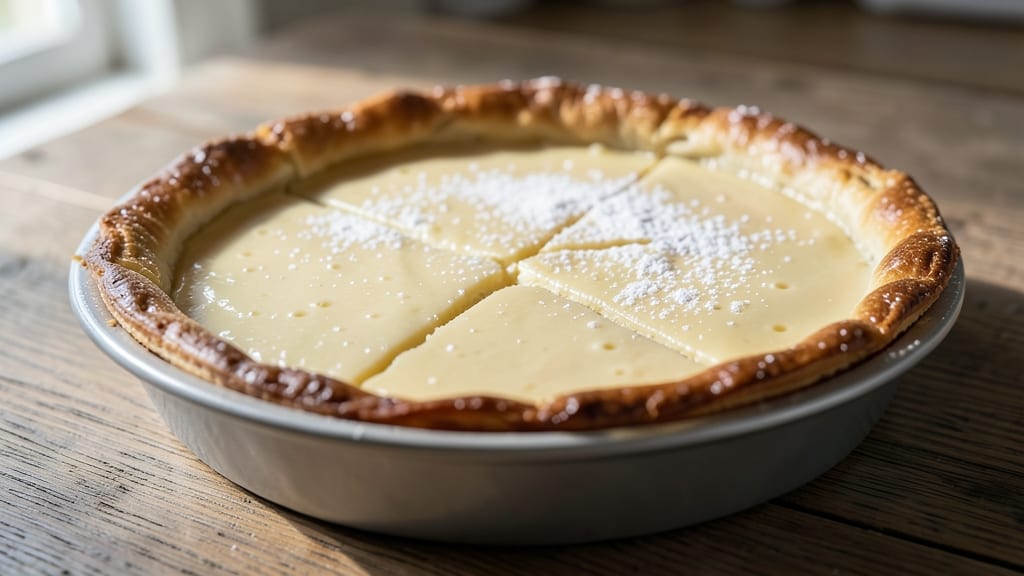
The first bite of a traditional egg tart reveals why this pastry holds a special place in Asian bakeries—golden, flaky crust hugging a silky custard center that melts with every bite. 💛 This recipe delivers the authentic experience, from the precise custard consistency to the perfect egg wash that creates that signature glossy finish.
I've perfected it over years of baking, ensuring the crust stays crisp while the custard remains rich and tender.
What sets this recipe apart is the balance between tradition and approachability. The pastry dough uses simple ingredients like flour, butter, and ice water to create layers that shatter with each bite.
The custard, made with eggs, sugar, and milk, achieves that signature golden hue and creamy texture through careful cooking—no lumps, just velvety perfection. The secret lies in the technique: baking at the right temperature ensures the custard sets just enough to hold its shape while staying luscious.
By the time you pull these egg tarts from the oven, you'll have pastries that look—and taste—like they came from a bustling bakery. The crust will be golden and crisp, while the custard remains silky and slightly wobbly in the center.
This is the kind of recipe that transforms a simple breakfast into something special, whether you're serving them warm for brunch or packing them for a picnic.
For those who love tradition with a twist, you can infuse the custard with pandan or vanilla for added depth. The method remains the same, but the flavor profile elevates to new heights. Let's get started on creating these timeless treats that are as beautiful as they are delicious.
Ingredients for traditional egg tart
Six simple ingredients create the perfect balance of flaky crust and silky custard.
| Ingredient | Amount | Notes |
|---|---|---|
| All-Purpose Flour 🌾 | 2 cups | Plus 2 tbsp for dusting |
| Unsalted Butter 🧈 | 1 cup | Cold, cubed, high-fat (82%) |
| Ice Water 💧 | ½ cup | Chilled, for dough elasticity |
| Large Eggs 🥚 | 4 whole | Room temperature, for custard |
| Granulated Sugar 🍚 | ¾ cup | White or raw, for custard |
| Whole Milk 🥛 | 1 cup | Full-fat for creaminess |
| Salt 🧂 | ½ tsp | Fine sea salt preferred |
| Baking Powder 🍞 | ½ tsp | For crust lift |
| Cornstarch 🌾 | 1 tbsp | For silky custard texture |
| Egg Wash 🥚 | 1 whole | 1 egg + 1 tbsp water |
| Turmeric Powder 🌿 | ¼ tsp | For golden custard hue |
| Vegetable Oil 🫒 | 1 tbsp | For greasing molds |
The butter makes or breaks the crust—high-fat (82%) European-style is non-negotiable for that shatter factor. Trader Joe's or Land O'Lakes work fine, but avoid salted. Keep it cold until mixing to prevent melting. The flour? King Arthur or Gold Medal are reliable, but any all-purpose will do. If your kitchen's humid, chill the dough for 30 minutes before rolling. The custard eggs should be room temp—cold eggs make lumpy custard, trust me on this.
No turmeric? Saffron at 1/4 tsp gives a similar golden hue (expensive but stunning). Short on milk? Heavy cream at half the amount makes it richer. The cornstarch is key—don't skip it, even if you're tempted. For the egg wash, pasteurized eggs work if you're avoiding raw eggs. The baking powder is easy to forget, but it's what gives the crust that perfect lift. If your custard looks too thick, add 1 tsp milk at a time until it's pourable but still coats the back of a spoon.
Dough keeps 2 days wrapped in the fridge or 3 months frozen. Custard must be made fresh—it doesn't reheat well. For make-ahead, prep dough and custard separately, then assemble just before baking. The molds? Mini muffin tins work in a pinch, but egg tart pans from Asian markets give that perfect shape. If you don't have one, oil your pan generously and dust with flour.
Why You'll Love This Recipe
- Five-Ingredient Magic: I swear by this list—flour, butter, ice water, eggs, sugar. That’s it. No fancy pantry trips, no last-minute grocery runs. The dough comes together faster than you can say "egg tart," and the filling? Just whisked eggs and sugar, no overcomplicating.
- Crispy-Golden Obsession: The moment the edges turn that perfect golden brown while the center stays silky? Chef’s kiss. That buttery crust with the custardy egg filling—it’s the kind of thing that makes you pause mid-bite. Honestly, I’ve made it for breakfast, dessert, and even snack attacks. It’s that good.
- Breakfast or Snack Hero: Need something for a quick morning grab-and-go? These reheat in seconds. Or pack them for lunch—they’re sturdy enough to handle a bag. Between us, I’ve also used them to impress at potlucks (they disappear fast) and as a no-fuss dessert when I’m too tired to bake.
- Budget Baking Wins: Flour, butter, eggs—these are pantry staples that won’t break the bank. A batch makes 12, and they keep for days in the fridge. Freeze extras too; just reheat and enjoy. My wallet and taste buds thank me every time. (Yes, even on a Tuesday night.)
Step-by-step instructions for traditional egg tarts
Master this classic Cantonese treat with golden custard and buttery layers—here's how to nail it every time.
👨🍳 Step 1: Make the Flaky Pastry Dough
Cut the 1 cup unsalted butter into ½-inch cubes and chill for 15 minutes until firm but pliable. In a food processor, pulse the 2 cups all-purpose flour, 0.5 tsp salt, and 0.5 tsp baking powder until combined. Add the cold butter cubes and pulse in 8-10 bursts until the mixture resembles coarse crumbs with pea-sized butter pieces.
Drizzle in the 0.5 cup ice water through the feed tube while pulsing until the dough just comes together. Avoid overmixing—you want a shaggy texture. Turn the dough onto a lightly floured surface, shape into a rough rectangle, and wrap tightly in plastic. Chill for 30 minutes to relax the gluten. This cold dough is your secret weapon for flaky layers.
🍳 Step 2: Roll and Fill the Tarts
Preheat oven to 375°F. Lightly grease six 4-inch tart molds with 1 tbsp vegetable oil (or use silicone molds). Roll out the chilled dough between two sheets of parchment paper to ⅛-inch thickness. Cut circles slightly larger than your molds and press gently into each one. Trim excess dough, leaving a ½-inch overhang.
In a blender, combine the 4 whole eggs, 0.75 cup granulated sugar, 1 cup whole milk, 1 tbsp cornstarch, 0.25 tsp turmeric powder, and 0.25 tsp salt. Blend until completely smooth. Pour the custard mixture into the prepared tart shells, filling each about ¾ full. The custard should reach just below the top edge of the dough.
🔥 Step 3: Bake the Tarts to Golden Perfection
Brush the dough overhang with the egg wash (1 egg + 1 tbsp water) for a golden finish. Bake on the middle rack for 20-25 minutes until the crust is deep golden brown and the custard is just set but still slightly wobbly in the center. Rotate the pans halfway through baking for even heat distribution.
Here's the thing—don't overbake. You want the custard to have that signature silky texture, not dry out. The tarts will continue setting as they cool. Let them rest for 10 minutes before carefully removing from the molds. If the custard hasn't fully set, you can pop them back in the oven for 2-3 minutes to finish.
⏰ Step 4: Serve Warm with Confidence
Garnish with a sprinkle of powdered sugar if desired, though traditional egg tarts rely on their natural golden beauty. Serve warm—this is when the custard is at its most luxurious, with that perfect balance of creamy and slightly jiggly. The pastry should be crisp at the edges but tender in the center, with a delicate crumb that practically dissolves in your mouth.
For that authentic experience, serve with a cup of strong tea. The contrast between the warm, custardy tarts and the hot tea is pure Cantonese comfort food magic. And if you're feeling fancy, dust with a pinch of ground cinnamon for an extra layer of warmth.
Pro Tips For Making Traditional Egg Tart
- Chill the Dough Properly: Traditional egg tart dough needs a solid 30 minutes in the fridge—not just a quick pop in the freezer. I learned this after my first batch spread like butter on a hot pan, leaving a sad, thin crust. Cold butter stays firm, so resist the urge to rush this step.
- Use Room-Temp Eggs: Crack eggs straight from the fridge into a bowl first, then let them sit for 10 minutes before mixing. Cold eggs curdle when they hit hot oil, and nobody wants a scrambled mess in their tart. (Yes, even if you’re impatient like me.)
- Prevent Overbrowning: Once the egg custard sets (about 5-7 minutes), lower the heat to medium-low and cover the pan loosely with foil. I used to leave it on high, and the tops would turn leather-hard before the centers cooked. A gentle finish keeps the custard silky.
- Skip the Extra Sugar: The egg mixture already has sugar—adding more just makes the custard gummy. Stick to the recipe’s amount unless you’re making a dessert version. (Your future self will thank you for not over-sweetening the classic.)
Essential equipment for traditional egg tart
Must-Have Tools
First up, you'll need a food processor—this is non-negotiable for achieving that perfect flaky crust. I use my Cuisinart DFP-14BCNY because it handles cold butter and flour beautifully without overheating.
If you don’t have one, a stand mixer with a paddle attachment works too, though you’ll need to work faster to keep the butter cold. 🔥
Pastry Essentials
For rolling out the dough, grab two sheets of parchment paper—this prevents sticking and makes cleanup a breeze. I also recommend a rolling pin with a handle (like the OXO Good Grips) for even pressure.
If you’re using tart molds, 4-inch silicone molds are my go-to—they release effortlessly, but if you prefer metal, non-stick tart pans from Asian markets work wonders.
Custard Perfection
A high-speed blender (like the Ninja BL610) is key for a lump-free custard. The blades need to be sharp for smooth results. For measuring, a digital kitchen scale ensures precision with the eggs and sugar—no guesswork!
If you’re making these ahead, airtight containers keep the dough fresh for up to 3 months in the freezer.
Baking Basics
Your oven needs to be preheated to 375°F—use an oven thermometer (like the Thermoworks Oven Thermometer) to confirm accuracy. A pastry brush for the egg wash and a small offset spatula help with filling the tarts neatly.
For serving, a cooling rack prevents soggy bottoms while the custard sets.
Optional Upgrades
Want to take it pro? A pandan leaf (for flavoring) or gold leaf (for garnish) adds wow factor. For storage, glass containers preserve freshness longer than plastic. And if you’re making these often, a mini muffin tin works in a pinch—just grease it well and dust with flour.
Nutrition facts
Frequently asked questions
Why does my egg tart custard turn out grainy?
The most common cause is blending the custard ingredients too quickly or using cold eggs. Always use room-temperature eggs and blend until completely smooth—no visible streaks. For extra insurance, strain the custard through a fine-mesh sieve before pouring into the shells. The cornstarch also needs to be fully dissolved, so whisk it with a little milk first.
Can I make egg tarts without a food processor?
Yes! Cut the cold butter into the flour using a pastry cutter or two forks until you get pea-sized pieces. Work quickly to keep everything cold. For the custard, whisk vigorously by hand until smooth, then strain it. The texture will be slightly less flaky but still delicious. Just expect to spend 10-15 minutes extra on the dough.
How do I fix overbaked egg tarts?
If the custard is dry, try reviving it with a quick trick: Wrap the cooled tarts in a damp paper towel and microwave for 10-15 seconds. The steam will soften the custard slightly. For a better fix, reheat them in a 200°F oven for 5 minutes with a splash of milk or cream in the pan to add moisture. Prevent this by pulling them out when the edges are golden but the center still wobbles.
What's the secret to getting that perfect golden crust?
The golden hue comes from three things: turmeric powder in the custard, egg wash on the dough, and baking at 375°F. Brush the egg wash generously on the dough overhang right before baking. For extra shine, add 1 tsp sugar to the egg wash. The turmeric also enhances the golden color—don't skip it!
Can I make egg tarts ahead of time?
The dough can be made 2 days ahead and stored in the fridge, or 3 months in the freezer. The custard must be made fresh, but you can prep the shells (dough in molds) and store them separately. Assemble and bake just before serving. For reheating, warm in a 300°F oven for 5 minutes to restore that fresh-baked texture.