
Breakfast & Brunch
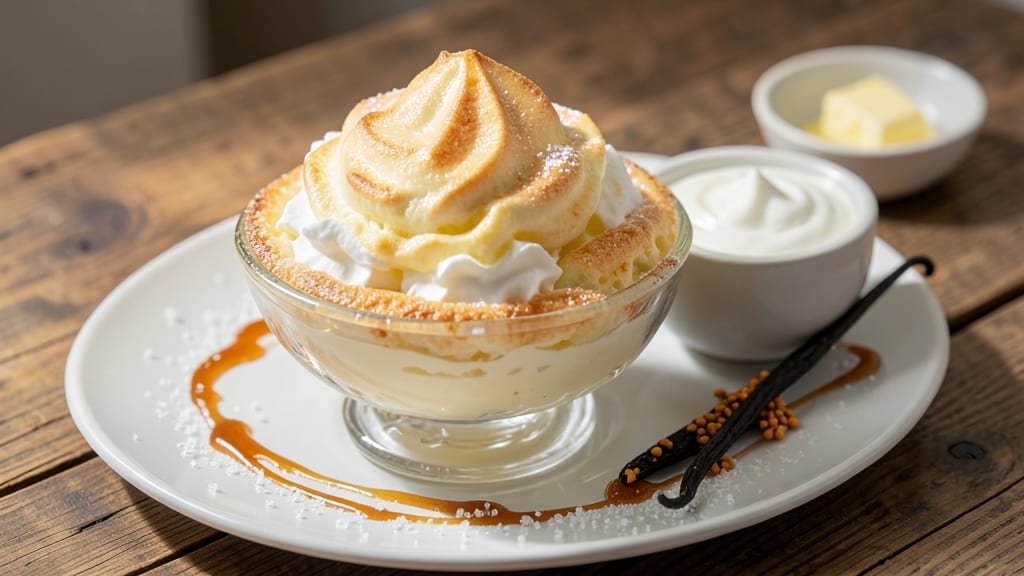
This traditional egg souffle recipe delivers the signature light-as-air rise and delicate texture that makes it a breakfast masterpiece. ✨ The secret lies in precise egg separation, gentle folding, and baking at the perfect temperature—techniques that transform simple eggs into an elegant dish worthy of any brunch table.
What makes this recipe truly traditional is the method: egg whites whipped to stiff peaks before being folded into yolks with vanilla-infused cream. The result is a soufflé that rises dramatically in the oven, creating a golden, airy center with a tender crust—exactly as classic French cuisine intended.
Baking at 350°F ensures even cooking while maintaining that signature puff, and using ovenproof ramekins allows for direct heat transfer. The vanilla infusion adds subtle sweetness that balances the egg's richness, creating a dish that's both impressive and comforting.
Perfect for special breakfasts or elegant gatherings, this recipe proves that traditional techniques still deliver restaurant-quality results at home. Let's create a soufflé that will have everyone asking for seconds.
Ingredients for traditional egg souffle
Eight essential ingredients transform simple eggs into a restaurant-worthy soufflé masterpiece.
| Ingredient | Amount | Notes |
|---|---|---|
| Large Eggs 🥚 | 8 whole | Room temperature for best whipping |
| Heavy Whipping Cream 🥛 | ½ cup | Full-fat for optimal texture |
| Vanilla Extract 🌿 | 1 tbsp | Pure vanilla for authentic flavor |
| Granulated Sugar 🍚 | 2 tbsp | Fine granulation for smooth folding |
| Salt 🧂 | ¼ tsp | Fine sea salt preferred |
| Unsalted Butter 🧈 | 1 tbsp | Melted for ramekin preparation |
| All-Purpose Flour 🌾 | 1 tbsp | For dusting ramekins |
| Vanilla Bean Seeds 🌿 | ¼ tsp | Optional for premium vanilla flavor |
The eggs are the foundation—use organic, free-range if possible for richer flavor, but any large eggs work. Room temperature eggs whip far better, so take them out 30 minutes before starting. For the cream, heavy whipping cream is non-negotiable—light cream won't hold its shape. Vanilla matters here: pure extract delivers authentic French flavor, while vanilla bean seeds add luxurious depth. The sugar should be fine granulated to dissolve smoothly when folded into the yolks, preventing graininess in the final soufflé. Salt is crucial—it enhances flavor and helps stabilize the egg whites during whipping.
No vanilla extract? Vanilla sugar at double the amount works in a pinch, though the flavor won't be as pure. For a dairy-free option, substitute the cream with full-fat coconut cream, though texture may vary slightly. The butter and flour are for preparing the ramekins—melt the butter first, then dust with flour to prevent sticking. If you're short on time, pre-made vanilla-infused cream from gourmet stores can save steps. For the egg whites, ensure your bowl is completely dry and free of grease—even a trace of fat will prevent proper whipping. A copper bowl enhances results if you have one, but glass works perfectly fine.
Soufflés must be served immediately after baking—any delay causes them to deflate. Preheat your oven to 350°F and use ovenproof ramekins for even heat distribution. The butter-floured ramekins should be prepared the night before and stored in the fridge to prevent sogginess. Leftover egg whites can be refrigerated for up to 2 days in an airtight container, though freshly separated whites yield the best results. For a make-ahead option, prepare the yolk mixture and store it separately, then whip the whites fresh before folding. The soufflé's rise is best enjoyed fresh from the oven—plan to serve immediately for that signature light-as-air experience.
Why You'll Love This Recipe
- The secret’s in the technique: folding the whipped cream just until combined, then baking until the outside crackles like a golden shell while the inside stays silky. Honestly, it’s the kind of texture that makes you pause mid-bite.
- Just Five Ingredients: I swear by this—no pantry raids, no last-minute shopping. The eggs, cream, sugar, vanilla, and salt? That’s it. No substitutions, no stress, just pure, reliable baking that actually works.
- That Crispy-Creamy Magic: The secret’s in the technique: folding the whipped cream just until combined, then baking until the outside crackles like a golden shell while the inside stays silky. Honestly, it’s the kind of texture that makes you pause mid-bite.
- Brunch Star Without Effort: Serve it warm with berries for a Sunday morning flex, or chill and slice it for a dessert that feels fancy but takes zero time. Between us, it’s my go-to for when I need something special but don’t want to slave over it.
Step-by-step instructions for traditional egg soufflé
Mastering this classic requires precision—each step builds on the last to create that signature rise.
🍳 Step 1: Prepare the Ramekins for Perfect Rise
Preheat your oven to 350°F while you prepare. Generously butter each of the 4 ramekins using the 1 tablespoon unsalted butter, coating the entire interior including the sides. Then dust with the 1 tablespoon all-purpose flour, tapping out any excess. This creates a nonstick barrier that prevents sticking and ensures clean release.
I like to hold the ramekins at a slight angle while buttering to ensure the bottom gets full coverage. The flour creates a thin, even layer that helps the soufflé cling to the ramekin walls during baking. Don't skip this step—it's what makes the soufflé release cleanly from the dish.
👨🍳 Step 2: Separate Eggs and Whip Yolks with Cream
Separate the 8 whole large eggs, placing yolks in one bowl and whites in another. In a separate mixing bowl, combine the 0.5 cup heavy whipping cream, 2 tablespoons granulated sugar, 0.25 teaspoon salt, and 1 tablespoon vanilla extract. Add the egg yolks and whisk until smooth and fully incorporated.
This mixture should be pale yellow and completely homogeneous. I use a balloon whisk for this step as it incorporates air more gently than an electric mixer. The sugar helps stabilize the cream while the salt enhances flavor. If you're using the 0.25 teaspoon vanilla bean seeds, add them now and let them infuse for 1 minute before proceeding.
🥘 Step 3: Whip Egg Whites to Stiff Peaks
In a separate, spotlessly clean bowl, beat the egg whites with an electric mixer on medium speed until soft peaks form. Gradually increase to high speed and continue whipping until the whites form stiff, glossy peaks that hold their shape when the whisk is lifted. This typically takes 3-5 minutes—don't rush it or the soufflés won't rise properly.
I like to tilt the bowl slightly while whipping to ensure even incorporation of air. The whites should be thick enough to hold their shape but still slightly shiny. If they become dry or grainy, the soufflés may collapse. Add a pinch of cream cheese or sugar if needed, but try to avoid this adjustment if possible.
🍳 Step 4: Fold Whites into Yolk Mixture Gently
Using a rubber spatula, gently fold one-third of the whipped egg whites into the yolk mixture to lighten it. Then carefully fold in the remaining whites in two additions, using a gentle scooping motion and cutting through the center to maintain air incorporation. The batter should be smooth with no visible streaks of white.
This is the most delicate step—overmixing will deflate the air bubbles you've worked so hard to create. I like to hold the spatula at a 45-degree angle and use a slow, sweeping motion. The final batter should be thick but still pourable, with a slightly glossy sheen from the incorporated air.
⏰ Step 5: Bake Until Golden and Set
Divide the batter evenly among the prepared ramekins, filling each about two-thirds full. Place the ramekins on a baking sheet and bake in the preheated 350°F oven for 15-18 minutes until the soufflés have risen dramatically and are golden brown on top. The edges should pull away slightly from the ramekin sides.
Don't open the oven door during baking—this causes the soufflés to collapse from the sudden temperature drop. They're done when they've nearly doubled in size and the tops are crisp and golden. Serve immediately—soufflés lose their rise as they cool. For best results, serve straight from the ramekin with a dusting of powdered sugar or fresh berries.
Pro Tips For Making Traditional Egg Souffle
- Whisk Eggs Cold: Start your egg whites in a completely chilled bowl—no warm hands, no residual heat from the fridge. I learned this the hard way when my whites took forever to stiffen, and it’s the single biggest speed boost for this recipe. Cold surfaces help stabilize the proteins faster, so pop that bowl in the freezer for 5 minutes if your kitchen’s toasty.
- Salt the Cream: Add a pinch of salt to the heavy cream before whipping it into the egg mixture—yes, even if the recipe doesn’t say so. The cream’s sweetness gets muted without it, and the salt balances the vanilla. I was skeptical until I tried it; now I can’t go back.
- Stop Folding Early: Fold in just one-third of the whipped cream first, then gently mix the rest in last. Overmixing collapses the air bubbles, and you’ll end up with a dense, sad soufflé. Work fast but deliberately—this isn’t the time to rush.
- Bake at 350°F: Skip the high-heat preheating hype—350°F is the sweet spot for even rise and a tender crumb. I used to blast my oven to 400°F, and the outside would brown before the center set. This temp gives you 15–20 minutes of leeway to perfect the timing without burning.
Storing and reheating your leftovers
Immediate Serving
Soufflés are best served immediately after baking—any delay causes them to deflate dramatically. The signature light-as-air texture depends on serving straight from the oven while the structure is fully set. I recommend gathering all your serving dishes and toppings before baking to minimize any waiting time. 💫
Refrigerator Storage
If you must store leftovers (though I don't recommend it), place the baked soufflés in an airtight container and refrigerate for up to 2 hours maximum. The texture will become dense and cake-like, but you can reheat briefly. For best results, prepare only what you plan to serve immediately.
Freezing Limitations
Soufflés do not freeze well—they become watery and lose their delicate structure. The high moisture content in egg whites causes ice crystals that destroy the airy texture. If you're making multiple soufflés, I suggest baking them in batches and serving each one fresh from the oven.
Reheating Method
If reheating is absolutely necessary, place the soufflé in a preheated 300°F oven for 5-7 minutes—just until warmed through. Microwaving is not recommended as it creates uneven heating. Even with reheating, the texture will never match the fresh version's perfection. 🔥
Make-Ahead Tips
For a semi-make-ahead approach, prepare the yolk mixture (cream, sugar, salt, vanilla, and yolks) up to 1 day ahead and store in the refrigerator. Whip the egg whites fresh before folding, as they lose volume when refrigerated. This gives you a head start while maintaining the best possible texture.
Serving Immediately
For that authentic restaurant experience, serve soufflés straight from the ramekin. Dust with powdered sugar or garnish with fresh berries and a drizzle of vanilla-infused cream. The contrast between the warm soufflé and cool toppings creates an unforgettable presentation. 🍓
Nutrition facts
Frequently asked questions
Why do my egg soufflés collapse after baking?
The most common causes are overmixing the whites or opening the oven door too early. Make sure your egg whites reach stiff peaks but aren't dry, and maintain the oven temperature without peeking. Also verify your ramekins are properly buttered and floured to prevent sticking.
Can I make a savory egg soufflé instead of sweet?
Replace the sugar with 1 tablespoon grated Parmesan and 1 teaspoon Dijon mustard, then fold in 0.5 cup shredded Gruyère with the yolks. Use chicken or vegetable stock instead of cream for a lighter version. The technique remains identical—just adjust flavors to your preference.
What's the best way to separate eggs without mixing yolks?
Crack the egg into a small bowl first, then transfer the white to your main bowl using a fine-mesh strainer. This catches any stray yolk bits. For extra precision, use two bowls—one for whites, one for yolks—while holding the egg over them. Always discard any eggs with visible cracks in the shell.
How do I know when my egg whites are properly whipped?
Stiff peaks should stand straight up when you lift the whisk, and the meringue should hold its shape. If you tilt the bowl, the whites should stay put rather than sliding. For extra assurance, try "floating" a spoon in the mixture—if it stays suspended, you're ready to fold.
Can I use a different type of ramekin for baking?
Only ovenproof ceramic or metal ramekins work—glass or plastic won't handle the heat properly. Make sure they're at least 6-8 ounces capacity and can withstand 350°F temperatures. Silicone ramekins are also an option if they're oven-safe (check manufacturer guidelines).