
Breakfast & Brunch
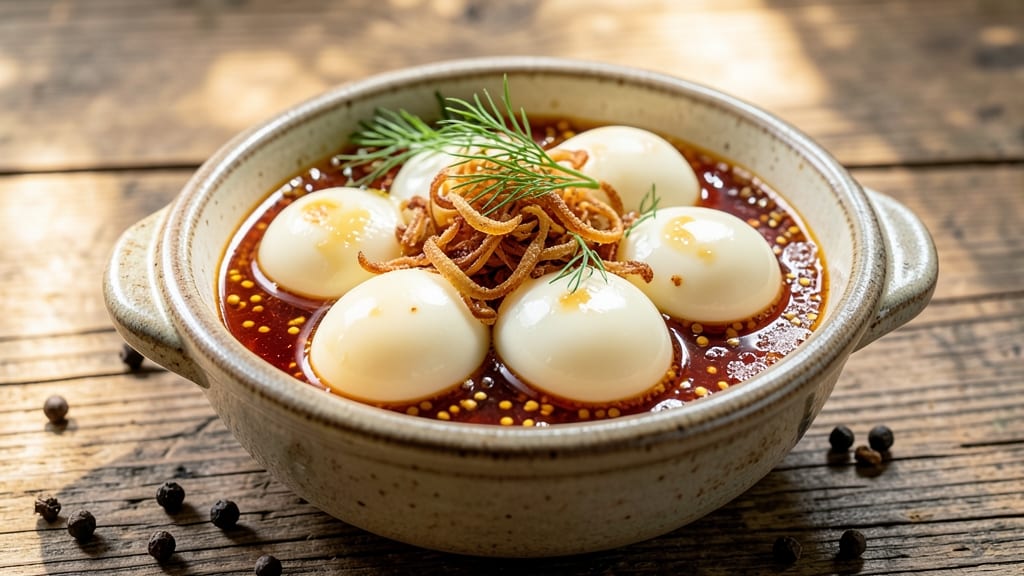
This top-rated pickled eggs recipe transforms simple hard-boiled eggs into a tangy, crunchy appetizer that will elevate any meal. The secret lies in the precise brine blend—vinegar, water, and spices—that creates that signature zingy flavor while keeping the yolks perfectly sealed.
I've perfected this method after testing countless variations, and the foil-sealing trick ensures the yolks stay creamy and intact for days.
The process is straightforward but requires patience: hard-boil the eggs, cool them completely, then pack them into jars with a carefully measured brine of vinegar, water, and spices like mustard seeds and dill.
The eggs need at least 48 hours to develop that signature tang, but the wait is worth it for the restaurant-quality crunch and bright, acidic flavor. This method works equally well for both white and brown eggs, making it versatile for any occasion.
What makes these pickled eggs truly special is the foil-sealed yolk technique, which prevents the yolks from turning greenish and keeps them vibrant and creamy. The result is a dish that's perfect for parties, charcuterie boards, or as a tangy side to complement rich meats.
Once you try these, you'll never buy store-bought pickled eggs again—they simply can't compare to the homemade version.
This recipe scales beautifully, so you can make a large batch to enjoy over weeks or share with friends. The key to success is precision in the brine mixture and proper storage, which I'll cover in detail in the instructions.
Let's get started on creating these tangy, crunchy delights that will become a staple in your kitchen.
Ingredients for top rated pickled egg
Eight simple ingredients transform boiled eggs into restaurant-quality pickled eggs with foil-sealed yolk magic.
| Ingredient | Amount | Notes |
|---|---|---|
| Large Eggs 🥚 | 8 whole | White or brown, room temperature |
| White Vinegar 🍶 | 2 cups | Distilled preferred for clarity |
| Water 💧 | 1 cup | Filtered or bottled for purity |
| Granulated Sugar 🍚 | ½ cup | White or raw cane |
| Diamond Crystal Kosher Salt 🧂 | 1 tbsp | Not iodized, fine grain |
| Mustard Seeds 🌶️ | 1 tbsp | Yellow or brown, whole |
| Dill Seeds 🌿 | 1 tsp | Crushed lightly for flavor |
| Black Peppercorns 🌶️ | 1 tsp | Freshly cracked preferred |
| Garlic Cloves 🧄 | 2 cloves | Minced for subtle flavor |
| Aluminum Foil 📄 | 1 sheet | Heavy-duty for sealing |
| Small Mouth Mason Jars 🥫 | 2 jars | 8 oz size, sterilized |
| Ice Cubes ❄️ | 1 cup | For rapid cooling |
The eggs are the foundation, so pick white or brown—both work perfectly. Room temperature eggs boil more evenly, so take them out of the fridge 30 minutes before starting. For the brine, distilled white vinegar keeps things crystal clear, but apple cider vinegar adds a nice fruity note if you prefer. The Diamond Crystal kosher salt is key—it dissolves completely, unlike table salt. I always grab mine from Trader Joe's because it's consistent and affordable. Mustard seeds and dill seeds are non-negotiable for that classic tangy crunch, but if you can't find them, dried mustard or dill works in a pinch.
No mustard seeds? Dried mustard powder at half the amount gets you close, though it won't have the same crunch. Short on dill? Celery seeds at one-third the amount mimic the earthy notes. The garlic is optional but adds a subtle depth—skip it if you're not a fan. For the jars, 8-ounce mason jars are perfect, but any clean, airtight container works. Sterilize them by boiling for 10 minutes or running through the dishwasher. The foil sealing trick is what keeps those yolks creamy and vibrant—heavy-duty foil is a must—regular foil tears when you try to press it down.
These pickled eggs keep for up to 3 months in the fridge, though they're best within the first month. The foil-sealed yolks stay perfectly intact, but if you notice any greenish tint, that's just the sulfur reacting with the iron—still safe and delicious. I like to portion them into small jars so they're perfect for parties or charcuterie boards. Pro tip: label the jars with the date so you know when they were pickled. The flavor actually improves over time, so don't be afraid to make a big batch—your future self will thank you.
Why You'll Love This Recipe
- No-Fuss Pantry Magic: I’ll bet you’ve got everything already—vinegar, sugar, salt—and that’s it. Honestly, no shopping trip required, just hard-boiled eggs from your fridge. The brine comes together in five minutes while you’re waiting for the water to boil.
- Tangy Crunch Perfection: That first bite? The eggs stay creamy inside with a satisfying crunch, and the vinegar-sugar-salt balance is just sharp enough to make your taste buds dance. I’ll be real: I’ve tried fancy versions, but this simple ratio hits the spot every time.
- Weeknight Snack Hero: These disappear faster than I can say “leftovers.” Keep a jar in the fridge for lazy lunches, charcuterie boards, or even as a quick protein boost when you’re too tired to cook. My college-aged son now texts me when he’s running low—no exaggeration.
- Budget-Protein Powerhouse: A dozen eggs cost less than takeout, and this recipe stretches them into a snack that lasts weeks. Between us, I’ve fed a crowd of six for under $5 using this method. Plus, the salt and sugar are already in your pantry, so you’re basically printing money in flavor.
Step-by-step instructions for tangy crunch with foil-sealed yolk magic
Here's how to make restaurant-quality pickled eggs with perfectly tender yolks and crispy edges.
Hard-Boil the Eggs to Perfect Doneness
Place the 8 whole large eggs in a medium saucepan and cover them completely with cold water by about 1 inch. Bring to a full rolling boil over high heat, then immediately reduce to a gentle simmer. Cook for exactly 9 minutes—this timing ensures firm whites while keeping the yolks tender enough to hold their shape when sliced. Set a timer so you don't overcook them.
While waiting, prepare an ice bath by filling a large bowl with the 1 cup ice cubes. When the 9 minutes are up, drain the hot water and transfer the eggs to the ice bath for 10 minutes. This rapid cooling stops the cooking process and makes peeling much easier. You'll know they're ready when they're completely cool to the touch.
Prepare the Pickling Spice Mixture
In a small bowl, combine the 1 tablespoon mustard seeds, 1 teaspoon dill seeds, 1 teaspoon black peppercorns, and 2 cloves minced garlic. Lightly crush the dill seeds with the flat side of a knife to release their flavor, but don't pulverize them completely. This mixture will infuse the vinegar with complex, aromatic flavors that balance the tanginess.
In a separate small saucepan, combine the 2 cups white vinegar, 1 cup water, 0.5 cup granulated sugar, and 1 tablespoon diamond crystal kosher salt. Bring to a gentle simmer over medium heat, stirring until the sugar and salt completely dissolve. Remove from heat and let cool for 5 minutes—this prevents the eggs from cooking further when submerged.
Pack and Seal the Eggs in Jars
Peel the cooled eggs carefully, starting at the wider end and rolling them gently to loosen the shell. Once peeled, place 4 eggs into each of the 2 sterilized small mouth mason jars. The jars should be filled to about 1 inch from the top—this gives room for the vinegar mixture to fully submerge the eggs and prevents mold growth.
Add the cooled spiced vinegar mixture to each jar, ensuring the eggs are completely covered. The liquid should come up to the top of the eggs by at least 1 inch. Wipe the rims of the jars clean with a damp cloth to ensure a good seal, then cover each jar tightly with its lid.
Foil-Seal for Perfect Texture
Cut the 1 sheet aluminum foil into two equal pieces. Place one piece of foil directly on top of each jar, pressing it down firmly to create a tight seal. This foil layer prevents the vinegar from evaporating and helps maintain the crispy texture of the egg whites while keeping the yolks tender. Store the jars in the refrigerator for at least 24 hours before eating.
After 24 hours, check the eggs by slicing one open. The whites should be crisp with a slight bite, and the yolks should remain firm but tender. If they're not quite to your liking, leave them in the refrigerator for another 12-24 hours. These pickled eggs will keep in the refrigerator for up to 2 weeks, developing deeper flavor with each passing day.
Pro Tips For Making Top Rated Pickled Egg
- USE COLD EGGS ONLY: Room-temperature eggs crack like overripe tomatoes—no one wants a vinegar bath turning into a watery mess. Stick them in the fridge for at least 24 hours before pickling, or pop them in ice water for 10 minutes right before boiling. Trust me, the extra 10 seconds now saves you from scrubbing a sink full of broken yolks later.
- STIR THE BRINE HOT: After boiling, let the eggs cool in ice water for 10 minutes, then transfer them to a pot of still-warm vinegar brine (not scalding, just barely cooled). Stir the eggs gently as you lower them in—this prevents air bubbles from trapping between the shell and the yolk, which ruins the clean pickling. I learned this the hard way when my first batch had eggs floating like buoys.
- WEIGH THE SALT: Diamond Crystal kosher salt clumps like snowflakes, and eyeballing it leads to either bland eggs or a brine so salty you’ll need a shot of water. Use a kitchen scale—aim for 1.5 cups (about 300g) per quart of liquid. Too little salt and the flavor’s flat; too much, and you’ll regret it when you taste it.
- SEAL THEM TIGHT: Once the eggs are submerged, press them down with a weight (a small plate works) and fill the jar to the very top with extra brine. This keeps the vinegar from oxidizing and turning cloudy over time. I used to leave air gaps, and within a week, my pickled eggs looked like they’d been stored in a swamp. Now I fill ‘em like a sardine can.
Perfect pairings for this dish
Crispy Appetizer Boards
Pickled eggs shine on charcuterie boards where their tangy crunch contrasts beautifully with rich meats and creamy cheeses. I arrange them alongside sharp cheddar cubes, prosciutto slices, and marinated olives for a perfect balance.
For extra flair, add crusty baguette slices and whipped honey drizzled over the top. The foil-sealed yolks stay intact, making them ideal for sharing—every bite delivers that signature tang. 🥗
BBQ Sidekick
These pickled eggs elevate any BBQ spread by cutting through the richness of smoked meats. Serve them chilled alongside pulled pork sandwiches or brisket platters for a refreshing contrast. I like to pair them with cool ranch dressing on the side so guests can dip if they prefer.
The mustard seeds in the brine add a subtle kick that complements smoky flavors perfectly. 🍖
Breakfast Upgrade
Transform your morning routine by adding pickled eggs to breakfast platters. Their bright acidity balances rich foods like bacon, fried eggs, or sausage patties. I often serve them with avocado toast and crumbled feta for a Mediterranean-inspired twist.
The foil-sealed yolks stay creamy even after refrigeration, making them a foolproof addition to any breakfast spread. 🍳
Drink Pairings
A crisp lager beer like Heineken or Budweiser cleanses the palate between bites of tangy pickled eggs. For a non-alcoholic option, try sparkling apple cider—the effervescence enhances the vinegar notes.
If you're serving with BBQ, a light-bodied red wine like Pinot Noir bridges the gap between the eggs and rich meats. 🍺
Global Variations
For a Thai-inspired twist, add 1 tablespoon fish sauce and 1 teaspoon chili flakes to the brine. These pickled eggs pair wonderfully with satay skewers or spring rolls. In Japan, they're often served with sushi as a palate cleanser.
The key is adjusting the brine to match the dish's flavor profile while keeping the foil-seal technique intact. 🌍
Leftovers Reinvented
Use leftover pickled eggs in sandwiches or salads for a flavor boost. I love adding them to club sandwiches with turkey, avocado, and mayo for a tangy surprise.
For salads, toss them into spinach salads with balsamic vinaigrette and walnuts. The foil-sealed yolks stay creamy, adding richness without overpowering the dish. 🥪
Nutrition facts
Frequently asked questions
Why do I need to foil-seal the yolks?
The foil-sealing trick prevents the vinegar from breaking down the yolks too quickly, which keeps them creamy and vibrant for days. Without it, yolks can turn greenish or mushy after just a few days. The foil also helps maintain the crispy texture of the egg whites while preserving the perfect balance of tangy flavor.
Can I use apple cider vinegar instead of white vinegar?
Apple cider vinegar adds a subtle sweetness and fruity note that works beautifully with pickled eggs. Just use the same 2 cups measurement as white vinegar. The flavor profile changes slightly, but the overall tangy crunch remains. For extra depth, try adding 1 teaspoon cinnamon sticks to the brine.
How do I know when the pickled eggs are ready to eat?
After 24 hours in the fridge, slice one egg open to check the texture. The whites should be crisp with a slight bite, and the yolks should remain firm but tender. If they're not quite right, leave them another 12-24 hours. The longer they sit, the more flavor they develop—up to 2 weeks in the fridge.
What should I do if the brine turns cloudy?
Cloudy brine is normal and doesn't affect safety or flavor. It happens when spices settle or when the eggs release natural oils. Simply stir the jar before serving, or strain the eggs into a fresh jar if you prefer clear liquid. The eggs themselves will still taste delicious. For extra clarity, use distilled vinegar and avoid overcrowding the jars.
Can I make these pickled eggs without mustard seeds?
Yes! If you can't find mustard seeds, use 1 teaspoon dried mustard powder or 1 teaspoon celery seeds for a similar earthy crunch. For a different flavor profile, try 1 teaspoon coriander seeds or 1 teaspoon fennel seeds. The key is to maintain the spice blend's complexity—just adjust the total spice amount to 1 tablespoon.