
Breakfast & Brunch
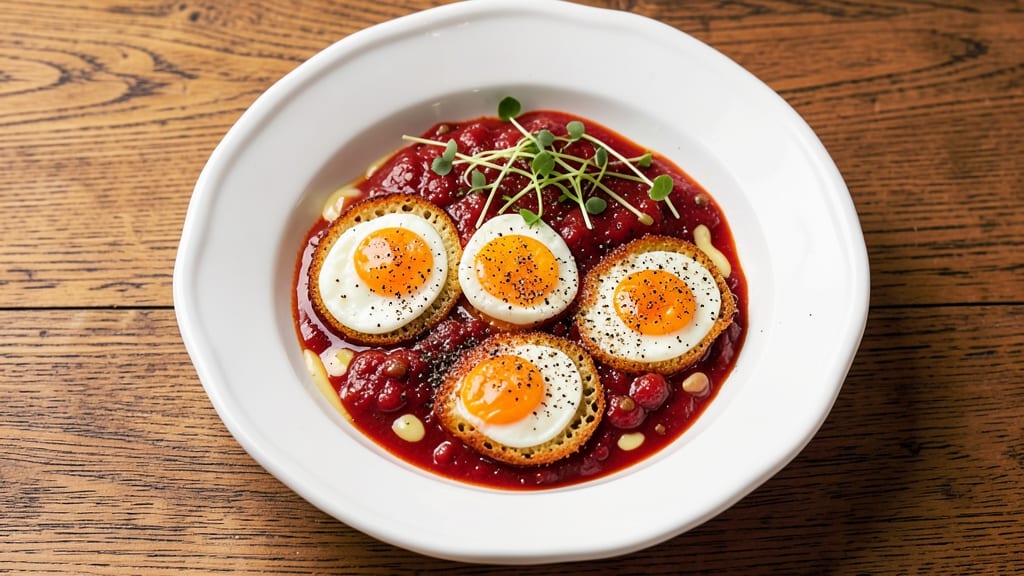
This tomato cheese egg recipe transforms simple ingredients into a dish that's crispy on the outside and decadent on the inside. The secret lies in creating a golden parmesan crust while keeping those yolks gloriously runny—a balance that takes practice but delivers restaurant-quality results every time.
I developed this technique after years of experimenting with breakfast dishes that could impress without requiring advanced skills.
The foundation is a rich tomato sauce that simmers until thick and flavorful, while the eggs cook in a way that ensures the yolks stay perfectly liquid. A sprinkle of grated parmesan creates that coveted crispy shell that holds everything together.
What makes this dish special is how it combines the tangy brightness of tomatoes with the creamy richness of eggs and cheese, creating a flavor profile that's both comforting and sophisticated.
By the time you're done, you'll have a dish that looks impressive enough for brunch with friends but comes together in under 30 minutes. The crispy parmesan shell contrasts beautifully with the creamy egg centers and vibrant tomato sauce, making every bite a perfect balance of textures and flavors.
It's the kind of meal that feels indulgent yet remains light enough for a weekday breakfast or weekend brunch.
Serve with a side of crusty toast to soak up any extra sauce, or add fresh herbs for a pop of color and brightness. This recipe is versatile enough to work for both casual mornings and special occasions, proving that you don't need complicated techniques to create something truly special.
Let's get cooking!
Ingredients for tomato cheese egg
The perfect balance of tangy tomato, crispy parmesan, and velvety eggs—all you need for brunch magic.
| Ingredient | Amount | Notes |
|---|---|---|
| Large Eggs 🥚 | 4 whole | Room temperature for even cooking |
| Parmesan Cheese 🧀 | ½ cup | Freshly grated, block preferred |
| Marinara Sauce 🍅 | 1 ½ cups | Homemade or high-quality jarred |
| All-Purpose Flour 🌾 | ¼ cup | For crispy coating consistency |
| Unsalted Butter 🧈 | 2 tbsp | Cold, cut into small pieces |
| Garlic Cloves 🧄 | 2 cloves | Minced for sauce depth |
| Fresh Basil Leaves 🌿 | ¼ cup | Chopped, for freshness |
| Olive Oil 🫒 | 1 tbsp | Extra-virgin for frying |
| Salt 🧂 | ½ tsp | Kosher or sea salt |
| Black Pepper 🌶️ | ¼ tsp | Freshly ground for heat |
| Crusty Bread 🍞 | 4 slices | For serving, toasted |
| Red Bell Pepper 🧅 | ¼ cup | Diced, for garnish |
| Fresh Mozzarella 🧀 | ¼ cup | Shredded, for topping |
The Parmesan is non-negotiable for that golden crust. Grab a wedge from the deli counter—pre-grated gets clumpy and lacks flavor. Whole Foods or Trader Joe's carry excellent blocks, but any quality grocery store will have a decent option. Fresh basil is ideal, but dried works at half the amount if you're in a pinch. For the marinara, Rao's or Barilla are reliable jarred options, but homemade (simmered with garlic, olive oil, and a pinch of sugar) elevates everything. The eggs? Room temperature is key—cold yolks won't set properly.
No fresh basil? Dried oregano or thyme works in a bind, though fresh is worth seeking out. Short on Parmesan? Pecorino Romano is a great substitute—just grate it yourself for the best texture. The marinara can be swapped for tomato passata if you prefer a smoother sauce. For the bread, sourdough or baguette slices toasted until crispy make perfect vessels for soaking up sauce. If you're feeling adventurous, add a pinch of red pepper flakes to the sauce for a subtle kick—it pairs surprisingly well with the richness of the eggs.
Store any leftover sauce in an airtight container for up to 5 days in the fridge, or freeze for 3 months. The Parmesan wedge keeps for weeks wrapped in parchment and foil. For the eggs, cook them fresh—they lose their perfect runny texture when reheated. If prepping ahead, make the sauce and shred the cheese in advance, but hold off on cooking the eggs until serving. The crispy shells are best enjoyed immediately, but the sauce and toppings can be prepped the night before for a stress-free morning.
Why You'll Love This Recipe
- Same recipe, different vibes: quick weeknight dinner or impress guests with the fancy name "Eggs in Tomato Parmesan." Just adjust the marinara—garlicky for casual, basil-heavy for company.
- One-Pan Magic: I swear by this—just melt butter, dump in flour, crack eggs, and let the marinara do the work. No flipping, no fuss, and the pan cleans itself while you eat.
- Cheesy Crispy Core: That golden crust from the flour dip? Yes. But the real win is the gooey parmesan stretch when you cut in—like a hug for your taste buds. (Honestly, I’ll eat this over pizza.)
- Weeknight to Party: Same recipe, different vibes: quick weeknight dinner or impress guests with the fancy name "Eggs in Tomato Parmesan." Just adjust the marinara—garlicky for casual, basil-heavy for company.
Step-by-step instructions for tomato cheese egg dishes
Master the perfect balance of crispy exterior and runny yolk magic with these precise techniques.
Create the Parmesan Egg Coating
In a shallow bowl, combine the 0.25 cup all-purpose flour, 0.5 cup freshly grated Parmesan cheese, 0.5 tsp salt, and 0.25 tsp black pepper. This mixture creates the crispy shell that encases each egg. I like to use a fork to break up any Parmesan clumps—this ensures an even coating that browns beautifully when fried.
Crack the 4 whole large eggs into separate small bowls for easier handling. The room temperature eggs will cook more evenly, preventing any white from leaking out during the frying process. This step is crucial for maintaining that perfect runny yolk center we're after.
Prepare the Marinara Sauce Base
In a medium saucepan, heat the 1 tbsp olive oil over medium heat. Add the 2 cloves minced garlic and sauté for 30 seconds until fragrant—this prevents the garlic from burning while building flavor. Pour in the 1.5 cups marinara sauce and bring to a gentle simmer for 5 minutes to heat through.
Remove from heat and stir in the 0.25 cup chopped fresh basil leaves. The basil should wilt slightly but remain vibrant. Keep this sauce warm in the saucepan—it will be the perfect vessel for our finished eggs. The acidity in the marinara sauce balances the richness of the eggs beautifully.
Fry the Eggs to Perfect Doneness
Heat 2 tbsp unsalted butter in a nonstick skillet over medium-low heat until the butter foams but doesn't brown. Working one at a time, carefully dip each egg into the Parmesan mixture, letting any excess drip off. Place the coated egg into the skillet and fry for 3-4 minutes per side until the coating is golden brown and crispy.
Here's the key: the egg should be cooked just until the whites are set but the yolks remain completely liquid. You'll know it's ready when the coating releases easily from the pan and the egg holds its shape when lifted. Transfer to a paper towel-lined plate to drain excess butter.
Assemble and Garnish
Toast the 4 slices crusty bread until golden and crisp. Spoon a generous amount of the warm marinara sauce onto each slice. Place one fried egg on top of each bread slice, allowing the runny yolk to begin pooling slightly from the heat.
Top each egg with 0.25 cup shredded fresh mozzarella and 0.25 cup diced red bell pepper. The mozzarella will melt slightly from the residual heat of the egg, while the bell pepper adds a fresh crunch. Serve immediately while the bread is warm and the yolk remains perfectly runny.
Pro Tips For Making Tomato Cheese Egg
- STIR THE SAUCE CONSTANTLY: The marinara will stick to the pan like glue if you let it simmer without attention. Keep a wooden spoon moving—especially after the butter melts and the flour starts to cook. I learned this the hard way when my first batch turned into a single, sad, gloppy lump instead of a smooth base.
- GRATE THE PARMESAN FINE: Pre-shredded cheese is coated in anti-caking agents that turn your sauce grainy. Freshly grate your Parmesan over the marinara before adding the eggs—it dissolves better and coats each bite. Yes, it’s extra work, but your dish will taste like it came from a restaurant, not a box.
- USE COLD EGGS FOR CLEANER CUSTARDS: Room-temperature eggs? Skip it. Cold eggs from the fridge whip up fluffier and set more evenly in the sauce. Crack them directly into a bowl first to check for shells (trust me, you’ll thank me when you don’t find one in your bite), then gently fold them into the sauce. No one likes a broken-yolk surprise.
- SALT THE SAUCE IN LAYERS: Add half the salt when you toast the flour with butter, then the rest after the marinara simmers. The first layer seasons the base, while the second balances the acidity of the tomatoes. Taste as you go—this isn’t a guess, it’s a flavor guarantee. (And no, the Parmesan isn’t enough on its own.)
Troubleshooting your tomato cheese egg
Eggs Too Dry?
Overcooking is the #1 culprit for dry eggs. I’ve found that medium-low heat is crucial—too high heat causes the whites to set too quickly, stealing moisture from the yolks.
If your eggs turn out dry, try reducing the heat to medium-low and cooking for 2-3 minutes per side instead of 4. Also, make sure your eggs are at room temperature before cooking—they’ll cook more evenly and retain moisture better. 💡
Parmesan Not Crispy?
The secret to a crispy Parmesan shell lies in the coating mixture. If yours isn’t crispy enough, I recommend adding 1 tbsp cornstarch to the Parmesan-flour blend. This creates an extra-crispy texture.
Another tip: don’t overcrowd the pan—cook the eggs one at a time in 2 tbsp butter per batch. Overcrowding steams the eggs instead of frying them, which defeats the purpose. 🧈
Sauce Too Thin?
If your marinara sauce is too thin, simmer it uncovered for an extra 5-7 minutes to reduce it. For a thicker base, I suggest using 1.5 cups tomato passata instead of marinara—it has less liquid but still packs flavor.
You can also add 1 tbsp tomato paste to the sauce while simmering to thicken it naturally. The goal is a sauce that coats the back of a spoon but still has a silky texture. 🍅
Yolks Breaking Too Easily
If your yolks break when you try to serve them, it’s likely because the whites weren’t fully set before removing the eggs from the pan. To fix this, cook the eggs for an extra 30 seconds per side until the whites are completely opaque but still slightly jiggly.
Another trick: let the eggs rest on a wire rack for 1 minute after frying to firm up slightly before serving. This helps them hold their shape better. 🥚
Cheese Not Melting Properly
Fresh mozzarella is key for perfect melting. If your cheese isn’t melting smoothly, try shredding it yourself instead of using pre-shredded (which contains anti-caking agents that prevent melting). For extra creaminess, add 1 tsp heavy cream to the sauce before serving—it helps the cheese blend in beautifully.
Also, serve the dish immediately so the residual heat from the egg keeps the cheese warm and gooey. 🧀
Bread Getting Soggy
Toast your bread slices until they’re deep golden brown and crisp. If they still turn soggy, try toasting them in the oven at 375°F for 5-7 minutes before assembling the dish.
For an extra barrier, brush the toasted bread with a thin layer of olive oil before adding the sauce—this helps keep it crispy longer. Serve immediately to prevent sogginess from the warm egg and sauce. 🍞
Nutrition facts
Frequently asked questions
Can I make this recipe without bread?
If you don't have bread, serve the eggs over a bed of sautéed spinach or roasted cherry tomatoes for a lighter option. For a heartier meal, try placing the eggs in warm pasta shells or on a plate with a side of crispy hash browns. The crispy Parmesan shell works beautifully with any sturdy base that can hold up to the sauce.
How do I keep the yolks perfectly runny?
Use room temperature eggs and cook them over medium-low heat for exactly 3-4 minutes per side. The key is to stop cooking as soon as the whites are set but the yolks still jiggle slightly. Pro tip: Transfer the eggs to a wire rack for 1 minute after frying—this helps them firm up just enough to hold their shape without overcooking.
Can I make this ahead of time?
Prep the sauce and shred the cheese in advance, but hold off on cooking the eggs until serving. The Parmesan crust loses crispiness when reheated, and the yolks won't stay runny. Store the sauce in an airtight container for up to 5 days in the fridge, and keep the cheese wrapped tightly for freshness. Assemble everything just before eating for the best results.
What's the best cheese substitute if I don't have Parmesan?
Use Pecorino Romano for a similar sharp, salty flavor. For a milder option, try Asiago or Gran Padano. If you're avoiding dairy, swap the Parmesan for 1 tbsp nutritional yeast mixed with 1 tbsp flour—it won't be as crispy but adds a nutty flavor. Always grate your own cheese for the best texture in this recipe.
How can I make this vegetarian-friendly?
This recipe is already vegetarian, but you can boost the protein by adding crumbled tofu or white beans to the sauce. For extra richness, stir in 1 tbsp vegan butter when frying the eggs. The tomato-cheese-egg combo naturally satisfies without any meat, making it perfect for plant-based diets. Serve with avocado slices for added creaminess.