
Soups & Stews
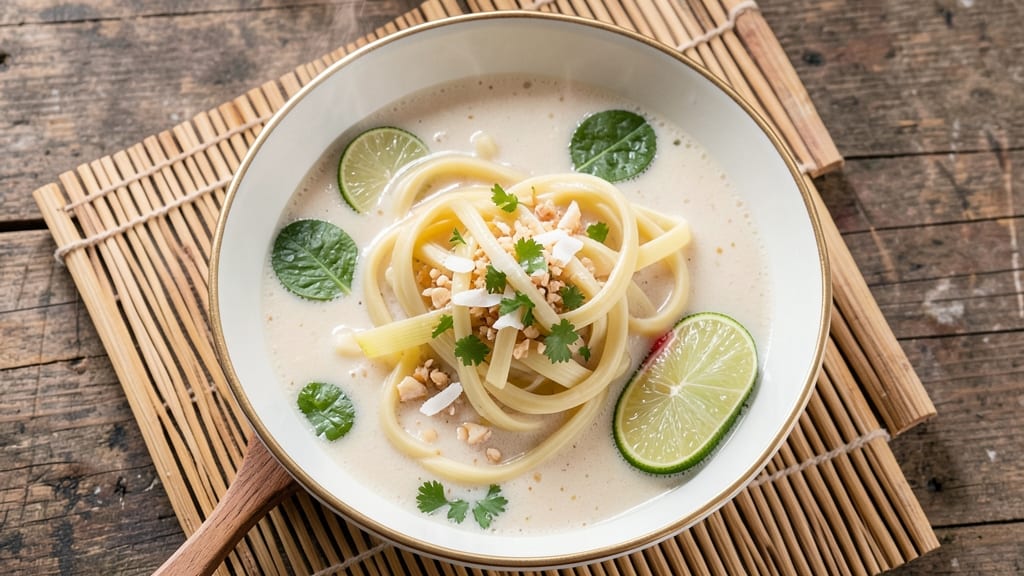
This Thai egg drop soup recipe brings the comforting aromas of Thailand to your kitchen with its silky egg ribbons floating in a fragrant ginger-lime broth. 🌿 The secret lies in balancing coconut milk's creaminess with the bright, herbal notes of lemongrass and galangal—creating a broth that's both aromatic and deeply satisfying.
I've perfected this recipe over years of testing, ensuring the egg drops are delicate yet substantial, never breaking into chunks.
The broth begins with a fragrant base of ginger, galangal, and kaffir lime leaves, simmered until their flavors meld into something magical. Coconut milk adds richness without overpowering the dish, while lime juice and fish sauce (or vegetarian alternatives) provide that signature Thai tang.
The egg drop technique requires gentle heat and constant stirring, creating those signature ribbons that make this soup irresistible.
What you'll end up with is a bowl of soup that's as visually appealing as it is delicious—golden egg ribbons swirling in a pale, aromatic broth, topped with fresh bean sprouts, Thai basil, and a sprinkle of chili flakes.
The contrast of textures and temperatures (hot broth, cool garnishes) makes every spoonful a perfect balance of warmth and freshness. This is the kind of dish that feels like a hug in a bowl.
Whether you're serving it as a light lunch or a comforting dinner, this Thai egg drop soup is versatile enough to adapt to your preferences. Add shrimp or chicken for extra protein, or keep it vegetarian for a lighter option.
The beauty of this recipe is in its simplicity and the way it transports you to Thailand with just a few ingredients and a little patience.
Ingredients for thai egg drop soup
Silky egg ribbons meet fragrant ginger-lime broth—just 14 ingredients for pure comfort.
| Ingredient | Amount | Notes |
|---|---|---|
| Large Eggs 🥚 | 4 whole | Room temperature for best results |
| Coconut Milk 🥥 | 1 can | Full-fat for creaminess, unsweetened |
| Fresh Ginger 🧄 | 2 tbsp | Grated, aromatic variety preferred |
| Galangal 🌿 | 1 piece | Thinly sliced, or 1 tbsp galangal paste |
| Kaffir Lime Leaves 🍋 | 2 whole | Bruised slightly for flavor release |
| Lime Juice 🍋 | 1 tbsp | Freshly squeezed, seeds removed |
| Fish Sauce 🍜 | 1 tbsp | Red Boat preferred, or soy sauce for veg |
| Vegetable or Chicken Broth 💧 | 3 cups | Low-sodium preferred, homemade best |
| Bean Sprouts 🌱 | ½ cup | Fresh, rinsed and drained |
| Thai Basil 🌿 | ¼ cup | Fresh leaves, stems removed |
| Chili Flakes 🌶️ | ½ tsp | Adjust to heat preference |
| Garlic Cloves 🧄 | 2 cloves | Minced, aromatic variety |
| Olive Oil 🫒 | 1 tbsp | For gentle simmering |
| Salt 🧂 | ½ tsp | To taste, adjust carefully |
The galangal and kaffir lime leaves are the soul of this soup. Asian markets carry the best quality—look for fresh, firm galangal with no black spots and kaffir lime leaves that smell vibrant. If you can't find galangal, extra ginger plus a dash of citrus zest works in a pinch, but it won't be the same. The coconut milk? Full-fat cans from Aroy-D or Thai Kitchen brands add that perfect richness. Fresh ginger and garlic are non-negotiable here—dried just won't cut it. I always buy extra ginger because it freezes beautifully for future batches.
No fish sauce? Soy sauce plus a pinch of sugar mimics the umami, though it won't be identical. The eggs need to be room temperature—cold eggs break into chunks instead of silky ribbons. Want to make this vegetarian? Swap the fish sauce for soy sauce plus a splash of miso paste. The bean sprouts can be subbed with shredded cabbage if you're in a rush, though Thai basil is worth hunting down at Asian grocery stores—it's got that perfect anise flavor. For the broth, homemade chicken or veggie broth tastes worlds better than store-bought, but low-sodium bouillon cubes work in a bind.
This soup tastes even better the next day—honestly, the flavors meld into something magical. Store leftovers in airtight containers for up to 3 days, but the egg ribbons might get a little firmer. To reheat, just warm gently on the stove with a splash of water. The lime leaves and galangal can be composted, but save the kaffir lime zest for garnishes or cocktails. Freezes beautifully too—just omit the bean sprouts and basil until reheating. I always make a double batch because it disappears so fast—perfect for meal prep lunches all week.
Why You'll Love This Recipe
- No-Chop Needed: I swear by this—just slice the ginger thin, no mincing, and the galangal stays whole. The kaffir lime leaves? Toss them in whole too, then fish them out later. That’s it. Zero prep stress.
- Creamy Without Guilt: The coconut milk makes it rich but light, like a hug in a bowl. And those silky egg ribbons? They melt in your mouth instead of weighing you down. Honestly, it’s the kind of comfort that doesn’t leave you napping for hours.
- Leftover Magic: This soup actually improves the next day. The flavors meld deeper, and the egg ribbons get even more delicate. I make a big batch on Sundays—eat half, reheat the rest, and it’s still the star of my week.
- Budget Bright Spot: Fresh ginger and galangal might sound fancy, but a little goes a long way. Coconut milk is cheap in cans, and eggs? You’re already buying them. It’s my go-to when I need a fancy-feeling meal that won’t break the bank. (Yes, even on a Tuesday night.)
Step-by-step instructions for silky Thai egg drop soup
Here's how to craft this velvety soup with perfect egg ribbons and aromatic depth.
🍳 Step 1: Build the Ginger-Galangal Base
Heat the 1 tablespoon olive oil in a medium pot over medium heat. Add the 2 tablespoons grated fresh ginger and 1 piece thinly sliced galangal—you'll smell that bright, citrusy aroma immediately. Cook for 2-3 minutes until the ginger becomes fragrant and just starts to soften.
Here's the thing—don't let it brown. We want those aromatic oils to infuse the broth without adding bitterness. If your galangal is fresh, you might even see it release some juices. That's perfect—those juices carry incredible flavor. Keep the heat steady and stir occasionally so nothing sticks to the bottom.
🍳 Step 2: Add Aromatics and Broth
Push the ginger-galangal mixture to one side of the pot, then add the 2 cloves minced garlic and 2 bruised kaffir lime leaves to the empty space. Sauté for 30 seconds until the garlic turns golden—this prevents that harsh, raw garlic taste. Then pour in the 3 cups vegetable or chicken broth.
Bring everything to a gentle simmer, then add the 1 can coconut milk and 1 tablespoon fish sauce. Stir well to combine—you'll see the broth turn instantly creamy. Let it simmer for 5 minutes to let all those flavors meld together. This is where the magic happens—the coconut milk adds richness while the fish sauce balances it with umami.
🍳 Step 3: Season and Prepare Garnishes
Remove the pot from heat and stir in the 1 tablespoon lime juice, 0.5 teaspoon salt, and 0.5 teaspoon chili flakes. Taste and adjust—you want that perfect balance of tangy, spicy, salty, and sweet. This is your flavor calibration moment. While the soup simmers gently (keep it on very low heat), prepare your garnishes by rinsing the 0.5 cup bean sprouts and picking the leaves from the 0.25 cup Thai basil.
I like to keep the bean sprouts separate until serving so they stay crisp. The Thai basil should be fresh—if it's wilted, the soup won't have that bright herbal finish. This is also when I like to crack the 4 large eggs into a small bowl and add a pinch of salt to each. Room temperature eggs make all the difference for those perfect ribbons.
🍳 Step 4: Create Silky Egg Ribbons
Return the soup to a gentle simmer—you want it bubbling just enough to create movement but not boiling. Here's the crucial part: slowly drizzle the egg mixture into the soup while stirring constantly with chopsticks or a fork. The key is to keep the motion gentle and continuous—this creates those signature silky ribbons instead of scrambled eggs.
Work in batches if needed, but don't let the eggs sit in the bowl too long or they'll start to cook prematurely. You're aiming for delicate, translucent strands that melt in your mouth. If the soup thickens too much, add a splash of hot water to loosen it. The perfect consistency should be like warm, creamy silk.
🍽️ Step 5: Finish and Serve
Once all the egg ribbons are incorporated, divide the soup among bowls. Immediately top each serving with the reserved bean sprouts and Thai basil leaves. The contrast of crisp sprouts against the creamy broth is what makes this soup so satisfying. Serve with a sprinkle of extra chili flakes if you want more heat—just remember, the soup will cool slightly as it sits.
This soup tastes even better the second day, so make extra if you can. The flavors deepen as the broth absorbs the aromatics overnight. I like to serve it with a side of steamed jasmine rice to soak up every last drop of that creamy broth. Each spoonful should deliver that perfect balance of silky eggs, aromatic broth, and fresh herbal notes.
Pro Tips For Making Thai Egg Drop Soup
- Simmer Low and Slow: Once you add the coconut milk, drop the heat to a bare simmer—no boiling. I learned this the hard way when my soup split into curdled oil and water. A gentle roll keeps the coconut smooth and the broth silky.
- Slice Galangal Thin: Skip the thick chunks unless you want to chew mystery pieces. Thinly slice galangal (about 1/8-inch) so it infuses flavor without turning the soup into a root salad. A sharp knife and steady hand make this quick.
- Whisk Eggs Cold: Crack eggs into a separate bowl first, then whisk them with a splash of cold water from the pot. Warm eggs cook unevenly and turn rubbery—cold eggs ribbon like silk. Trust me, your soup will thank you.
- Toast Kaffir Lime Leaves: Tear the leaves and give them a quick 10-second toast in a dry pan before adding to the broth. This removes bitterness and deepens their aroma—like the difference between sipping tea and smelling a garden. (Yes, even if you’re impatient like me.)
Essential equipment for thai egg drop soup
Pot Selection
For this soup, I recommend using a medium-sized stainless steel pot with a tight-fitting lid—like the All-Clad Stainless Steel Stockpot or Cuisinart MultiClad Pro. The stainless steel conducts heat evenly and won't react with acidic ingredients like lime juice.
Avoid nonstick pots—they can't handle the gentle simmering required for those perfect egg ribbons. A 3-4 quart capacity is ideal for serving 4 people comfortably. 🍲
Heat Control Tools
A kitchen thermometer is your best friend here—I swear by the Thermoworks Thermapen ONE for its instant-read accuracy. You want the broth to maintain a gentle simmer at 185-190°F—never a rolling boil.
For precise temperature adjustments, I use two burners: one for the soup and another for preheating water if needed. A heat diffuser (like the Ozeri Heat Diffuser) helps prevent temperature spikes when adding eggs.
Stirring Essentials
You'll need two stirring tools: a pair of silicon-tipped chopsticks (I love the OXO Good Grips) for delicate egg ribbon creation, and a long-handled spoon (like the Zyliss Stainless Steel Ladle) for broth adjustments.
The chopsticks give you the precision to create those signature strands without breaking them. Keep a small bowl nearby to crack eggs into—room temperature eggs are critical for perfect ribbons. 🥚
Garnish Prep Station
Set up a small prep station with a fine-mesh strainer (for rinsing bean sprouts) and a small cutting board with a sharp chef's knife. I use the Victorinox Fibrox for its grip—bean sprouts need to stay crisp, and a dull knife crushes them.
Keep your Thai basil leaves separate until serving to preserve their vibrant color. A small bowl of ice water nearby helps refresh wilted herbs if needed.
Optional Upgrades
For next-level flavor, invest in a mortar and pestle (like the Kuhn Rikon) to crush kaffir lime leaves and galangal for maximum aroma release. A microplane (I use the OXO Good Grips) makes quick work of fresh ginger and garlic.
For protein additions, a small saucepan with a fine-mesh skimmer helps remove cooked shrimp or chicken cleanly. These tools elevate the dish without being essential.
Nutrition facts
Frequently asked questions
Why does my Thai egg drop soup look different from yours?
The key difference is the egg ribbon technique! Use room temperature eggs and stir constantly with chopsticks over gentle heat (185-190°F)—never boiling. The broth should be creamy but not thick, and the eggs should melt into delicate strands. If yours look chunky, the heat might be too high or the eggs too cold.
Can I make this soup vegetarian?
Replace fish sauce with 1 tbsp soy sauce + 1 tsp miso paste for umami depth. Use vegetable broth instead of chicken, and add tofu or mushrooms for protein. The coconut milk and lime still create that perfect Thai balance—just skip any meat garnishes.
What's the secret to making the broth aromatic?
Bruise the kaffir lime leaves and galangal before adding them—this releases their essential oils. Simmer the ginger-galangal base for 2-3 minutes before adding broth to develop flavors, and never let it brown. The coconut milk should be full-fat and added last to maintain creaminess.
How do I adjust the spice level?
Start with 0.5 tsp chili flakes and adjust to taste. For extra heat, add 1 tsp Thai bird's eye chili paste or a dash of sriracha. Remember: the soup cools slightly after serving, so add spice gradually. Keep extra chili flakes on the table for personal preference.
Can I prepare this ahead of time?
Make the broth base up to 2 days ahead and store it in airtight containers. Reheat gently, then add fresh eggs and garnishes just before serving. The flavors actually improve overnight! For make-ahead meals, pre-cook any protein additions separately and add them back when reheating.