
Breakfast & Brunch
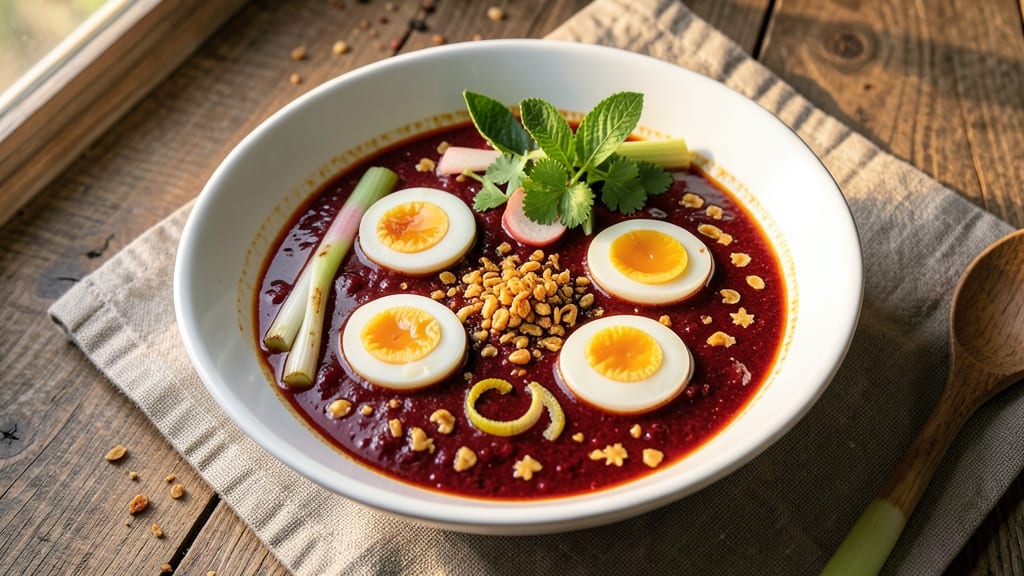
This Thai egg curry recipe transforms your morning routine into a fragrant, herb-packed adventure that feels like a Bangkok street breakfast. The secret lies in balancing traditional Thai flavors—lemongrass, galangal, and kaffir lime leaves—with a creamy coconut base that makes every bite rich yet light.
I developed this version after years of experimenting with curry pastes, ensuring the flavors are bold but approachable for home cooks.
The dish starts with a fragrant curry paste sautéed in coconut milk, where the aromatics infuse the sauce with layers of complexity. Soft-boiled eggs are gently poached directly in the simmering curry, absorbing those vibrant flavors while keeping their yolks perfectly runny.
This method delivers restaurant-quality results in under 30 minutes, making it ideal for busy mornings.
What sets this recipe apart is the balance of textures—creamy coconut sauce, tender eggs, and fresh herbs like Thai basil and cilantro. The dish is hearty enough to stand alone but pairs beautifully with steamed jasmine rice or noodles for a complete meal.
The flavors evolve as it sits, making it perfect for meal prep or a spontaneous weekend brunch.
Whether you're a seasoned home cook or new to Thai cuisine, this recipe delivers depth without complexity. The step-by-step process ensures you'll achieve that signature fragrant, herb-packed bowl every time. Let's get cooking!
Ingredients for thai egg curry
Fragrant Thai aromatics meet creamy coconut for a breakfast bowl that feels like Bangkok street food.
| Ingredient | Amount | Notes |
|---|---|---|
| Fresh Lemongrass 🌿 | 3 stems | White part only, finely chopped |
| Galangal 🥕 | 2 inches | Fresh rhizome, peeled and sliced thin |
| Kaffir Lime Leaves 🍋 | 4 whole | Torn into strips, not stems |
| Red Curry Paste 🌶️ | 2 tbsp | High-quality, no additives |
| Coconut Milk 🥥 | 1 can (13.5 oz) | Full-fat for creaminess |
| Large Eggs 🥚 | 4 whole | Room temperature for even cooking |
| Thai Basil Leaves 🌿 | ½ cup | Fresh, stems removed |
| Cilantro Leaves 🌿 | ¼ cup | Fresh, chopped |
| Garlic Cloves 🧄 | 4 cloves | Minced for aromatic depth |
| Shallots 🧅 | 2 whole | Minced, not sliced |
| Fish Sauce 🍶 | 1 tbsp | Red Boat preferred |
| Palm Sugar 🍯 | 1 tbsp | Or substitute brown sugar |
| Vegetable Oil 🫒 | 1 tbsp | High smoke point |
| Salt 🧂 | ½ tsp | Diamond Crystal preferred |
| Black Pepper 🌶️ | ¼ tsp | Freshly ground |
Galangal and kaffir lime leaves are the heart of this dish—Thai markets or specialty grocers carry the freshest versions. Look for galangal with tight, pale yellow skin and no soft spots. Costco or Asian grocery stores often stock these ingredients pre-packaged, but buying whole gives you better control over quality. The lemongrass should be vibrant green with no brown spots, and the lime leaves should be glossy and fragrant. If you can't find fresh galangal, ginger at half the amount works in a pinch, though it won't replicate the exact flavor.
Red curry paste is non-negotiable here—Maesri or Thai Kitchen brands are reliable, but if you're feeling adventurous, make your own by blending chiles, lemongrass, galangal, and garlic. Fish sauce adds depth, but soy sauce at double the amount works if you're avoiding it. The coconut milk should be full-fat for that signature creaminess—no substitutions here. For the eggs, room temperature ensures even cooking, but if you forget, just let them sit for 10 minutes before adding. The Thai basil and cilantro should be fresh—dried herbs won't cut it for that bright, fresh finish.
This curry reheats beautifully—flavors deepen overnight, so make extra for leftovers. Store in an airtight container for 3-4 days in the fridge, or freeze for up to 3 months. The eggs will soften slightly when reheated, so it's best enjoyed fresh. For meal prep, portion the curry sauce separately and cook the eggs fresh to maintain that perfect runny yolk. Serve with steamed jasmine rice to soak up every last drop of that fragrant coconut sauce.
Why You'll Love This Recipe
- One-Pot Magic: I swear by this recipe—just a single pot, no fussing with multiple pans. The curry paste and coconut milk do all the heavy lifting while I chop a few stalks of lemongrass (which, honestly, takes less time than waiting for takeout).
- Creamy Heat Balance: That first bite of silky coconut milk with a whisper of spicy red curry paste? It’s the kind of flavor that lingers without overpowering. The galangal adds this earthy depth that makes it taste like a proper Thai restaurant—just with my slightly clumsy stirring.
- Leftovers for Days: Between us, this curry tastes better the next day. I make a big batch on Sundays, and by Wednesday, it’s still my go-to lunch—whether I’m reheating it or tossing it into rice bowls for the week. The coconut milk keeps it rich without drying out.
- Budget-Friendly Luxury: Fresh lemongrass and kaffir lime leaves might sound fancy, but they stretch like crazy in this dish. A single stalk of lemongrass and a few leaves turn a simple egg curry into something that feels special—without breaking the bank. Plus, eggs are my wallet’s best friend.
Step-by-step instructions for Thai egg curry
This aromatic curry comes together quickly with bold Thai flavors and silky coconut richness.
Prepare the Aromatic Base
Heat the 1 tablespoon vegetable oil in a large skillet over medium heat. Add the 2 whole shallots and 4 cloves garlic cloves, cooking for 3-4 minutes until the shallots soften and become translucent. This foundational step builds flavor depth—don't rush it.
Add the 3 stems fresh lemongrass (white part only, finely chopped) and 2 inches galangal (peeled and sliced thin). Stir for 2 minutes until fragrant. The galangal should release its citrusy aroma—this is your signal to proceed. If the mixture smells underdeveloped, increase heat slightly for 30 seconds to intensify the aromatics.
Build the Curry Sauce
Reduce heat to medium-low and stir in the 2 tablespoons red curry paste, allowing it to bloom for 1 minute while stirring constantly. This prevents burning and fully activates the spices' flavors. Add the 1 can (13.5 oz) coconut milk and 1 tablespoon palm sugar, stirring until smooth and creamy.
Bring the mixture to a gentle simmer, then add 1 tablespoon fish sauce, 0.5 teaspoon salt, and 0.25 teaspoon black pepper. The sauce should thicken slightly while maintaining a velvety texture. If it becomes too thick, whisk in 1-2 tablespoons water to achieve the perfect consistency for egg poaching.
Poach the Eggs
Using a slotted spoon, carefully place the 4 whole large eggs (room temperature) into the simmering curry. The water should be at a gentle simmer—not a rolling boil—to create perfectly set yolks with silky whites. Cook for 3-4 minutes until the whites are just set but yolks remain runny.
Here's the key: The eggs should float gently in the sauce without breaking. If they sink or stick to the bottom, reduce heat to low and cook for an additional 1 minute. Remove the eggs with a slotted spoon and set aside on a plate, reserving the curry sauce.
Finish with Herbs and Garnish
Return the skillet to medium heat and add the 4 whole kaffir lime leaves (torn into strips) and 0.5 cup thai basil leaves. Stir for 30 seconds until the basil wilts slightly and releases its aromatic oils. Remove from heat and stir in the 0.25 cup cilantro leaves.
Divide the curry sauce among bowls, placing 1 poached egg in each. Garnish with additional thai basil and cilantro for vibrant color and freshness. Serve immediately with steamed jasmine rice to soak up the rich coconut sauce.
Pro Tips For Making Thai Egg Curry
- CHAR THE PASTE LOW: I used to blast the curry paste on high heat like I was in a hurry to prove something—big mistake. Let it simmer gently for 5-7 minutes first, stirring often, until the oil releases and the raw flavors mellow. This isn’t about speed; it’s about building depth. (Yes, even if you’re impatient like me.)
- SLICE GALANGAL THIN: That knobby galangal root is stubborn—peeling it is half the battle, but slicing it wrong makes it taste like nothing. Cut it paper-thin (about 1/16-inch) and pound it lightly with the flat side of your knife before adding. This releases the citrusy oils without turning your curry into a bitter muddle.
- STIR THE COCONUT MILK: Don’t just dump the coconut milk and walk away. After adding it, give the curry a constant stir for the first 2-3 minutes—especially if you’re using full-fat canned milk. This prevents a greasy split where the milk separates into a sad, oily layer instead of blending smoothly. (Your future self will notice the difference.)
- SALT THE EGGS FIRST: I learned this the hard way—adding eggs to unsalted curry means they’ll absorb the broth like sponges, turning bland and watery. Crack them into a bowl, season with a pinch of salt, and let them sit for 5 minutes before gently sliding them into the simmering curry. This keeps them rich and creamy, not like sad, flavorless rubber balls.
Storing and reheating this thai egg curry
Fridge Storage Tips
Let your Thai egg curry cool completely before storing in an airtight glass container—I prefer Pyrex with snap-on lids for easy reheating. The flavors actually deepen overnight, so it's perfect for leftovers.
Store in the fridge for up to 3-4 days, but keep the eggs separate if possible to maintain their texture. 🥥
Freezing for Later
For long-term storage, freeze the curry sauce (without eggs) in quart-sized freezer bags, leaving 1-inch headspace for expansion. The sauce keeps for 3 months without losing its vibrant flavors.
When ready to eat, thaw overnight in the fridge and cook fresh eggs to add later. The sauce reheats beautifully but loses its perfect consistency for poaching eggs.
Reheating Sauce
Warm the curry sauce gently on the stovetop over medium-low heat for 5-7 minutes, stirring occasionally. If it thickens too much, add 1-2 tablespoons water to restore its velvety texture.
For microwave reheating, use 50% power for 2-3 minutes, stirring halfway. The sauce should reach 165°F internally to ensure safety. 🔥
Reviving Eggs
If you freeze the eggs separately, thaw them in cool water for 5 minutes before reheating. For best results, poach fresh eggs in the reheated sauce—this ensures that perfect runny yolk and tender whites.
If reheating previously poached eggs, use low heat and cover the pan to prevent drying out. The texture won't be as luxurious, but it's still delicious!
Meal Prep Strategy
I recommend prepping the curry sauce 2 days ahead and cooking the eggs fresh in the morning. Store the sauce in a glass jar in the fridge, then simply reheat and poach eggs directly in the sauce for 3-4 minutes.
This keeps the yolks perfectly set while the sauce remains creamy. Garnish with fresh herbs right before serving for that restaurant-quality finish. ✨
Garnish Refresh
Fresh herbs are key to bringing reheated curry back to life. Toss 2 tablespoons chopped Thai basil and 1 tablespoon cilantro into the sauce just before serving. A squeeze of lime juice or a sprinkle of crushed red pepper flakes adds brightness and heat.
The contrast of fresh herbs against the rich coconut sauce makes every bite feel fresh and vibrant. 🌿
Nutrition facts
Frequently asked questions
Can I use chicken or tofu instead of eggs in this curry?
This curry works beautifully with chicken breast (cut into bite-sized pieces) or extra-firm tofu (pressed and cubed). For chicken, cook it separately in the sauce for 8-10 minutes until fully done. For tofu, add it after the sauce has simmered for 5 minutes to absorb flavors without falling apart. The coconut base will complement both proteins wonderfully.
What's the best way to make this curry spicier?
For extra heat, add 1/2 teaspoon chili flakes or 1 tablespoon sambal oelek when building the sauce. You can also increase the red curry paste to 3 tablespoons or stir in 1/2 cup chopped Thai chilies at the end. For a smoky kick, add 1/2 teaspoon smoked paprika when blooming the curry paste. Adjust gradually—Thai curries can be surprisingly potent!
Can I make this curry without fresh galangal or kaffir lime leaves?
Yes! Replace 2 inches galangal with 1 inch ginger (though it won't be identical) and use 1/2 teaspoon lime zest + 1 tablespoon lime juice instead of kaffir lime leaves. The dish will still taste amazing, though the authentic citrusy depth will be slightly different. For maximum flavor, try to find these ingredients at an Asian market—they're worth the search!
Why did my eggs turn out rubbery instead of runny?
Rubbery eggs usually happen from either too much heat (boiling instead of simmering) or overcooking. Keep the sauce at a gentle simmer (tiny bubbles, not rolling) and cook eggs for exactly 3-4 minutes. For extra insurance, use room-temperature eggs—they cook more evenly. If you're unsure, test one egg first!
How can I make this curry vegetarian?
Swap the fish sauce for 1 tablespoon soy sauce + 1 teaspoon sugar and use tofu or mushrooms instead of eggs. For a protein boost, add 1 cup chickpeas (simmered for 5 minutes) or 1/2 cup cashews (toasted separately). The coconut milk and herbs will still shine while keeping the dish fully plant-based.