
Beverages
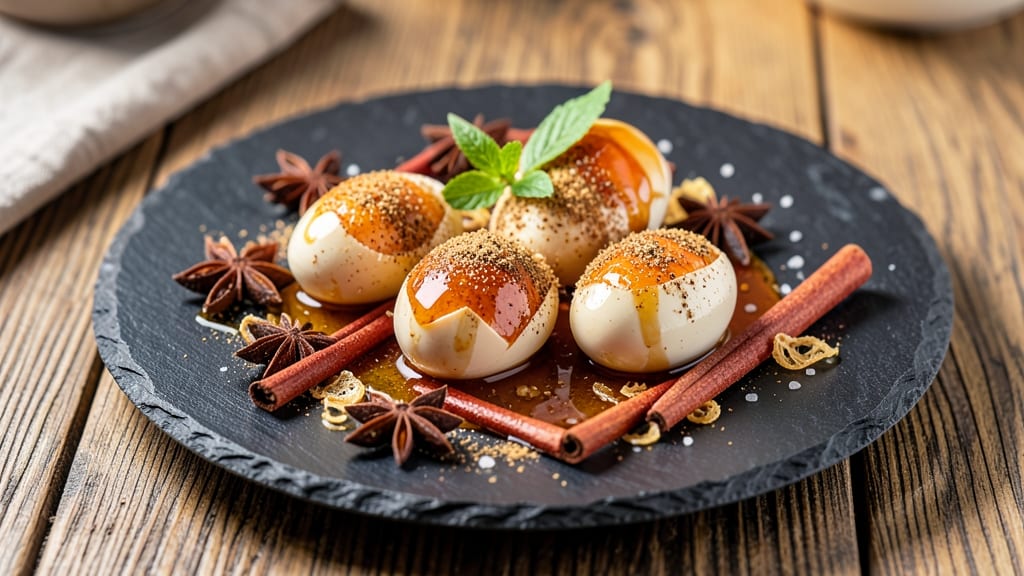
This tea egg recipe with 5 spice transforms ordinary hard-boiled eggs into fragrant, golden masterpieces—where silky yolks meet aromatic spices in every bite. 🌟 The secret lies in simmering eggs in a rich, spiced tea broth that infuses them with deep, warming flavors while keeping the yolks tender and vibrant.
I perfected this after discovering how a simple Chinese teahouse technique could elevate a basic ingredient into something extraordinary.
The process is straightforward but rewarding: start with a robust black tea base, then layer in five-spice powder, star anise, and a touch of sugar to create a fragrant broth. The eggs simmer gently until their centers remain creamy, absorbing the tea's depth while developing a delicate golden crust.
This method preserves the egg's natural richness while adding layers of warmth from cinnamon, cloves, and fennel.
What you'll end up with are eggs that crack open to reveal yolks with a subtle marbled effect—just a hint of spice peeking through their golden centers.
The broth reduces into a glossy glaze that coats each egg, making every bite a balance of tea's earthy notes and the eggs' natural creaminess. Serve them warm with toasted baguette slices or chili oil for dipping.
This recipe bridges tradition and simplicity, perfect for brunch gatherings or when you want to impress without fuss. The key is patience—the longer the eggs simmer, the more flavor they absorb.
Trust the process, and you'll have restaurant-quality tea eggs that taste like a little piece of China in your own kitchen.
Ingredients for tea egg recipe 5 spice
Four eggs and a handful of spices transform into fragrant tea eggs with golden crusts.
| Ingredient | Amount | Notes |
|---|---|---|
| Large Eggs 🥚 | 4 whole | Room temperature for even cooking |
| Black Tea Bags ☕ | 4 whole | Strong brew, like Earl Grey |
| Five-Spice Powder 🌶️ | 1 tbsp | Authentic Chinese blend preferred |
| Star Anise Pods 🌟 | 2 whole | Lightly crushed for aroma |
| Granulated Sugar 🍯 | 1 tbsp | Light brown sugar for depth |
| Cinnamon Sticks 🌿 | 1 whole | 1-inch pieces for simmering |
| Cloves 🌶️ | 2 whole | Lightly crushed for subtle heat |
| Fennel Seeds 🌿 | ½ tsp | Toasted for aromatic warmth |
| Water 💧 | 4 cups | Filtered for best flavor |
| Sesame Oil 🫒 | 1 tbsp | For finishing drizzle |
| Toasted Sesame Seeds 🌾 | 1 tbsp | For garnish |
| Salt 🧂 | ½ tsp | Kosher or sea salt |
The tea bags make all the difference—Earl Grey or Lapsang Souchong from Twinings or Harney & Sons work best, but any strong black tea will do. Five-spice powder is non-negotiable; Penzeys or Spicewalla carry authentic blends. For the spices, I grab mine from the bulk section at Whole Foods—they stay fresher longer. If you're using whole spices, lightly crush them with a mortar and pestle (or a heavy pan) to release their oils without turning to dust. The cinnamon sticks and star anise add depth, but don’t overdo it—they’re more about aroma than flavor here.
No five-spice powder? Mix 2 tsp cinnamon, 1 tsp fennel seeds, 1 tsp cloves, 1 tsp star anise, and 1 tsp Szechuan peppercorns—that’s the classic blend. Running short on star anise? A pinch of anise seeds works in a pinch. No sesame oil? Toasted peanut oil gives a similar nutty finish. The sugar can be swapped for brown sugar or honey, but white keeps things balanced. And if you’re feeling fancy, a splash of Shaoxing wine in the broth adds complexity—just reduce it down first.
Simmer the eggs in the broth for 20-25 minutes—they’re done when the whites are set but yolks still jiggle slightly. The longer they cook, the more flavor they absorb, but don’t let them get rubbery. Store cooked eggs in the fridge for up to 5 days, covered in their broth. Reheat gently in a pot with a splash of water for 5 minutes—they’ll taste even better the next day. For a quick brunch, make a double batch and keep them ready in the fridge. Trust me, the first bite is worth the wait.
Why You'll Love This Recipe
- I’ll be real: the first batch always feels like a test run, but once you nail the sugar-to-tea ratio, you’ll have leftovers for days. Plus, star anise pods last forever, so you’re not just making eggs—you’re stocking up on flavor for future projects. Smart move.
- Five-Ingredient Magic: I swear, this is one of those recipes where you look at the list and think, "Wait, that’s it?"—then taste it and wonder why you didn’t make it sooner. The star anise and five-spice powder do all the heavy lifting, so you’re basically getting gourmet flavor with zero fuss.
- Cupboard to Table: Honestly, I keep a stash of black tea bags and five-spice powder just for this. No fancy shopping trips, no last-minute ingredient scrambles—just pull what you’ve got, boil some water, and let the eggs do the work. That’s my kind of cooking.
- Breakfast or Snack: Between us, these eggs are ridiculously good cold the next day. I’ve sent them to work in a lunchbox, tossed them into salads for crunch, or just eaten them straight out of the fridge like fancy bite-sized treats. Versatility wins.
Step-by-step instructions for tea eggs with five-spice infusion
Here's how to create silky, fragrant tea eggs that balance perfect texture with complex spice notes.
🍳 Step 1: Simmer the Spiced Tea Infusion
In a medium saucepan, combine the 4 cups water, 1 tbsp granulated sugar, 1 tbsp five-spice powder, 2 whole star anise pods, 1 whole cinnamon stick, 2 whole cloves, and 0.5 tsp fennel seeds. Bring to a gentle boil over medium-high heat until the water reaches a rolling simmer.
Reduce heat to medium-low and let it simmer uncovered for 10 minutes. You'll notice the spices release their aromatic oils—this is when the tea starts developing its signature depth. The liquid should smell like a warm spice market with hints of licorice and cinnamon. Remove the tea bags and let the infusion steep for another 5 minutes before straining through a fine-mesh sieve into a clean bowl. Discard the spices and tea bags.
👨🍳 Step 2: Prepare the Eggs for Simmering
Gently lower the 4 whole large eggs into the warm spiced tea infusion using a slotted spoon. The water should be at 185°F—just below boiling—to prevent cracking. If it's too hot, remove the pan from heat for 1-2 minutes to let it cool slightly.
Simmer gently for 12 minutes—this is critical for even cooking without overcooking the yolks. You'll know it's ready when the whites are just set but the yolks remain runny. I like to give the pan a very gentle stir every 3 minutes to ensure even heat distribution around the eggs.
🔥 Step 3: Finish with Sesame Oil and Garnish
Remove the eggs with a slotted spoon and transfer them to a bowl of ice water for 5 minutes to stop the cooking process. This chilling step also helps set the yolks perfectly while keeping them silky.
Drain the eggs and drizzle with 1 tbsp sesame oil, tossing gently to coat. Sprinkle with 1 tbsp toasted sesame seeds and 0.5 tsp salt, mixing just until the seeds adhere. The sesame oil adds a nutty finish that complements the spiced tea infusion beautifully.
🍽️ Step 4: Serve Immediately for Best Texture
Serve the tea eggs warm or at room temperature. The contrast between the firm, slightly chewy whites and the silky, vibrant yolks is what makes these special. For extra presentation, arrange them on a platter with additional toasted sesame seeds sprinkled around.
Here's the thing—these eggs are best enjoyed within 2 hours of making. The texture starts to firm up as they cool, so plan to serve them while still warm. Pair with a simple green salad or steamed greens to let the flavors shine.
Pro Tips For Making Tea Egg Recipe 5 Spice
- USE STAR ANISE WHOLE: Tossing in whole star anise pods instead of grinding them first gives you layers of flavor—those little bursts of anise when you bite through the yolk are what makes this dish special. I used to crush them out of habit, but whole pods infuse the tea broth better and add texture. Just fish them out before serving (they’re easy to spot).
- BOIL EGGS UNTIL JUST SET: Nine minutes in simmering water gives you perfectly jammy yolks without graying whites—any longer and you’ll end up with rubbery eggs. I learned this the hard way after overcooking a batch and wondering why my tea eggs tasted flat. Use a timer, and start checking at 8 minutes if you’re impatient.
- STEAM THE TEA BAGS FIRST: Drop the tea bags into the pot before adding the eggs and five-spice. This pre-infuses the water with tea flavor, so the eggs absorb it evenly instead of just sitting in a weak, late-stage brew. It’s a small step that makes a real difference in how rich the final taste is.
- SKIP THE SUGAR RUSH: Adding all the sugar at once makes the water cloudy and can dull the five-spice flavor. Instead, dissolve half the sugar in a splash of hot water first, then stir it into the pot. The rest can go in later—this keeps the broth clear and lets the spices shine. (Yes, it’s extra work, but your eggs will taste like they came from a street vendor’s cart.)
Serving suggestions for this tea egg recipe 5 spice
Warm Tea Dipping Sauce
Elevate your tea eggs with a quick warm dipping sauce that mirrors their spiced flavor. Heat ¼ cup soy sauce, 1 tbsp Shaoxing wine, 1 tsp honey, and ½ tsp five-spice powder in a small saucepan until steaming.
Drizzle over cracked eggs or serve in a small bowl for dipping—it cuts through the richness while enhancing the tea notes. 🌟
Crispy Baguette Slices
Toast ½-inch thick baguette slices in a 400°F oven for 5-7 minutes until golden and crisp. Brush with a mix of 1 tbsp melted butter and ½ tsp sesame oil, then sprinkle with toasted sesame seeds.
The crunch contrasts beautifully with the silky eggs, soaking up any leftover broth. I always make extra—these disappear fast!
Chili Oil Garnish
Add a kick with homemade chili oil: Heat ½ cup neutral oil (like avocado) with 1 tbsp crushed dried chilies and 1 tsp Sichuan peppercorns in a small pan over low heat for 5 minutes.
Strain and drizzle over cracked eggs or serve on the side. The numbing heat from Sichuan peppercorns pairs perfectly with the warm spices in the tea eggs. 🌶️
Fresh Herb Accents
Brighten the dish with fresh herbs like cilantro or Thai basil. Chop 2 tbsp cilantro and scatter over the platter, or make quick herb-infused oil: Heat 1 tbsp oil with 1 tbsp chopped herbs and a pinch of salt, then drizzle over the eggs.
The freshness balances the deep tea and spice flavors beautifully.
Pickled Vegetable Pairing
Add a tangy crunch with quick-pickled vegetables. Thinly slice ½ cup daikon radish and ½ cup cucumber, then toss with 2 tbsp rice vinegar, 1 tsp sugar, and a pinch of salt.
Let sit for 15 minutes before serving. The acidity cuts through the richness, making each bite more dynamic.
Presentation Tips
For a restaurant-worthy look, arrange eggs on a platter with toasted sesame seeds forming a border. Crack one egg open to reveal the marbled yolk, then drizzle with extra sesame oil.
Serve with small bowls of the dipping sauce and chili oil on the side—it’s all about that visual appeal! Trust me, your guests will be impressed. ✨
Nutrition facts
Frequently asked questions
Can I use whole spices instead of five-spice powder?
Just combine 2 tsp cinnamon, 1 tsp fennel seeds, 1 tsp cloves, 1 tsp star anise, and 1 tsp Szechuan peppercorns for the same flavor profile. Lightly crush whole spices before adding to the tea infusion to release their aromatic oils.
How do I know when the eggs are perfectly cooked?
They're done when the whites are fully set but the yolks remain slightly runny—about 12 minutes of gentle simmering. Test by gently shaking an egg; if the yolk moves freely but doesn't jiggle like a liquid center, it's perfect. Overcooking makes yolks rubbery, so watch closely!
Can I make these eggs ahead of time?
Yes! Store cooked eggs in their spiced broth in the fridge for up to 5 days. Reheat gently in a pot with a splash of water for 5 minutes—they'll taste even better the next day. The flavors deepen as the spices infuse longer.
What if my eggs crack while simmering?
Don't worry—it happens! Use a slotted spoon to carefully lower eggs into the broth at 185°F (just below boiling). If cracks appear, remove them immediately and finish cooking in fresh hot water. The cracked eggs will still taste delicious, just with slightly less presentation.
Can I use green tea instead of black tea?
While black tea gives the best robust flavor, you can use green tea—but expect a lighter, grassier taste. For balance, add ½ tsp extra five-spice powder to compensate. Lapsang Souchong (smoky black tea) works wonderfully too if you want a unique twist.