
Breakfast & Brunch
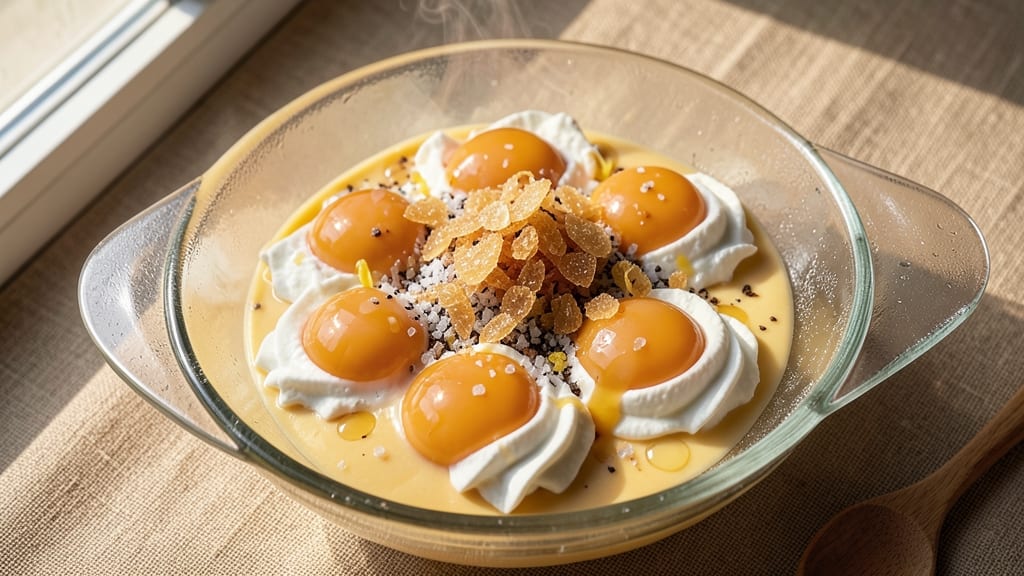
This sugared egg yolks recipe transforms simple yolks into a luxurious, caramelized treat that balances crispy edges with velvety sweetness. The secret lies in gently cooking yolks with sugar until they develop a glossy, custard-like texture—perfect for elevating desserts or breakfast dishes.
I developed this technique after experimenting with French-inspired custards, and it’s now a staple in my kitchen for adding depth to pastries, fruit bowls, or even toast.
The process is simpler than it sounds: yolks are cooked low and slow with sugar until they thicken into a smooth, golden mixture. This method preserves the yolks' natural richness while caramelizing the sugar into a delicate crust.
The result is a versatile topping that adds both visual appeal and a sophisticated sweetness to any dish. Whether you're a baking enthusiast or a home cook looking to impress, this technique delivers restaurant-quality results with minimal effort.
What makes this recipe stand out is its adaptability—vanilla, cinnamon, or citrus zest can be incorporated for custom flavors, and the yolks keep beautifully in the refrigerator for up to 5 days.
Serve them over pancakes, drizzle over ice cream, or fold into custards for an elegant touch. The possibilities are endless, and the process is foolproof once you master the timing.
Ready to elevate your desserts with this refined technique? The key is patience—letting the yolks and sugar meld into a harmonious, caramelized perfection. This isn’t just a topping; it’s a game-changer for anyone who loves rich, sweet flavors with a touch of sophistication.
Ingredients for sugared egg yolks
Six yolks, two sugars, and a touch of butter—this is all you need to transform ordinary eggs into a luxurious caramelized topping.
| Ingredient | Amount | Notes |
|---|---|---|
| Large Egg Yolks 🥚 | 6 whole | Fresh, room temperature preferred |
| Granulated White Sugar 🍚 | ½ cup | Fine grain, super-fine preferred |
| Unsalted Butter 🧈 | 2 tbsp | European-style for higher fat content |
| Vanilla Extract 🌿 | ½ tsp | Pure vanilla, not imitation |
| Pinch of Fine Sea Salt 🧂 | ⅛ tsp | Diamond Crystal preferred |
| Heavy Whipping Cream 🥛 | ¼ cup | Full-fat for best texture |
| Ground Cinnamon 🍃 | ¼ tsp | Optional, for warm undertones |
| Lemon Zest 🍋 | ½ tsp | Fresh, for bright acidity |
| Dark Brown Sugar 🍚 | 1 tbsp | For deeper caramel flavor |
| Powdered Sugar 🍚 | 2 tbsp | For final dusting |
| Confectioners' Glaze 🍬 | 1 tbsp | Optional, for extra shine |
The yolks are the star here, so use the freshest, highest-quality eggs you can find. Whole Foods or local farms often carry eggs with richer yolks that caramelize beautifully. Separate them carefully—no traces of white will prevent proper thickening. For the sugar, super-fine granulated sugar (or pulse regular sugar in a food processor) ensures a smoother texture without graininess. The butter should be European-style—it has a higher fat content that enhances the custard's richness. If you're using vanilla, Madagascar Bourbon adds depth, but pure vanilla works too. The pinch of salt isn't just for flavor—it also helps balance the sweetness and promotes even caramelization.
No super-fine sugar? Pulse regular sugar in a blender for 10 seconds—it makes all the difference. Short on vanilla? Almond extract at half the amount gives a nutty twist. Want extra caramel flavor? Swap half the white sugar for dark brown. For a citrusy note, orange zest works beautifully alongside lemon. The heavy cream can be omitted if you prefer a lighter texture, but it adds luxurious body. If you're making this ahead, store the yolks and sugar mixture separately until ready to cook—this prevents premature crystallization. And if your yolks start to thicken too quickly, lower the heat immediately—they'll continue cooking off the heat.
Once caramelized, these yolks keep perfectly in the fridge for up to 5 days, stored in an airtight container with parchment between layers. To reheat, warm gently in a water bath—never microwave, or they'll scramble. For a restaurant-worthy presentation, dust with powdered sugar and a quick glaze of confectioners' glaze mixed with a drop of water. They're ideal for topping warm pancakes, French toast, or ice cream. Pro tip: Portion into small ramekins before chilling—they're perfect for individual servings. The texture transforms from silky to slightly set when cold, making them versatile for both warm and cold dishes.
Why You'll Love This Recipe
- Five-Ingredient Magic: I swear by this recipe because it’s that simple—just yolks, sugar, butter, a splash of vanilla, and a whisper of salt. No fancy gadgets, no last-minute grocery runs, just pure, unadulterated ease that still feels special.
- Caramel-Kissed Bliss: The moment those yolks hit the sugar and butter? Pure perfection. That glossy, buttery-sweet coating with a hint of vanilla warmth—it’s like biting into a tiny, creamy cloud with a crisp edge. (Between us, I’ve been known to eat them straight from the pan.)
- Breakfast to Dessert: Honestly, this is my secret weapon for lazy mornings and impromptu dessert cravings. Toss them over pancakes, fold into ice cream, or serve with toasted brioche—suddenly, you’ve got a dish that works for brunch or bedtime.
- No Waste, All Win: Use every last bit of those egg yolks without guilt. The recipe scales effortlessly, and leftovers? They keep for days in the fridge, ready to jazz up yogurt, oatmeal, or even a simple salad. (Yes, even on a Tuesday night.)
Step-by-step instructions for sugared egg yolks
Transform simple egg yolks into a luxurious dessert with caramelized crunch and velvety sweetness.
Prepare the Yolks and Sugar Mixture
In a heavy-bottomed saucepan, combine the 6 whole large egg yolks with the 0.5 cup granulated white sugar and 0.125 tsp fine sea salt. Whisk vigorously over a double boiler (or a heatproof bowl set over simmering water) until the mixture reaches 160°F and thickens to a pale, creamy custard consistency. This process, called tempering, prevents scrambling while building flavor.
You'll know it's ready when the mixture coats the back of a spoon smoothly and the temperature stabilizes. Remove from heat immediately—overheating turns yolks grainy. The mixture should be thick enough to leave a visible trail when the whisk is lifted, but still pourable.
Incorporate Butter and Aromatics
Return the saucepan to low heat and whisk in the 2 tbsp unsalted butter, 0.5 tsp vanilla extract, and 0.5 tsp lemon zest until fully melted and incorporated. The butter should blend seamlessly, creating a glossy, satin finish. Add the 0.25 tsp ground cinnamon and 1 tbsp dark brown sugar, whisking constantly for 1 minute to develop their warm, caramelized notes.
Here's where precision matters: maintain a gentle simmer (165-170°F) while whisking continuously. The mixture should thicken further but remain silky—if it begins to curdle, reduce heat immediately. The lemon zest will brighten the richness, while the cinnamon adds subtle warmth that complements the caramelization to come.
Create the Caramelized Crust
Transfer the yolk mixture to a greased 8-inch round baking dish or ramekins. Spread evenly, then place under a broiler for 2-3 minutes until the top develops a deep golden caramel crust. Watch closely—the crust should be firm to the touch but still slightly jiggly in the center. Immediately remove from heat and let rest for 5 minutes to set slightly.
The broiler creates that coveted glass-like crust while keeping the interior custardy. If your oven runs hot, start with 1 minute and check frequently. The contrast between the crisp exterior and molten center is what makes these yolks extraordinary.
Finish with Cream and Dusting
While the yolks rest, warm the 0.25 cup heavy whipping cream in a small saucepan until steaming but not boiling. Gently pour this over the yolks, allowing it to soak through for 1 minute. Then dust the surface with 2 tbsp powdered sugar and, if using, drizzle the 1 tbsp confectioners' glaze in decorative patterns. The glaze adds a professional shine and subtle sweetness.
This step transforms the texture—each bite should deliver creamy yolk, crisp caramelized crust, and a velvety cream finish. For maximum impact, serve immediately while the center remains warm and the crust is at its crispest. The powdered sugar also helps create that signature "snowed" presentation.
Chill and Serve for Optimal Texture
Refrigerate the sugared yolks for at least 1 hour before serving to allow flavors to meld and the caramel to firm slightly. When ready, invert onto plates or serve directly from the dish. The contrast between the cool, creamy interior and warm caramel exterior creates a sensory experience that's both elegant and indulgent.
For presentation, garnish with a sprinkle of powdered sugar or a twist of lemon zest to echo the flavors. These yolks pair beautifully with fresh berries, vanilla bean ice cream, or a drizzle of reduced berry sauce. The key to success lies in the balance of temperatures and textures—hot caramel, cool custard, and creamy cream.
Pro Tips For Making Sugared Egg Yolks
- Whisk Yolks First: Separate yolks into a bowl before measuring sugar—this prevents grainy lumps. Cold yolks resist dissolving, so let them sit at room temp for 10 minutes if they’re straight from the fridge. I learned this the hard way when my first batch looked like sand instead of silk.
- Sugar Ratio Matters: Stick to 1:1 sugar to yolks by weight (not volume)—that’s ~1 cup sugar for 4 yolks. Too little? They’ll dry out. Too much? They’ll seize. My grandmother swore by this, and she was right: eyeballing it leads to disappointment.
- Low and Slow Wins: Start on medium-low heat, then immediately lower to the gentlest simmer possible. Watch for bubbles—tiny, consistent ones mean you’re golden. I used to blast the heat and ended up with scrambled eggs instead of custard. Patience here makes all the difference.
- Butter Timing Fixes Graininess: Add butter after the sugar dissolves completely, then whisk until the mixture thickens but just coats the back of a spoon. If you add it too early, the fat can separate. (Yes, even if you’re impatient like me.)
Troubleshooting great sugared egg yolks
Yolks Too Thin?
If your mixture isn’t thickening enough, you’re likely cooking at too high a temperature. Yolks scramble when exposed to direct heat—always maintain a gentle simmer (no higher than 165°F) while whisking constantly.
For extra insurance, use a double boiler and reduce heat to low-medium. If it still doesn’t set, whisk in 1 extra tbsp of butter—the fat content helps stabilize the emulsion. 🌡️
Grainy Texture?
Graininess usually means you overheated the yolks or didn’t temper them properly. To fix this, strain the mixture through a fine-mesh sieve before broiling. For prevention, whisk vigorously over low heat and remove from heat the moment it reaches 160°F.
If it’s already grainy, whisk in 1 tbsp of warm cream to smooth it out.
Crust Too Soft?
A soft crust happens when the broiler isn’t hot enough or the yolks aren’t set properly. Preheat your broiler to high and ensure the yolks are fully thickened before broiling. For extra firmness, chill the dish for 10 minutes in the fridge before broiling—this helps the sugar caramelize faster.
If it’s still too soft, broil for 30 seconds longer in 15-second bursts.
Sugar Crystallizing?
Crystallization occurs when sugar isn’t fully dissolved or the mixture cools too quickly. To prevent this, whisk constantly over low heat until the sugar dissolves completely. If crystals form, gently reheat the mixture to 170°F while whisking until smooth.
For future batches, use super-fine sugar or pulse regular sugar in a blender for 10 seconds to prevent graininess. 🍚
Yolks Curdling?
Curdling is a sign of overheating or too much acid (like lemon zest). Reduce heat immediately and whisk in 1 tbsp of warm cream to rescue the texture. For prevention, add lemon zest after the yolks have thickened, and avoid direct contact with the pan.
If curdling is severe, strain the mixture through a fine-mesh sieve to remove lumps.
Uneven Caramelization?
Uneven caramelization often means the yolks weren’t spread evenly or the broiler was too hot. Spread the mixture thinly and evenly in your dish, and broil in 30-second increments, checking frequently.
For a more controlled finish, use a torch to caramelize the top—this gives you precision over a broiler’s intense heat. 🔥
Nutrition facts
Frequently asked questions
Can I use whole eggs instead of just yolks?
The whites will scramble and prevent proper thickening, so stick to yolks only. For a richer version, you could try adding a splash of heavy cream (like in the recipe) to compensate, but the texture won't be as silky. The yolks' natural fat content is what creates that luxurious custard consistency.
How do I prevent the yolks from sticking to the pan?
Always use a heavy-bottomed saucepan and make sure it's properly greased with butter or oil before adding the yolks. A double boiler is ideal—it keeps the heat gentle and even. If using a stovetop method, maintain a steady low-medium heat and whisk constantly to prevent sticking.
Can I make this ahead of time?
Yes! Cook the yolks and sugar mixture as directed, then store them in an airtight container in the fridge for up to 5 days. Reheat gently in a water bath before broiling to finish the caramel crust. The flavors actually improve after resting, making them perfect for meal prep.
What can I substitute if I don't have vanilla extract?
Try ½ tsp almond extract for a nutty twist or 1 tsp orange blossom water for floral notes. A pinch of ground cardamom (⅛ tsp) also works beautifully. Just remember, extracts are potent—start with less and adjust to taste.
How do I get that perfect caramelized crust?
The secret is in the broiling step: use a hot broiler and watch closely for 2-3 minutes until golden. For extra shine, dust with powdered sugar right after broiling while still warm. If your crust isn't setting, chill the yolks for 10 minutes before broiling—the cold helps the sugar caramelize faster.