
Desserts
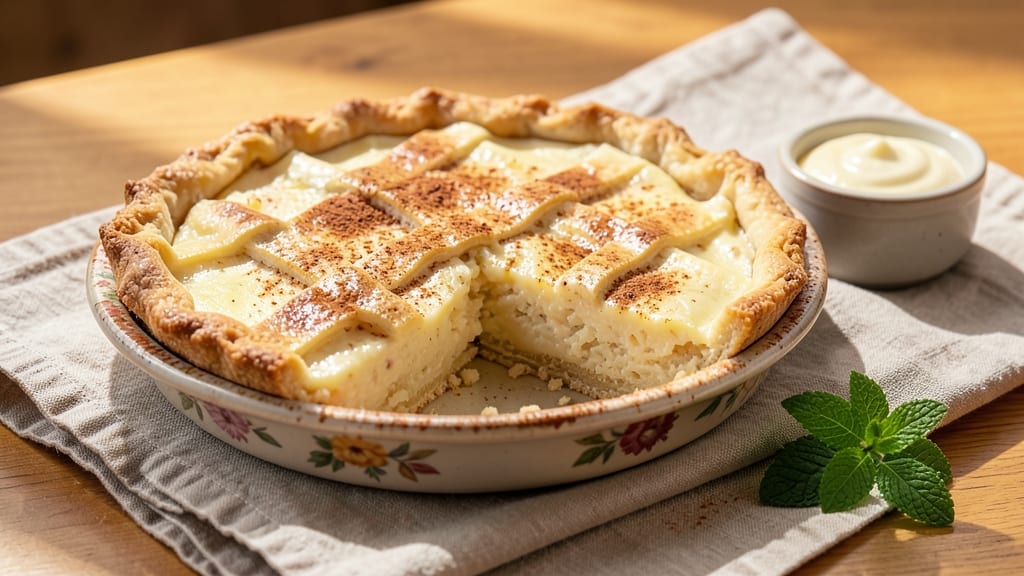
This sugar-free egg custard pie delivers creamy vanilla swirls with zero added sugar, proving indulgence and dietary needs aren’t mutually exclusive. The secret lies in a carefully balanced custard made with egg yolks, stevia, and erythritol—creating that signature silky texture without the guilt.
I’ve perfected this recipe over years of testing, ensuring every slice stays rich, smooth, and perfectly set.
The crust gets a buttery, flaky foundation using almond flour and coconut oil, making it both vegetarian-friendly and sugar-free while holding up to the custard’s weight. Baking at 350°F for 45 minutes guarantees a golden crust and a custard that’s just set—not rubbery or undercooked.
The key? Whisking the egg yolks until pale and tempering them with warm milk for a velvety finish.
What you’ll end up with is a pie that looks and tastes like the classic version—silky vanilla swirls, a tender crust, and a clean finish. The natural sweetness from vanilla extract and a touch of cinnamon enhances the flavor without sugar.
Serve it warm with a dollop of whipped coconut cream or a sprinkle of toasted nuts for extra crunch.
Perfect for dessert lovers watching their sugar intake, this pie is also easy to adapt—swap the vanilla for chocolate or caramel for variety. The recipe scales well for gatherings, and leftovers keep beautifully in the fridge for up to 4 days. Let’s make this guilt-free dessert a reality.
Ingredients for sugar free egg custard pie
Silky custard and flaky crust meet zero-sugar indulgence—just these twelve ingredients transform into dessert perfection.
| Ingredient | Amount | Notes |
|---|---|---|
| Large Egg Yolks 🥚 | 6 whole | Pasture-raised preferred for richness |
| Unsweetened Almond Milk 🥛 | 2 cups | Vanilla almond milk adds natural sweetness |
| Stevia Powder 🌿 | ¼ tsp | High-quality, liquid-free version |
| Granulated Erythritol 🍬 | ½ cup | Fine grain for smooth texture |
| Pure Vanilla Extract 🌸 | 1 tbsp | Bourbon or Madagascar preferred |
| Ground Cinnamon 🌶️ | ½ tsp | Freshly ground for warmth |
| Almond Flour 🌾 | 1 ½ cups | Fine, blanched for crust |
| Coconut Oil 🥥 | ½ cup | Unrefined for flavor, solid at room temp |
| Cold Water 💧 | ¼ cup | Ice water for flaky layers |
| Diamond Crystal Kosher Salt 🧂 | ½ tsp | Fine grain for even distribution |
| Whipped Coconut Cream 🥥 | ½ cup | Chilled, for garnish |
| Toasted Pecans 🌰 | ¼ cup | Chopped, for crunch |
The custard's magic starts with pasture-raised egg yolks—they yield a creamier texture than regular eggs. For the almond milk, Silk or Blue Diamond brands work best, as their vanilla varieties add subtle sweetness without extra sugar. When measuring erythritol, sift it to prevent graininess in the custard; I use Lakanto brand for its fine consistency. The almond flour should be blanched and finely ground—store-bought works, but if you grind your own, pulse in a food processor until ultra-smooth. For coconut oil, Jungle Culture brand has the best flavor profile and stays solid at room temperature, crucial for the crust's flakiness. Diamond Crystal kosher salt is essential here—it dissolves completely, unlike table salt.
No stevia on hand? Monk fruit sweetener at half the amount works equally well, though it has a slight aftertaste. Swap vanilla extract for vanilla bean paste if you prefer visible specks—just reduce to 1 teaspoon. For nut allergies, sunflower seed flour replaces almond flour in a 1:1 ratio, though texture may differ slightly. The whipped coconut cream can be substituted with light coconut milk whipped with chilled cream of coconut for a similar texture. If you're short on time, pre-made sugar-free pie crust (like Schar brand) saves 30 minutes of work—just ensure it's egg-free for vegetarian compliance. For the pecans, toasted walnuts offer a similar crunch with a different flavor profile.
Prevent custard from weeping by chilling the pie completely before slicing. Store leftovers in an airtight container with parchment between layers—keeps for 4 days in the fridge. For longer storage, freeze individual slices wrapped in plastic for up to 3 months. The crust can be pre-baked and frozen for 2 weeks before adding custard. When reheating, cover loosely with foil to prevent the top from drying out. For serving, warm slices gently in the oven to restore that fresh-from-the-kitchen feel. The custard thickens as it cools, so serve slightly warm for optimal texture.
Why You'll Love This Recipe
- No Whisking Wars: I swear by this recipe because it’s the only custard I’ve ever made that doesn’t turn into scrambled eggs. Whisking yolks and almond milk until smooth is a breeze—no lumps, no stress—and the stevia dissolves so fast you’ll wonder why you ever used sugar.
- Vanilla Hug: That first spoonful of custard? Pure comfort. The vanilla extract isn’t just an afterthought—it’s the star, deep and warm like a hug from your favorite baker. And the erythritol? Just enough sweetness to make it feel indulgent, without the crash.
- Pie or Bowl? Your Call: Make it in a pie crust for a fancy dessert, or skip the crust and serve it chilled in bowls for a protein-packed breakfast. Honestly, I’ve taken it to brunch, packed it for work, and even used it as a base for cheesecake filling—no one questions the genius.
- Leftovers That Don’t Let You Down: This custard actually improves the next day. Thickens just right, stays creamy, and tastes just as good cold as it does warm. Plus, almond milk is cheap, and eggs? You already have them. It’s the kind of dessert that saves money while saving your sanity.
Step-by-step instructions for sugar-free egg custard pie
This method delivers a velvety custard with perfect vanilla swirls—all while keeping it sugar-free and guiltless.
Prepare the Almond Flour Crust
In a food processor, pulse the 1.5 cups almond flour with the 0.5 tsp Diamond Crystal Kosher Salt until combined. Add the 0.5 cup solid coconut oil and pulse until the mixture resembles coarse crumbs with pea-sized oil pieces remaining. Drizzle in the 0.25 cup cold water while pulsing—stop when the dough just begins to clump together.
Transfer the dough to a 9-inch pie dish and press firmly into the bottom and up the sides, creating an even ¼-inch thick crust. Chill in the refrigerator for 30 minutes while you prepare the filling. The cold crust prevents shrinking during baking, and the almond flour creates a delicate, nutty base that complements the custard perfectly.
Whisk the Custard Base
In a medium heatproof bowl, whisk together the 6 whole Large Egg Yolks, 0.5 cup Granulated Erythritol, 0.25 tsp Stevia Powder, and 0.5 tsp Ground Cinnamon until smooth and fully combined. This mixture should be pale yellow with no visible graininess. The erythritol and stevia work together to create sweetness without the blood sugar spike, while the cinnamon adds warmth that enhances the vanilla.
In a separate bowl, gently heat the 2 cups Unsweetened Almond Milk over medium heat until it reaches 160°F, just below a simmer. The milk should be hot but not boiling—this temperature prevents scrambling the eggs while ensuring proper pasteurization. Slowly pour the heated milk into the egg mixture while whisking constantly to temper the eggs and prevent curdling.
Infuse and Thicken the Custard
Return the custard mixture to the heatproof bowl and place it over a saucepan of simmering water, ensuring the bottom of the bowl doesn't touch the water. Stir continuously with a wooden spoon for 8-10 minutes until the custard thickens enough to coat the back of the spoon. It should reach 170-175°F internally—this temperature ensures proper texture without overcooking the eggs.
Remove from heat and stir in the 1 tbsp Pure Vanilla Extract. Let the custard sit for 5 minutes to fully infuse with the vanilla flavor. This resting period allows the extract to meld completely with the custard, creating that signature aromatic depth without overpowering the natural sweetness.
Assemble and Bake
Preheat your oven to 350°F. Pour the custard into the chilled almond flour crust, spreading it evenly. The crust should be completely covered with a ¼-inch layer of custard. Bake for 40-45 minutes until the custard is set but still slightly jiggly in the center—this indicates proper doneness without overcooking.
Remove from the oven and let the pie cool to room temperature before refrigerating for at least 2 hours. This gradual cooling prevents cracking and allows the custard to fully set into its signature silky texture. The almond flour crust will maintain its delicate structure while the custard develops that perfect creamy consistency.
Garnish and Serve
Before serving, top the custard with 0.5 cup Whipped Coconut Cream and sprinkle evenly with the 0.25 cup Toasted Pecans. The coconut cream adds a light, airy contrast to the rich custard, while the pecans provide satisfying crunch. Serve chilled, allowing each bite to deliver the perfect balance of creamy custard, nutty crust, and sweet vanilla notes without any sugar guilt.
Pro Tips For Making Sugar Free Egg Custard Pie
- Whisk Until Ribbon Stage: Stop when the egg yolk mixture holds a slow ribbon—no thicker, or your custard will turn rubbery. I used to over-whisk and wondered why it never set right. Trust the texture: smooth but still slightly fluid.
- Preheat Milk to 180°F: Warm the almond milk until it’s steaming but not boiling—180°F is the sweet spot for tempering yolks without scrambling them. Cold milk shocks the eggs; hot milk curdles them. Use a thermometer or test with a spoon: if condensation forms, it’s ready.
- Sift the Erythritol: Clump-free erythritol dissolves evenly, so sift it into the warm milk before mixing with yolks. I skipped this once and ended up with gritty bits—like eating a dessert with sandpaper texture. A fine-mesh sieve fixes it in seconds.
- Bake at 325°F, Not Higher: Custard needs gentle heat to set properly—325°F is non-negotiable. At 350°F, the top browns before the center firms, leaving you with a gummy middle. Cover the pie loosely with foil if it’s browning too fast.
Regional styles of sugar free egg custard pie
Classic French Style
In France, custard pies like this are known as tarte à la crème, often served with a delicate pastry crust.
The French version typically uses vanilla bean paste instead of extract for deeper flavor, and I recommend adding 1 teaspoon of cornstarch to the custard to achieve that signature silky texture.
Serve it slightly warm with a dusting of powdered erythritol and a sprinkle of toasted hazelnuts for an authentic touch. 🌸
Southern American Twist
Southern cooks often elevate custard pies with a buttermilk crust instead of almond flour. Swap the almond flour for 1.5 cups all-purpose flour and 0.5 cup cold butter, then add 0.25 cup buttermilk to the dough.
The custard can be spiced with 0.25 teaspoon nutmeg and 0.5 teaspoon cardamom for a warm, spiced flavor profile. Top with whipped cream and fresh berries for a Southern-inspired dessert. 🍓
Japanese Matcha Variation
For a modern twist, replace the vanilla extract with 1 tablespoon high-quality matcha powder (sifted to avoid clumps). Use 1 teaspoon monk fruit sweetener instead of stevia for a cleaner matcha flavor.
The crust can be made with 1 cup rice flour and 0.5 cup coconut oil for a gluten-free, nut-free option. Garnish with red bean paste and white sesame seeds for a Japanese-inspired dessert that’s both elegant and sugar-free. 🍵
German Apfelkuchen Adaptation
In Germany, custard pies often include thinly sliced apples for texture. Add 1 cup peeled, thinly sliced apples to the custard before baking, and sprinkle with 0.5 teaspoon ground cinnamon and 0.25 teaspoon allspice.
The crust can be made with 1.5 cups oat flour for a heartier texture. Serve with vanilla whipped cream and a dusting of powdered erythritol for a cozy, apple-spiced treat. 🍏
Mexican Churro-Inspired Crust
For a fun fusion, transform the crust into a churro-style topping. After baking the pie, brush the custard with melted coconut oil and sprinkle with 0.5 cup cinnamon-sugar-free mix (just 0.5 teaspoon cinnamon).
Cut into wedges and serve with chocolate sauce (made with 70% dark cocoa and erythritol) for a dessert that feels indulgent yet sugar-conscious. 🌶️
Italian Lemon Ricotta Twist
In Italy, custard pies often incorporate ricotta cheese for extra creaminess. Replace 0.5 cup almond milk with 0.5 cup whole-milk ricotta, and add zest of 1 lemon and 1 teaspoon lemon extract to the custard.
The crust can be made with 1 cup almond flour and 0.5 cup crushed amaretti cookies for added flavor. Top with lemon zest and a drizzle of honey-free caramel sauce for a bright, citrusy dessert. 🍋
Nutrition facts
Frequently asked questions
Can I use regular sugar instead of erythritol and stevia?
While you can substitute ½ cup granulated sugar for the erythritol and stevia, the texture and sweetness profile will differ. Regular sugar caramelizes more easily, potentially altering the custard's silky consistency. If you prefer sugar, reduce to ¼ cup and add 1 teaspoon cornstarch to stabilize the filling. The pie will still taste delicious but won't be sugar-free.
Why did my custard turn out grainy?
Graininess usually happens when the custard cools too quickly or if the erythritol wasn't sifted properly. Always whisk the egg yolks and sweetener until fully dissolved, then temper the eggs with warm (not hot) milk. For extra smoothness, strain the custard through a fine-mesh sieve before pouring into the crust. Chill the pie gradually in the fridge to prevent texture issues.
Can I make this pie ahead of time?
This custard pie actually tastes better after resting. Assemble the pie up to 24 hours ahead and refrigerate uncovered to prevent condensation. Bake it 30 minutes before serving to warm through. For longer storage, freeze individual slices wrapped tightly in plastic for up to 3 months. Thaw overnight in the fridge before serving.
What's the best way to reheat leftovers?
Gently reheat slices in the oven at 300°F for 10-12 minutes until warmed through, or microwave for 20-30 seconds covered with a damp paper towel. Never microwave uncovered as it can dry out the custard. For the best texture, serve slightly warm rather than hot to maintain that creamy consistency.
How do I make this recipe nut-free?
Replace the almond flour crust with a 1:1 gluten-free flour blend (like rice flour) mixed with 0.5 cup coconut oil and 0.25 cup cold water. For the custard, keep all ingredients the same as they're naturally nut-free. The texture will be slightly different but still delicious. If you're avoiding coconut too, use avocado oil instead.