
Beverages
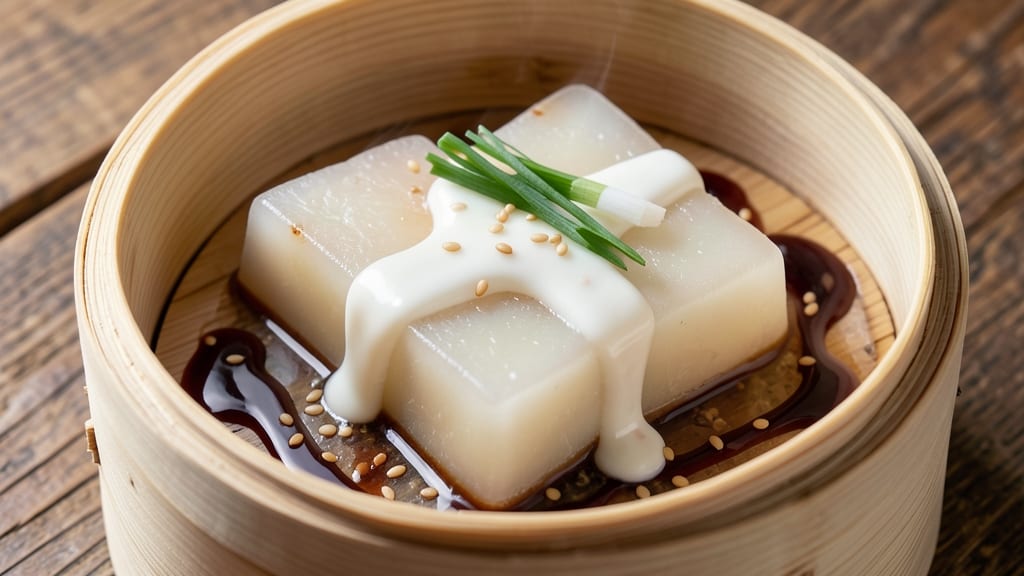
This steamed Japanese egg tofu recipe transforms simple eggs into delicate, silky ribbons that melt in your mouth—perfect for elevating any meal. 💛 The process begins with whisking eggs into a velvety batter, steaming them gently in bamboo molds, then slicing into ethereal strands.
What makes this dish special is its versatility: serve it in savory miso broth, sweet soy glaze, or even as a light side dish with rice. The secret to success lies in the temperature control—steaming too hot creates rubbery tofu, while too cool leaves it undercooked.
Traditional Japanese techniques ensure the texture is tender yet firm, with a delicate, almost custard-like quality. This dish isn’t just food; it’s a cultural experience, often enjoyed in kaiseki meals or as a humble yet elegant side.
Once steamed, the egg tofu absorbs flavors beautifully, making it a blank canvas for your favorite seasonings. A classic miso broth adds depth, while a drizzle of sweet soy sauce balances richness. The result?
A dish that’s light yet satisfying, with a texture so delicate it practically dissolves on your tongue. For best results, use room-temperature eggs and steam just until set—no overcooking allowed. Serve immediately for the perfect bite, or chill briefly for a firmer texture.
Whether you’re hosting a dinner party or simply craving something refined, this recipe delivers restaurant-quality elegance at home. Let’s get started!
Ingredients for steamed japanese egg tofu
Twelve simple ingredients transform into delicate egg tofu ribbons—perfect for elegant meals or quick sides.
| Ingredient | Amount | Notes |
|---|---|---|
| Large Eggs 🥚 | 12 whole | Room temperature for best results |
| Water 💧 | ½ cup | Room temperature |
| Bamboo Steaming Molds 🌿 | 2 whole | Or silicone molds if bamboo unavailable |
| White Miso Paste 🧈 | 2 tbsp | For savory broth |
| Dashi Powder 🍜 | 1 tsp | Instant or homemade |
| Soy Sauce 🥢 | 2 tbsp | For depth of flavor |
| Rice Vinegar 🍶 | 1 tbsp | Balances richness |
| Sesame Oil 🌰 | ½ tbsp | Toasted for aroma |
| Toasted Sesame Seeds 🌱 | 1 tbsp | For garnish |
| Green Onions 🧅 | 2 whole | Thinly sliced for garnish |
| Steamed White Rice 🍚 | 2 cups | Cooked, for serving |
| Salt 🧂 | ½ tsp | Fine sea salt |
| Mirin 🍶 | 1 tbsp | Sweetens broth |
The eggs are the star—room temperature is non-negotiable for silky texture. Pasture-raised eggs from Trader Joe's or local farms have richer yolks, but any large eggs work. The bamboo molds? Amazon or Japanese grocery stores sell them, but silicone molds are a great backup. If you can't find dashi powder, combine 1 tsp kombu powder + 1 tsp bonito flakes for homemade. For the miso, White Miso from Marukome is ideal—sweeter and creamier than red miso. Toast your sesame seeds in a dry pan for 1 minute until fragrant—that aroma makes all the difference.
No bamboo molds? Line a loaf pan with plastic wrap and steam that way. Short on miso? Substitute 1 tbsp white wine vinegar + 1 tsp sugar for a quick fix. The dashi powder can be skipped if you're avoiding fish—extra soy sauce + a pinch of sugar works in a pinch. For a sweeter broth, add 1 tsp honey or maple syrup (though traditionalists might scoff). The green onions can be subbed with shredded nori for a seafood-free option. And if you're feeling fancy, infuse the broth with a star anise pod while heating—removes it before serving.
Egg tofu keeps best in the fridge for 3 days if stored in airtight containers with a thin layer of water. Reheat gently in the broth—microwave ruins the texture. The broth itself reheats beautifully, so make extra for leftovers. For a restaurant-style presentation, chill the egg tofu briefly before slicing into ribbons—it holds shape better. Freeze any extras for up to 1 month by wrapping tightly in plastic. The rice? Day-old rice reheats best—less sticky, soaks up flavors like a dream.
Why You'll Love This Recipe
- No Fuss Setup: I’ll admit, the bamboo molds look intimidating—but honestly, it’s just eggs and water. Whisk, pour, steam. That’s it. No fancy gadgets, no last-minute grocery runs.
- Umami Magic: The miso and dashi turn this into something ridiculously flavorful. Silky, slightly chewy, with that deep savory punch that makes it taste like a restaurant dish, not a weeknight hack.
- Meal Prep Hero: Between us, I make a batch on Sundays and snack on it all week. Slice it into salads, toss it in stir-fries, or just eat it straight—it holds up perfectly. (Yes, even on a Tuesday night.)
- Budget Stretch: Five eggs, a spoonful of miso, a pinch of dashi—this recipe costs next to nothing but delivers big. It’s my go-to when I’m broke but still want to feel like I’m eating well.
Step-by-step instructions for steamed Japanese egg tofu
Here's how to create delicate egg tofu ribbons that melt in your mouth—simple but magical.
👨🍳 Step 1: Whisk Eggs and Seasoning for Perfect Texture
In a large bowl, whisk together the 12 whole large eggs until the yolks and whites are fully combined and the mixture is smooth. Add the 0.5 cup water, 0.5 tsp salt, and 1 tbsp mirin, whisking constantly until everything is evenly incorporated. This step is crucial—you want the mixture to be completely homogeneous so the egg tofu sets evenly.
Next, add the 2 tbsp white miso paste, 1 tsp dashi powder, 2 tbsp soy sauce, and 1 tbsp rice vinegar. Whisk vigorously for another 2-3 minutes until the miso is fully dissolved and the mixture becomes slightly thicker. The color should be a rich, creamy yellow with no visible streaks. This savory base will give your egg tofu its signature umami depth. Let the mixture rest for 5 minutes at room temperature before proceeding—this helps the flavors meld.
🔪 Step 2: Prepare the Steaming Molds
Fill the 2 whole bamboo steaming molds with the egg mixture, dividing it evenly between them. I like to use a ladle for this—fill each mold to about ¾ full to allow room for expansion. Tap the molds gently on the counter to release any air bubbles that may have formed. These bubbles can create weak spots in your egg tofu, so removing them ensures silky, uniform ribbons.
Place the filled molds on a heatproof plate or tray. If you don't have bamboo molds, silicone molds work perfectly too—they're more forgiving for beginners. Just make sure they're designed for steaming and can handle the heat without warping. The molds should be placed on a stable surface that can handle the condensation from steaming.
🔥 Step 3: Steam to Silky Perfection
Bring a large pot of water to a gentle simmer—you want to see small bubbles breaking the surface, but not a rolling boil. Place a steamer basket or rack in the pot and carefully position the molds on top. Cover with a tight-fitting lid and steam for 12-15 minutes. The egg tofu is ready when it's fully set but still slightly jiggly in the center—like a firm custard.
Here's the thing about steaming egg tofu: timing is everything. If you steam too long, it'll become rubbery. If you steam too short, it won't set properly. I check for doneness by gently shaking the mold—if the tofu wobbles slightly but holds its shape, it's perfect. Remove from heat immediately after steaming to prevent overcooking.
🥘 Step 4: Create the Miso Broth
While the egg tofu steams, prepare the savory broth. In a small saucepan, combine 1 cup water, 1 tbsp rice vinegar, 2 tbsp soy sauce, 1 tbsp mirin, and 0.5 tbsp sesame oil. Bring to a gentle simmer over medium-low heat, then reduce to the lowest setting possible—you want this to barely bubble. Add the 1 tsp dashi powder and stir until fully dissolved. Let it simmer for 3-4 minutes to allow the flavors to meld together.
The broth should smell rich and aromatic—like a perfect balance of umami and acidity. If you're using homemade dashi powder, you'll notice a deeper, more complex flavor. For an extra touch, add a few thin slices of green onions to the broth while it simmers—they'll infuse the liquid with their fresh, slightly sweet flavor.
⏰ Step 5: Assemble and Serve with Confidence
Carefully remove the steamed egg tofu from the molds by running a thin, flexible spatula around the edges. Gently lift and place each piece into a bowl of ice water for 1-2 minutes—this shocking treatment helps set the texture and makes those beautiful ribbons when you slice. Once chilled, transfer the egg tofu to a cutting board and slice it into ¼-inch thick strips using a sharp knife.
To serve, place 2 cups steamed white rice in each bowl and arrange the egg tofu ribbons on top. Ladle the warm miso broth over the egg tofu and rice, then drizzle with 0.5 tbsp sesame oil. Finish with a sprinkle of 1 tbsp toasted sesame seeds and thinly sliced green onions. The contrast of the silky egg tofu against the warm, savory broth is what makes this dish truly special.
Pro Tips For Making Steamed Japanese Egg Tofu
- Boil Eggs Until Just Set: The eggs need to be fully cooked but still runny inside—about 6 minutes in simmering water. I learned this the hard way when mine turned solid and rubbery; the yolk should jiggle slightly when gently shaken. Crack them open right after boiling to prevent overcooking while you steam.
- Chill Eggs Before Cracking: Run the boiled eggs under cold water for 30 seconds, then let them sit in an ice bath for 5 minutes. This stops the cooking process and makes cracking them open much easier—no more struggling with stubborn shells or messy yolk leaks. Trust me, your hands will thank you.
- Steam Over High Heat First: Start with a rolling boil in your steamer, then lower to medium heat once it’s going. The initial high heat helps the egg tofu set faster and more evenly—skipping this step means uneven texture or a watery center. And yes, even if you’re impatient like me, wait for that initial steam blast.
- Use Warm Water for Miso Mix: Dissolve the white miso paste and dashi powder in warm (not hot) water—just enough to loosen it, around 100°F (38°C). Hot water kills the delicate flavors in miso, and you’ll end up with a flat, bitter taste. Stir it into the egg mixture right before pouring into the molds for the freshest flavor.
Flavor customization for this recipe
Sweet Soy Glaze
Transform your egg tofu into a dessert-worthy treat by swapping the savory miso broth for a sweet soy glaze. Mix 3 tbsp soy sauce, 2 tbsp mirin, 1 tbsp honey, and ½ tsp grated ginger in a small saucepan.
Simmer for 3-4 minutes on low heat until slightly thickened. Drizzle this glaze over chilled egg tofu ribbons and garnish with crushed peanuts and thinly sliced scallions. The balance of sweet, salty, and nutty flavors makes this a stunning vegetarian option for celebrations. 💛
Spicy Miso Dip
For a bold twist, prepare a spicy miso dip to serve alongside your egg tofu. Blend 2 tbsp white miso paste, 1 tbsp sriracha, 1 tbsp rice vinegar, 1 tsp toasted sesame oil, and 1 tbsp water until smooth.
Serve this fiery dip in a small bowl with the egg tofu ribbons for dipping—it adds a kick of heat that contrasts beautifully with the silky texture. Garnish with sesame seeds and chopped cilantro for freshness. 🌶️
Citrus-Inspired Broth
Brighten up your egg tofu with a citrus-infused broth by adding zest of 1 lemon or yuzu and 1 tbsp freshly squeezed juice to the miso broth. Simmer for an extra 2 minutes to infuse the flavors, then strain out the zest.
The zesty tang cuts through the richness of the egg tofu, making each bite feel light and refreshing. Pair this with steamed bok choy for a vibrant, spring-inspired dish. ✨
Umami Mushroom Broth
Elevate the depth of flavor by incorporating shiitake mushrooms into your broth. Sauté 4 dried shiitake mushrooms (or ½ cup fresh shiitake slices) in a dry pan until fragrant, then add them to the simmering broth along with the dashi powder.
Let the mushrooms steep for 5 minutes before removing them. The earthy umami from the mushrooms adds a meaty, savory quality that pairs perfectly with the delicate egg tofu. 🍄
Matcha Green Tea Infusion
For a subtly earthy and slightly sweet variation, infuse the broth with matcha powder. Whisk ½ tsp high-quality matcha into the warm broth and let it steep for 3 minutes before serving.
The green tea notes complement the egg tofu’s mild flavor while adding a visually striking jade-green hue. Garnish with gold leaf for an extra touch of luxury. 💚
Sesame-Ginger Dressing
Create a creamy sesame-ginger dressing to drizzle over your egg tofu. Blend 2 tbsp tahini, 1 tbsp rice vinegar, 1 tbsp grated ginger (fresh or powdered), 1 tsp honey, and 2 tbsp water until smooth.
Thin with more water if needed for a pourable consistency. This dressing adds a nutty, tangy contrast that enhances the egg tofu’s delicate texture. Drizzle generously over the ribbons before serving. 🌰
Nutrition facts
Frequently asked questions
Can I make egg tofu without bamboo molds?
If you don't have bamboo molds, use silicone molds (like rectangular loaf pans lined with plastic wrap) or even a steamer basket lined with parchment paper. Just shape the egg mixture into a log before steaming. The key is to keep the shape compact so it holds together when sliced. For best results, press the mixture gently into the mold to remove air bubbles.
Why did my egg tofu turn out rubbery?
Rubbery egg tofu usually means it was oversteamed. The ideal texture is set but slightly jiggly—like firm custard. For perfect results, steam for exactly 12-15 minutes over gentle simmering water (not boiling). If your stove runs hot, reduce heat slightly. Also, ensure your egg mixture is room temperature before steaming—cold eggs take longer to set properly.
How do I store leftover egg tofu?
Store cooked egg tofu in an airtight container with a thin layer of water or broth to keep it moist. It stays fresh in the fridge for 3 days. For longer storage, freeze for up to 1 month by wrapping tightly in plastic. Reheat gently in the broth—microwaving ruins the delicate texture. The broth reheats beautifully, so make extra for leftovers!
What's the difference between egg tofu and regular tofu?
Egg tofu is made from whisked eggs steamed into delicate ribbons, while regular tofu comes from coagulated soy milk. Egg tofu has a silky, custard-like texture that melts in your mouth, whereas regular tofu is firmer. The flavor is also milder—egg tofu absorbs seasonings beautifully, making it perfect for both savory and sweet dishes. It's a great vegetarian protein alternative!
Can I make egg tofu sweeter instead of savory?
Yes! For a sweet version, replace the miso broth with a sweet soy glaze made from 3 tbsp soy sauce, 2 tbsp mirin, and 1 tbsp honey. Simmer until slightly thickened, then drizzle over chilled egg tofu ribbons. Garnish with crushed peanuts and scallions for a festive touch. This sweet version works beautifully as a dessert or light breakfast dish.