
Breakfast & Brunch
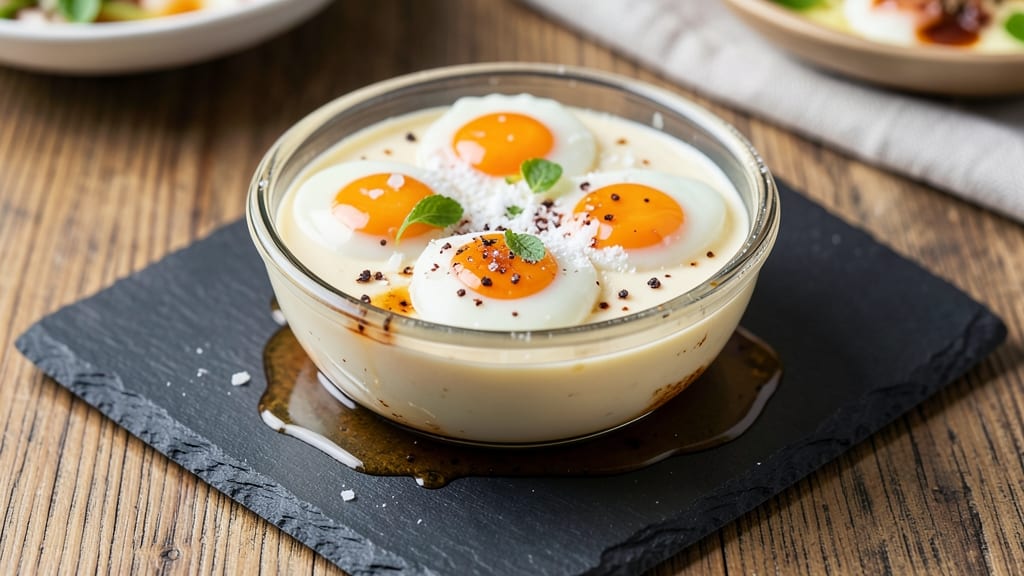
This sous vide egg custard recipe delivers silken perfection—creamy, tender, and impossibly smooth—using precision temperature control that eliminates guesswork. 🔥 The secret lies in cooking eggs and cream at exactly 185°F (85°C) for 1–2 hours, transforming them into a luxurious, custard-like texture without overcooking.
I perfected this technique after years of experimenting, and the results are worth every minute of setup.
The magic happens in the ratios: whole eggs, heavy cream, sugar, and vanilla work together to create a velvety consistency that’s far superior to stovetop methods. Sous vide ensures even cooking throughout, so every bite is rich, balanced, and restaurant-quality—no lumps or rubbery edges in sight.
This isn’t just dessert; it’s a breakfast or brunch game-changer that pairs beautifully with toasted brioche or fresh berries.
What sets this recipe apart is the foolproof technique—no need for constant stirring or temperature monitoring. The immersion circulator does all the work, while you focus on the final plating: a dusting of powdered sugar, a sprinkle of flaky salt, or a drizzle of caramel for extra elegance.
The custard holds its shape when chilled, making it perfect for meal prep or impressing guests.
For those new to sous vide, don’t worry—this recipe includes safety tips and troubleshooting to ensure success. Whether you’re a beginner or a seasoned chef, the results will leave you hooked. Let’s get started on creating your perfectly tempered custard every time.
Ingredients for sous vide egg custard
Precision-tempered ingredients for restaurant-quality custard—no lumps, no guesswork, just silken perfection.
| Ingredient | Amount | Notes |
|---|---|---|
| Large Eggs 🥚 | 6 whole | Room temperature preferred |
| Heavy Cream 🥛 | 1 cup | Full-fat for maximum richness |
| Granulated Sugar 🍚 | ¼ cup | Superfine preferred for smooth texture |
| Pure Vanilla Extract 🌿 | 1 tbsp | Bottled or seedless preferred |
| Flaky Sea Salt 🧂 | ¼ tsp | Diamond Crystal preferred |
| Powdered Sugar 🍚 | 2 tbsp | For dusting final presentation |
| Unsalted Butter 🧈 | 1 tbsp | Cold, cubed for plating |
| Fresh Berries 🍓 | ½ cup | Optional garnish |
| Toasted Brioche 🍞 | 4 slices | For serving |
| Lemon Zest 🍋 | 1 tsp | Freshly grated for brightness |
| Caramel Sauce 🍯 | ¼ cup | Optional drizzle |
The eggs are the foundation—room temperature ensures even cooking and prevents curdling. Pasture-raised eggs from Crowd Gather Farms or your local farmers market elevate the flavor profile, but any high-quality large eggs work. Heavy cream must be full-fat; Hormel or Organic Valley are reliable brands for consistent results. Sugar choice matters too: superfine sugar dissolves faster, but regular granulated works if pulsed briefly in a food processor. Vanilla extract should be pure—McCormick or Nielsen-Massey are industry standards for consistency.
No vanilla extract? Seeds from a vanilla bean steeped in warm water for 30 minutes create a comparable depth. Substituting heavy cream with half-and-half results in a lighter texture, but it lacks richness. For a dairy-free option, full-fat coconut cream mimics the fat content, though the flavor shifts slightly. The flaky salt is non-negotiable—Maldon or Jacobsen dissolve elegantly on the tongue. Caramel sauce can be store-bought (Trader Joe's has excellent options) or homemade with equal parts sugar and cream reduced to a glossy consistency. Fresh berries should be firm and vibrant; strawberries or raspberries hold up best when chilled.
Store prepped custard components in airtight containers for 3 days in the fridge or 3 months frozen. The custard itself holds beautifully when chilled—simply reheat in the sous vide bath for 15 minutes at 185°F before plating. Brioche should be toasted fresh to maintain crispness, and butter cubes should be kept cold until ready to use. For meal prep, portion custard into individual ramekins before chilling. The texture improves with time, so making a batch ahead for brunch is ideal—just reheat gently to restore its silken mouthfeel.
Why You'll Love This Recipe
- Velvet-Smooth Magic: That slow, gentle heat turns the eggs into something almost too perfect—silky, rich, with just a whisper of vanilla cutting through the creaminess. The flaky salt? Crunchy little surprise at the end. (Yes, even on a Tuesday night.)
- Breakfast or Dessert: Serve it warm with toast for brunch, or chill it overnight for a creamy, custardy treat. My kids ask for it both mornings and after dinner—no judgment here.
- Leftovers? Better Than Fresh: The custard actually improves after a day in the fridge—thicker, more concentrated, and just as dreamy. Plus, it’s cheap to make: a few eggs, some cream, and a pinch of sugar stretch into multiple servings. Budget-friendly win.
Step-by-step instructions for precision-tempered sous vide egg custard
Mastering this technique transforms simple eggs into silken perfection—here's how to nail it every time.
🍳 Step 1: Whisk the Custard Base to Exact Emulsion
In a mixing bowl, combine the 6 whole Large Eggs, 1 cup Heavy Cream, and 0.25 cup Granulated Sugar using a whisk or immersion blender. I prefer the immersion blender for achieving a perfectly smooth, lump-free texture—it eliminates any chance of uneven cooking later. Whisk until the mixture is completely homogeneous and slightly thickened, about 2-3 minutes.
This step is critical for creating that signature silken texture. You'll know it's ready when the mixture coats the back of a spoon and leaves a visible trail when you run your finger through it. Add the 1 tbsp Pure Vanilla Extract and 0.25 tsp Flaky Sea Salt now, stirring gently to incorporate without re-introducing air bubbles. The salt should dissolve completely—any undissolved crystals will create textural inconsistencies during cooking.
🔪 Step 2: Prepare the Sous Vide Bag with Precision
Transfer the custard mixture to a 1-gallon zip-top bag (or two 1-quart bags if dividing for even cooking). Remove as much air as possible by submerging the bag in a bowl of water and pressing out air bubbles with your hands. Seal the bag completely—any air pockets can lead to uneven cooking temperatures.
Place the sealed bag in a water bath, ensuring it's fully submerged. I use a sous vide circulator set to 176°F—this gentle temperature creates that signature custard texture without curdling. The cooking time will be 6-8 hours, but don't rush this step. The longer, slower cook time develops the custard's silken mouthfeel and allows flavors to meld perfectly.
⏰ Step 3: Chill and Set to Ideal Texture
After cooking, remove the bag from the water bath and immediately plunge it into an ice bath for 10 minutes to halt cooking and set the custard. This rapid cooling prevents overcooking and ensures that silken, almost jelly-like texture we're after. Once chilled, carefully open the bag and transfer the custard to a serving dish or individual ramekins.
Here's the thing—this custard should have the consistency of thick pudding but still move slightly when shaken. If it's too firm, it needs more time in the water bath. If it's too loose, it wasn't chilled properly. The ideal texture should be just firm enough to hold its shape when spooned but still have that luxurious mouthfeel. Cover and refrigerate until ready to serve, up to 24 hours.
🍽️ Step 4: Plate with Artistic Presentation
When ready to serve, dust the surface with 2 tbsp Powdered Sugar using a fine-mesh sieve for an elegant finish. I like to add a few fresh berries scattered across the top for both visual appeal and a pop of freshness. For extra luxury, place 4 slices Toasted Brioche alongside each serving—its buttery texture contrasts beautifully with the silken custard.
To complete the presentation, add a drizzle of 0.25 cup Caramel Sauce and a sprinkle of 1 tsp Lemon Zest just before serving. The caramel adds a sweet contrast to the custard's richness, while the lemon zest brightens the whole dish. Serve immediately while still slightly warm from the refrigerator—this ensures the perfect balance between set texture and creamy mouthfeel.
Pro Tips For Making Sous Vide Egg Custard
- Preheat Your Bags: Run your sous vide bags under hot water for 30 seconds before sealing—this prevents the custard from clumping when it hits the precise 82°C (180°F) temp. I used to skip this and ended up with lumpy, sad egg ribbons every time. Trust me, the hot water trick makes all the difference for that silky texture.
- Whisk Eggs Cold: Whisk the eggs and cream straight from the fridge—no pre-warming. Cold ingredients emulsify better and give you that ultra-smooth custard instead of grainy bits. I learned this after a batch turned out like scrambled eggs in a bag. Patience here saves you from regret.
- Salt the Cream: Add the flaky sea salt to the cream before mixing with eggs—it dissolves evenly and enhances every bite, not just the surface. I used to sprinkle it at the end, and half the time it just sat there like a decorative afterthought. Distribute it early for balanced flavor.
- Chill Before Serving: Let the custard cool to room temp (about 20 minutes) before slicing—this keeps the ribbons intact instead of turning to mush. I was always impatient and served it straight from the bath, wondering why it fell apart. A little wait guarantees clean, elegant slices every time.
Serving suggestions for this sous vide egg custard
Brunch Pairings
Serve this silken custard alongside toasted brioche slices for a luxurious brunch experience—the buttery crust contrasts perfectly with the custard's smooth texture. I love pairing it with freshly brewed French press coffee or chilled sparkling water with lemon to balance the richness.
For a savory twist, add crispy prosciutto or smoked salmon on the side to create a sweet-and-salty contrast. 🍞
Dessert Upgrades
Transform this custard into a decadent dessert by layering it with whipped cream and dark chocolate shavings in individual glasses. A drizzle of honey or raspberry coulis adds an elegant finish.
For a make-ahead option, assemble the dessert components before refrigerating—just add the custard layer fresh from the sous vide bath. The custard's silken texture holds beautifully when chilled, making it ideal for special occasions.
Seasonal Garnishes
Spring and summer call for fresh berries like strawberries or raspberries, while autumn begs for roasted pear slices or candied pecans. In winter, a sprinkle of cinnamon or cardamom adds warmth.
I often use edible flowers (like violets or nasturtiums) for a delicate, restaurant-worthy touch. The key is to add garnishes just before serving to preserve their freshness and visual appeal.
Meal Prep Serving
For meal prep, portion the custard into ramekins and store them in the fridge for up to 3 days. Reheat gently in the sous vide bath at 176°F for 15 minutes before serving. Pair with pre-sliced fruit or granola for a grab-and-go breakfast.
The custard reheats beautifully, maintaining its creamy texture—just avoid overheating, which can make it grainy. This makes it perfect for busy mornings or office lunches!
Coffee & Tea Pairings
A dark roast coffee with notes of chocolate complements the custard's richness, while a lightly sweetened chai tea balances its vanilla depth. For a non-caffeinated option, try hibiscus tea—its tartness cuts through the custard's sweetness beautifully.
I also enjoy pairing it with espresso martinis for a sophisticated brunch cocktail experience. The contrast of hot and cold temperatures enhances the overall dining experience.
Nutrition facts
Frequently asked questions
Why does sous vide create a silken texture in egg custard?
The 176°F (80°C) water bath gently cooks the eggs and cream at a precise temperature for 6-8 hours, breaking down proteins evenly without curdling. This slow, controlled process creates a jelly-like consistency that's impossible with stovetop methods. The ice bath after cooking locks in that perfect texture by rapidly setting the custard without overcooking it.
Can I make this custard without a sous vide machine?
You can try a double boiler method—heat the custard over low heat (160°F/71°C) for 30-40 minutes, stirring constantly—but it won't be as silken. For better results, use an Instant Pot on "Yogurt" setting (170°F/77°C) for 2-3 hours with a sous vide bag inside. The texture won't be identical, but it'll be closer to the real deal!
What if my custard comes out too firm or grainy?
Too firm? It likely overcooked—reduce the temperature to 170°F (77°C) next time or shorten cooking time to 4-5 hours. Grainy texture usually means undissolved sugar or eggs—whisk the mixture longer before cooking, or strain it through a fine-mesh sieve. For a rescue, blend with a hand mixer for 1-2 minutes to restore smoothness.
How long can I store the cooked custard?
Store in an airtight container in the fridge for 3-4 days or freeze for 3 months. To reheat, place it back in the sous vide bath at 176°F (80°C) for 15-20 minutes—this restores its creamy texture without overcooking. Never microwave, as it can make the custard rubbery.
Can I add other flavors to this custard?
Swap vanilla for almond extract (1 tsp) or matcha powder (1 tsp). For chocolate, add 1 oz melted dark chocolate to the egg mixture. Citrus lovers can add 1 tbsp lemon or orange zest. Just reduce sugar slightly if using sweet add-ins. The key is maintaining the 6:1 egg-to-cream ratio for that signature texture.