
Breakfast & Brunch
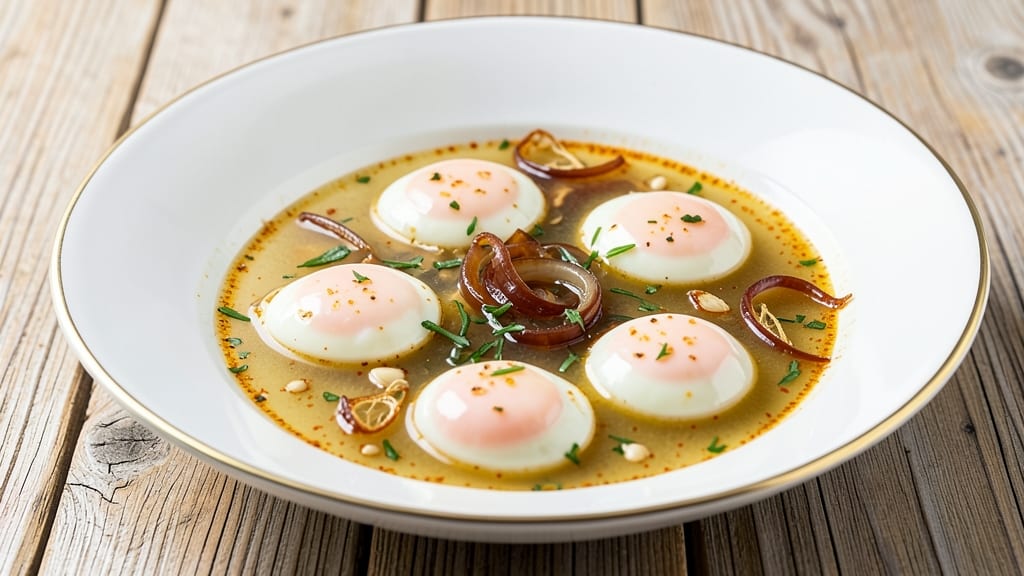
This silky ginger-turmeric broth with egg ribbons transforms traditional sipo egg into a lighter yet equally satisfying dish—without shrimp. The secret lies in slow-simmering aromatic broth that coaxes delicate egg ribbons into velvety perfection, while turmeric and ginger infuse warmth into every sip.
I developed this version after realizing shrimp isn't always accessible, and the result? A dish that still delivers that comforting Filipino soul-food experience with a fresh twist.
What makes this recipe special is the balance of simplicity and depth. You'll start with a fragrant broth built on ginger, turmeric, and garlic—classic Filipino flavors that create an inviting aroma before you even taste it.
The egg, poached in this spiced liquid, transforms into delicate ribbons that absorb the broth's rich, earthy notes. Unlike traditional versions, this adaptation uses chicken or vegetable broth as the base, making it equally satisfying whether you're following a pescatarian diet or simply prefer a lighter profile.
The result is a dish that's both elegant and comforting—silky egg ribbons floating in a golden broth that's fragrant with ginger and bright with turmeric. Each spoonful delivers layers of flavor without heaviness, making it perfect for breakfast or a light lunch.
The texture is what truly sets this apart: the egg ribbons remain tender yet hold their shape, while the broth clings to them like a luxurious embrace.
Serve it with steamed rice to soak up every last drop of that aromatic broth, or pair it with a simple side of sautéed greens for a complete meal.
This version proves that traditional dishes can be adapted without losing their essence—just with a fresh perspective. Let's make this silky, comforting bowl of goodness.
Ingredients for sipo egg recipe without shrimp
Ginger, turmeric, and egg ribbons—this silky broth needs just these simple ingredients.
| Ingredient | Amount | Notes |
|---|---|---|
| Large Eggs 🥚 | 8 whole | Freshly poached for ribbons |
| Fresh Ginger 🌿 | 2 tbsp | Finely grated, aromatic |
| Ground Turmeric 🌶️ | 1 tbsp | Bright yellow color |
| Garlic Cloves 🧄 | 4 cloves | Minced for aromatic base |
| Yellow Onions 🧅 | 1 whole | Thinly sliced for sweetness |
| Chicken Broth 💧 | 4 cups | Low-sodium preferred |
| Vegetable Oil 🫒 | 2 tbsp | For gentle simmering |
| Salt 🧂 | 1 tsp | Kosher or sea salt |
| Black Peppercorns 🌶️ | ¼ tsp | Freshly cracked |
| White Rice 🍚 | 1 ½ cups | Uncooked, long-grain |
| Green Onions 🧅 | 2 whole | Thinly sliced for garnish |
| Lemon Wedges 🍋 | 2 whole | For serving |
| Sesame Oil 🫒 | 1 tsp | For finishing aroma |
The ginger and turmeric are where the magic happens. Fresh ginger from the produce section (not the jarred kind) gives you that zingy aroma, while ground turmeric from Trader Joe's or Penzeys keeps things vibrant. I always double-check the turmeric's color—it should be bright yellow, not dull. The onions? Yellow onions add sweetness that balances the heat, but red onions work too if that's what you've got. For the broth, I prefer low-sodium chicken broth—it keeps the flavors pure without adding extra salt later. If you're making this vegetarian, swap in vegetable broth and add an extra pinch of salt to compensate.
No fresh ginger? Powdered ginger at half the amount gets you close, though it won't have the same punch. Running out of turmeric? Curry powder at one-third the amount works in a pinch, but you'll lose that signature golden color. The eggs should be freshly poached—room temperature eggs poach more evenly. For the rice, I use jasmine or long-grain white rice, but basmati works too if that's what's in your pantry. The sesame oil is non-negotiable for that final aromatic touch—Trader Joe's has the best-priced bottle, and it keeps for ages in the pantry.
This broth reheats beautifully—just warm it gently on the stove, and the egg ribbons stay silky. Store the broth separately from the rice in the fridge for up to 4 days. The eggs poach best fresh, but you can prep the broth ahead and poach them right before serving. For a quick meal, I often make a double batch of broth and freeze it in ice cube trays—just pop out what you need and reheat. The rice keeps for 3 days in the fridge, and the egg ribbons stay tender if you reheat them gently with a splash of broth.
Why You'll Love This Recipe
- One-Pan Magic: I swear by this recipe when I’m too tired to scrub pots—just crack eggs, toss in the onions and garlic, and let the turmeric and ginger work their magic. The eggs poach right in the pan, so clean-up is basically rinsing one sheet.
- Ginger-Garlic Glow-Up: That fresh ginger and garlic combo? It’s the secret weapon here. The ginger adds a bright, zesty kick, while the garlic caramelizes just enough to give these eggs a depth you won’t find in your average scrambled dish. Honestly, the turmeric ties it all together—warm, earthy, and just a little golden.
- Lunchbox Hero: Between us, this is my go-to for quick lunches. Make a big batch on Sunday, and you’ve got a protein-packed meal for the week—no sad desk salads here. The eggs hold up well, and the onions add crunch even when reheated. (Yes, even on a Tuesday night.)
- Budget Breakthrough: Eggs, onions, and ginger? Check. That’s it for the heavy hitters, and they’re all pantry staples. I’ve made this for under $3 per serving, and it still feels like a restaurant-worthy dish. Plus, leftovers taste just as good cold—perfect for packed lunches or a late-night snack.
Step-by-step instructions for silky ginger-turmeric broth with egg ribbons
Here's how to create this vibrant, comforting dish with perfectly poached egg ribbons and aromatic broth.
Prepare the Ginger-Turmeric Base
Heat the 2 tablespoons vegetable oil in a large pot over medium heat. Add the 1 whole yellow onions, thinly sliced, and cook for 5 minutes until softened and translucent. This step develops the sweetness of the onions.
Add the 4 cloves garlic cloves, minced, and cook for 30 seconds until fragrant. Immediately stir in the 2 tablespoons fresh ginger and 1 tablespoon ground turmeric. The turmeric will infuse the oil with its signature golden hue. Cook for 1 minute until the raw aroma disappears—this ensures you capture all the aromatic oils without bitterness.
Build the Flavorful Broth
Pour in the 4 cups chicken broth and bring to a gentle simmer. Add the 1 teaspoon salt and 0.25 teaspoon black peppercorns, freshly cracked. Let the broth simmer uncovered for 15 minutes to allow the flavors to meld. You'll notice the liquid deepens in color and aroma—this is where the magic happens.
While the broth simmers, prepare the 1.5 cups white rice by rinsing it under cold water until the water runs clear. This removes excess starch and prevents gummy rice. Drain well and set aside.
Poach Egg Ribbons for Delicate Texture
Bring a separate pot of water to a gentle simmer—not a rolling boil. For each of the 8 whole large eggs, crack them into individual ramekins or small bowls. The gentle simmer prevents the eggs from curling up.
Lower each egg into the simmering water using a slotted spoon. Poach for 3 minutes for runny yolks or 4 minutes for slightly firmer yolks. Once done, transfer the eggs to an ice bath for 1 minute to stop the cooking process. This makes them easier to handle and creates those beautiful ribbons when sliced.
Cook the Rice and Assemble
In a separate pot, bring 2 cups fresh water to a boil. Add the rinsed 1.5 cups white rice and reduce heat to low. Cover and simmer for 15 minutes, then turn off the heat and let it steam for another 5 minutes. Fluff the rice gently with a fork.
To serve, place a portion of rice in each bowl. Ladle the ginger-turmeric broth over the rice, then carefully slice each poached egg into ribbons and arrange them on top. Drizzle with 1 teaspoon sesame oil and garnish with thinly sliced green onions and lemon wedges. The bright citrus cuts through the richness of the dish beautifully.
Finish with Fresh Aromas
Let the dish sit for 2 minutes before serving to allow the flavors to meld. The sesame oil adds a nutty aroma that complements the ginger and turmeric perfectly. The lemon wedges not only add freshness but also help balance the rich broth.
Serve immediately while the broth is hot and the egg ribbons are still silky. This dish is all about the contrast—creamy eggs against the vibrant broth, with each bite offering a perfect balance of textures and flavors. Enjoy your homemade sipo egg recipe!
Pro Tips For Making Sipo Egg Recipe Without Shrimp
- Mince That Ginger: Use a sharp knife and chop the ginger into a paste—not just slices—so it melts into the oil instead of sitting as chunks. I learned this the hard way when my first batch had uneven texture because the ginger stayed too whole.
- Toast the Spices: Bloom the turmeric and garlic in hot oil for 30 seconds until fragrant—this deepens their flavor and cuts bitterness. Skip this, and your eggs will taste flat, no matter how fresh the ingredients.
- Whisk Eggs Like Mad: Beat the eggs thoroughly until the yolks and whites are uniform, then add a splash of warm water (1-2 tbsp) to make them silky. Lumpy eggs mean uneven cooking, and no one wants a dry, rubbery center.
- Salt the Water: Add a pinch of salt to the water you’ll use to poach or steam the eggs—it helps them set faster and keeps the whites from turning cloudy. Trust me, it’s a game-changer for that clean, bright finish.
Essential equipment for this recipe
Essential Pot Selection
For this recipe, I recommend using a wide, heavy-bottomed pot with at least a 4-quart capacity—like the All-Clad Stainless Steel Stockpot or Le Creuset Dutch Oven. The wide base prevents boiling over while simmering the broth, and the heavy material ensures even heat distribution.
If you don’t have one, a stainless steel or enameled cast iron pot works just as well. Avoid non-stick pots—they can’t handle the prolonged simmering without risking damage. 🌡️
Poaching Equipment
A slotted spoon and ramekins or small bowls are essential for poaching the eggs. The ramekins help crack the eggs cleanly, while the slotted spoon lets you transfer them to the ice bath without breaking.
For the ice bath, use a large bowl that can hold the poached eggs plus ice cubes—I like to use a stainless steel mixing bowl from OXO because it’s durable and easy to clean.
A fine-mesh strainer also comes in handy if you want to strain the broth for extra clarity.
Rice Cooking Tools
Cooking perfect rice requires a fine-mesh strainer and a rice cooker or heavy-bottomed pot. I prefer a Zojirushi rice cooker for hands-off cooking, but a stainless steel pot with a tight-fitting lid works too. If you’re using a pot, a wooden spoon helps prevent scratching the bottom.
For fluffing the rice, a fork or rice paddle is ideal. Pro tip: A measuring cup with leveling edges ensures accurate rice portions every time. 🍚
Garnish and Finishing
For the final touches, you’ll need a sharp chef’s knife and cutting board to slice the green onions. A microplane is perfect for grating fresh ginger if you prefer finely textured pieces. For the sesame oil, a small squeeze bottle makes drizzling easier.
If you’re serving in bowls, wide, shallow bowls (like Corelle stoneware) help showcase the dish beautifully. Don’t forget a lemon juicer if you want to express fresh lemon juice for extra brightness. ✨
Optional but Helpful
A thermometer (like the Thermoworks Thermapen) ensures your broth stays at a gentle simmer—180–190°F is ideal for poaching eggs without overcooking. A fine-mesh sieve lets you strain the broth for a silky texture if you prefer.
For meal prep, glass storage containers with tight lids keep the broth and rice fresh for up to 4 days in the fridge. If you’re freezing, quart-sized freezer bags work best for portion control. 💡
Nutrition facts
Frequently asked questions
Can I substitute shrimp with another seafood in this recipe?
While shrimp is traditional, you can use squid rings, mussels, or even clams for a similar umami boost. Simply add ½ cup of your chosen seafood to the broth during the final 5 minutes of simmering. Squid works especially well as it cooks quickly and absorbs the ginger-turmeric flavors beautifully.
Why does my broth look cloudy instead of golden?
The golden color comes from properly infused turmeric and ginger. If your broth looks cloudy, you may have used too much ginger (which can make it murky) or didn't simmer long enough. For a clearer broth, strain it through a fine-mesh sieve after simmering, or reduce the ginger slightly to 1 tbsp. The flavor will still be delicious!
How do I make this recipe vegetarian? Swap the chicken broth for vegetable broth and add 1 tsp soy sauce or ½ tsp miso paste to the broth for depth. For extra umami, stir in 1 tbsp tomato paste when building the base. The egg ribbons will still be the star, but the broth gains a savory richness.
Can I use frozen eggs for this recipe?
Fresh eggs are ideal for perfect ribbons, but if you must use frozen, thaw them overnight in the fridge first. Frozen eggs release more water when poached, which can dilute the broth. For best results, pat the thawed eggs dry with a paper towel before poaching. The texture won't be quite as silky, but it'll still be delicious!
What's the best way to reheat leftovers?
Reheat the broth separately in a saucepan over low heat until warm. For the egg ribbons, gently warm them in the broth for just 1-2 minutes—they'll become rubbery if overcooked. The rice can be reheated in the microwave with a splash of water. Never reheat the eggs alone, as they dry out quickly.