
Breakfast & Brunch
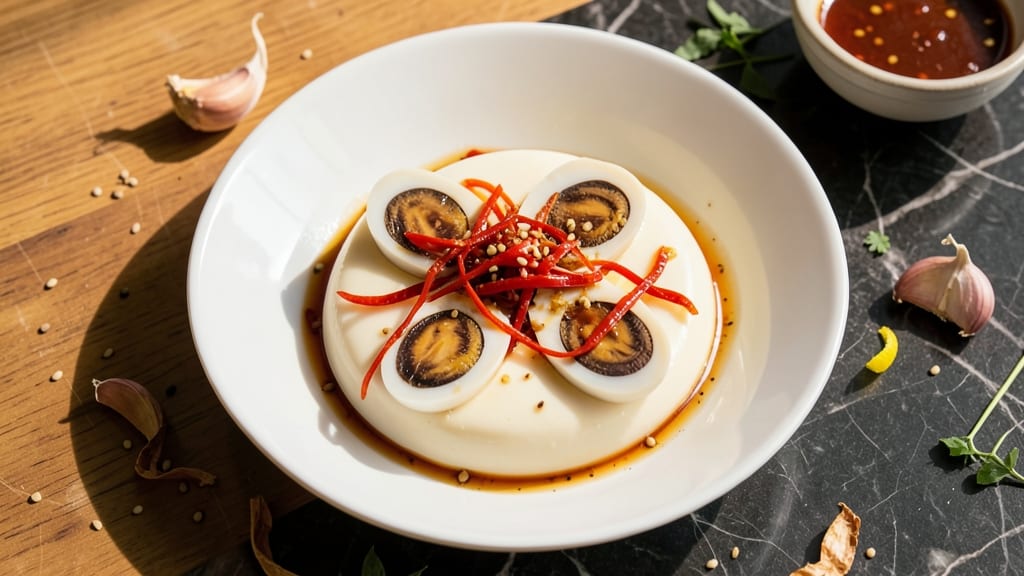
This silken tofu and century egg recipe delivers a bold umami-packed contrast that’s both traditional and surprisingly quick to prepare. The delicate, custard-like texture of silken tofu pairs perfectly with the salty, creamy richness of century eggs—creating a dish that’s as visually striking as it is flavorful.
I’ve refined this recipe to balance textures and flavors in just 20 minutes, making it ideal for brunch or a light vegetarian meal.
The secret lies in the preparation: silken tofu is gently heated to maintain its silky consistency, while century eggs are carefully peeled and sliced to reveal their marbled, jelly-like interior. A light broth or chili oil sauce ties everything together, enhancing the dish’s natural umami without overpowering it.
This recipe stays true to its Chinese roots while offering a modern, approachable twist for home cooks.
What you’ll end up with is a harmonious plate of silky tofu and century eggs, their contrasting textures and flavors complementing each other beautifully. The dish is light yet satisfying, perfect for serving with steamed rice, pickled vegetables, or a simple side salad.
It’s a vegetarian-friendly masterpiece that feels special enough for guests but easy enough for weeknight dinners.
Whether you’re introducing someone to Chinese cuisine or looking for a creative vegetarian dish, this recipe delivers. The combination of silken tofu and century eggs is unforgettable—once you try it, you’ll want to make it again and again.
Ingredients for silken tofu with century egg
Silken tofu's delicate texture meets century eggs' bold umami in this vegetarian showstopper.
| Ingredient | Amount | Notes |
|---|---|---|
| Silken Tofu 🧀 | 12 oz | Unopened package preferred |
| Century Eggs 🥚 | 4 whole | Peeled and sliced lengthwise |
| Light Soy Sauce 🥄 | 2 tbsp | Japanese or Chinese preferred |
| Sesame Oil 🫒 | 1 tbsp | Toasted for aroma |
| Chili Oil 🌶️ | 1 tbsp | Store-bought or homemade |
| Garlic Cloves 🧄 | 3 cloves | Minced for sauce |
| Fresh Ginger 🌿 | 1 tbsp | Grated, for brightness |
| Green Onions 🧅 | 3 whole | Thinly sliced, for garnish |
| White Rice Vinegar 🍶 | 1 tbsp | For balance |
| Granulated Sugar 🍬 | ½ tbsp | For subtle sweetness |
| Vegetable Oil 🫒 | 1 tbsp | For gentle cooking |
| Salt 🧂 | ½ tsp | Kosher or sea salt |
| Black Pepper 🌶️ | ¼ tsp | Freshly ground |
| Steamed White Rice 🍚 | 2 cups | For serving |
Century eggs are the star here—look for plump, marbled eggs with intact shells at Asian markets or specialty stores. H Mart or 99 Ranch Market carry them year-round, but if you can't find them, substitute preserved duck eggs (though texture differs). The silken tofu should be unopened and chilled—once opened, it loses its silky texture within hours. For authentic flavor, use Japanese Kikkoman soy sauce alongside Chinese light soy for depth. Fresh ginger is non-negotiable—dried lacks the bright, citrusy punch this dish needs.
No century eggs? Preserved quail eggs work in a pinch, though they're smaller. Substitute chili oil with Sichuan peppercorn oil for a numbing kick. The garlic and ginger can be swapped for 1 tbsp fresh cilantro stems if you're out, though flavor shifts slightly. For the rice vinegar, rice wine vinegar is fine, but reduce to 0.75 tbsp—it's more acidic. The sugar can be omitted entirely if you prefer a sharper contrast, but the 0.5 tbsp balances the saltiness beautifully. If you're using store-bought chili oil, check for MSG-free labels—some brands add it.
Century eggs keep unpeeled in the fridge for up to 2 weeks, but once peeled, they oxidize quickly—use within 2 days. Store peeled eggs submerged in water in an airtight container. Silken tofu lasts 5 days unopened in the fridge; once opened, portion into ice cube trays and freeze for 3 months. The chili oil and sesame oil should be kept in dark glass bottles in a cool pantry—they degrade fast when exposed to light. Make the sauce components separately and store them in small jars for up to 1 week.
Why You'll Love This Recipe
- Five-Ingredient Magic: I swear by this recipe when I’m too tired to chop. Silken tofu blends smooth, century eggs add that je ne sais quoi texture, and a splash of sesame oil turns bland into bold—no fancy skills needed.
- Umami Bomb: That first bite? The century egg’s salty, creamy yolk mixed with silken tofu’s silkiness, all wrapped in light soy and chili oil heat—it’s the kind of flavor that makes you pause mid-bite. Honestly, I’ve never met a tofu dish this satisfying.
- Lunchbox Hero: Pack this for work or school—it holds up perfectly in containers. The tofu stays creamy, the eggs keep their texture, and the sesame-chili dressing stays vibrant. My kid brings it every Friday, no complaints.
- Budget Luxury: Century eggs might sound fancy, but a pack lasts forever. Silken tofu’s cheap, and a little sesame oil goes a long way. I make this twice a month, and it always feels like a restaurant meal without the price tag. (Yes, even on a Tuesday night.)
Step-by-step instructions for silken tofu with century egg
Master this umami-packed dish with precise timing and technique for perfect texture contrast.
Prepare the Century Eggs and Silken Tofu
Begin by peeling the 4 whole century eggs using a small spoon to carefully remove the outer membrane. Slice each egg lengthwise into quarters, preserving the yolk's distinctive texture. Place the sliced eggs in a small bowl and set aside. For the 12 oz silken tofu, drain any excess liquid from the package and gently press it through a fine-mesh strainer to remove surface moisture—this ensures better texture when cooked.
Real talk: Century eggs have a strong, acquired flavor. The key is balancing them with the delicate silken tofu. If you're new to century eggs, start with just 2 slices per serving and adjust to taste. The tofu should remain unbroken during pressing—if it crumbles, work gently with a rubber spatula to maintain its silky consistency.
Create the Umami-Packed Sauce
In a small saucepan, combine 1 tbsp vegetable oil, 3 cloves minced garlic cloves, and 1 tbsp fresh ginger over medium-low heat. Cook for 2 minutes until the garlic turns golden and fragrant—don't let it brown or it'll turn bitter. Add 1 tbsp sesame oil and 1 tbsp chili oil, stirring constantly for 30 seconds to meld the flavors.
Next, pour in 2 tbsp light soy sauce, 1 tbsp white rice vinegar, and 0.5 tbsp granulated sugar. Simmer for 3 minutes until the mixture reduces slightly and coats the back of a spoon. Taste and adjust seasoning with 0.5 tsp salt and 0.25 tsp black pepper—this sauce should be bold but balanced, cutting through the richness of both tofu and century eggs.
Cook the Silken Tofu
Cut the pressed 12 oz silken tofu into ½-inch cubes for even cooking. Heat a nonstick skillet over medium heat and add the tofu cubes in a single layer. Cook undisturbed for 2-3 minutes until the bottoms develop a light golden crust. Flip carefully and cook another 2-3 minutes until all sides are gently seared but still tender.
Transfer the tofu to a plate and set aside. Here's the thing—silken tofu is delicate. Overcooking turns it rubbery, so watch closely. You're aiming for just enough color to indicate it's heated through without losing its silky texture. If the pan starts smoking, reduce the heat immediately to prevent burning.
Assemble the Dish
Return the skillet to low heat and add the cooked tofu cubes back in. Pour the prepared sauce over the tofu and toss gently to coat evenly. Cook for 1 additional minute, allowing the flavors to meld. Remove from heat and stir in the sliced century eggs, being careful not to overmix—their unique texture should remain intact.
Divide the 2 cups steamed white rice among serving plates. Top each portion with the tofu and century egg mixture, arranging the century egg slices artistically on top. Garnish with 3 whole green onions, thinly sliced, for freshness and visual appeal. The contrast of creamy tofu, rich century eggs, and fragrant rice creates an unforgettable bite.
Pro Tips For Making Silken Tofu With Century Egg
- CHOP CENTURY EGGS THIN: Century eggs split like overripe fruit if you’re not careful. Slice them just before adding to the dish—no more than ¼-inch thick—and keep them submerged in cold water until the last second. The gelatinous yolk will hold together better, and the dish won’t look like a science experiment gone wrong.
- GENTLY FOLD TOFU: Silken tofu turns to mush when manhandled. Use a rubber spatula and fold it just enough to distribute the sauce—think marbling, not blending. If you’re worried about breaking it up, press the tofu lightly through a fine-mesh strainer first (yes, even silken tofu) for a cleaner texture.
- SAVE SESAME OIL FOR FINISHING: Add sesame oil after the dish leaves the heat—it burns faster than you’d think. A single teaspoon drizzled at the end amplifies the aroma without turning your pan into a smoky disaster. (I learned this the hard way when my first batch tasted like charred nuts instead of toasted sesame.)
- DILUTE CHILI OIL FIRST: Undiluted chili oil can overwhelm the delicate balance of this dish. Mix 1 teaspoon into 2 tablespoons of warm water or light soy sauce before adding—this lets you control the heat and distribute it evenly. Trust me, your taste buds will thank you when the flavors play nice instead of fighting.
Wine and beer pairings for this dish
Rice Wine Pairings
For this dish, I reach for a dry Chinese Shaoxing wine—its nutty, slightly sweet profile mirrors the century egg's umami depth while cutting through the tofu's silkiness. A chilled glass of Martell Cordon Bleu (a classic Chinese rice wine) elevates the meal without overpowering the delicate flavors.
Serve it slightly chilled to preserve its crispness and let it refresh your palate between bites. 🍷
Light Beer Options
A crisp Japanese lager like Asahi Super Dry or Sapporo complements the dish's clean flavors without competing. The subtle malt sweetness balances the century egg's saltiness, while the effervescence cleanses the palate.
For a local twist, try a light American wheat beer—its citrus notes harmonize beautifully with the ginger and garlic in the sauce. Keep the beer well-chilled to enhance its refreshing quality.
Spiced Tea Balance
If you prefer non-alcoholic pairings, a jasmine green tea infused with a pinch of star anise bridges the dish's savory and umami elements. Brew it lightly to avoid bitterness, then serve warm or iced.
The floral notes of jasmine tea contrast the century egg's intensity while the star anise adds a subtle warmth that mirrors the chili oil's heat. 💫
Regional Wine Twists
In Cantonese cuisine, where this dish originates, a lightly sparkling Huadiao Jiu (a Chinese sparkling wine) is traditional. Its effervescence and citrus undertones mirror the dish's bright, fresh components.
For a Sichuan-inspired version, pair with a dry Riesling—its acidity stands up to the bold flavors, while its slight sweetness complements the century egg's richness.
Post-Meal Digestif
End the meal with a small cup of Chinese herbal tea, like pu-erh or goji berry tea, to aid digestion and balance the dish's richness. The earthy notes of pu-erh contrast the century egg's umami, while goji berry tea adds a gentle sweetness.
Brew the tea strong and serve it warm—it’s a traditional way to close a Chinese meal with harmony. ✨
Nutrition facts
Frequently asked questions
What makes century eggs so unique in this dish?
Century eggs have a distinctive marbled, jelly-like interior with a salty, umami-rich flavor that develops from their long preservation process. Their creamy texture contrasts beautifully with silken tofu's delicate silkiness, while their bold taste needs balancing with the dish's lighter components like ginger and rice vinegar.
Can I substitute silken tofu with regular firm tofu?
Regular firm tofu won't work here—it's too dense and will turn rubbery when cooked. Silken tofu's custard-like texture is essential for the dish's delicate balance. If you must substitute, try extra-firm tofu pressed for 30 minutes and cut into thin slices, but expect a firmer bite. The recipe relies on silken tofu's natural tenderness.
How do I properly peel a century egg?
Start by cracking the shell and peeling away the outer membrane (the black, rubbery layer) using your fingers or a spoon. The egg inside will have a dark brown shell—crack this gently to reveal the marbled interior. Rinse briefly under cold water to remove any residue, then slice lengthwise. Work quickly to prevent oxidation of the exposed yolk.
What's the best way to store leftover century eggs?
Store peeled century eggs in an airtight container submerged in water in the fridge for up to 2 days. For longer storage, freeze them in a single layer before transferring to a freezer bag (use within 1 month). The texture changes slightly after freezing, but they're still safe to eat. Never store them dry—they oxidize quickly.
Can I make this dish spicier?
Increase the chili oil to 2 tbsp and add ½ tsp red pepper flakes to the sauce. For heat lovers, stir in 1 tsp chili crisp at the end. Balance the extra heat with 1 extra tbsp sugar to prevent overpowering the dish. Adjust gradually—century eggs are already salty, so go slow with additional seasoning.