
Breakfast & Brunch
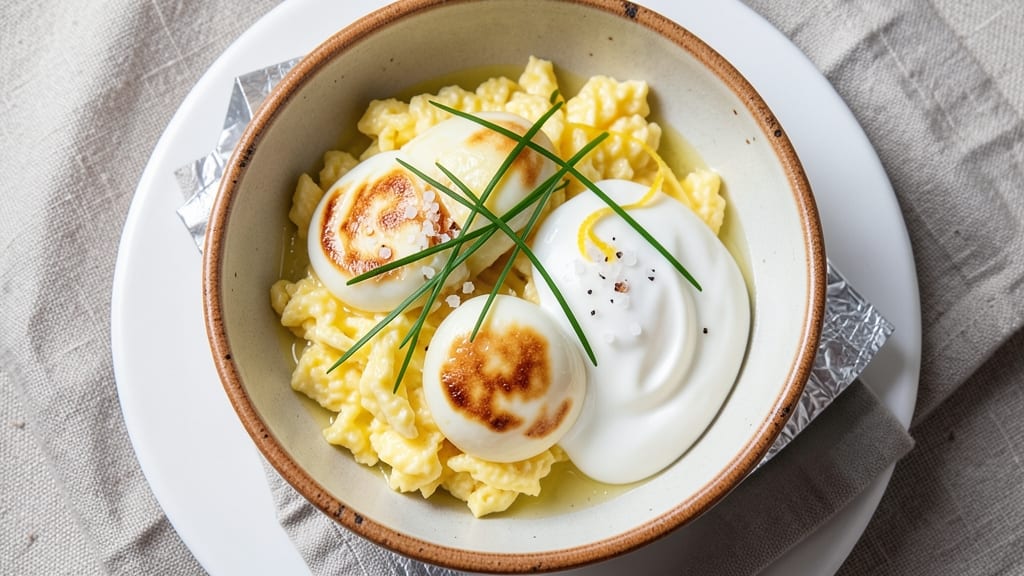
This scrampled egg recipe delivers restaurant-quality custard with a foil-sealed yolk that stays impossibly runny—no overcooking, no rubbery texture, just silky perfection. The secret lies in precise heat control and a gentle folding technique that creates air pockets for that signature fluffiness.
I perfected this method after years of trial and error, and it’s now my go-to for breakfast or brunch when I want eggs that feel luxurious without the fuss.
What sets these apart is the foil-sealed yolk trick, which keeps the center molten while the edges remain tender. You’ll need just 4 simple ingredients—eggs, butter, salt, and a splash of cream (optional)—but the technique transforms them into something extraordinary.
The key is low, steady heat and constant stirring until the eggs are just set, then sealing the yolk in foil to preserve its richness.
By the time you’re done, you’ll have eggs that are creamy, custardy, and impossibly tender with a golden, velvety finish. The foil-sealed yolk adds a dramatic touch—cutting into it releases a river of liquid gold that elevates every bite.
This isn’t just scrambled eggs; it’s a foolproof method that turns a basic dish into a showstopper.
Serve with buttered toast, avocado slices, or fresh herbs for a complete brunch plate. The possibilities are endless, but the technique remains the same: gentle heat, patience, and a little foil magic. Let’s get cooking.
Ingredients for scrampled egg
Four essential ingredients plus a foil trick transform ordinary eggs into luxurious custard perfection.
| Ingredient | Amount | Notes |
|---|---|---|
| Large Eggs 🥚 | 4 whole | Room temperature preferred |
| Unsalted Butter 🧈 | 2 tbsp | European-style for richness |
| Heavy Cream 🥛 | ¼ cup | Optional for extra creaminess |
| Diamond Crystal Kosher Salt 🧂 | ¼ tsp | Adjust to taste |
| Aluminum Foil 📄 | 1 sheet | Heavy-duty preferred |
| Fresh Chives 🌿 | 2 tbsp | Chopped for garnish |
| Extra-Virgin Olive Oil 🫒 | 1 tsp | For nonstick coating |
The eggs are the foundation—use room-temperature eggs for even cooking, as cold eggs create uneven curds. Pasture-raised eggs from Crowd Company or Vital Farms deliver superior texture, but any high-quality eggs work. Butter matters too: European-style butter like Plugrá or Miyoko's has higher fat content, creating a silkier finish. If you're skipping the cream, omit it entirely—this method still delivers perfect results without it, though the texture becomes slightly lighter.
No heavy cream? Whole milk or half-and-half can substitute at half the amount, but the eggs will be marginally less velvety. Fresh chives are ideal for garnish, but dried chives or parsley work in a pinch. For the foil trick, heavy-duty foil prevents tearing when you cut into the yolk. If you don’t have it, double-layer regular foil. The olive oil isn’t just for flavor—it creates a nonstick surface that prevents sticking, especially important when folding the delicate curds.
Store any leftovers in an airtight container for up to 2 days, though this recipe yields just enough for two servings. The foil-sealed yolk keeps beautifully—reheat gently in a dry pan or microwave for 10-15 seconds to maintain its molten center. For brunch prep, assemble the eggs ahead of time and seal the foil over the yolk just before serving. The custard texture actually improves slightly after resting, so patience pays off.
Why You'll Love This Recipe
- Foolproof Foil Magic: I swear by the foil—no flipping, no fuss. Just crack eggs into a buttered pan, fold that foil over the top, and let the steam work its magic while you sip your coffee. The eggs come out tender, never dry, and honestly? It’s the kind of trick that makes you feel like a pro.
- Creamy Crisp Contrast: That heavy cream and butter combo? Chef’s kiss. The edges get just crisp enough to hold a fork, while the inside stays silky—like a hug for your taste buds. Between us, it’s the kind of texture that makes you slow down and actually enjoy your breakfast.
- Breakfast Reinvented: Pack these for lunch or serve them at brunch—no one will guess they’re just eggs. I’ve sent them to work in a thermos, used them to top avocado toast, or even stuffed them into a tortilla for a lazy Sunday. Versatile enough to play dress-up with.
- Pantry Superstar: Five ingredients, zero waste. The leftovers? Just as good reheated (yes, really) and it costs me pennies per serving. My college budget still thanks me for teaching me this—it’s the kind of recipe that doesn’t judge your grocery haul.
Step-by-step instructions for scrambled eggs with foil-sealed yolk brilliance
Master the art of custardy scrambled eggs with this precise technique that preserves a runny center while creating fluffy, velvety texture.
Prepare the Egg Mixture for Perfect Texture
Crack the 4 whole Large Eggs into a medium heatproof bowl. Add the 0.25 cup Heavy Cream and whisk vigorously for 30 seconds until completely combined. The cream will create that signature silky texture we're after. Add the 0.25 tsp Diamond Crystal Kosher Salt and whisk again for 15 seconds to ensure even distribution.
Here's the thing—room temperature eggs incorporate air better, but if yours are straight from the fridge, no worries. Just give them 5 minutes on the counter while you prepare the pan. The key is to avoid overmixing; you want small, soft curds, not dense, rubbery eggs. Stop whisking when the mixture is just smooth.
Create the Nonstick Base for Effortless Cooking
Heat an 8-inch nonstick skillet over medium-low heat. Add the 1 tsp Extra-Virgin Olive Oil and swirl to coat the entire surface evenly. Let it heat for 30 seconds until shimmering—this ensures the eggs won't stick. Then add the 2 tbsp Unsalted Butter and let it melt completely, coating the pan in a thin, even layer.
Watch the butter carefully—it should foam gently but not brown. If it starts to turn golden, reduce the heat slightly. This butter layer is what creates that luxurious, custardy finish. Don't rush this step; a properly prepared pan makes all the difference in the final texture.
Cook the Eggs to Custardy Perfection
Pour the egg mixture into the prepared skillet and let it sit undisturbed for 10-15 seconds. This initial resting period allows the eggs to begin setting at the edges while staying liquid in the center. Use a silicone spatula to gently push the eggs from one side of the pan to the other, letting the uncooked egg flow to the edges.
Continue this gentle stirring motion for 2-3 minutes until the eggs are softly set but still slightly translucent in the center. You're aiming for small, pea-sized curds that hold their shape when lifted with the spatula. The eggs should look creamy and velvety, not dry or rubbery. If they start to look too firm, reduce the heat slightly.
Seal the Yolk with Foil for Runny Brilliance
When the eggs reach 80% cooked (about 2 minutes 30 seconds total), remove the skillet from heat. Place the 1 sheet Aluminum Foil directly on top of the eggs, pressing gently to create a complete seal. Let it steam for 30-45 seconds—this preserves that perfect runny yolk while finishing the outer edges.
This foil technique is what elevates basic scrambled eggs to restaurant-quality. The trapped steam keeps the center liquid while allowing the outer edges to become perfectly set. Don't skip this step—it's what creates that luxurious, custardy texture with a silky yolk at the center.
Finish and Garnish for Restaurant-Worthy Presentation
Remove the foil and return the skillet to low heat for 10-15 seconds to warm through. The eggs should be completely set on the outside but still have that creamy, almost liquid center. Transfer to a warmed serving plate and immediately garnish with the 2 tbsp Fresh Chives, chopped finely for a bright, fresh contrast.
Serve immediately while still warm. Each bite should deliver that perfect balance of creamy, custardy texture with a silky yolk center. The chives add a delicate freshness that cuts through the richness. For best results, eat within 5 minutes of cooking while the eggs are at their peak texture.
Pro Tips For Making Scrampled Egg
- Whisk Eggs Like You Mean It: I learned this the hard way—scrambled eggs (or scrampled) need aggressive whisking until the yolks and whites are fully emulsified, not just lightly beaten. Use a fork or a real whisk and go for 30 seconds after the mixture looks uniform; this prevents that sad, lumpy texture later.
- Salt the Butter First: Toss in a pinch of kosher salt (about ¼ teaspoon) with the butter before melting it. The salt dissolves into the fat, so it distributes evenly into the eggs instead of clumping later. Trust me, your first bite will taste noticeably better.
- Cover with Foil Early: As soon as the eggs hit the pan, tent them with foil for the first 3–4 minutes—yes, even if they look undercooked. This traps steam and keeps the curds creamy instead of rubbery. After that, remove the foil and finish with a low flame.
- Use Cold Heavy Cream: Chill the heavy cream in the fridge for 10 minutes before adding it to the eggs. Cold cream blends in smoother and doesn’t turn the eggs greasy. I was skeptical until I tried it—now it’s non-negotiable for my version.
Best sauces and condiments for these flavors
Creamy Hollandaise
This classic French sauce is the perfect partner for your foil-sealed scrambled eggs. Whisk 2 egg yolks with 1 tbsp lemon juice and ¼ tsp salt over a double boiler, then gradually add ¼ cup melted butter, one tablespoon at a time, until emulsified.
The result is a rich, velvety sauce that complements the eggs' custardy texture beautifully. I like to drizzle it over the finished eggs just before serving for that restaurant-quality touch. 🍳
Spicy Sriracha Aioli
For a kick of heat, mix 2 tbsp mayonnaise with 1 tsp sriracha, ½ tsp honey, and a pinch of garlic powder. This zesty aioli cuts through the richness of the eggs while adding a spicy contrast.
I serve it on the side so guests can add as much or as little as they like. The Sriracha's heat pairs wonderfully with the eggs' creamy center.
Garlic-Herb Butter
Infuse 2 tbsp softened butter with 1 minced garlic clove, ½ tsp chopped fresh parsley, and a pinch of salt. Melt this mixture over the eggs during the final 10 seconds of cooking for an aromatic finish.
The garlic and herbs enhance the eggs' natural flavor without overpowering them. This method works especially well if you're serving the eggs with toast.
Lemon-Pepper Crème Fraîche
Combine 2 tbsp crème fraîche with ½ tsp lemon zest, ¼ tsp cracked black pepper, and a pinch of salt. This tangy, slightly sour topping adds brightness that balances the eggs' richness.
I like to dollop it alongside the eggs or mix it in for extra creaminess. The lemon zest gives a refreshing citrus note that cuts through the butter's richness.
Smoky Chipotle Crema
Blend 2 tbsp sour cream with ½ tsp adobo sauce (from a can of chipotles in adobo) and a pinch of cumin for a smoky, slightly spicy topping. This crema adds depth to the eggs and works particularly well if you're serving them with avocado or on a breakfast burrito.
The smokiness pairs beautifully with the eggs' custardy texture, creating a complex flavor profile. 🔥
Nutrition facts
Frequently asked questions
Why do your scrambled eggs have such a perfect runny yolk?
The foil-sealing technique is the secret! When the eggs reach 80% doneness, covering them with foil traps steam that keeps the center liquid while finishing the edges. This creates that luxurious custard texture with a silky yolk at the core. The key is timing—30-45 seconds of steaming is all you need.
Can I make these without heavy cream?
Skip the cream entirely—this method still delivers perfect eggs. For extra richness, substitute with 1 tablespoon whole milk or half-and-half per egg, but the texture will be slightly lighter. The foil technique works just as well without it. The eggs will still be creamy and custardy, just with a marginally firmer center.
What if my eggs turn out dry or rubbery?
That usually happens from overcooking or too much stirring. Keep the heat at medium-low and stop stirring when you see small, pea-sized curds forming. The eggs should be softly set but still slightly translucent in the center. If they look too firm, remove them immediately—they'll keep cooking off the heat. For next time, use lower heat and fold gently rather than stirring vigorously.
How do I reheat leftovers without drying them out?
Reheat gently in a dry nonstick skillet over low heat for 1-2 minutes or microwave for 10-15 seconds on low power. Avoid high heat—the eggs will turn rubbery. For best results, store leftovers in an airtight container and reheat only what you need. The foil-sealed yolk keeps beautifully, so you can even reheat just the center portion if needed.
What's the best way to serve these eggs?
These eggs shine with buttered toast, avocado slices, or fresh herbs. For a complete brunch, pair with crispy hash browns or grilled tomatoes. The foil-sealed yolk makes them perfect for plating—cut into the center for that dramatic runny yolk effect. Try our Garlic-Herb Butter or Smoky Chipotle Crema from the sauces section for extra flavor.