
Breakfast & Brunch
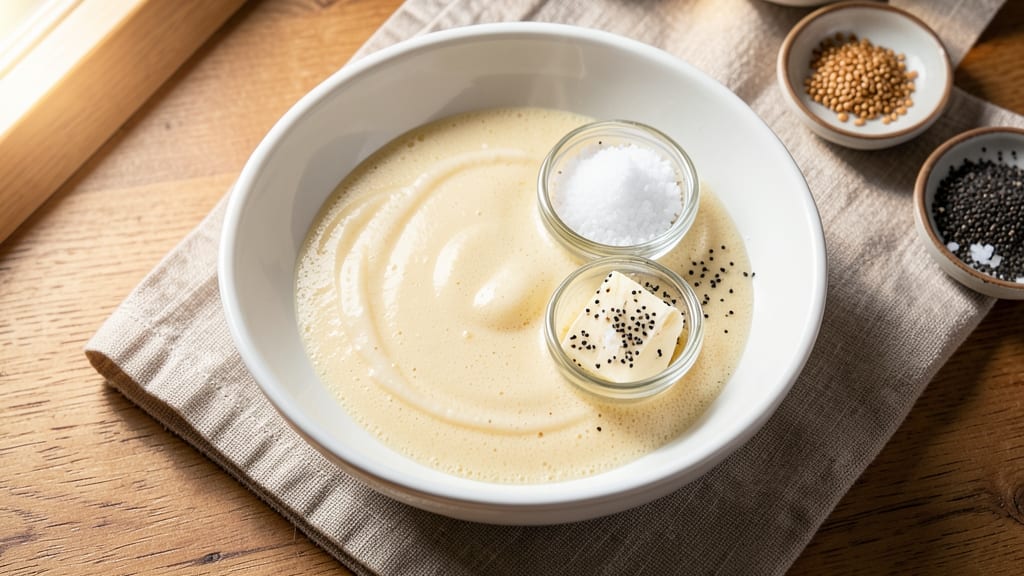
This bagel egg wash recipe transforms ordinary bagels into golden-brown, glossy masterpieces with a crisp exterior and tender crumb. The secret lies in a simple yet precise technique—beating eggs with water and a pinch of salt creates the perfect wash for that iconic shine and satisfying crunch.
I’ve perfected this method over years of baking, ensuring every bite delivers that restaurant-quality finish you crave.
The egg wash doesn’t just add color—it acts as a protective barrier during baking, locking in moisture while creating that irresistible caramelized crust. For an extra touch, sprinkle sesame or poppy seeds on top before baking, but the wash itself is the star.
This method works for classic New York-style bagels, everything bagels, or even sweet variations like cinnamon raisin.
What makes this recipe truly foolproof is the balance: too much wash makes bagels soggy, too little leaves them dull. With just 2 tablespoons of beaten egg mixed with 1 tablespoon of water, you’ll achieve the ideal gloss without overdoing it.
The result? Bagels that look (and taste) like they came from a deli, with a crust so crisp it practically sings.
Once baked, these bagels stay fresh for 3-4 days when stored in an airtight container. For extra flair, toast them before serving—this reactivates the crust for maximum crunch. Whether you’re making a batch for breakfast or a weekend brunch, this egg wash recipe is the game-changer your bagel game needs.
Ingredients for bagel egg wash
Four simple ingredients transform bagels into restaurant-quality golden bites.
| Ingredient | Amount | Notes |
|---|---|---|
| Large Eggs 🥚 | 2 whole | Room temperature for even beating |
| Water 💧 | 1 tbsp | Room temperature preferred |
| Diamond Crystal Kosher Salt 🧂 | ¼ tsp | Fine grain for even dissolving |
| Sesame Seeds 🌾 | ¼ cup | Toasted for extra flavor |
| Poppy Seeds 🌿 | 0.1 cup | Optional for sweet variations |
| Unsalted Butter 🧈 | 1 tbsp | Melted for brushing |
| Plain Bagels 🥯 | 4 whole | Store-bought or homemade |
| Everything Bagel Seasoning 🌶️ | 1 tbsp | For topping after baking |
| Olive Oil 🫒 | 1 tbsp | For brushing bagel surfaces |
The eggs are the star, so use room-temperature eggs—they whip up smoother and create a more even coat. Trader Joe's and Whole Foods sell fresh, high-quality eggs that work perfectly. For the salt, Diamond Crystal kosher salt dissolves best, but any fine grain works. Sesame seeds should be toasted in a dry pan for 2-3 minutes—they’ll pop and smell amazing, adding that extra crunch. If you're making sweet bagels, poppy seeds are a must, but for savory, stick with sesame. The butter should be unsalted to control the final flavor profile.
No sesame seeds? Toasted sunflower seeds work in a pinch, though they lack the same nutty flavor. Short on water? A splash of milk or cream keeps the wash from drying out too fast. For extra shine, add 1 teaspoon of honey to the wash—it caramelizes beautifully during baking. The bagels can be store-bought or homemade; just ensure they're fully cooled before brushing with the wash. If you're using everything bagel seasoning, sprinkle it on after baking so the seeds stick properly.
This wash keeps in the fridge for 3 days if stored in an airtight container, but it's best used fresh. The bagels stay crisp for 3-4 days when stored in a paper bag at room temperature. For extra crunch, toast them before serving—this reactivates the crust. If you're prepping ahead, brush the wash on the bagels and freeze them unbaked. They'll crisp up perfectly when baked from frozen.
Why You'll Love This Recipe
- Here’s what sold me: that first bite of toasted sesame and poppy seeds cracking under your teeth while the egg wash keeps things golden and tender. It’s the balance my lazy mornings crave—simple, but ridiculously satisfying.
- Four-Ingredient Magic: I swear by this—just eggs, water, salt, and seeds. No fancy gadgets, no measuring cups (eyeball it), and you’re done in five minutes. That’s right: the kind of recipe that makes you wonder why you ever overcomplicated breakfast.
- Crunchy Contrast: Here’s what sold me: that first bite of toasted sesame and poppy seeds cracking under your teeth while the egg wash keeps things golden and tender. It’s the balance my lazy mornings crave—simple, but ridiculously satisfying.
- Brunch or Snack: Between us, this works for everything. Slather it on bagels for weekend brunch, drizzle it over toasted bread for a quick lunch, or even use it as a dip base for veggies when you’re in a pinch. (Yes, even on a Tuesday night.)
Step-by-step instructions for perfectly browned bagels
Here's how to create a simple, foolproof egg wash that guarantees a glossy, golden finish every time.
Prepare the Egg Wash Mixture
In a medium bowl, crack the 2 whole Large Eggs and add the 1 tablespoon Water. Use a fork or whisk to beat them together until fully combined and slightly frothy. The mixture should be smooth with no visible streaks of egg white or yolk. Room temperature eggs blend more easily, so if they're cold, let them sit at room temperature for 10-15 minutes before starting.
Add the ¼ teaspoon Diamond Crystal Kosher Salt and continue whisking until it dissolves completely. The salt enhances the browning reaction and adds subtle flavor. For even distribution, make sure the salt is fully incorporated before moving to the next step. This mixture is your foundation for that signature bagel shine.
Prep the Bagels for Baking
Preheat your oven to 375°F. While it heats, place the 4 whole Plain Bagels on a baking sheet lined with parchment paper. Brush each bagel generously with the 1 tablespoon melted Unsalted Butter using a pastry brush. The butter creates a barrier that helps the egg wash cling better and promotes even browning.
Lightly brush the bagels with the 1 tablespoon Olive Oil as well. This step is optional but creates an extra glossy finish. The oil helps prevent the bagels from drying out while baking. Arrange them in a single layer with about 1 inch of space between each to allow for even browning.
Apply the Egg Wash for Maximum Gloss
Using the same pastry brush, carefully coat each bagel with the egg wash mixture. Work quickly and evenly to avoid drips or uneven coverage. I like to apply a thin, even layer first, then go back over any missed spots. The egg wash should glisten slightly—this indicates proper coverage and ensures a uniform golden finish.
For extra texture, sprinkle ¼ cup Sesame Seeds and ⅛ cup Poppy Seeds evenly over the bagels. Press them gently into the egg wash so they adhere well. The seeds add visual appeal and a delightful crunch. Sprinkle the 1 tablespoon Everything Bagel Seasoning over the top for that classic bagel flavor.
Bake to Golden Perfection
Place the baking sheet in the preheated oven and bake for 12-15 minutes. You're looking for a deep golden brown color with a slight sheen—this indicates the egg wash has created that perfect crust. Rotate the baking sheet halfway through baking if your oven has hot spots to ensure even browning.
Watch closely in the last 2 minutes of baking. The bagels should be golden brown but not dark brown or burnt. If they start to brown too quickly, remove them early and let them sit for a minute—they'll continue cooking slightly from residual heat. The internal temperature should reach 190°F for a fully baked bagel.
Pro Tips For Making Bagel Egg Wash
- Crack Eggs Cold: Grab eggs straight from the fridge—room temperature makes the wash runny. I used to warm them up first, but the yolk thickens too much, and you end up scraping egg off the bowl instead of brushing it on cleanly.
- Salt the Bowl First: Toss a pinch of kosher salt into the mixing bowl before cracking eggs—it dissolves faster and coats the wash evenly. I learned this after my first batch had clumpy salt specks stuck to the bagels.
- Whisk Like You Mean It: Use a fork or small whisk and go hard for 30 seconds—this breaks up the yolks and emulsifies the wash so it sticks to bagels instead of pooling. I used to give it a half-hearted stir, and the seeds just slid right off.
- Toast Seeds Separately: Dry-toast sesame and poppy seeds in a skillet for 1-2 minutes before mixing—they’ll clump less and stick better to the egg wash. I skipped this once and ended up with a gloppy mess that looked like birdseed soup.
Troubleshooting perfect results
Uneven Egg Wash Coverage
If your egg wash clumps or doesn’t stick evenly, whisk the eggs until completely smooth with no streaks. Cold eggs cause this—always use room-temperature eggs for even distribution. For stubborn clumps, strain the mixture through a fine-mesh sieve before brushing.
I’ve found that adding ½ teaspoon of honey to the wash helps it cling better and creates extra shine. 🌟
Bagels Turning Too Dark
Over-browning happens when the oven runs hot or the wash is too thick. Lower your oven to 350°F and reduce baking time by 2-3 minutes. For extra protection, brush the bagels with 1 tablespoon olive oil before applying the egg wash—this creates a barrier that slows browning.
Watch closely in the last 2 minutes and remove them as soon as they reach golden brown.
Egg Wash Too Runny
A runny wash can drip off the bagels, making a mess. Fix this by adding ½ teaspoon of cornstarch to the egg mixture—it thickens without altering flavor. Alternatively, whisk in 1 teaspoon of cold water to adjust consistency.
For best results, let the wash sit for 5 minutes before brushing to thicken slightly. This trick ensures even coverage without drips. ✨
Seeds Not Sticking
Seeds often fall off if the egg wash isn’t set properly. Press them gently into the wash right after brushing and let the bagels rest for 1 minute before baking.
For extra grip, lightly toast the seeds in a dry pan for 1-2 minutes before sprinkling—they’ll stick better and add more flavor. I’ve also had success using a light dusting of flour on the seeds to help them adhere.
Soggy Bagels After Baking
Sogginess usually means the egg wash was too thick or the bagels weren’t fully baked. For a crisp crust, bake until the internal temperature reaches 190°F. Avoid overloading the wash—stick to 2 tablespoons of beaten egg for 4 bagels.
If using store-bought bagels, ensure they’re fully cooled before brushing to prevent excess moisture from the wash.
Vegan Egg Wash Substitute
For a vegan wash, blend 2 tablespoons aquafaba (chickpea brine) with 1 tablespoon water and ¼ teaspoon salt. Whisk until frothy, then brush as directed. The aquafaba mimics the egg’s protein structure, creating a similar gloss.
For extra shine, add 1 teaspoon of maple syrup to the mixture. This substitute works perfectly for vegan bagels without sacrificing texture or appearance. 🌱
Nutrition facts
Frequently asked questions
Can I use this egg wash on other baked goods?
This simple egg wash works beautifully on pretzels, biscuits, or even croissants. The key is to adjust the quantity—use 1 tablespoon of wash per 4 pieces of dough. For extra shine on pastries, add ½ teaspoon of honey to the mixture. The same ratio applies to homemade bread or English muffins too!
Why does my egg wash sometimes turn out too thick or too thin?
Temperature and whisking are the culprits! Cold eggs create thicker, clumpier washes, while room-temperature eggs blend smoothly. For adjustments: if too thin, whisk in ½ teaspoon cornstarch; if too thick, add 1 teaspoon water. Let the mix sit for 5 minutes before using—this helps it reach the perfect consistency. A good wash should coat the back of a spoon lightly without dripping.
How long can I store the egg wash before using it?
Fresh is best, but you can store the wash in an airtight container in the fridge for 3 days. Before using, whisk again to restore smoothness. For longer storage, freeze it in 1-tablespoon portions—thaw overnight in the fridge and whisk before applying. Pro tip: Add ½ teaspoon lemon juice to the mix if storing longer than 24 hours to prevent bacterial growth.
Can I make this egg wash without eggs?
Yes! For a vegan version, use 2 tablespoons aquafaba (chickpea brine) mixed with 1 tablespoon water and ¼ teaspoon salt. Whisk until frothy—it mimics egg's protein structure perfectly. For extra shine, add 1 teaspoon maple syrup. This works especially well for vegan bagels or gluten-free doughs where eggs are omitted.
Will this egg wash work for frozen bagels?
Not directly—frozen bagels have excess moisture that makes the wash stick poorly. First, thaw them completely (overnight in the fridge). Then, pat dry with a paper towel before applying the wash. For extra crispiness, brush with 1 teaspoon olive oil first to create a barrier. Bake at 375°F for 8-10 minutes—frozen bagels need less time to crisp up.