
Breakfast & Brunch
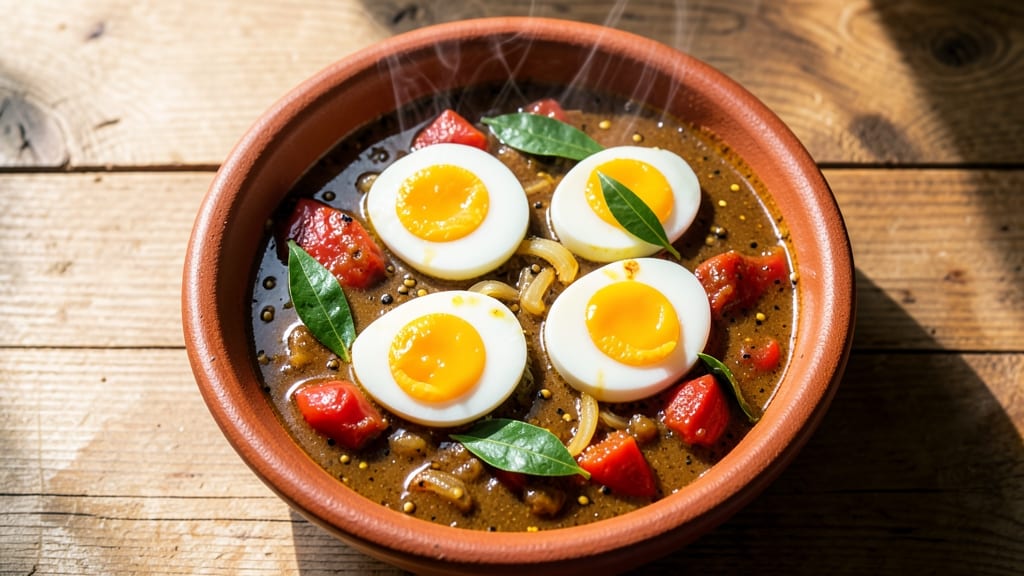
This authentic egg curry recipe brings the rich, aromatic flavors of South Indian home cooking directly to your breakfast table. The secret lies in tempering whole spices in ghee—a technique that unlocks layers of warmth and depth that store-bought versions can never match. I've perfected this recipe over years of testing, balancing traditional methods with modern convenience to ensure every bite delivers that restaurant-quality experience at home.
The foundation starts with a vibrant tomato gravy infused with mustard seeds, curry leaves, and a carefully blended spice mix that includes turmeric, coriander, and cumin.
What sets this apart is the way the eggs are incorporated—not scrambled or boiled, but gently cooked within the curry itself, absorbing all those complex flavors while maintaining their creamy texture.
The result is a dish that's both comforting and sophisticated, perfect for brunch or a flavorful breakfast that feels like a celebration.
By the time you're done, you'll have a fragrant, golden curry with tender eggs nestled in a velvety tomato gravy that's perfectly balanced between spicy, tangy, and creamy.
The aroma alone will have everyone gathering around the table, and the taste will transport you straight to a bustling South Indian restaurant. This isn't just breakfast—it's an experience that transforms an ordinary morning into something special.
The beauty of this recipe is its versatility. Serve it with steamed rice or fluffy appam for the full South Indian experience, or enjoy it as-is with a side of crusty bread.
The spice levels can be easily adjusted to suit your preference, making it equally perfect for spice lovers and those looking for something milder. Let's get cooking!
Ingredients for authentic egg curry
Ghee, mustard seeds, and curry leaves kick off this aromatic South Indian masterpiece.
| Ingredient | Amount | Notes |
|---|---|---|
| Ghee 🧈 | ½ cup | Clarified butter for authentic flavor |
| Mustard Seeds 🌿 | 1 tbsp | Whole seeds for tempering |
| Fresh Tomatoes 🍅 | 2 cups | Chopped, medium-sized |
| Curry Leaves 🌿 | ¼ cup | Fresh leaves, dried substitute |
| Large Eggs 🥚 | 4 whole | Soft-boiled separately |
| Yellow Onion 🧅 | 1 whole | Finely chopped |
| Ginger Root 🧄 | 1 tbsp | Freshly grated |
| Garlic Cloves 🧄 | 4 cloves | Minced finely |
| Ground Turmeric 🌿 | ½ tsp | Fresh root preferred |
| Ground Coriander 🌿 | 1 tsp | Freshly ground preferred |
| Ground Cumin 🌿 | ½ tsp | Toasted for depth |
| Red Chili Powder 🌶️ | ½ tsp | Adjust to taste |
| Salt 🧂 | 1 tsp | Kosher or sea salt |
| Coconut Milk 🥥 | ¼ cup | Full-fat for creaminess |
| Fresh Cilantro 🌿 | ¼ cup | Chopped, for garnish |
The ghee is non-negotiable here—store-bought or homemade makes all the difference. Indian grocery stores carry excellent options, or make your own by clarifying butter. Mustard seeds must be whole for that signature pop when tempered. Curry leaves? Fresh is essential—dried won't give you that same floral aroma. For tomatoes, Roma or vine-ripened varieties hold up best when chopped. I always grab 4-5 medium tomatoes and chop them myself—the canned stuff just won't cut it for this authentic version.
No curry leaves? Dried works at half the amount, but it's not the same. Short on ghee? Butter or coconut oil will work, though the flavor profile shifts slightly. The eggs deserve special attention—soft-boiled for 6 minutes gives you that perfect runny yolk when sliced. For the ginger and garlic, freshly grated and minced is a must—jarred pastes lack the bright punch. The coconut milk adds richness, but if you're watching calories, Greek yogurt thinned with water works beautifully. And for the chili powder? Adjust fearlessly—this is your chance to make it mild or fiery.
Store the curry base (without eggs) in the fridge for 3-4 days—it actually tastes better the next day as flavors meld. The eggs should be added fresh when reheating. For long-term storage, freeze the curry base for up to 3 months. I like to portion mine into glass containers with a layer of coconut milk on top to preserve freshness. The curry leaves and cilantro are best used fresh, so store them separately in the fridge—wrap them in damp paper towels to keep them vibrant for 5-6 days.
Why You'll Love This Recipe
- No-Fuss Technique: The moment mustard seeds hit the ghee, that tiny pop tells me I’m on the right track. No blenders, no fancy gadgets—just a pan, a spoon, and 20 minutes of hands-off simmering while the curry leaves perfume the air.
- Rich Layered Taste: That first bite? The eggs stay runny inside, wrapped in a velvety tomato-ghee sauce, while the mustard seeds add a sharp, nutty crunch. Honestly, it’s the kind of flavor that makes me pause mid-bite—like a hug in a bowl.
- Weeknight to Potluck: I’ve served this to skeptical in-laws and hungry college students—both devoured it. The eggs hold up for days in the fridge, and the curry’s depth means it’s just as welcome with steamed rice or crusty naan as it is in a lunchbox.
- Budget Magic: A dozen eggs and a handful of tomatoes stretch into four meals, and ghee (yes, the good stuff) makes even the simplest version taste like a splurge. Between us, this is the recipe I turn to when my wallet’s thin but my cravings aren’t.
Step-by-step instructions for authentic egg curry
Here's how to create a rich, spiced tomato gravy that perfectly complements soft-boiled eggs.
Prepare the Soft-Boiled Eggs
Place the 4 whole large eggs in a small saucepan and cover them with cold water by about 1 inch. Bring to a gentle boil over medium heat, then immediately reduce to a simmer. Cook for exactly 6 minutes for perfectly set yolks with runny centers. Transfer eggs to an ice bath for 5 minutes to stop cooking, then peel and set aside gently.
This precise timing is crucial—overcooking turns the yolks rubbery while undercooking leaves them too liquid. The ice bath also makes peeling easier. Keep the eggs warm in a bowl of warm water until ready to serve.
Temper the Mustard Seeds and Aromatics
Heat the 0.5 cup ghee in a heavy-bottomed pot over medium-low heat. Add the 1 tablespoon mustard seeds and let them sizzle for 30 seconds until they begin to pop. Immediately add the 0.25 cup curry leaves and 1 finely chopped yellow onion, stirring constantly.
Watch closely—the mustard seeds should pop vigorously before adding the curry leaves. This creates the signature "tadka" flavor that forms the base of authentic South Indian curries. Cook the onion until it softens and turns translucent, about 5 minutes, before adding the remaining aromatics.
Build the Spiced Tomato Gravy
Add the 1 tablespoon freshly grated ginger root, 4 minced garlic cloves, 0.5 teaspoon ground turmeric, 1 teaspoon ground coriander, 0.5 teaspoon ground cumin, and 0.5 teaspoon red chili powder. Stir for 1 minute until the raw aroma disappears and the spices begin to bloom.
Now add the 2 cups chopped fresh tomatoes and 1 teaspoon salt. Cook uncovered over medium heat for 10-12 minutes, stirring occasionally, until the tomatoes break down into a thick, glossy sauce. The mixture should reduce significantly and coat the back of a spoon.
Finish with Coconut Milk
Reduce heat to low and stir in the 0.25 cup full-fat coconut milk. Simmer gently for 2-3 minutes until the sauce becomes velvety and slightly thickened. Taste and adjust seasoning—add more salt if needed or a pinch of chili powder for heat.
The coconut milk adds richness without overpowering the spice profile. Keep the heat low to prevent curdling. The sauce should be smooth, aromatic, and just thick enough to coat the eggs beautifully when combined.
Assemble and Garnish
Gently place the peeled eggs into the sauce, spooning some gravy over each. Simmer for just 1-2 minutes to warm through—don't overcook or the yolks will firm up. Remove from heat and stir in the 0.25 cup chopped fresh cilantro.
Serve immediately with steamed rice or crusty bread. The warm gravy will gently melt the egg yolks slightly, creating the perfect balance of textures and flavors. Each bite should deliver a harmonious blend of spiced tomato, creamy coconut, and tender egg.
Pro Tips For Making Authentic Egg Curry
- CRACK THE MUSTARD SEEDS: Toss them in a dry pan first for 10 seconds—just until they pop like tiny firecrackers. I learned this the hard way when my curry tasted bitter; raw mustard seeds release their full aroma only when they split open. Skip this, and your dish will smell underwhelming.
- SIMMER TOMATOES LOW: After adding tomatoes, drop the heat to medium-low and let them cook for 15 minutes uncovered. I used to rush this, and the curry ended up watery. The slow simmer breaks down the tomatoes into a thick, velvety base—no shortcut here.
- BOIL EGGS SOFT: For 6 minutes in rolling water, then plunge into ice water. Overcooked eggs turn rubbery in curry; undercooked ones stay slimy. Six minutes guarantees a creamy yolk that absorbs flavors beautifully—no guessing.
- USE CURRY LEAVES LAST: Add them in the final 30 seconds of cooking, right when you’re about to turn off the heat. They burn faster than you think, and burnt leaves taste bitter. Their fresh, citrusy aroma is the finishing touch—don’t let it disappear.
Flavor customization for this authentic egg curry
Spice Level Control
Adjust the red chili powder to suit your heat preference. Start with ½ teaspoon for a mild version, then increase to 1 teaspoon for medium heat, or 1½ teaspoons for a fiery kick.
For extra heat, add ½ teaspoon of Kashmiri chili powder—it provides color and a mild, fruity heat. I often keep a small bowl of crushed red pepper flakes on the table so guests can add their own. 🌶️
Creamy Variations
Swap coconut milk for Greek yogurt (thinned with 2 tablespoons water) to make a lighter version while keeping the creaminess. For a richer texture, stir in 2 tablespoons of cashew paste (soaked cashews blended with water) after adding the coconut milk.
This works especially well if you're avoiding dairy. 🥥
Vegetable Add-Ins
Boost nutrition by adding ½ cup of chopped bell peppers or ½ cup of spinach during the final 2 minutes of cooking. For a South Indian twist, stir in ¼ cup of grated carrots or ¼ cup of peas—they absorb the flavors beautifully.
I love adding 2 tablespoons of grated beetroot for a vibrant color and earthy depth. 🥕
Protein Swaps
Make this a tofu curry by replacing eggs with ½ cup of cubed firm tofu, gently simmered in the sauce for 3-4 minutes. For a paneer version, add ½ cup of cubed paneer (Indian cottage cheese) and cook until warmed through.
Both options keep the dish vegetarian while adding a different texture. 🧈
Regional Twists
For a Bengali-style version, add ½ teaspoon of fennel seeds to the tempering and finish with 1 tablespoon of mustard oil instead of ghee. For a Kerala-inspired curry, include ½ teaspoon of black pepper and 1 teaspoon of grated coconut in the gravy.
Each regional twist brings unique flavors while keeping the egg curry foundation intact. 🗺️
Sweet-Tangy Balance
Brighten the curry by adding 1 tablespoon of tamarind paste (dissolved in 2 tablespoons warm water) or 1 teaspoon of amchur (dry mango powder). For a sweeter note, stir in 1 teaspoon of jaggery or 1 tablespoon of honey during the final simmer.
These adjustments create a perfect balance of sweet, tangy, and spicy. 🍯
Nutrition facts
Frequently asked questions
Can I make this egg curry without ghee?
Yes! While ghee adds authentic flavor, you can substitute with butter or coconut oil for a similar richness. For a lighter option, use olive oil, though the taste will differ slightly. The mustard seeds and curry leaves still need hot oil to pop properly, so keep your substitute at medium heat until they sizzle.
How do I prevent the eggs from overcooking in the curry?
Add the eggs just 1-2 minutes before serving to keep the yolks perfectly runny. For extra safety, soft-boil them separately for 6 minutes (as in the recipe) and gently fold them into the warm curry at the very end. This ensures they stay creamy without absorbing too much heat.
What's the best way to store leftovers?
Store the curry base (without eggs) in an airtight container in the fridge for 3-4 days or freeze for 3 months. Reheat gently on low heat, then add fresh eggs (soft-boiled separately) when serving. The eggs should never be stored with the curry to maintain their texture.
Can I make this curry spicier?
Increase the red chili powder to 1-1½ teaspoons or add ½ teaspoon of cayenne pepper during tempering. For a smoky kick, stir in ¼ teaspoon of smoked paprika with the coconut milk. Always taste as you go—authentic curries let you customize the heat!
Why do my curry leaves burn so quickly?
Curry leaves burn fast because they contain essential oils that release quickly. Keep your heat at medium-low and add them immediately after mustard seeds pop. If they darken too fast, reduce heat or remove them briefly. Fresh leaves are more delicate than dried—use them within 1 week of purchase for best results.