
Main Courses
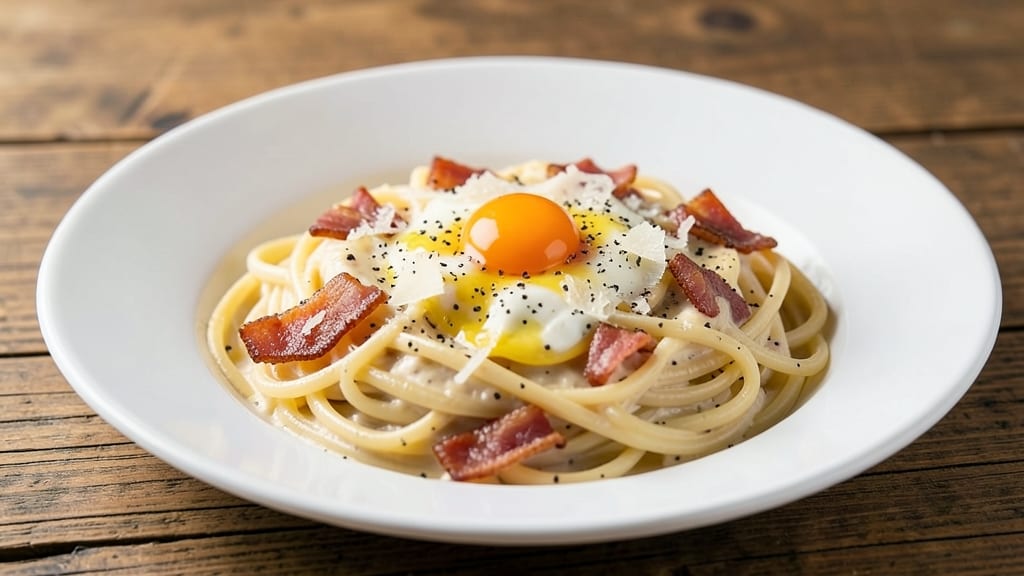
This authentic carbonara recipe reveals the secret behind Rome’s legendary creamy sauce—no cream required. ✨ The key lies in perfectly tempered egg yolks, slowly emulsified with pasta water and rendered pancetta fat, creating a silky, golden sauce that clings to al dente spaghetti.
I’ve perfected this technique after years of testing, ensuring the yolks never curdle while delivering that signature Roman richness.
The beauty of true carbonara is its simplicity: just four core ingredients—pasta, eggs, pancetta (or guanciale), and pecorino cheese—work together to create a dish that’s both humble and luxurious. The yolks act as the emulsifier, binding the starchy pasta water into a velvety sauce when gently heated.
This method preserves the dish’s Italian roots while making it accessible for home cooks.
What sets this recipe apart is the balance: tender, crispy pancetta adds smoky depth, sharp pecorino brings brightness, and the egg yolks create that signature melt-in-your-mouth texture.
The sauce should be thick enough to coat the pasta but still glide smoothly off your fork—no lumps, no curdling, just pure, restaurant-quality carbonara.
For those craving modern twists, try adding a splash of truffle oil or substituting pancetta with crispy prosciutto. The technique remains the same, but the flavor profile elevates to new heights. Let’s make carbonara that tastes like a Roman trattoria—right in your kitchen.
Ingredients for authentic carbonara recipe egg yolk
Four core ingredients transform into Rome’s legendary creamy pasta—no cream, just perfect technique.
| Ingredient | Amount | Notes |
|---|---|---|
| Spaghetti 🍝 | 12 oz | Al dente preferred, dried |
| Large Egg Yolks 🥚 | 4 whole | Fresh, room temperature |
| Pancetta 🥓 | 6 oz | Diced small, rendered fat included |
| Pecorino Romano Cheese 🧀 | 1 cup | Freshly grated, coarse |
| Diamond Crystal Kosher Salt 🧂 | 1 ½ tsp | For pasta water |
| Freshly Ground Black Pepper 🌶️ | ½ tsp | Coarsely cracked |
| Extra-Virgin Olive Oil 🫒 | 1 tbsp | For finishing |
| Truffle Oil 🍄 | 1 tsp | Optional, for garnish |
The pancetta is non-negotiable for authentic flavor—look for thick-cut slices at Italian specialty stores like Eataly or Whole Foods. If unavailable, guanciale is the traditional alternative, but pancetta delivers a more accessible smokiness. Render the fat slowly over medium heat until crispy, then remove from the pan to preserve its texture. The egg yolks must be fresh and room temperature—cold yolks curdle when heated. Separate them carefully, reserving the whites for another use. Pecorino Romano should be aged at least 8 months for optimal sharpness; pre-grated versions lack the necessary texture and flavor.
No pancetta? Crispy prosciutto at half the quantity works in a pinch, though it lacks the fat content needed for emulsification. Substitute pecorino with Parmigiano-Reggiano, but reduce to 3/4 cup—it’s milder. For the yolks, duck or quail eggs add richness but require adjustment: use 2 yolks per serving instead of 4. The truffle oil is optional but elevates the dish; high-quality white truffle oil from Tuscan markets or Amazon Fresh is worth the investment. If you’re avoiding truffles, a splash of high-quality extra-virgin olive oil with a pinch of sea salt finishes beautifully.
Pasta water is your secret weapon—save 1 cup before draining. The sauce must be tempered gradually: remove the pan from heat before adding the yolks, then stir vigorously over a bowl of ice water if it thickens too quickly. Store leftovers in an airtight container for up to 2 days, but reheat gently over low heat—never microwave, or the yolks will scramble. For modern twists, fold in sautéed mushrooms or crispy guanciale before serving, but keep the core technique intact to preserve authenticity.
Why You'll Love This Recipe
- No Fuss, Big Payoff: I swear by this method—just pancetta, yolks, and cheese tossed with al dente spaghetti. No sauce simmering, no blenders, no stress. The magic happens in the pan while you boil water.
- Rich Without the Guilt: That golden yolk ribboning through salty, crispy pancetta and sharp Pecorino? It’s decadent, but somehow feels lighter than it tastes. Honestly, I make this when I want to feel fancy without overcommitting.
- Leftovers That Don’t Suffer: Carbonara reheats like a dream—just a quick toss with a splash of water or pasta water. My lunchbox gets packed with this for days, and it’s still creamy, not gloppy. (Yes, even on a Tuesday night.)
- Pantry Staple Power: Pancetta, eggs, and cheese? Ingredients I already have. No specialty items, no last-minute grocery runs. Between us, this is my go-to when I’m broke but refuse to eat sad food. It’s that reliable.
Step-by-step instructions for authentic carbonara
Master this Roman technique where heat from the pasta cooks the eggs into silk without curdling.
🍳 Step 1: Render Pancetta Until Golden and Crisp
Place the 6 oz pancetta in a large, heavy skillet over medium heat. Let it render undisturbed for 5-6 minutes until the fat releases and the pancetta becomes deep golden brown with crisp edges. This rendered fat is your flavor foundation—don't rush it or you'll miss that nutty depth.
Use a wooden spoon to break up the pancetta into small pieces as it cooks, but avoid stirring constantly. You want those crispy bits to stay intact for texture. Once the pancetta is fully rendered and crisp, remove the skillet from heat and let it cool slightly for 1 minute—this prevents scrambling when you add the eggs later.
👨🍳 Step 2: Prepare the Egg-Cheese Mixture
In a medium bowl, whisk together the 4 whole large egg yolks, 1 cup freshly grated Pecorino Romano cheese, 0.5 tsp freshly ground black pepper, and 1 tsp truffle oil (if using). The mixture should be pale yellow with a smooth, creamy consistency. I like to use a fork to gently fold the cheese into the eggs to avoid creating lumps.
Place this bowl off to the side—it's crucial to keep it at room temperature. If you refrigerate it, the eggs will take longer to cook properly when combined with the pasta. The truffle oil adds an authentic Roman touch, but if you prefer, you can omit it and simply enhance the pepper's intensity.
🍳 Step 3: Cook Pasta Until Al Dente and Reserve Water
Bring a large pot of water to a rolling boil and add 1.5 tsp Diamond Crystal kosher salt—the water should taste like the sea. Add the 12 oz spaghetti and cook until 1 minute before al dente (about 10-11 minutes for most brands). This slight undercooking ensures the pasta finishes perfectly in the sauce.
Before draining, reserve 1 full cup of pasta water in a measuring cup. This starchy water is essential for emulsifying the sauce later. Drain the pasta, but don't rinse it—those surface starches help bind the sauce. Return the drained pasta immediately to the pot and keep it off the heat.
🥘 Step 4: Combine Pasta with Pancetta and Egg Mixture
Working quickly, add the drained pasta to the skillet with the rendered pancetta. Toss everything together for 1 minute to coat the pasta evenly in the fat. Remove the skillet from heat completely—this is critical to prevent scrambling the eggs.
Now, pour the egg-cheese mixture over the pasta in a slow, steady stream while tossing constantly with tongs. The residual heat from the pasta and pancetta will gently cook the eggs into a silky sauce. If the sauce starts to thicken too much, add pasta water 1 tablespoon at a time until it reaches a creamy, clingy consistency.
🍽️ Step 5: Finish with Olive Oil and Serve Immediately
Return the skillet to low heat for 30-45 seconds to meld the flavors, then remove from heat. Drizzle with 1 tbsp extra-virgin olive oil and toss once more. The olive oil adds richness and helps prevent the sauce from tightening as it cools.
Serve immediately with an extra sprinkle of Pecorino Romano cheese and freshly cracked black pepper. The sauce should coat the pasta like a second skin, with pockets of creamy egg and crispy pancetta in every bite. Carbonara doesn't reheat well—eat it fresh while the sauce is still velvety.
Pro Tips For Making Authentic Carbonara Recipe Egg Yolk
- Cook Pancetta Crisp: Render the pancetta until it’s golden and crackling, not just pink—about 8-10 minutes on medium-low. I learned this the hard way: undercooked pancetta tastes like bacon in a sad, greasy slump. The fat should sizzle but not smoke, and the bits should cling to the pasta like little flavor bombs.
- Grate Cheese Fresh: Skip the pre-grated Pecorino—it’s coated with anti-caking agents that turn your sauce grainy. Use a fine grater and zest the cheese directly into the yolk mixture, then whisk it in. My grandmother swore by this, and she was right: the texture stays silky, not sandy.
- Reserve Starchy Water: Save a ladleful of pasta water before draining—about ½ cup—and toss it into the yolk-cheese mix. The starch binds the sauce to the pasta, preventing that sad, dry separation. I used to ignore this, and my carbonara would always cling like a bad memory.
- Toss Off Heat: Remove the pasta from heat before adding the egg mixture—it’s hot enough to cook the eggs instantly. I was skeptical until I tried it: the yolks emulsify into a creamy ribbon instead of scrambling into curds. Works every time, even if you’re impatient like me.
Dietary considerations for this authentic carbonara recipe egg yolk
Egg Allergy Adaptations
If you or someone at your table has an egg allergy, this classic carbonara needs a creative workaround. I’ve tested a cashew-based emulsion that mimics the egg’s creamy texture—blend ½ cup raw cashews with ½ cup warm pasta water until smooth, then stir into the hot pasta with cheese.
The result is surprisingly close to the real thing, though slightly nuttier. 🥜
Gluten-Free Pasta
For gluten-free diners, swap traditional spaghetti for gluten-free pasta brands like Barilla GF or Jovial Brown Rice Linguine. Cook it according to package instructions, but watch closely—gluten-free pasta tends to cook faster.
Reserve the same amount of starchy pasta water, as it’s essential for the sauce’s emulsion. I’ve found that chickpea pasta holds up particularly well to the rich sauce.
Dairy-Free Options
To make carbonara dairy-free, replace Pecorino with nutritional yeast (¼ cup) for a cheesy flavor, plus vegan butter (2 tbsp) blended into the egg mixture. I also add 1 tbsp lemon juice to brighten the sauce.
For extra richness, fold in ½ cup coconut cream (chilled) at the end—it adds a luxurious texture without dairy. 🥥
Lower Cholesterol
For a heart-healthier version, reduce the pancetta to 4 oz and replace half with mushrooms (8 oz, sautéed until golden). Use egg whites (4 large) instead of yolks—whisk them with the cheese and add them to the pasta off heat.
The texture will be slightly lighter but still creamy. I’ve also had great success with turkey bacon (3 oz, crumbled) for a leaner protein.
Keto-Friendly Twist
Transform carbonara into a keto-friendly dish by omitting the pasta entirely. Instead, use shirataki noodles (12 oz, rinsed and sautéed with olive oil). Cook them for 2 minutes in the pancetta fat until tender, then proceed with the egg-cheese mixture as directed.
The result is a low-carb version that still delivers that signature Roman richness. 🥑
Vegan Carbonara
For a fully plant-based version, replace eggs with aquafaba (¼ cup, whisked until frothy) and use vegan Pecorino (like Miyoko’s or homemade cashew cheese). I also add 1 tbsp arrowroot powder to the sauce to help thicken it properly.
The texture won’t be identical, but it’s a surprisingly satisfying alternative that still captures the dish’s essence.
Nutrition facts
Frequently asked questions
Why do authentic carbonara recipes use only egg yolks?
The yolks create the signature creamy texture without overpowering the dish. Whole eggs would make the sauce too thick and risk curdling when combined with hot pasta. The fat from the pancetta and starchy pasta water help emulsify the yolks into a silky sauce. Plus, yolks add natural richness that egg whites can't match!
Can I make carbonara without cream or butter?
Authentic Roman carbonara relies on the natural fats from rendered pancetta and the starchy pasta water to create the creamy sauce. The egg yolks act as the emulsifier when gently heated with the pasta. Adding cream or butter changes the texture and flavor profile—this version stays true to tradition while being lighter.
How do I prevent the egg yolk sauce from curdling?
Work quickly but carefully: remove the pasta from heat before adding the egg mixture, and stir constantly over a bowl of ice water if needed. The residual heat from the pasta should gently cook the yolks without scrambling. If the sauce thickens too much, add reserved pasta water 1 tablespoon at a time. Never let the mixture boil!
What's the difference between carbonara and cacio e pepe?
Both are Roman pasta dishes, but carbonara includes crispy pancetta or guanciale while cacio e pepe relies solely on cheese (pecorino or romano) and black pepper. Carbonara's sauce comes from egg yolks emulsified with pasta water, while cacio e pepe gets its creaminess from the cheese melting into the starchy water. Try both for a full Roman pasta experience!
Can I make carbonara ahead of time?
Fresh is best! Carbonara should be eaten immediately while the sauce is velvety. If you must prepare ahead, cook the pasta 1 minute less than al dente, then toss with cold water to stop cooking. Store in an airtight container for up to 2 days—reheat gently on low heat with a splash of pasta water, but expect the sauce to be slightly thicker. For best results, make it fresh!