
Desserts
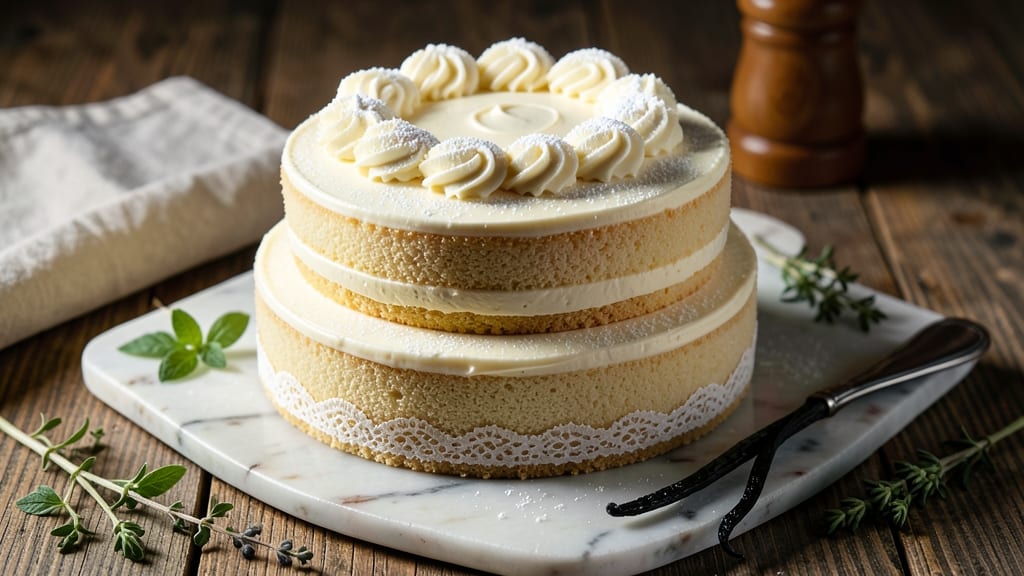
This 6-egg vanilla cake recipe delivers moist, tender layers without the risk of overmixing or dryness—perfect for bakers who want professional results at home. The secret lies in the creaming method and precise egg incorporation, which creates a light, airy crumb while maintaining that signature vanilla flavor.
I developed this recipe after years of testing, and it consistently yields a cake that stays moist for days, even without frosting.
The 6-egg formula balances structure and tenderness, ensuring your cake rises properly while avoiding the common pitfall of overmixing. You’ll work with butter and sugar until light and fluffy, then fold in eggs one at a time to maintain airiness.
This method is foolproof for beginners but refined enough for experienced bakers looking to elevate their vanilla cake game. The result? A cake with a fine, even crumb and a subtle vanilla aroma that fills your kitchen.
What sets this recipe apart is its versatility—use it as a classic vanilla layer cake, a trifle base, or even a simple sheet cake for birthdays. The moist texture makes it ideal for filling with jam, whipped cream, or custard, or simply serving with a dusting of powdered sugar.
Whether you’re baking for a celebration or treating yourself, this cake delivers restaurant-quality results with minimal effort.
For extra flavor, consider adding vanilla bean paste or a splash of almond extract, but the base recipe stands strong on its own. Ready in under an hour, this cake is perfect for weeknight desserts or last-minute gatherings. Let’s get baking!
Ingredients for 6 egg vanilla cake
Six eggs, one cup butter, and the perfect creaming method create this restaurant-quality vanilla cake.
| Ingredient | Amount | Notes |
|---|---|---|
| Unsalted Butter 🧈 | 1 cup | Softened to room temperature |
| Granulated Sugar 🍚 | 2 cups | Superfine preferred for finer crumb |
| Pure Vanilla Extract 🌿 | 2 tbsp | High-quality, Madagascar bourbon preferred |
| Large Eggs 🥚 | 6 whole | Room temperature for even incorporation |
| All-Purpose Flour 🌾 | 2 cups | Sifted, spooned and leveled |
| Baking Powder 🧂 | 1 ½ tsp | Diamond Crystal brand preferred |
| Salt 🧂 | ½ tsp | Fine sea salt for balance |
| Whole Milk 🥛 | ½ cup | Room temperature for smooth batter |
The butter and sugar are the foundation—European-style butter like Plugrá or Land O'Lakes makes all the difference here. Grab the highest quality you can find; the flavor carries through the entire cake. For sugar, superfine granulated gives the finest crumb, but regular granulated works if you pulse it in a food processor. The vanilla extract should be pure, not imitation—Madagascar bourbon vanilla has the most complex flavor profile. Store your butter in the fridge until ready to use, then let it sit at room temperature for about 1 hour before creaming. This ensures proper emulsification with the sugar.
No vanilla bean paste? Pure extract plus a pinch of vanilla sugar works beautifully. Short on eggs? Flax eggs (1 tbsp ground flaxseed + 3 tbsp water per egg) can replace up to 2 eggs, but the texture will be slightly denser. For the flour, King Arthur or Bob's Red Mill brands are ideal—they're consistently high-quality. If you don't have baking powder, baking soda plus cream of tartar at a 1:2 ratio substitutes, though results may vary slightly. The milk adds moisture without altering the cake's structure—whole milk yields the richest texture, but 2% works in a pinch. Always measure your flour by spooning it into the cup and leveling off; scooping compresses the flour and changes the ratio.
This cake keeps beautifully for 4-5 days at room temperature wrapped in plastic, or up to 1 week refrigerated. For longer storage, freeze the fully baked and cooled cake in an airtight container for up to 3 months. To reheat, wrap slices in a damp paper towel and warm in the microwave for 10-15 seconds. The cake's moistness makes it perfect for layering with fillings—jam, whipped cream, or custard all work wonderfully. For extra flavor, brush warm layers with simple syrup before assembling. The vanilla aroma intensifies as the cake cools, so wait at least 2 hours before slicing for the best experience.
Why You'll Love This Recipe
- Six Egg Magic: I swear by this ratio—six eggs mean a cake that’s light as air, not dense like my first attempts. That butter-to-sugar cream? It’s the secret to a texture so tender it melts in your mouth.
- Vanilla Bomb: Pure vanilla extract isn’t just flavoring—it’s the star. The kind that makes you pause mid-bite, like a whisper of warmth in every slice. (Yes, even my vanilla-loving husband notices.)
- Crowd Pleaser: This cake feeds 12 but costs less than takeout for two. Double it for parties, halve it for a quiet Sunday—it’s the one dessert that never feels like a hassle.
- No-Waste Winner: Leftovers? More like leftovers you’ll actually eat. Slice it fresh or freeze slices for breakfast toast—because why let good cake go to waste when it’s this easy to make twice?
Step-by-step instructions for perfectly moist vanilla cake
Here's the precise method for a tender, moist vanilla cake that stays rich and flavorful without overmixing.
Cream Butter and Sugar to Light and Fluffy
In a stand mixer fitted with the paddle attachment, combine the 1 cup unsalted butter and 2 cups granulated sugar. Beat on medium speed for 3-4 minutes until the mixture becomes pale and nearly doubles in volume. You'll notice the texture lighten significantly and small ribbons form when the paddle is lifted.
This creaming process incorporates air into the butter, which creates a fine, tender crumb. I press my finger into the mixture occasionally to check for proper aeration—it should leave a slight indentation that slowly fills back in. If using superfine sugar, the process will be slightly faster, so watch closely to avoid overmixing.
Incorporate Eggs and Vanilla Extract
Add the 6 whole large eggs, one at a time, mixing on low speed for 30 seconds after each addition until fully combined. After the last egg, add the 2 tablespoons pure vanilla extract and mix for 10 seconds to distribute evenly. The batter should be smooth and ribbon-like at this stage.
I've found that adding eggs one at a time prevents curdling and ensures even incorporation. The vanilla extract should be high-quality Madagascar bourbon for that authentic, rich vanilla flavor that permeates the entire cake. The mixture might look slightly curdled after adding the eggs, but this will resolve completely when combined with the dry ingredients.
Combine Dry Ingredients and Milk
In a separate bowl, whisk together the 2 cups all-purpose flour, 1.5 teaspoons baking powder, and 0.5 teaspoon salt. Sift the dry ingredients directly into the wet mixture while mixing on low speed for 20-30 seconds until just combined. You should still see small flour streaks remaining—this indicates proper mixing without developing gluten.
With the mixer running on low speed, gradually add the 0.5 cup whole milk until the batter is smooth and homogeneous. The batter should be thick but pourable, with a consistency similar to heavy cream. Overmixing at this stage will develop gluten, leading to a tough cake rather than the tender texture we're aiming for.
Prepare and Bake the Cake
Preheat your oven to 350°F and grease two 9-inch round cake pans, lining the bottoms with parchment paper. Divide the batter evenly between the prepared pans. Tap each pan gently on the counter to release any air bubbles and ensure even distribution of the batter.
Bake for 25-30 minutes or until a toothpick inserted into the center comes out clean. The cake should be golden brown on top and spring back slightly when pressed gently in the center. I check for doneness at the 25-minute mark, as ovens vary in temperature accuracy. Rotate the pans halfway through baking for even browning.
Cool and Serve for Maximum Moisture
Allow the cakes to cool in their pans for 10 minutes before transferring them to a wire rack to cool completely. This gradual cooling prevents cracking and helps maintain the cake's moisture. Once completely cooled, you can frost with your favorite vanilla buttercream or simply dust with powdered sugar for a classic presentation.
The key to maintaining moisture in this cake lies in the proper ratio of butter to eggs and the careful creaming process. When sliced, the interior should be tender and slightly moist, with a fine, even crumb throughout. Store any leftovers covered at room temperature for up to 3 days, or refrigerate for up to 5 days—though I doubt you'll have any leftovers with this rich, flavorful cake.
Pro Tips For Making 6 Egg Vanilla Cake
- Cream Butter Slowly: Six eggs mean your batter’s gonna be thick—don’t drown it. Beat the butter and sugar on medium-high for 2-3 minutes until pale and fluffy before adding eggs one at a time. I used to rush this and ended up with a dense, cakey mess that tasted more like pound cake than vanilla sponge.
- Room-Temp Eggs Matter: Cold eggs? Skip it. Crack your eggs into a measuring cup, cover, and let them sit for 10 minutes while you melt the butter. Room-temperature eggs blend smoother and whip up lighter—your cake’s crumb will thank you. (Yes, even if you’re impatient like me.)
- Don’t Overmix the Flour: Once you fold in the flour, stop after 10-12 strokes. Overmixing develops gluten, and six eggs already make this cake sturdy enough—you don’t need chewiness. I learned this the hard way when my cake turned out tougher than a boot.
- Test for Doneness at 325°F: This recipe’s high egg count means it’ll bake faster than you think. Start checking at 25 minutes with a toothpick—if it comes out with moist crumbs (not wet batter), you’re golden. Oven hotspots are real; rotate the pan halfway if yours plays favorites.
Perfect pairings for these flavors
Classic Vanilla Frosting
This cake shines with a simple vanilla buttercream made with ½ cup unsalted butter, 2 cups powdered sugar, 2 tablespoons heavy cream, and 1 teaspoon vanilla extract.
Beat the butter until creamy, then gradually add powdered sugar, cream, and vanilla. Spread between layers or on top for that signature vanilla-on-vanilla perfection. 🌸
Fresh Berries Topping
Brighten the cake with a strawberry or raspberry compote—simmer 1 cup sliced berries with 2 tablespoons sugar and 1 teaspoon lemon juice for 5 minutes. Let cool before arranging on top or between layers. The tartness cuts through the cake’s richness beautifully.
Whipped Cream Layer
For a lighter option, layer with whipped cream—whisk 1 cup heavy cream with 2 tablespoons powdered sugar and ½ teaspoon vanilla extract until stiff peaks form. Fold in 1 tablespoon crushed vanilla wafers> for texture. This adds airiness and balances the cake’s density.
Chocolate Ganache Drizzle
Elevate with a dark chocolate ganache—heat ½ cup heavy cream until steaming, pour over 6 ounces chopped dark chocolate, and let sit for 2 minutes before stirring smooth. Drizzle over the cake or use as a filling. The bitterness contrasts the vanilla’s sweetness wonderfully. 🍫
Citrus Zest Garnish
Add a zesty kick with lemon or orange zest—sprinkle 1 teaspoon finely grated zest over the frosting or between layers. The citrus brightens the vanilla flavor and adds a pop of color. Pair with a dusting of powdered sugar for an elegant finish.
Coffee Syrup Drizzle
For a sophisticated twist, drizzle with vanilla coffee syrup—simmer ½ cup water, ½ cup sugar, and 1 tablespoon instant coffee granules for 3 minutes, then cool. The coffee enhances the vanilla’s depth while adding a subtle caramel note. Perfect for coffee lovers! ☕
Nutrition facts
Frequently asked questions
Why does this recipe use 6 eggs instead of the usual 3-4?
The extra eggs create a richer, more tender crumb while adding structure without making the cake dense. The creaming method and gradual incorporation prevent overmixing, which balances the higher egg content beautifully. This ratio is ideal for a moist cake that holds its shape even when layered.
Can I substitute butter with oil for a lighter cake?
You can try, but the texture will differ significantly. Oil yields a denser, moister cake with less structure. For a lighter version, reduce eggs to 4 and use ½ cup melted butter + ½ cup neutral oil—this maintains some lift while reducing richness. The vanilla flavor will still shine, but the crumb will be slightly finer.
How do I prevent my cake from cracking?
Cracking usually happens from rapid cooling or overbaking. Let the cake cool in the pan for 10 minutes before removing, then transfer to a wire rack. Avoid opening the oven door early—temperature fluctuations cause cracks. If cracks appear, cover with a thin layer of frosting or whipped cream to disguise them.
What's the best way to store leftovers?
Wrap individual slices tightly in plastic wrap, then store in an airtight container. At room temperature, it stays fresh for 3 days, or refrigerate for 5 days. For longer storage, freeze slices (unfrosted) for up to 3 months. To reheat, microwave for 10-15 seconds—the moisture keeps it tender.
Can I make this cake in a bundt pan instead of round pans?
Yes! Reduce baking time to 35-40 minutes at 350°F in a greased 10-cup bundt pan. The batter will rise differently, so check for doneness at 30 minutes. Brush with simple syrup while warm for extra moisture. The intricate shape makes it perfect for special occasions!