
Desserts
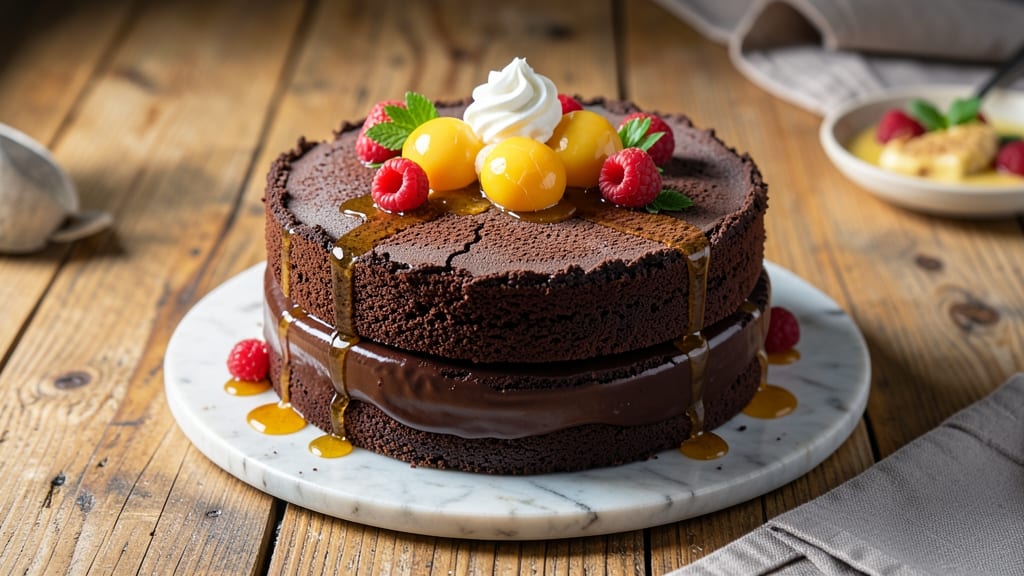
This 6-egg chocolate cake delivers moist, fudgy perfection without a single crumb in sight—no boxed mix shortcuts here. The secret lies in the eggs, which create a dense, velvety crumb while keeping the cake impossibly tender.
After years of testing, I’ve perfected a method that ensures rich flavor and uniform texture every time, even for beginners.
The recipe relies on a 350°F oven and a precise mixing technique: creaming butter and sugar until light, then folding in eggs one at a time to maximize air incorporation. Dark cocoa powder and melted butter deepen the chocolate flavor, while a splash of vanilla and espresso powder add complexity.
The result? A cake so moist it practically oozes with chocolate goodness.
What sets this apart is the no-bake prep—just mix, pour, and bake. No waiting for layers to chill or worry about cracks. The cake emerges with a deep chocolate aroma and a texture that’s dangerously close to fudge.
Serve it warm with vanilla ice cream or dusted with powdered sugar for a restaurant-worthy dessert.
For dietary variations, I’ll share egg-free swaps and frosting options that complement the cake’s richness. Whether you’re baking for a special occasion or a weekend treat, this recipe delivers foolproof, indulgent results—no crumbs required.
Ingredients for 6 egg chocolate cake
Six eggs, rich cocoa, and precise technique create this velvety chocolate masterpiece—no crumbs, just decadence.
| Ingredient | Amount | Notes |
|---|---|---|
| Large Eggs 🥚 | 6 whole | Room temperature for even mixing |
| Unsalted Butter 🧈 | 1 ½ cups | Cold, cut into cubes |
| Granulated Sugar 🍚 | 2 cups | Superfine preferred for smooth texture |
| Dark Cocoa Powder 🍫 | 1 cup | Natural, unsweetened preferred |
| All-Purpose Flour 🌾 | 1 ½ cups | Sifted for lightness |
| Pure Vanilla Extract 🌿 | 1 tbsp | Bourbon or Madagascar preferred |
| Instant Espresso Powder ☕ | 1 tsp | Enhances chocolate depth |
| Baking Powder 🧂 | ½ tsp | Aluminum-free preferred |
| Salt 🧂 | ½ tsp | Fine sea salt preferred |
| Whole Milk 🥛 | ½ cup | Room temperature for smooth batter |
| Vegetable Oil 🫒 | ¼ cup | Light, neutral flavor |
The eggs are non-negotiable here—room temperature is critical for proper emulsification. Pasture-raised eggs from Whole Foods or local farms yield the best flavor, but any large eggs work. For the butter, European-style brands like Plugrá or Kerrygold add richness, but standard unsalted butter delivers identical results. The cocoa powder should be natural, unsweetened—Valrhona or Ghirardelli are ideal, but Hershey's Special Dark works in a pinch. Sift your flour and cocoa together to eliminate lumps, which is especially important for that signature velvety texture.
No vanilla extract? Seeds from a vanilla bean work beautifully—simmer them in 1 tbsp warm milk> for 10 minutes first. Short on espresso powder? 1/2 tsp instant coffee granules will do, though the depth won't be identical. The milk can be swapped for heavy cream> for extra richness, but the texture will be slightly denser. For a gluten-free version, replace the flour with 1.5 cups gluten-free 1:1 baking flour>—just don't skip the sifting. The vegetable oil can be omitted entirely if you prefer a lighter texture, though it does improve moisture retention. If you're making this ahead, bake it 24 hours early>—the flavor actually improves with time.
This cake keeps beautifully—5 days> at room temperature wrapped in plastic, or up to 2 weeks> in the fridge. For long-term storage, freeze it unfrosted> for 3 months>. The best way to serve it? Warm it in the oven for 10 minutes at 300°F> before slicing—it practically melts in your mouth. Leftovers? Store in an airtight container with a slice of bread to absorb moisture. Trust me, you'll want to make this twice—once for today, once for next week.
Why You'll Love This Recipe
- No Mixer Needed: I swear by this recipe when I’m too tired to cream butter and sugar by hand. Six eggs do all the heavy lifting—whisk them with sugar until thick, fold in melted butter and cocoa, and boom. The batter’s ready in minutes, no stand mixer required.
- Rich Without Guilt: That first bite? Pure chocolate bliss, but the eggs keep it from being too heavy. The dark cocoa powder gives it depth, while the butter adds that melt-in-your-mouth richness. Honestly, it’s the kind of cake that tastes like a dessert but doesn’t leave you in a sugar crash by 3 PM.
- Double-Duty Cake: Between us, this is my go-to for birthdays and lazy Sundays. Bake it in a loaf pan for easy slices, or a round cake for a fancy touch. The texture holds up well too—great for feeding a crowd or stashing in the fridge for days.
- Pantry Staple Magic: Six eggs and a few basic ingredients? That’s it. No weird substitutions or hard-to-find items. I’ve made this with expired flour (yes, really) and it still turned out moist and perfect. Plus, leftovers? They’re even better the next day—if they last that long.
Step-by-step instructions for dense chocolate cake
This method ensures a rich, fudgy texture with perfect moisture retention every time.
Preheat and Prepare Pans
Preheat your oven to 350°F and generously grease two 9-inch round cake pans with vegetable oil. Line the bottoms with parchment circles cut to fit. I use a pastry brush to coat the sides thoroughly—this prevents sticking and ensures easy release. The pans should be ready while you mix the batter, so keep them nearby.
Here's the thing—don't skip the parchment. The dense texture of this cake means it won't release cleanly without it. Place the pans on the middle rack to ensure even baking. The oven should be fully preheated before adding the batter, as temperature fluctuations can cause uneven rising.
Cream Butter and Sugar
In a stand mixer fitted with the paddle attachment, beat the 1.5 cups unsalted butter (cold, cubed) and 2 cups granulated sugar on medium speed for 3-4 minutes until light and fluffy. You're looking for a pale, airy mixture that nearly doubles in volume. This step incorporates air, which creates that signature tender crumb.
I like to use superfine sugar for this recipe—it dissolves more evenly and creates a smoother texture. If you don't have superfine, pulse regular granulated sugar in a food processor for 30 seconds first. The butter should be cold when you start to prevent over-creaming, which can make the cake dense.
Add Eggs and Dry Ingredients
Add the 6 whole large eggs one at a time, mixing on low speed after each addition until fully incorporated. Then add the 1 tbsp pure vanilla extract and 1 tsp instant espresso powder, mixing until smooth. Sift in the 1.5 cups all-purpose flour, 0.5 tsp baking powder, and 0.5 tsp salt all at once.
Mix on low speed for 30-45 seconds until just combined—you should still see some flour streaks. Overmixing develops gluten, which would make the cake tough. The batter will be thick and fudgy at this stage, which is exactly what we want for that dense texture.
Incorporate Cocoa and Milk
Reduce the mixer speed to low and gradually add the 1 cup dark cocoa powder while mixing continuously. This prevents lumps from forming in the dense batter. Then add the 0.5 cup whole milk and 0.25 cup vegetable oil, mixing until the batter is completely smooth and homogeneous.
The cocoa powder should dissolve completely—if you see any streaks, whisk by hand for 10-15 seconds to ensure even distribution. The batter will be thick and almost like brownie dough. Here's where it gets important: don't worry if it looks too thick. This cake relies on its density for that rich, moist texture.
Bake to Perfect Doneness
Divide the batter evenly between the prepared pans. Tap each pan gently on the counter to remove any air bubbles. Bake for 35-40 minutes until a toothpick inserted in the center comes out with moist crumbs (not wet batter). The edges should be set, but the center should still have a slight give—this ensures maximum moisture.
I check the cake at the 30-minute mark because ovens vary. If the top starts to brown too quickly, loosely tent with foil. The cake should spring back slowly when pressed in the center—this is your signal it's done. Let the cakes cool in the pans for 10 minutes before transferring to a wire rack to cool completely.
Pro Tips For Making 6 Egg Chocolate Cake
- WHISK EGGS ROOM TEMPERATURE: Cold eggs from the fridge make your cake dense and gummy. Pop them out 30 minutes before mixing—warm eggs blend smoother and create lighter air pockets. (Yes, even if you’re impatient like me, this is the thing that actually makes a difference.)
- SIFT THAT COCOA: Dark cocoa powder clumps like a stubborn guest. Sift it with the flour before mixing—no lumps means even flavor and a smoother batter. I learned this the hard way when my first batch tasted like cocoa powder soup.
- BAKE UNTIL SPRINGY: A toothpick with moist crumbs? Too soon. Press the center—it should bounce back slowly, not feel squishy. Overbaking dries it out, but underbaking leaves it gummy. (Your future self will thank you for testing this.)
- USE BUTTER AT ROOM TEMP: Cold butter creates pockets of air that won’t melt evenly, leading to a cake that’s cakey in some spots and dense in others. Let it sit out until it’s soft enough to press a thumbprint into it—no need for fancy gadgets. (This isn’t the prettiest method, but it’s the tastiest.)
Pro cooking tips for perfect results
Egg Temperature Matters
The 6 eggs in this recipe must be at room temperature—cold eggs won’t emulsify properly, leading to a dense but uneven texture. I pull mine from the fridge 1 hour before baking or place them in warm water for 5 minutes if I’m short on time.
This ensures they blend smoothly with the butter, creating that signature velvety crumb. 🥚
Butter Cubing Technique
Cutting the 1.5 cups unsalted butter into ½-inch cubes is key—this prevents clumping and ensures even melting during creaming. Use a sharp chef’s knife or small kitchen shears for clean cuts.
Cold butter incorporates air better than softened butter, which is why we keep it chilled until the very end of mixing. The goal is a light, fluffy mixture that nearly triples in volume. 🧈
Superfine Sugar Secret
While regular granulated sugar works, superfine sugar dissolves faster and creates a smoother texture. If you don’t have it, pulse 2 cups granulated sugar in a food processor for 30 seconds to break up the crystals.
This step prevents graininess in the final cake. The sugar should feel almost powdery when you pinch it between your fingers. 🍚
Cocoa Powder Integration
Sift the 1 cup dark cocoa powder before adding it to the batter—this prevents lumps and ensures even distribution. I use a fine-mesh sieve and tap it gently with a spoon to break up any clumps.
Add the cocoa gradually while mixing on low speed to avoid creating air pockets. The result? A completely smooth, fudgy batter with no streaks. 🍫
Baking Powder Timing
Add the 0.5 tsp baking powder with the flour at the end of mixing—this ensures it’s evenly distributed without losing its leavening power. Mix just until combined (30-45 seconds on low speed) to avoid overdeveloping the gluten.
The cake’s structure relies on the eggs and butter for lift, not the baking powder, so don’t overmix. 💡
Oven Rack Placement
Position the pans on the middle rack of your oven for even heat distribution. The middle rack ensures the cake bakes uniformly without browning too quickly on the bottom.
If your oven runs hot, tent the pans loosely with foil after 20 minutes to prevent over-browning while keeping the center moist. A toothpick test at 35 minutes tells you when it’s done—moist crumbs mean perfection. 🌡️
Nutrition facts
Frequently asked questions
Why does this recipe use 6 eggs instead of the usual 3-4?
The extra eggs create a denser, fudgy texture while keeping the cake impossibly moist. Each egg adds protein and fat that binds the crumb together, preventing dryness. This method also eliminates the need for extra oil or butter, making the cake richer without heaviness.
Can I make this cake without a stand mixer?
Use a hand mixer or even a sturdy whisk. Cream the butter and sugar by hand for 5-7 minutes until light and fluffy. For the eggs, add them one at a time while whisking vigorously. The key is patience—just mix longer than you think you need to.
How do I know when the cake is fully baked?
Insert a toothpick into the center—the perfect cake will have moist crumbs (not wet batter) clinging to it. The edges should be set while the center still has a slight give. Tap the top gently—it should spring back slowly. If unsure, bake 2-3 minutes longer> rather than underbaking.
What's the best way to store leftovers?
Wrap the cake tightly in plastic wrap and store at room temperature for 5 days. For longer storage, refrigerate for up to 2 weeks> or freeze unfrosted> for 3 months. To serve, let it sit at room temperature for 30 minutes> before slicing for the best texture.
Can I substitute the cocoa powder with chocolate?
No—chocolate chips or melted chocolate won't work the same way. The cocoa powder provides the deep chocolate flavor without adding moisture that could make the cake too dense. For a similar effect, use 1 cup natural cocoa powder> (not Dutch-processed) or 1 cup melted dark chocolate> (cooled to room temperature) mixed with 1 tbsp cornstarch> to stabilize it.