
Desserts
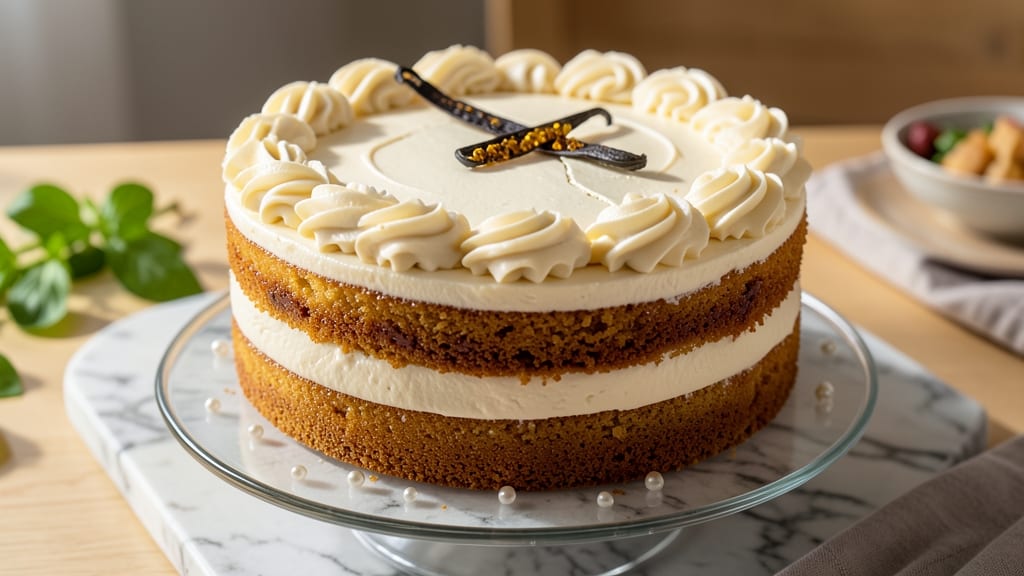
This 3-egg vanilla cake delivers moist, tender layers with every bite—no dry crumbs in sight. The secret lies in proper mixing techniques and vanilla bean infusion, which transforms ordinary cake into something extraordinary.
I developed this recipe after years of testing, ensuring it stays perfectly moist even when baked at high temperatures.
What sets this recipe apart is the vanilla bean paste—it adds depth and aroma that bottled extracts simply can’t match. The cake relies on three eggs for structure without heaviness, and the right balance of butter and oil keeps it rich yet tender.
Unlike many recipes, this one avoids overmixing, which guarantees a light, airy crumb.
By the time you pull it from the oven, you’ll have a golden, fragrant cake with a fine crumb that melts in your mouth. The vanilla flavor is rich and complex, not overpowering, making it perfect for any occasion.
Whether you serve it with whipped cream, fresh berries, or a simple glaze, this cake will impress every time.
For extra indulgence, consider adding a pinch of salt to enhance the vanilla flavor or swapping out some flour for almond flour for a nutty twist. The possibilities are endless, but the base recipe remains foolproof—moist, flavorful, and always satisfying. Let’s get baking!
Ingredients for 3 egg vanilla cake
Vanilla bean paste and proper mixing make this cake extraordinary—moist layers guaranteed.
| Ingredient | Amount | Notes |
|---|---|---|
| All-Purpose Flour 🌾 | 2 ½ cups | Sifted for light texture |
| Granulated Sugar 🍚 | 1 ½ cups | Superfine preferred for smoothness |
| Vanilla Bean Paste 🌿 | 2 tbsp | High-quality, not extract |
| Large Eggs 🥚 | 3 whole | Room temperature for even mixing |
| Unsalted Butter 🧈 | 1 cup | Softened, full-fat preferred |
| Vegetable Oil 🫒 | ½ cup | Light, neutral flavor |
| Whole Milk 🥛 | ¾ cup | Room temperature |
| Baking Powder 🧂 | 2 tsp | Diamond Crystal preferred |
| Salt 🧂 | ½ tsp | Fine sea salt |
| Almond Flour 🌰 | ½ cup | Optional for nutty twist |
| Vanilla Extract 🌿 | 1 tsp | Pure, high-quality extract |
The vanilla bean paste is non-negotiable here. Williams Sonoma or Nielsen-Massey are my go-tos—they offer the richest flavor. If you can't find paste, split one vanilla bean and scrape the seeds into your sugar. The eggs must be room temperature (about 30 minutes out of the fridge) for even mixing. For the flour, King Arthur or Bob's Red Mill are reliable brands. If you're using almond flour, toast it first in a dry pan for 2-3 minutes to deepen the flavor.
No vanilla bean paste? Double the vanilla extract—just know it won’t have the same depth. Short on eggs? Replace one with flax eggs (1 tbsp ground flaxseed + 3 tbsp water). The baking powder is crucial—Diamond Crystal measures differently than aluminum-free brands, so don’t swap unless you adjust. For a richer texture, substitute half the milk with heavy cream. If you’re feeling adventurous, add 1 tsp lemon zest to brighten the flavor.
This cake keeps beautifully—3 days at room temperature wrapped in plastic, or 1 week in the fridge. For longer storage, freeze portions for up to 3 months. To reheat, wrap in a damp towel and microwave for 10-15 seconds. The vanilla flavor intensifies as it sits, so it actually gets better over time. Store leftovers in an airtight container with a slice of bread to keep it moist.
Why You'll Love This Recipe
- No Mixer Needed: I swear by this recipe when my mixer’s on the fritz—just creaming butter and sugar by hand until it’s fluffy enough to make you believe it. Three eggs hold it all together without overworking, and that vanilla bean paste? One little swipe does more than artificial ever could.
- Butter So Rich: That unsalted butter isn’t just flavor—it’s the secret to a tender crumb and a melt-in-your-mouth finish. Honestly, I’ve tried cutting corners with oil, but this? This is the kind of cake that makes you pause mid-bite, wondering if it’s too good to be true.
- Weeknight Magic: Bake it for a last-minute dessert, slice it for breakfast with butter and jam, or pack it in lunchboxes—this cake handles whatever you throw at it. Three eggs mean it’s light enough to reheat in the microwave later, no sad leftovers here.
- Pantry Staples Only: Between us, this recipe uses things you already own: flour, sugar, butter, eggs, and that one tiny bottle of vanilla paste collecting dust. No specialty ingredients, no last-minute grocery runs—just pure, reliable cake that doesn’t break the bank.
Step-by-step instructions for moist vanilla bean cake
Here's how to craft a tender, moist vanilla cake with rich vanilla bean flavor—without overmixing or dry crumbs.
Cream Butter, Sugar, and Vanilla Bean Paste
In a stand mixer fitted with the paddle attachment, beat the 1 cup unsalted butter and 1.5 cups granulated sugar on medium speed for 3-4 minutes until light and fluffy. You'll see the mixture nearly double in volume and become pale, with ribbons forming when the paddle lifts. This step incorporates air, which creates that signature tender crumb.
Scrape down the sides of the bowl, then add the 2 tablespoons vanilla bean paste and mix for 30 seconds on low speed. The paste will distribute evenly, infusing the butter with that deep, complex vanilla flavor. I like to press the paste through a fine-mesh sieve first to remove any seeds—this prevents graininess in the final cake. The mixture should smell intensely sweet and aromatic at this stage.
Add Eggs and Wet Ingredients
Add the 3 whole large eggs, one at a time, mixing on low speed for 30 seconds after each addition. This gradual incorporation prevents the eggs from scrambling. Once all eggs are incorporated, add the 0.5 cup vegetable oil and 0.75 cup whole milk, mixing just until combined—no need to overwork the batter.
The batter should be smooth and thick, like heavy pudding. If it looks slightly curdled, don't worry—it will come together in the next step. Here's the thing: the almond flour will help stabilize the texture, but we're going to add it gently to avoid developing gluten. The goal is a moist, velvety batter that rises beautifully in the oven.
Combine Dry Ingredients Gently
In a separate bowl, whisk together the 2.5 cups all-purpose flour, 0.5 cup almond flour, 2 teaspoons baking powder, and 0.5 teaspoon salt. Sift the dry ingredients directly into the wet mixture, mixing on low speed for 20-25 seconds—just until the flour is barely incorporated. You should still see small streaks of flour; this prevents a tough cake.
Add the 1 teaspoon vanilla extract and mix for another 10 seconds to distribute it evenly. The batter will be thick and slightly lumpy, but that's perfect. Overmixing at this stage introduces gluten, which leads to a dense, chewy texture instead of the light, airy crumb we're after. Stop mixing as soon as the flour disappears—this is the moment that matters.
Bake for Perfect Moisture
Preheat your oven to 350°F and grease two 8-inch round cake pans with butter or baking spray, then line the bottoms with parchment paper. Divide the batter evenly between the pans and smooth the tops with a spatula. Tap the pans gently on the counter to release any air bubbles.
Bake for 25-30 minutes, or until a toothpick inserted into the center comes out clean with a few moist crumbs clinging to it. The edges should be golden brown, but the tops might still look slightly underdone—this is normal. The residual heat will finish cooking the centers as the cakes cool. Don't overbake; this is how you end up with a dry cake. As soon as they're done, transfer the pans to a wire rack and let them cool for 10 minutes before removing the cakes.
Cool and Serve for Maximum Moisture
Once the cakes are cool enough to handle, transfer them to a serving plate. The secret to keeping this cake moist? Serve it at room temperature, not straight from the fridge. The flavors develop fully after cooling, and the crumb remains tender. For extra moisture, you can brush the tops with a simple syrup made by heating 0.25 cup granulated sugar with 0.25 cup water until dissolved, then cooling slightly.
Slice with a serrated knife for clean, even pieces. Each slice should be light, tender, and infused with that rich vanilla bean aroma. The almond flour adds a subtle nuttiness that balances the sweetness, while the butter and oil ensure a moist, velvety texture. This cake holds up well for 2-3 days when stored in an airtight container, but it's best enjoyed fresh.
Pro Tips For Making 3 Egg Vanilla Cake
- Whisk Eggs Until Ribbon Stage: Stop cracking them into the bowl the second they look set—whisk those eggs until the mixture holds a slow ribbon when you lift the whisk. I used to rush this, and my cakes turned out dense. Three eggs need proper aeration, especially in a vanilla cake where lightness matters.
- Melt Butter Slowly: Heat your butter over low heat until it’s just melted, then let it cool for 5 minutes before mixing. I learned this the hard way—hot butter cooks the eggs immediately, and your cake will taste like scrambled eggs instead of pure vanilla bliss.
- Sift the Flour Twice: Don’t just dump it in. Sift the flour first, then whisk it with the sugar before folding it in. This keeps the cake tender and prevents lumps. Yes, it’s extra work, but your future self will notice the difference in texture.
- Test Doneness with a Toothpick: Skip the guesswork—insert a toothpick into the center. If it comes out clean but with a few moist crumbs (not wet batter), your cake’s done. Overbaking dries out vanilla cakes faster than you’d think.
Wine and beer pairings for this dish
White Wine Pairings
For this delicate vanilla cake, I reach for Sauvignon Blanc—specifically a crisp example from New Zealand or Loire Valley.
The bright citrus and herbal notes in wines like Cloudy Bay Sauvignon Blanc or Sancerre cut through the richness of the butter and oil while complementing the vanilla's floral depth. A glass chilled to 45-50°F ensures the acidity remains vibrant, balancing the cake's sweetness beautifully. 🍷
Sparkling Wine Harmony
If you're serving this cake at a celebration, Prosecco or Cava is my go-to choice. The effervescence cleanses the palate between bites, while the subtle fruitiness of La Marca Prosecco or Freixenet Cordon Negro Cava enhances the vanilla's aromatic qualities.
Opt for a slightly sweeter style (Demisec) to match the cake's richness without overpowering it.
Beer Pairings for Contrast
A Belgian Witbier like Hoegaarden or Stella Artois provides a refreshing contrast with its coriander and citrus notes. The light effervescence and mild sweetness mirror the cake's texture while adding a unique herbal dimension.
For a bolder option, try a German Pilsner—the Warsteiner brand delivers crisp, clean flavors that highlight the vanilla's complexity without competing.
Coffee Pairing Perfection
For a sophisticated finish, serve this cake with a light roast coffee like Ethiopian Yirgacheffe. The floral and citrus notes in the coffee echo the vanilla's aroma, creating a harmonious pairing.
Brew it medium-dark to avoid bitterness that might clash with the cake's delicate sweetness. A small cup of cortado (equal parts espresso and steamed milk) works beautifully too. ☕
Seasonal Adaptations
In summer, I often pair this cake with sparkling rosé—the berry notes in a Provençal rosé like Whispering Angel complement the vanilla's warmth. For fall and winter gatherings, a dry Riesling from Germany adds a touch of spice that enhances the cake's nutty almond flour undertones.
The acidity in both wines helps maintain the cake's moist texture by preventing a heavy mouthfeel. 🍇
Nutrition facts
Frequently asked questions
Can I substitute the vanilla bean paste with regular vanilla extract?
While you can use vanilla extract, the flavor won't be as rich or complex. For best results, use double the amount of high-quality pure extract (about 4 teaspoons). If you're feeling adventurous, split a vanilla bean, scrape out the seeds, and mix them into the sugar before adding to the batter for a more authentic vanilla flavor.
Why is my cake dense instead of light and fluffy?
Overmixing is the #1 cause of dense cake. Mix the dry ingredients with the wet just until combined—about 20-25 seconds—and stop as soon as the flour disappears. Also, ensure your eggs are room temperature and don't overbake. A toothpick should come out with a few moist crumbs, not completely clean.
Can I make this cake in a different pan size?
Yes! For an 8-inch round pan, bake for 25-30 minutes. For a 9-inch round pan, reduce baking time to 20-25 minutes, and for a 9x13-inch pan, bake for 18-22 minutes. Always check with a toothpick to avoid overbaking. Adjust oven racks to the middle position for even heat distribution.
How do I keep this cake moist for longer?
Store it in an airtight container with a slice of bread to retain moisture. For extra freshness, brush the cake with a simple syrup (equal parts sugar and water, heated and cooled) before serving. If storing in the fridge, let it sit at room temperature for 30 minutes before slicing to restore its tender texture.
Can I add chocolate chips or nuts to this recipe?
Fold in 1 cup chocolate chips or 1 cup chopped walnuts after mixing in the dry ingredients. For nuts, toast them first in a dry pan for 2-3 minutes to enhance their flavor. Avoid overmixing to keep the cake light. This works especially well with semi-sweet chocolate chips or pecans for a Southern-inspired twist.