
Main Courses
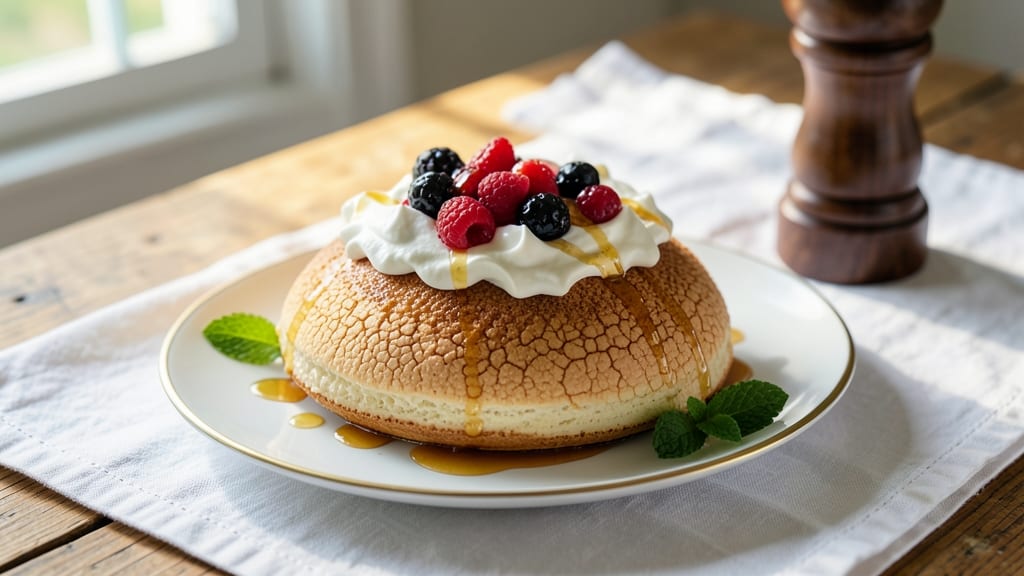
A 12-egg pavlova delivers the perfect balance of crisp, crackly edges and a marshmallow-soft center—this is the dessert that steals every gathering. 💛 The secret lies in precise technique: whipping egg whites to stiff peaks, baking at low heat for hours to create that iconic hollow shell, then topping with clouds of whipped cream and vibrant fruit.
I've perfected this recipe after years of trial and error, ensuring your pavlova rises tall and golden, never collapsing under its own weight.
What sets this version apart is the foolproof method for achieving that signature crisp shell while keeping the inside light and airy. The 12 eggs create a sturdy structure that holds its shape, while the corn syrup in the meringue prevents over-browning.
Once baked, the pavlova's hollow center stays perfectly crisp—no soggy surprises here. The whipped cream topping adds a luxurious contrast, and fresh fruit brings brightness to every bite.
This isn't just dessert—it's a showstopper that feels impressive yet requires no fancy equipment. The slow baking process (about 1 hour at 250°F) ensures even drying, while the final resting period lets the shell set properly.
Whether you serve it for a holiday feast or a casual summer picnic, this pavlova will wow your guests with its height, texture, and delicate sweetness.
For a modern twist, consider adding citrus zest or chocolate shavings to the whipped cream, or swapping fruit for caramelized bananas. The key is balancing flavors—tart, sweet, and creamy—while maintaining that signature crispness. Let's create a dessert that's as beautiful as it is delicious.
Ingredients for 12 egg pavlova
Twelve eggs, a few pantry staples, and you'll have a showstopping dessert that's crisp on the outside, soft inside.
| Ingredient | Amount | Notes |
|---|---|---|
| Large Egg Whites 🥚 | 12 whole | Room temperature, no yolks |
| Granulated Sugar 🍚 | 1 ½ cups | Superfine preferred for smoothness |
| Light Corn Syrup 🍯 | ½ cup | Karo brand works perfectly |
| White Vinegar 🍶 | 1 tbsp | For extra stability |
| Vanilla Extract 🌿 | 1 tsp | Pure vanilla for best flavor |
| Heavy Whipping Cream 🥛 | 3 cups | Full-fat for best whipping |
| Powdered Sugar 🍚 | 1 cup | For whipped cream sweetness |
| Fresh Berries 🍓 | 3 cups | Strawberries, raspberries, or mixed |
| Lemon Zest 🍋 | 1 tsp | Brightens the flavor profile |
| Unsalted Butter 🧈 | ½ cup | Softened for garnish |
The egg whites are non-negotiable here—room temperature makes all the difference. Whole Foods or Trader Joe's carry the largest eggs, which whip up best. For sugar, superfine is ideal (it dissolves faster), but regular granulated works if you pulse it in a food processor. The corn syrup? Karo brand is my go-to—it's affordable and does the job perfectly. If you're feeling fancy, swap the vanilla extract for vanilla bean paste for extra depth, but regular extract works just fine too.
No corn syrup? Honey or maple syrup in a pinch (use same amount), but it'll add moisture. For the berries, frozen works in a pinch—just toss them in hot water for 30 seconds to thaw. The whipped cream needs to be thick and glossy, so chill your bowl and beaters beforehand. Want more flavor? Add a splash of orange liqueur to the whipped cream or swap the berries for passion fruit or mango. The lemon zest can be omitted if you're not a fan, but it really ties everything together.
This pavlova needs time to set—at least 2 hours before serving. Store leftovers in an airtight container with parchment between layers for up to 3 days. The meringue shell keeps its crispness for 3 days at room temperature if protected from humidity. For a modern twist, sprinkle the whipped cream with crushed freeze-dried berries or chocolate shavings before serving. The butter garnish? Melt it slightly for a glossy finish.
Why You'll Love This Recipe
- No Stand Mixer Needed: I’ll be real—this recipe only asks for a whisk and steady arms. Twelve egg whites might sound intimidating, but the meringue comes together faster than you’d think, especially with that light corn syrup trick to keep it silky.
- Crispy-Creamy Magic: That vinegar splash isn’t just for show—it locks in the snap while the center stays soft as cloud. Top it with vanilla whipped cream, and you’ve got dessert that’s ridiculously good without being overly sweet.
- Holiday Hero: Between us, this is my secret weapon for Thanksgiving or Christmas. It’s impressive enough for guests but unfussy enough that I can prep it the day before. (Yes, even on a Tuesday night.)
- Egg Whites on Sale: Here’s what sold me—pavlova uses the cheapest part of the egg, and 12 whites means zero waste. I’ll often double the batch, freeze half, and pull it out for last-minute gatherings. Budget-friendly and foolproof.
Step-by-step instructions for towering meringue with whipped cream clouds
Here's how to build that perfect pavlova—crisp shell, marshmallow center, and fluffy clouds of cream.
🍳 Step 1: Whip Egg Whites to Stiff Peaks
Start by separating the 12 whole large egg whites (make sure they're completely free of yolk—even a trace will prevent stiff peaks). In a spotless, grease-free bowl, beat them on medium speed until soft peaks form. This usually takes about 3 minutes. Real talk: your bowl needs to be bone dry—any oil or grease will ruin your meringue.
Gradually add the 1.5 cups granulated sugar and 0.5 cup light corn syrup while beating on high speed. I like to add about 1 tablespoon at a time, letting each addition fully incorporate before adding more. This prevents sugar grains from forming. Beat for another 5-7 minutes until the meringue is glossy and holds stiff peaks that stand straight up when the beaters are lifted. The mixture should look thick, shiny, and almost like frosting.
🍳 Step 2: Add Stabilizers and Shape the Meringue
With the mixer still running, add the 1 tbsp white vinegar and 1 tsp vanilla extract. The vinegar helps stabilize the meringue and gives it that signature crisp shell. Beat for another 1-2 minutes until fully combined. Transfer the meringue to a piping bag fitted with a large round tip (or a pastry bag with a corner snipped off).
Pipe the meringue onto a parchment-lined baking sheet, forming a 10-inch circle (about 1.5 inches thick in the center, tapering to ½ inch at the edges). Here's the thing—don't over-smooth the top. A slightly uneven surface helps create those beautiful cracks when it bakes. Use the back of a spoon to gently shape the edges while keeping the center thick. Place in the fridge to chill for 30 minutes while you preheat the oven.
🔥 Step 3: Bake Until Crisp and Cool Gradually
Preheat your oven to 250°F—this low temperature is key for baking pavlova. Bake for 1 hour and 15 minutes until the outside is crisp and the inside feels dry when you gently press the center (it should spring back). Don't open the oven door during baking—this causes the meringue to collapse. If your oven runs hot, start checking at the 50-minute mark for doneness.
Turn off the oven and let the pavlova cool completely inside the oven with the door slightly ajar. This gradual cooling prevents cracking. Once fully cooled (about 2 hours total), transfer to a wire rack. The meringue should have a crisp shell with a soft, marshmallow-like center. If it cracks, don't stress—it's still delicious (and some say the cracks make it more interesting!).
🍽️ Step 4: Whip Cream and Assemble
In a chilled bowl, beat the 3 cups heavy whipping cream with the 1 cup powdered sugar and 1 tsp lemon zest until soft peaks form. Avoid over-whipping or you'll get butter. Fold in the 3 cups fresh berries gently with a spatula—just enough to distribute them evenly. The lemon zest adds a bright contrast to the sweet cream.
Spread the whipped cream over the cooled pavlova, leaving a ½-inch border at the edges. Top with the 0.5 cup softened unsalted butter, cut into small pieces, for a beautiful garnish. Serve immediately or refrigerate for up to 4 hours (though it's best fresh). The meringue will soften slightly as it absorbs the cream, creating that perfect balance of textures.
Pro Tips For Making 12 Egg Pavlova
- STOP WHEN MERANGUE’S STILL WARM: The meringue’s done when it’s cool to the touch—not when it’s still steaming. I learned this after watching my first pavlova collapse under a fruit topping because I rushed it. Wait until the outside’s dry and the center holds a gentle imprint when you press it with a finger. Patience here means no soggy bottom.
- USE ROOM-TEMP EGG WHITES: Cold egg whites hold onto moisture like a miser. Let them sit in their shells for 30 minutes before separating—this makes them fluffier and stiffer. I used to whip them straight from the fridge and wonder why my meringue never got that crisp, snappy shell. Trust me, 30 minutes changes everything.
- WHIP SLOW THEN FAST: Start your egg whites on low speed until soft peaks form, then crank it up to high. Rushing to high speed too soon traps air unevenly, leading to a dense center. I’ve seen this ruin even the best recipes—your meringue needs that gradual transition to hold its shape.
- SIFT THAT SUGAR: Dump granulated sugar straight into the bowl, and you’ll end up with gritty patches in your meringue. Sift it through a fine-mesh sieve first—it dissolves faster and blends smoother. I was skeptical until I tried it; now I won’t go back. The texture is noticeably lighter.
Pro cooking tips for this dish
Egg White Prep
Start with room-temperature egg whites—this is non-negotiable for proper volume. I swear by separating them over a bowl and checking for any stray yolk bits with a toothpick. Even a tiny trace of fat will prevent stiff peaks.
Use a spotless, grease-free bowl—wash it with soap, rinse well, and dry completely. I like to add a splash of white vinegar to the bowl first to neutralize any hidden oils. 🥚
Sugar Addition
Add sugar gradually—about 1 tablespoon at a time—while mixing on high speed. This prevents sugar grains from forming and ensures even distribution. I beat for 5-7 minutes after all sugar is added until the meringue is glossy and holds stiff peaks that stand straight up.
The mixture should look like thick frosting—if it's grainy, you've added sugar too quickly.
Vinegar Magic
The 1 tablespoon white vinegar is your secret weapon—it stabilizes the meringue and creates that signature crisp shell. Add it with the vanilla extract while the mixer is running.
Beat for just 1-2 minutes to incorporate fully. Overmixing here can deflate the meringue. I find Apple cider vinegar works too, but white vinegar is most reliable.
Baking Temperature
Never exceed 250°F for baking—this low heat is crucial for even drying. I set my oven to 250°F and bake for exactly 1 hour and 15 minutes.
Don't peek! Opening the oven door causes temperature fluctuations that can make the meringue collapse. If your oven runs hot, check at the 50-minute mark for doneness.
Cooling Technique
Turn off the oven completely after baking and let the pavlova cool inside with the door slightly ajar. This gradual cooling prevents cracking. The total cooling time should be about 2 hours.
The meringue should have a crisp shell with a marshmallow-like center. If it cracks, don't stress—it's still delicious and adds character! 💫
Whipped Cream Tips
Use a chilled bowl and beaters for the whipped cream—this helps it whip up faster and hold its shape. Add the lemon zest at the very end to preserve its bright flavor.
Fold in berries gently with a spatula to avoid deflating the cream. For extra flavor, I sometimes add ½ teaspoon orange extract to the whipped cream before folding in the fruit.
Nutrition facts
Frequently asked questions
Why does my pavlova collapse after baking?
Most collapses happen from opening the oven door too soon or uneven baking. The meringue needs that 250°F environment for 1 hour 15 minutes without interruption. Also, ensure your egg whites are fully whipped to stiff peaks—any under-whipped meringue won't hold its shape. If it cracks but doesn't collapse completely, it's still edible (just less impressive visually).
Can I make a smaller pavlova with fewer eggs?
For a 6-egg version, halve all ingredients (including sugar and vinegar) and bake at 250°F for 50-60 minutes. The key is maintaining the same proportions—too much sugar relative to egg whites will make it sticky. A smaller pavlova cools faster too, so watch the baking time closely.
How do I store leftover pavlova?
Store the meringue shell alone in an airtight container with parchment between layers for up to 3 days. Keep the whipped cream separate and add it fresh before serving. If you must store the whole dessert, refrigerate for 4 hours max—the meringue will soften but remains crisp when properly stored. Freezing isn't recommended as it destroys the texture.
What's the best way to reheat pavlova?
Pavlova isn't meant to be reheated—it's designed to be enjoyed fresh! If you must revive a slightly soggy meringue, place it on a wire rack in a 200°F oven for 5-10 minutes to crisp up the edges. But honestly, the magic is in the freshness—this dessert is all about that perfect contrast of textures.
Can I make pavlova without corn syrup?
Yes, but expect slightly different results. Substitute with ½ cup honey or maple syrup (same amount), though it adds moisture that can make the meringue softer. For a closer texture, try golden syrup (like treacle) which has a similar viscosity. The vinegar remains essential for stability—don't skip it!